RAL 7016 Aluminium Cladding Colours What Happens After 7 Years of UV Exposure
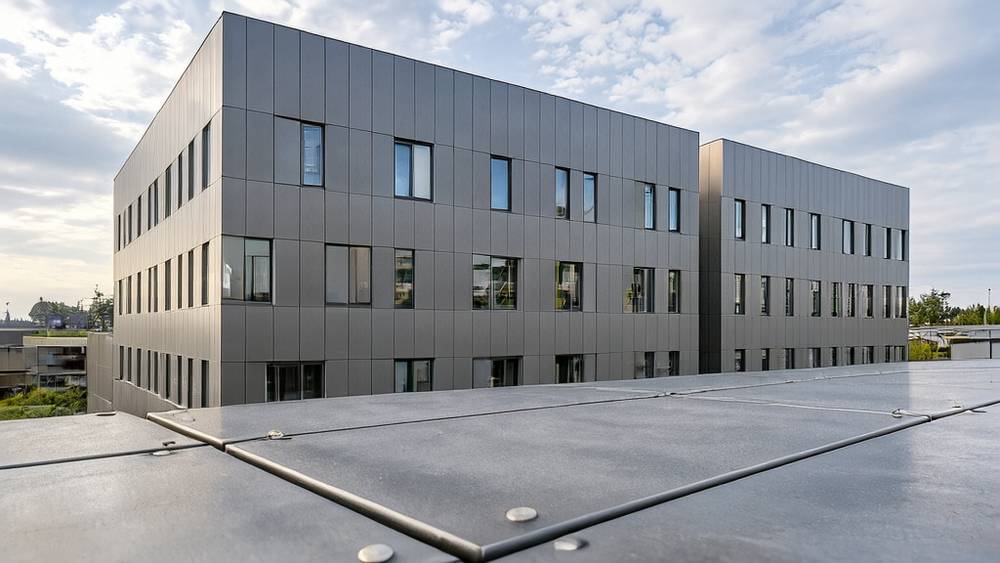
When a project architect specifies a RAL 7016 Anthracite Grey for a 12-storey mixed-use facade in Manchester, the conversation that follows is rarely about whether aluminium cladding colours can match that swatch. It is about whether that exact shade will still look like RAL 7016 after seven years of south-facing UV exposure, salt-laden coastal winds, and 1,200 mm of annual rainfall. The gap between a factory-fresh colour sample and the weathered reality on a completed building is where reputations are made or broken, and where procurement teams discover that not all PVDF-coated solid aluminium panels age the same way. Aluminium cladding colours are not simply aesthetic decisions made in a design studio; they are material performance commitments that must survive thermal cycling, industrial pollutants, and the relentless bleaching effect of ultraviolet radiation. This article examines the specific mechanisms that degrade colour on solid aluminium cladding panels, the measurable differences between coating technologies in real-world exposure conditions, and the testing protocols that separate a 20-year colour warranty from marketing copy.
What Actually Causes Aluminium Cladding Colours to Fade
Colour fading on architectural aluminium is almost never a single-factor failure. It is the cumulative result of three overlapping degradation pathways that attack the coating system at the molecular level. Understanding these mechanisms matters because the coating specification that resists one pathway may be vulnerable to another.
The primary driver is photodegradation. UV radiation in the 290–400 nm range carries sufficient photon energy to break carbon-carbon and carbon-nitrogen bonds in organic pigments. Inorganic pigments — iron oxides, chromium oxides, mixed-metal oxide pigments — are inherently more UV-stable than organic counterparts, which is why earth tones and blacks typically outlast bright reds and blues on exposed facades. A 2021 study published in the Journal of Architectural Coatings documented that certain organic red pigments in polyester-based coatings lost 60% of their original colour intensity after 3,000 hours of accelerated QUV-B testing, compared to less than 5% loss for the same pigment dispersed in a 70% PVDF resin system.
The second pathway is hydrolytic degradation. Moisture penetrates the coating film through microscopic pinholes and diffuses to the pigment-binder interface. In humid or coastal environments, this water attack hydrolyses the chemical bonds that anchor pigment particles within the resin matrix, causing chalking — the progressive release of pigment powder onto the surface. Chalking not only lightens the apparent colour but creates a rough surface that traps dirt, compounding the visual degradation.
The third and often underestimated pathway is thermal oxidation. Dark-coloured aluminium cladding panels can reach surface temperatures of 80–85°C under direct summer sun in Middle Eastern or Australian conditions. At these temperatures, the oxidation rate of organic resin components accelerates exponentially — roughly doubling for every 10°C rise — degrading the binder that holds pigment particles in place. This is why the same RAL 7016 panel performs differently on a north-facing elevation versus a south-facing one on the same building.
PVDF, FEVE, and Powder Coatings Under Accelerated Weathering
The coating technology selected for aluminium cladding colours determines the rate at which each degradation pathway progresses. Three dominant systems compete in the global architectural market, and their performance differences become stark when examined through the lens of standardised weathering protocols.
PVDF (Polyvinylidene Fluoride) coatings, typically applied as a 70% PVDF / 30% acrylic dispersion over a primer, remain the benchmark for architectural aluminium. The carbon-fluorine bond — one of the strongest single bonds in organic chemistry at approximately 485 kJ/mol — resists UV photolysis far better than the carbon-hydrogen bonds in polyester or acrylic resins. PVDF coatings meeting AAMA 2605 specifications must demonstrate colour retention of ΔE ≤ 5 after 10 years of South Florida exposure at 45° south-facing tilt. In practice, high-quality PVDF systems supplied by manufacturers including Futeng® typically achieve ΔE values below 3 over this period for inorganic pigment formulations.
FEVE (Fluoroethylene Vinyl Ether) coatings represent an alternative fluoropolymer chemistry that offers comparable weatherability to PVDF but with higher gloss potential — typically 60–80 GU at 60° compared to 25–35 GU for standard PVDF. FEVE resins are used extensively in Japan and increasingly specified for projects requiring high-gloss metallic aluminium cladding colours. The ASTM D7869 accelerated weathering protocol, which cycles xenon arc exposure with dark-phase moisture, has shown FEVE topcoats maintaining ΔE ≤ 2 after 5,000 hours when formulated with inorganic pigments.
Super-durable polyester powder coatings, qualified to Qualicoat Class 2 or AAMA 2604 standards, offer an intermediate cost position. These systems use triglycidyl isocyanurate (TGIC) or hydroxyalkylamide (HAA) crosslinkers with UV-stabilised polyester resins. Their colour retention is substantially better than standard polyester but falls short of fluoropolymer performance in high-UV environments. South Florida exposure data from resin manufacturers indicates that super-durable polyester powder coatings typically reach ΔE 5 at approximately 5–7 years, versus 10–15+ years for 70% PVDF.
| Coating System | Resin Chemistry | Standard | ΔE After 10 Years Florida | Typical Warranty | Best Application |
|---|---|---|---|---|---|
| 70% PVDF Liquid | PVDF/Acrylic | AAMA 2605 | ≤ 3 (inorganic) | 20–30 years | High-rise, coastal, extreme UV |
| FEVE Liquid | Fluoroethylene Vinyl Ether | AAMA 2605 | ≤ 2 (inorganic) | 20–30 years | High-gloss, metallic finishes |
| Super-Durable Powder | Polyester TGIC/HAA | AAMA 2604 | 5–8 (inorganic) | 10–15 years | Mid-rise, temperate climates |
| Standard Polyester Powder | Polyester TGIC | AAMA 2603 | ≥ 15 | 5 years | Interior, sheltered soffits |
| Anodised | Aluminium Oxide Layer | BS 3987 | Minimal (fades to chalky) | Variable | Monumental, uniform ageing acceptable |
Why Colour Consistency Across Production Batches Remains the Hidden Challenge
Specifiers tend to focus on long-term weathering performance, but a more immediate problem surfaces during installation: batch-to-batch colour variation. When 3,000 m² of solid aluminium cladding panels arrive on site across eight separate production batches, even minor ΔE deviations become visible across adjacent panels on the same elevation.
The root cause lies in the complexity of colour-matching architectural coatings. A single RAL or custom colour may require 8–15 individual pigment dispersions, each with its own particle size distribution and rheology. Variations in pigment lot, milling time, oven temperature profile, and even ambient humidity during application can shift the final colour by 0.5–1.5 ΔE units. The human eye can detect differences as small as 0.3 ΔE when panels are butt-jointed on a flat facade.
Manufacturers address this through spectrophotometric quality control at the coil-coating or spray line. A typical quality protocol involves measuring every coated sheet against a master standard using an integrating-sphere spectrophotometer configured for the CIELAB colour space (D65 illuminant, 10° observer). Acceptable tolerance bands are typically set at ΔE ≤ 1.0 for adjacent panels and ΔE ≤ 1.5 across the entire project. ISO 11664 defines the colourimetric framework, while project-specific tolerance agreements should form part of the coating qualification submittal.
For aluminium cladding colours specified as metallic or mica finishes, the challenge intensifies. Metallic pigments are plate-like aluminium flakes that orient parallel to the coating surface during application. Slight variations in spray gun distance, atomisation pressure, or film thickness alter flake orientation and produce visible differences in brightness (L*) and flop index — the change in lightness when viewing angle shifts from face-on to near-grazing. This is why metallic finishes demand a separate pass/fail criterion: colourimetric tolerances at three viewing angles (typically 25°, 45°, and 75° from specular).
The Gloss Factor That Changes Everything
Gloss is not a decorative afterthought; it is a functional property that directly affects how aluminium cladding colours are perceived at distance and how they weather over time. A panel specified at 30 GU (gloss units at 60°) will appear noticeably different from one at 45 GU, even when both carry identical pigmentation.
Gloss level influences perceived colour saturation. Low-gloss (matte) surfaces scatter incident light diffusely, which desaturates the apparent colour and makes the facade appear lighter and flatter. High-gloss surfaces produce specular reflection, deepening apparent colour saturation but also accentuating any surface irregularities — oil canning, weld marks on the aluminium substrate, or uneven coating application become far more visible above 50 GU.
From a durability standpoint, gloss retention is a leading indicator of coating breakdown. AAMA 2605 requires a minimum 50% gloss retention after 10 years South Florida exposure. Field experience on projects across Southeast Asia and the Middle East indicates that PVDF coatings on solid aluminium cladding typically retain 65–80% of original gloss over a decade, while super-durable powder coatings may drop to 40–55% in the same period under high-UV conditions. The loss of gloss precedes colour shift, making it a useful early-warning metric during facade condition surveys.
Dark Colours and the Heat Island Reality
The specification of dark aluminium cladding colours — RAL 7021 Black Grey, RAL 8019 Grey Brown, RAL 9005 Jet Black — triggers a cascade of thermal consequences that extend well beyond aesthetics. A solid aluminium panel coated in RAL 9005 can reach a surface temperature 30–35°C higher than an identical panel in RAL 9010 Pure White under the same solar irradiance, based on solar reflectance measurements conducted by the Cool Roof Rating Council.
This temperature differential imposes three practical constraints. First, the aluminium substrate undergoes greater thermal expansion — a 3-metre dark panel experiences approximately 5.5 mm of linear expansion from a 20°C winter night to an 85°C summer afternoon, versus 3.8 mm for a white panel. The cladding attachment system must accommodate this differential without inducing buckling or fastener fatigue.
Second, the coating system on dark panels operates closer to its thermal limits. PVDF resin remains stable up to approximately 260°C, but the acrylic modifier component — 30% of a standard 70/30 system — begins to soften above 100°C, potentially accelerating dirt pickup and reducing scratch resistance. Third, dark facades contribute to the urban heat island effect and may conflict with local building codes that mandate minimum solar reflectance index (SRI) values for exterior cladding. Projects in cities with green building requirements should verify SRI compliance early in the colour selection process.
Coastal and Industrial Atmospheres Demand Different Colour Strategies
Environmental exposure maps directly onto colour selection logic. A seaside apartment block in Brighton and an inland logistics centre in Stuttgart may both specify aluminium cladding colours from the same RAL palette, but the appropriate coating choices differ fundamentally.
Coastal environments deliver a triple assault: high UV (amplified by reflection from water), chloride-laden aerosol, and persistent moisture. Chloride ions accelerate the corrosion of any exposed aluminium at cut edges or fastener penetrations, but they also attack certain pigments. Copper phthalocyanine blues and greens — the workhorse pigments for many architectural blue shades — can fade more rapidly in chloride-rich atmospheres due to catalytic degradation mechanisms. In these environments, a 70% PVDF system with a corrosion-resistant primer (typically strontium chromate-free formulations meeting ISO 12944 C4 or C5 corrosivity categories) becomes the minimum defensible specification.
Industrial atmospheres introduce sulphur dioxide and nitrogen oxides that form acidic deposition on facade surfaces. These acidic films attack the coating-pigment interface in polyester systems but leave fluoropolymer coatings largely unaffected. Colour choices also matter: lighter shades in industrial zones show soiling more visibly but are easier to clean; darker shades mask dirt but absorb more heat, accelerating any underlying coating degradation. The pragmatic compromise for industrial sites is mid-tone colours (LRV 25–50) in PVDF, balancing dirt-hiding with thermal management.
Digital Tools and Physical Samples in the Colour Approval Workflow
No digital colour representation can substitute for a physical sample viewed under natural daylight at the project site. This statement appears obvious, yet procurement teams continue to approve aluminium cladding colours based on PDF colour swatches or website renderings, with predictable consequences during installation.
The gap between digital and physical colour stems from fundamental differences in colour generation. A monitor produces colour additively using RGB emitters; a coated aluminium panel produces colour subtractively through pigment absorption and reflection. The gamut — the range of reproducible colours — differs substantially between these systems. Colours that fall outside the monitor's gamut will be clipped or approximated, producing misleading representations. Metallic and mica finishes, with their angle-dependent reflectance, are essentially impossible to represent accurately on screen.
A robust colour approval workflow proceeds through four stages. First, the specifier identifies target colours using the RAL Classic, RAL Design, or NCS colour system. Second, the coating applicator produces laboratory drawdowns — small coated coupons prepared under controlled conditions — for initial approval. Third, the manufacturer produces full-size panel samples (minimum 300 × 300 mm) using the actual production coating line, capturing the real-world film thickness, cure conditions, and substrate preparation. Fourth, the project team evaluates these samples on-site at different times of day and under both overcast and direct sun conditions. Only after this four-stage verification should mass production begin.
On a 2023 mixed-use project in Rotterdam, the contractor approved RAL 9006 White Aluminium metallic based on a 100 × 100 mm laboratory drawdown. The production panels, coated on a different line, exhibited a noticeably coarser metallic flake distribution and a 2.5 ΔE deviation when installed adjacent to the approved sample. The entire 1,800 m² order was rejected and recoated — a six-week delay and a cost overrun exceeding €40,000.
How to Write a Colour Performance Specification That Means Something
A specification clause that reads "Colour: RAL 7035 Light Grey" is incomplete. It says nothing about the required colour retention over time, the acceptable tolerance during production, or the test methods that will validate compliance. A meaningful colour specification for solid aluminium cladding panels addresses each of these dimensions explicitly.
The specification should reference a recognised colour system (RAL, NCS, BS 4800, or a custom L*a*b* coordinate), define acceptance tolerances in ΔE units per ISO 11664-4, specify the coating system and its performance standard (AAMA 2605 for fluoropolymer, AAMA 2604 for super-durable powder), and state the required colour and gloss retention after a defined weathering period. For projects in harsh environments, the specification should further require evidence of performance from real-world exposure sites — not just accelerated QUV or Xenon arc data, which can misrepresent actual service life by a factor of two or more.
The specification must also address what happens when colour fails. A warranty that promises "colour retention of ΔE ≤ 5 for 20 years" but defines failure only as blistering, cracking, or peeling is effectively worthless for colour performance. The warranty clause should separately define colour failure thresholds, the measurement protocol for evaluating claims, and the remedy — whether recoating, replacement, or financial compensation. Most reputable PVDF coating suppliers, including those working with Futeng® manufacturing facilities, offer film integrity warranties of 20–30 years with colour performance criteria explicitly stated in the warranty document rather than buried in technical literature.
For the procurement manager, the practical takeaway is that aluminium cladding colours represent a long-term material commitment, not a one-time design choice. The upfront cost difference between a super-durable powder system and a 70% PVDF system — typically €8–15 per square metre — must be weighed against the cost of recoating or the reputational damage of a prematurely faded facade. On a 10,000 m² project, that premium amounts to €80,000–150,000. Against a potential recoating cost of €60–120 per square metre a decade later, the arithmetic favours getting the coating specification right the first time.