Z275 or Z120 Galvanized Coating Weight Decides Your Rooftop Iron Sheet Service Life
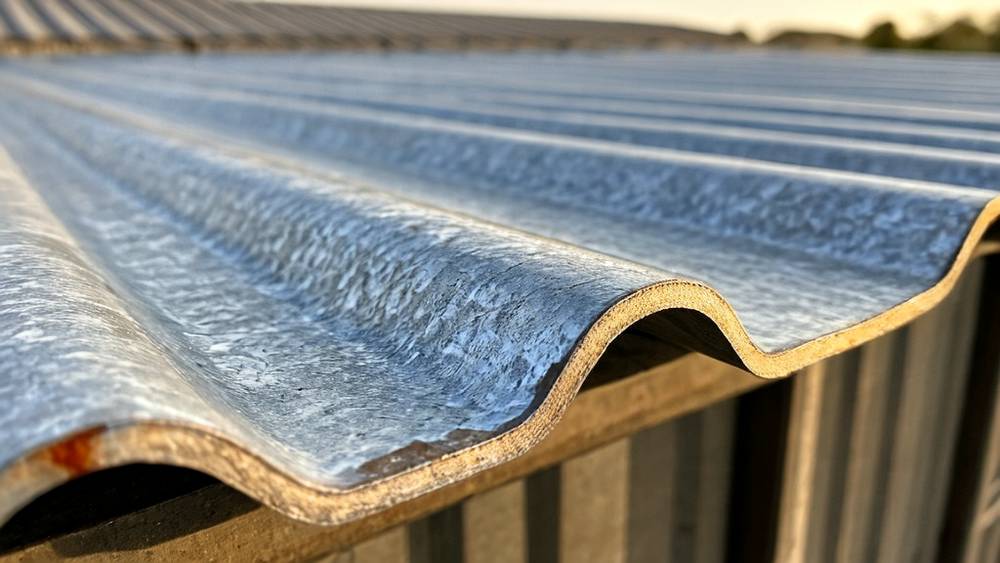
When a warehouse roof in Chennai failed after just 18 months of service, the post-mortem pointed to a single root cause: the wrong zinc coating weight for a high-humidity, salt-laced inland microclimate. That failure cost the facility operator roughly ₹42 lakh in water-damaged inventory and emergency structural repairs. The rooftop iron sheet itself had not rusted through — it had rusted from the cut edges and fastener penetrations inward, precisely where the protective galvanic layer was thinnest. This is the distinction that most procurement specifications miss: not all galvanized rooftop iron sheet products carry the same zinc mass, and the difference between 120 g/m² and 275 g/m² coating weight can mean a service life of 6 years versus 25 years in moderately corrosive environments.
This article focuses on one specific, measurable parameter — zinc coating weight in galvanized rooftop iron sheet — and examines how it directly governs corrosion resistance, cut-edge protection, and total lifecycle cost. For procurement managers writing tender documents, for quality engineers inspecting incoming coil stock, and for project owners comparing competing bids, coating weight is the single most important number on the mill certificate. Yet it remains the most overlooked.
What Zinc Coating Weight Actually Means in Engineering Terms
Zinc coating weight, expressed in grams per square metre (g/m²), represents the total mass of zinc applied to both sides of a steel substrate. This is not a paint layer or a cosmetic finish — it is a sacrificial metallic coating that corrodes preferentially to protect the underlying steel. When a rooftop iron sheet gets scratched during handling or drilled on site for fasteners, exposed steel at that breach would rust within hours in humid air. The surrounding zinc sacrifices itself electrochemically, oxidizing first and leaving the steel intact.
The industry standard reference for hot-dip galvanized coatings on sheet steel is ISO 4998:2014, which defines minimum coating mass designations. Common commercial grades include Z120 (120 g/m² total both sides), Z180, Z275, and Z350. The ASTM equivalent is ASTM A653/A653M, which uses the prefix "G" — G40 (approx. 120 g/m²), G60 (approx. 180 g/m²), and G90 (approx. 275 g/m²). The key engineering insight is this: zinc corrosion is linear with time in most atmospheric conditions. Double the coating weight, and you roughly double the time to first rust at scratches and cut edges.
Zinc corrodes at approximately 1–3 µm per year in rural atmospheres and 3–7 µm per year in urban/industrial atmospheres, per ISO 9223 corrosivity categories. A 20 µm zinc layer (roughly 140 g/m²) will be consumed in 3–7 years in an industrial environment. A 40 µm layer (roughly 275 g/m²) lasts 6–14 years in the same conditions.
The Cut-Edge Problem: Where Coating Weight Matters Most
Every rooftop iron sheet installation involves cutting. Sheets are trimmed to length, notched around vents, and drilled for fasteners. Each cut creates a bare steel edge with zero zinc coverage. The only protection that cut edge receives is cathodic — zinc ions from the adjacent coated surface must migrate laterally to protect the exposed steel. This protection distance is finite, typically 1.5 to 3 mm from the zinc source, depending on coating thickness and electrolyte conductivity (rainwater, condensation).
Thin coatings like Z120/G40 provide limited cathodic throw. After a few rain cycles, the cut edge begins showing rust spots. With Z275/G90 coatings, the thicker zinc layer sustains a robust electrochemical gradient that protects cut edges for many years longer. This is not theoretical — it has been quantified in salt spray testing per ASTM B117, where Z275-coated panels consistently show 3× to 4× longer time to red rust at scribed edges compared to Z120 panels.
For projects within 5 km of coastlines, or in industrial zones with SO₂ emissions, the cut-edge effect is amplified. Zinc consumption rates can exceed 10 µm/year in these environments. A Z120 coating might be consumed entirely at the cut edge zone within 24 months, leaving the steel substrate unprotected. At this point, the rooftop iron sheet begins structural degradation — not just cosmetic rust staining.
Coating Weight vs. Real-World Service Life: What the Data Shows
The relationship between zinc coating mass and service life has been studied extensively. The following table synthesizes service life estimates based on ISO 9223 corrosivity categories and empirical exposure data from the International Zinc Association's atmospheric corrosion program. These figures assume properly installed, un-painted galvanized rooftop iron sheet with no mechanical damage beyond normal fastener penetrations.
| Zinc Coating Designation | Total Mass (g/m²) | Rural (C2) Years to 5% Rust | Urban (C3) Years to 5% Rust | Industrial (C4) Years to 5% Rust | Coastal (C5) Years to 5% Rust |
|---|---|---|---|---|---|
| Z100 / G30 | 100 | 12–18 | 6–10 | 3–5 | 1–3 |
| Z120 / G40 | 120 | 15–22 | 8–12 | 4–7 | 2–4 |
| Z180 / G60 | 180 | 22–32 | 12–18 | 6–10 | 3–6 |
| Z275 / G90 | 275 | 35–50 | 18–28 | 10–16 | 5–9 |
| Z350 / G115 | 350 | 45–60 | 25–35 | 14–22 | 7–12 |
| Z450 / G150 | 450 | 55–75 | 30–45 | 18–28 | 9–15 |
These numbers reveal a hard truth: the Z120 product that dominates low-bid tender responses in price-sensitive markets is fundamentally unsuitable for any project longer than 10 years in urban environments. Yet procurement documents routinely specify "galvanized iron sheet" without a coating weight designation, effectively inviting suppliers to quote the cheapest compliant product — which will always be Z100 or Z120.
Why Tender Documents Fail on Coating Weight
Three recurring failures appear in construction tender specifications globally:
1. The "GI Sheet" Ambiguity
The term "GI sheet" (galvanized iron sheet) carries no coating weight information whatsoever. A supplier can legitimately supply Z100 material and claim full compliance. This is not a loophole — it is an absence of specification. Every tender for rooftop iron sheet should state the minimum zinc coating mass in g/m², referencing ISO 4998 or ASTM A653, and require mill test certificates (MTCs) that list actual coating weight measurements per coil.
2. Confusing Pre-Galvanized with Hot-Dip Galvanized
Pre-galvanized (continuous hot-dip) sheet — the standard product for roll-formed roofing profiles — typically carries coating weights from Z100 to Z275. Batch hot-dip galvanizing of fabricated steel sections achieves much thicker coatings (typically 85–200 µm, equivalent to 600–1400 g/m²) but is a completely different process applied after fabrication. Some tender documents confuse the two, requesting "hot-dip galvanized roofing sheets" without understanding that continuous galvanizing and batch galvanizing produce different coating characteristics and thickness ranges.
3. Ignoring the Base Metal Grade
Zinc coating weight is only half the story. The steel substrate grade determines structural performance. Common grades for rooftop iron sheet include commercial steel (CS Type B), forming steel (FS), and structural grades per ASTM A653 or ISO 4997. A Z275 coating on 0.35 mm commercial steel will perform very differently in wind uplift than Z275 on 0.50 mm structural grade. Both can claim "G90 galvanized" — only one will survive a cyclone.
Economic Analysis: Coating Weight and Total Cost of Ownership
Procurement teams often compare galvanized rooftop iron sheet on a per-square-metre installed cost basis. This is a false economy. The following analysis compares a 10,000 m² industrial roof in a C3 (urban) environment over a 20-year building lifecycle:
- Option A: Z120 coating, 0.40 mm substrate — Material cost approx. ₹280/m², installed cost approx. ₹520/m². Expected first rust at cut edges: year 8. Requires full replacement or over-cladding by year 15. Total 20-year cost including one replacement: approx. ₹1,040/m² (net present value with 7% discount: ₹780/m²).
- Option B: Z275 coating, 0.50 mm substrate — Material cost approx. ₹380/m², installed cost approx. ₹640/m². Expected first rust at cut edges: year 22. No replacement required within 20-year lifecycle. Total 20-year cost: ₹640/m².
The Z275 option costs 23% more upfront but saves roughly 40% over the building lifecycle. This calculation ignores the operational cost of roof replacement — production downtime, interior protection, waste disposal, and the management time required to run a re-roofing project on an operational facility. Those costs frequently exceed the material and labor cost of the roof itself.
Field Verification: How to Check Coating Weight on Site
Mill certificates can be falsified. The most reliable field verification method is a handheld magnetic coating thickness gauge. These instruments use magnetic induction to measure the non-magnetic zinc layer thickness on the ferrous steel substrate. A Z275 coating corresponds to roughly 19–22 µm per side (total 38–44 µm, though the standard measures total both sides by weight).
Testing protocol should include:
- Minimum 5 measurement points per coil or per 100 sheets
- Measurements taken at least 20 mm from cut edges to avoid edge-thickening effects from the galvanizing process
- Both top and bottom surfaces measured — coating distribution can be asymmetric in some continuous galvanizing lines
- Record and compare against the MTC's stated coating weight. Deviations exceeding 10% should trigger rejection or price renegotiation
For projects where a third-party inspection is warranted, laboratory cross-section microscopy per ASTM B487 provides definitive coating thickness measurement. This is destructive testing — samples must be cut from installed sheets — but it resolves disputes where coating weight is contested.
When Higher Coating Weight Creates Problems
The recommendation is not simply "specify the highest coating weight available." Z350 and Z450 coatings present genuine fabrication challenges:
- Roll-forming difficulty: Thicker zinc layers are more prone to zinc pick-up on forming rolls, requiring more frequent tooling cleaning and increasing the risk of surface scoring.
- Weldability: Zinc vaporizes at welding temperatures (boiling point 907°C versus steel melting at ~1,500°C). Thicker coatings generate more zinc fume, requiring enhanced ventilation and increasing porosity risk in welded joints. Most rooftop iron sheet installations use mechanical fasteners, but where welding is required, Z275 is generally considered the practical upper limit without special procedures.
- Paint adhesion: When galvanized sheet receives a factory-applied paint system (pre-painted galvanized, or PPGI), the paint-to-zinc interface is critical. Very thick, coarse zinc spangle — common in higher coating weights — can reduce paint adhesion unless the surface is properly pre-treated. Chromate conversion coatings or thin organic primers are standard solutions.
For most architectural and industrial roofing applications, Z275/G90 represents the optimal balance of corrosion protection, formability, and cost. Z350 becomes justified only in C4 or C5 environments where the lifecycle math clearly favors the additional upfront investment.
Regional Supply Reality: What Coating Weights Are Actually Available
Indian mills, including JSW Steel, Tata Steel (formerly Bhushan), and AM/NS India, produce galvanized coil in coating weights from Z80 to Z350 as standard products. Z450 and Z600 are available on mill order with minimum quantities typically starting at 50–100 tonnes per coil width and thickness combination. Southeast Asian suppliers — primarily from Vietnam, Thailand, and Indonesia — offer competitive pricing on Z120 and Z180 but less availability at Z275 and above.
For procurement managers sourcing rooftop iron sheet across borders, the coating weight specification also functions as a de facto quality filter. Mills capable of producing consistent Z275 coatings generally maintain better process control across all parameters — substrate thickness tolerance, mechanical properties, and surface quality. A Z120 mill may be running older continuous galvanizing lines with less precise air-knife systems for coating weight control. At Futeng® (Jiangsu, China), we have observed that project specifications requiring Z275 minimum coating weight consistently attract bids from higher-tier mills, naturally screening out suppliers who compete only on price with minimum-spec material.
Beyond Zinc: When Galvanized Alone Is Not Enough
Even Z450 galvanized rooftop iron sheet will eventually corrode in C5 marine environments. For these applications, additional protection layers become necessary:
- PVDF pre-painted systems: A 25–30 µm PVDF (polyvinylidene fluoride) paint system over a Z275 substrate provides both barrier protection and UV resistance. The zinc layer protects at cut edges and scratches; the paint protects the zinc from atmospheric consumption. Combined service life in C4 environments can exceed 40 years.
- Aluminium-zinc alloy coatings (Galvalume/AZ150): 55% Al-Zn alloy coatings provide 2–4× the corrosion resistance of pure zinc at equivalent coating mass. AZ150 (150 g/m²) performs comparably to Z275 in most environments. However, cut-edge protection is slightly reduced because aluminium is less galvanically active than zinc.
- Solid aluminium roofing sheet: For the most demanding environments, solid aluminium alloy (AA3003, AA3004, or AA5052 in H14/H24 temper) at 0.9–1.2 mm thickness eliminates steel corrosion entirely. Aluminium forms its own protective oxide layer and does not require sacrificial coating protection. This is a fundamentally different product category from galvanized rooftop iron sheet and carries a higher material cost, but in coastal C5 environments, it becomes the lowest-lifecycle-cost option.
Writing a Coating Weight Specification That Works
A defensible specification for galvanized rooftop iron sheet should include at minimum:
- Reference standard: ISO 4998:2014 or ASTM A653/A653M, stated explicitly.
- Coating designation: Z275 (or G90), not "GI sheet" or "galvanized iron."
- Testing method: Coating mass by weigh-strip-weigh (reference method) or magnetic thickness gauge with correlation factor.
- Substrate grade and thickness: e.g., "Grade 345 MPa minimum yield, 0.50 mm nominal thickness per ISO 4997 CR345."
- Mill certification: MTC required per coil or per heat, listing actual coating weight measurements, not just nominal designation.
- Field verification: Magnetic thickness gauge readings on site, with rejection threshold at 90% of specified minimum.
This specification language adds perhaps three lines to a tender document. It costs nothing to write. It changes everything about what gets delivered to the site.
The Chennai warehouse failure that opened this article was traced to a Z100 coating — the absolute minimum available — specified as "GI sheet, 0.40 mm" with no further detail. The supplier delivered exactly what was asked for. The zinc was consumed at fastener holes within 18 months. The roof leaked. The insurance claim was denied because the roof had not failed structurally; the specification had failed. Coating weight is not a technical detail. It is the primary determinant of whether a rooftop iron sheet roof will protect the building beneath it for five years or for fifty.