Aluminium Timber Cladding Achieves A2 s1 d0 Fire Rating for High Rise Facades
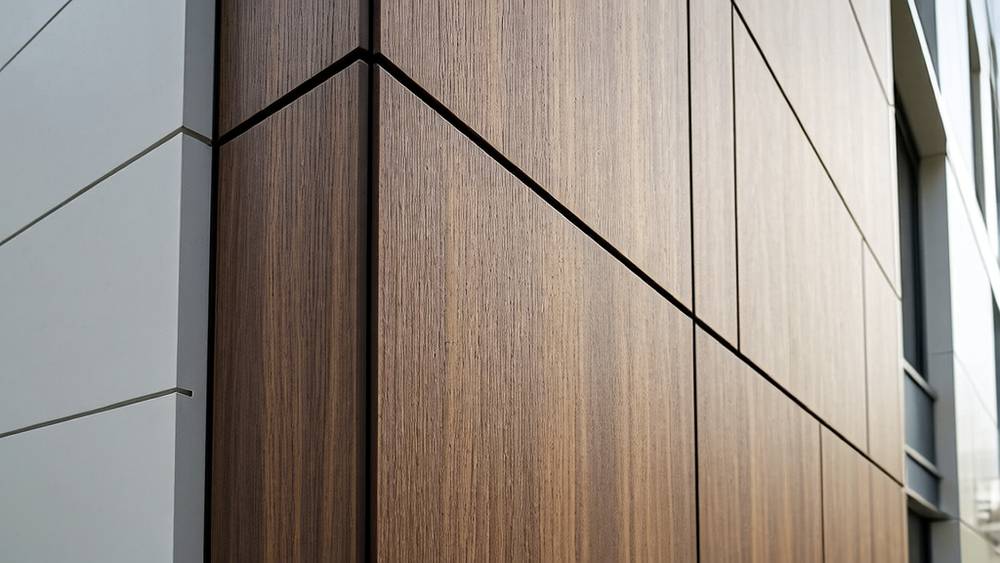
When specifying aluminium timber cladding systems for multi-storey facades, the conversation almost always starts with aesthetics — and almost always ends with fire. The Grenfell Tower tragedy rewrote the rulebook for combustible materials on external walls, and in its wake, specifiers worldwide have scrambled to reconcile the desire for warm, natural timber aesthetics with the hard reality of non-combustibility mandates. This is where aluminium timber — solid aluminium panels and battens engineered with advanced wood-grain sublimation finishes — enters the picture not as a compromise, but as a solution that satisfies both architectural intent and life-safety compliance. Unlike real timber, which is inherently combustible, or aluminium composite panels with polyethylene cores that can propagate flame, a 2.0 mm to 3.0 mm solid aluminium timber panel carries no fuel load. It is classified as A1 or A2-s1,d0 under EN 13501-1, the European reaction-to-fire classification standard that has become the de facto global benchmark for facade material selection. This single classification difference can mean the difference between a project sailing through building control or stalling for months in redesign.
How EN 13501-1 Classification Separates Compliant Aluminium Timber from Combustible Alternatives
EN 13501-1 is the harmonised European standard that categorises construction products into seven Euroclasses: A1, A2, B, C, D, E, and F. The classification is determined through a suite of tests — primarily the EN ISO 1182 non-combustibility furnace test, the EN ISO 1716 gross calorific potential test, and the EN 13823 Single Burning Item (SBI) test. Products that achieve A1 are non-combustible with zero contribution to fire. A2-s1,d0 denotes extremely limited combustibility, minimal smoke production (s1), and zero flaming droplets (d0). Solid aluminium timber cladding, fabricated from 2.0 mm, 2.5 mm, or 3.0 mm 3003-H14 or 5052-H32 alloy sheets with a sublimated wood-grain finish, consistently achieves A1 or A2-s1,d0 classification. The aluminium substrate itself is non-combustible, and the sublimation ink layer — measured in microns, not millimetres — adds negligible organic content. This stands in stark contrast to real timber cladding, which typically falls into class D or E, and high-pressure laminate (HPL) panels, which may achieve B-s1,d0 but still carry significantly more combustible mass per square metre than a solid aluminium timber panel.
A 3.0 mm solid aluminium panel with wood-grain sublimation finish tested to EN ISO 1182 typically records a furnace temperature rise of less than 4°C and mass loss below 15% — well within A1 thresholds. The same test on a 20 mm hardwood plank would see the specimen ignite within seconds.
The Four Test Regimes Behind Every Aluminium Timber Euroclass Rating
Understanding what goes into an EN 13501-1 classification helps specifiers cut through vague marketing claims about "fire-rated" or "non-combustible" cladding. Four distinct test standards underpin the Euroclass system, and each tells a different part of the fire performance story.
EN ISO 1182: The Non-Combustibility Furnace Test
This is the gatekeeper test for A1 and A2 classification. A cylindrical specimen — typically 45 mm in diameter and 50 mm in height — is lowered into a furnace held at 750°C. Thermocouples record the temperature rise inside the furnace, and the specimen is weighed before and after. To meet A1 criteria, the furnace temperature must not rise more than 30°C, and mass loss must not exceed 50%. Solid aluminium timber panels routinely record temperature rises under 5°C because the aluminium substrate acts as a heat sink, absorbing energy without contributing fuel. The sublimation layer vaporises almost instantly, contributing negligible calorific value. For specification writers, requesting the EN ISO 1182 test report — not just the classification certificate — is the surest way to verify a product's non-combustibility claims.
EN ISO 1716: Gross Calorific Potential (PCS)
Also known as the bomb calorimeter test, EN ISO 1716 measures the maximum total heat release when a product is completely burned in a pressurised oxygen environment. The threshold for A1 classification is a PCS value of ≤ 2.0 MJ/kg. For A2, the limit is ≤ 3.0 MJ/kg. A solid aluminium timber panel typically records PCS values between 0.5 and 1.5 MJ/kg, depending on the thickness of the sublimation coating and any primer layers. By comparison, solid hardwood cladding can exceed 18 MJ/kg, and fibre cement boards with organic fillers often fall in the 3.0 to 8.0 MJ/kg range. This test is particularly revealing because it exposes products that claim "limited combustibility" but carry substantial organic binders beneath the surface.
EN 13823: The Single Burning Item (SBI) Test
The SBI test is more realistic than the furnace test — it subjects a corner-mounted specimen to a 30 kW gas burner flame and measures heat release rate (HRR), smoke production rate (SPR), and flaming droplet formation over 20 minutes. The key metrics are FIGRA (Fire Growth Rate Index), SMOGRA (Smoke Growth Rate Index), and total heat release (THR600s). For A2 classification, FIGRA must be ≤ 120 W/s, and flaming droplets must not persist beyond 10 seconds (d0). Solid aluminium timber panels typically show a brief spike in heat release as the surface finish burns off, followed by a flatline as the inert aluminium substrate is exposed. This behaviour is well understood by fire engineers and is factored into facade fire risk assessments under BS 8414 in the UK and NFPA 285 in North America.
EN 13501-1 Annex: Smoke and Droplet Classification
The supplementary classifications — s1, s2, s3 for smoke and d0, d1, d2 for flaming droplets — are often overlooked but are critical for high-rise evacuation scenarios. s1 (SMOGRA ≤ 30 m²/s² and TSP600s ≤ 50 m²) represents the lowest smoke production, and d0 means no flaming droplets within 600 seconds. Aluminium timber cladding consistently achieves s1,d0 because the aluminium substrate cannot produce smoke and the sublimation layer is too thin to generate sustained flaming droplets. This is a decisive advantage over some powder-coated aluminium systems where organic powder formulations can push smoke classification to s2.
Real Timber Veneer Over Aluminium: The TechnoWood Approach and Its Fire Profile
Not all aluminium timber products are created equal. One distinct category — exemplified by TechnoWood's system — bonds a genuine timber veneer (typically 0.5 mm to 1.5 mm thick) directly onto a solid aluminium substrate. This approach delivers an authentic wood surface that is visually and tactilely indistinguishable from solid timber, because it is real timber. However, from a fire classification standpoint, the presence of real wood veneer changes the calculus. The veneer layer adds combustible mass — typically 0.3 to 0.8 kg/m² of wood fibre — which pushes the PCS value higher than a pure sublimation-finished panel. These products may still achieve A2-s1,d0 if the veneer is thin enough and the aluminium substrate dominates the mass, but specifiers must insist on seeing the full EN 13501-1 test report, not just the classification. The difference between a 0.5 mm veneer achieving A2 and a 1.5 mm veneer slipping to B can be decisive for projects over 18 metres in the UK or in Type I and II construction in the US.
| Product Type | Typical EN 13501-1 Class | PCS Value (MJ/kg) | Smoke Class | Droplet Class | Max. Building Height (UK Guidance) |
|---|---|---|---|---|---|
| Solid Aluminium Timber (Sublimation Finish, 2.0–3.0 mm) | A1 or A2-s1,d0 | 0.5–1.5 | s1 | d0 | Unrestricted |
| Aluminium with Real Timber Veneer (0.5 mm) | A2-s1,d0 | 2.0–3.0 | s1 | d0 | Unrestricted (subject to test report) |
| Aluminium with Real Timber Veneer (1.5 mm+) | B-s1,d0 to C-s2,d0 | 4.0–8.0 | s1–s2 | d0 | May be restricted above 18 m |
| Solid Hardwood Cladding (20 mm) | D-s2,d0 to E | 18–22 | s2 | d0 | Prohibited above 18 m in UK |
| Fibre Cement with Organic Binder | A2-s1,d0 to B-s1,d0 | 3.0–8.0 | s1 | d0 | Check individual test reports |
How NCC and UK Building Regulations Map to EN 13501-1 for Aluminium Timber
Different jurisdictions translate EN 13501-1 classifications into prescriptive building height limits, and the rules are not always consistent. Understanding these mappings is essential for specifiers working across borders.
In Australia, the National Construction Code (NCC) 2022 requires external walls of buildings with a rise in storeys of three or more (Type A construction) to be non-combustible. The NCC references AS 1530.1 for non-combustibility testing, which is functionally similar to EN ISO 1182. Aluminium timber cladding systems supplied by manufacturers such as Sculptform and Eurowood meet NCC non-combustibility requirements because the aluminium substrate passes AS 1530.1, and the wood-grain finish is deemed to be a "bonded laminate" with negligible combustible content. Australian fire engineers will typically accept an EN 13501-1 A2-s1,d0 classification as equivalent to NCC non-combustible, but project-specific performance solutions may still be required for buildings over 25 metres.
In the United Kingdom, Approved Document B (ADB) draws a hard line at 18 metres: materials classified below A2-s1,d0 are banned from the external walls of relevant buildings over 18 metres. Solid aluminium timber panels achieving A2-s1,d0 are fully compliant for all building heights — a fact that has driven enormous demand since the 2018 ban on combustible cladding took effect. The Ministry of Housing, Communities and Local Government (MHCLG) has issued consolidated guidance confirming that solid aluminium panels with thin organic coatings fall within scope of the ban exemption for A2-s1,d0 and above.
In the European Union, national building codes implement EN 13501-1 with varying height thresholds. Germany's MBO (Musterbauordnung) generally requires A2-s1,d0 or better for buildings above 22 metres. France's IT 249 requires A2-s1,d0 for facade systems on buildings above 28 metres. Spain's CTE DB-SI permits B-s1,d0 up to 28 metres but mandates A2-s1,d0 above. Aluminium timber cladding at A2-s1,d0 navigates all of these regimes without additional fire engineering justification — a significant procurement advantage for international projects.
Sublimation vs. Powder Coating: How the Finish Process Affects Fire Classification
The method used to transfer the timber pattern onto the aluminium substrate has a direct — and often underestimated — impact on fire performance. Two dominant technologies exist: sublimation transfer and PVDF or polyester powder coating with wood-grain effects.
Sublimation transfer involves printing a wood-grain pattern onto a transfer film using heat-activated dyes, then applying that film to a pre-treated aluminium panel under heat (180°C to 210°C) and pressure. The dyes penetrate the surface pores of the aluminium or the primer layer and become part of the substrate. The remaining film is discarded, leaving only the dye — which represents an organic layer measured in single-digit microns. This minimal organic content is why sublimated aluminium timber panels consistently achieve A1 or A2-s1,d0.
Wood-effect powder coating, by contrast, relies on polyester or PVDF-based powders that contain organic resins, pigments, and curing agents. The applied coating thickness is typically 60 to 80 microns for architectural applications. While PVDF (polyvinylidene fluoride) coatings meeting AAMA 2605 offer outstanding UV resistance and colour stability, the organic resin content — usually 30% of the total coating weight — contributes measurably to PCS values. A powder-coated aluminium timber panel may still achieve A2-s1,d0, but the margin is narrower than with sublimation, and specifiers should verify that the specific powder formulation has been tested with the specific aluminium substrate. A change in powder supplier can alter the fire classification.
Suppliers like Futeng® offer both sublimation and PVDF wood-grain finish options on solid aluminium panels, with full EN 13501-1 classification reports available for each combination of alloy, thickness, and finish type. This level of documentation is what separates a properly specified aluminium timber facade from a compliance gamble.
NFPA 285 and the North American Context for Aluminium Timber Cladding
While EN 13501-1 dominates in Europe, the Middle East, and Australasia, North America operates under a different fire testing regime: NFPA 285, the Standard Fire Test Method for Evaluation of Fire Propagation Characteristics of Exterior Wall Assemblies Containing Combustible Components. This is a full-scale wall assembly test, not a material-level test, and it evaluates flame propagation over the exterior face and within the wall cavity. Solid aluminium timber panels, when tested as part of a complete wall assembly that includes non-combustible insulation (mineral wool) and appropriate cavity barriers, have been shown to pass NFPA 285. The aluminium substrate does not ignite, and the minimal organic content of the sublimation finish does not sustain flame spread. The International Building Code (IBC) requires NFPA 285 compliance for exterior walls of buildings over 40 feet (12.2 metres) in Type I, II, III, and IV construction — making this a critical data point for aluminium timber projects in the United States and Canada.
Knotwood USA, a domestic manufacturer, has specifically engineered their aluminium timber battens and cladding profiles to pass NFPA 285 assembly testing, reflecting the growing North American demand for non-combustible timber-look solutions in mid-rise and high-rise construction.
Weathering, UV Stability, and the Long-Term Fire Performance Question
One question that diligent specifiers ask — but that few product datasheets answer — is whether fire classification degrades over time as the finish weathers. The short answer: for sublimated aluminium timber, the fire classification actually improves marginally with weathering. As UV exposure and rain gradually erode the outermost dye molecules over a 15- to 25-year service life, the already-minimal organic content decreases further. The aluminium substrate, which constitutes over 99% of the panel mass, is unaffected. This is the opposite of what happens with real timber cladding, where weathering opens the grain, increases surface area, and can accelerate flame spread in a fire scenario.
Sublimated aluminium timber finishes from reputable suppliers are tested for UV resistance under EN ISO 16474 (formerly ISO 11341) and for condensation resistance under EN ISO 6270. Typical xenon-arc accelerated weathering of 3,000 to 5,000 hours — equivalent to 10 to 15 years of Florida exposure — shows Delta-E colour shift below 5.0 for dark wood tones and below 3.0 for lighter tones. This stability is achieved through inorganic pigment formulations in the sublimation dyes, which resist photodegradation far better than the organic dyes used in early-generation wood-effect finishes.
Specifying Aluminium Timber with Confidence: The Documentation Checklist
Architects and facade engineers who want to specify aluminium timber cladding without leaving compliance gaps should assemble a documentation package that goes beyond the standard product data sheet. The following checklist, drawn from the requirements of UK Building Control, Dubai Civil Defence, and Australian private certifiers, covers the essential fire performance evidence:
- EN 13501-1 classification report from a UKAS-accredited or equivalent notified body, covering the exact product configuration (alloy, thickness, finish type, finish colour).
- EN ISO 1182 test report showing furnace temperature rise and mass loss data — not just a pass/fail summary.
- EN ISO 1716 bomb calorimeter report with PCS values for the complete panel assembly.
- EN 13823 SBI test report with FIGRA, SMOGRA, and THR600s data.
- NFPA 285 assembly test report if the project falls under IBC jurisdiction in North America.
- AS 1530.1 test report for Australian projects, with a signed statement from a registered fire safety engineer confirming NCC compliance.
- Factory production control (FPC) certificate under EN 1504 or ISO 9001, demonstrating that the manufacturing process is audited and consistent.
- Accelerated weathering test data per EN ISO 16474, confirming that UV exposure does not materially alter the fire classification.
Collecting this documentation during the specification phase — rather than during construction, when the pressure to proceed without proper evidence is immense — is one of the highest-return investments a project team can make. The cost of a failed building control inspection or a fire authority stop-work order dwarfs the administrative effort of requesting test reports upfront.
The aluminium timber category has matured rapidly since 2018, and the best manufacturers now provide this documentation as a matter of course. The days when "timber-look aluminium" meant a vague promise of fire safety are over. Today, the difference between a compliant and a non-compliant aluminium timber specification is measured in microns of organic coating thickness, in degrees of furnace temperature rise, and in the presence — or absence — of a properly accredited test report. For specifiers willing to engage with the detail, aluminium timber offers a rare combination: the warmth of natural wood, the durability of metal, and a fire classification that opens doors rather than closing them.