Anodized Aluminum Cladding Costs The 47k Mistake in Batch Matching and Alloy Selection
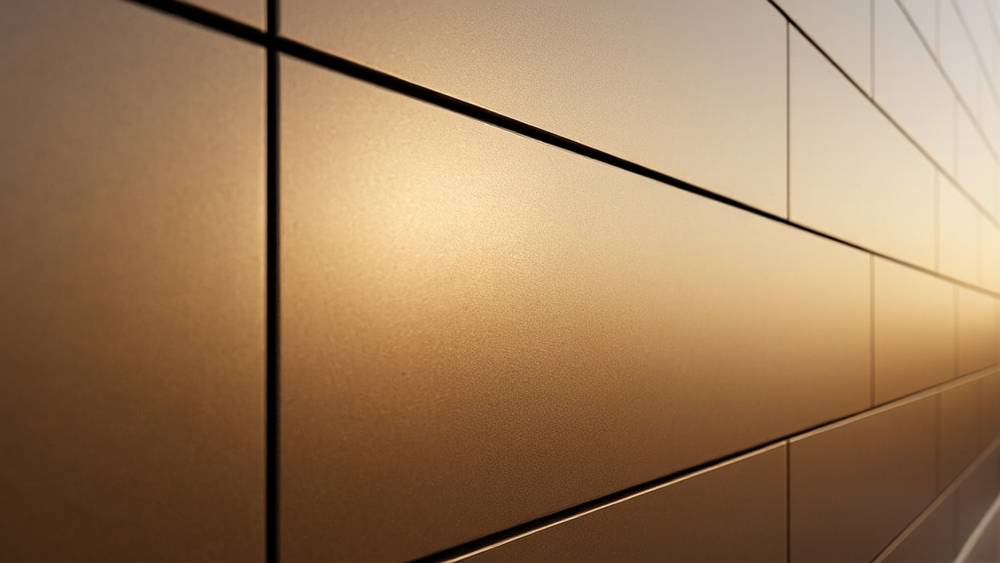
Anodized aluminum has been a mainstay in architectural cladding for decades, but specifying it correctly for large-scale solid aluminium panel projects requires understanding the full cost lifecycle—not just the per-square-meter price on a quotation. A procurement manager in Dubai once told me he saved 12% upfront by switching from PVDF-coated solid panels to anodized aluminum sheets on a 6,000 m² office tower, only to face a $47,000 rectification bill two years later when inconsistent colour batches became visible under raking sunlight. That story captures the central tension of this specification decision: anodized aluminum delivers unmatched surface hardness, metallic depth, and UV stability, yet its cost structure differs fundamentally from organic coating systems in ways that catch even experienced contractors off guard. This article dissects the real cost drivers behind anodized aluminum cladding—from alloy selection and anodizing type to batch matching, fabrication waste, and long-term maintenance—so you can build accurate budgets and avoid the financial traps that turn a competitively bid project into a margin-eroding headache.
Why Anodized Aluminum Cladding Costs Defy Simple Square-Meter Pricing
Organic coating systems—PVDF, FEVE, polyester powder—follow a relatively linear cost model. You select a paint system, the applicator quotes a price per square meter based on film thickness and colour complexity, and that number scales predictably across your panel area. Anodized aluminum breaks this model. The electrochemical process converts the aluminium surface itself into aluminium oxide, meaning the "finish" is not an applied layer but a transformation of the base metal. This has profound cost implications that ripple through every stage of procurement.
The first and most critical variable is alloy composition. Standard architectural anodizing—typically Type II per AAMA 611—produces consistent, predictable results only on specific alloys. The industry workhorse for anodized aluminum sheet is AA 5005 and AA 6061, but even within these grades, trace elements like iron, silicon, and copper affect oxide layer formation. Alloys with copper content above 0.2% tend to produce a yellowish tint that becomes more pronounced as coating thickness increases. This means you cannot simply take the cheapest 5000-series sheet from inventory and expect uniform anodizing results. Suppliers like Futeng® typically source dedicated anodizing-quality (AQ) billet for architectural projects, which carries a 6-10% raw material premium over standard commercial-grade aluminium.
Then there is the anodizing process itself. Type II architectural anodizing (10-20 microns oxide thickness) costs less than hard anodizing (Type III, 25-100 microns), but the price difference is not linear. Hard anodizing requires higher current density, more aggressive cooling, and longer tank time. A 50-micron hard anodized finish can cost 2.5 to 3 times more per square meter than a 15-micron architectural finish, primarily because the process consumes roughly 2.5× more electricity and reduces throughput in the anodizing line. For reference, a typical architectural anodizing line processing 2.5 m × 1.25 m panels might handle 80-120 panels per shift for Type II but only 30-45 for Type III.
The Batch-Matching Cost That Nobody Quotes Upfront
Here is where anodized aluminum costs diverge most sharply from organic coatings—and where the Dubai example above becomes instructive. PVDF coatings are manufactured to a colour standard (RAL, Pantone, or custom) and can be reordered with reasonable batch-to-batch consistency, typically achieving Delta E values below 1.0 when the same paint manufacturer and application parameters are used. Anodized aluminum does not work this way. The "colour" of an anodized panel is not a pigment but an optical effect created by the oxide layer's thickness and porosity interacting with light.
When you anodize panels in separate batches—even from the same alloy heat and the same anodizing line—subtle variations in tank chemistry, temperature, current distribution, and sealing conditions produce visible colour shifts. The industry standard for acceptable colour variation in architectural anodizing is defined by AAMA 611-14, which allows for some range, but many architects and clients find the permitted variation unacceptable on large, unbroken façades. The practical consequence: if your project requires 2,000 m² of anodized aluminum cladding and the anodizer can only process 600 m² per batch, you need to either accept batch-to-batch variation or pay for "batch matching."
Batch matching means running all panels for a single elevation or visible plane in one continuous production run, often requiring overtime shifts, dedicated tank preparation, and sometimes rejection of panels that drift outside the agreed colour range. Industry data suggests that batch-matching surcharges range from 8% to 18% of the base anodizing cost, depending on the size of the run and the stringency of the colour tolerance. On a $45/m² anodizing cost for 2.5 mm solid aluminium panels, that adds $3.60 to $8.10 per square meter—or $7,200 to $16,200 on a 2,000 m² project. None of this appears in the base anodizing quotation.
The anodizing process converts the aluminium surface itself—there is no separate coating layer to strip and reapply. This means rework costs for colour mismatches are substantially higher than for painted panels, where only the coating needs to be removed.
Alloy Selection and Its Hidden Fabrication Cost Impact
The choice of alloy for anodized aluminum cladding panels affects more than just the oxide layer appearance. It directly influences fabrication costs—cutting, routing, bending, and welding—because different alloys have markedly different machinability and formability characteristics. The table below compares the three most common alloys used for architectural anodized aluminum panels across the cost-relevant parameters.
| Parameter | AA 5005 (AQ Grade) | AA 5052 | AA 6061-T6 |
|---|---|---|---|
| Anodizing Response | Excellent; uniform clear/satin finish | Good; slight warm undertone possible | Moderate; may show yellowish tint at >15 μm |
| Formability (Bend Radius) | 1.0T–1.5T typical | 1.0T–1.5T; excellent for complex folds | 2.0T–3.0T; limited formability in T6 temper |
| Weldability | Good; MIG/TIG with 5356 filler | Good; widely used in welded assemblies | Fair; heat-affected zone softening |
| Raw Material Cost Index | 108–115 | 100 (baseline) | 118–128 |
| Fabrication Cost Impact | Low; standard tooling, predictable springback | Low; excellent punch and shear performance | Higher; increased tool wear, slower feed rates |
| Typical Panel Thickness Range | 2.0–3.0 mm | 2.0–3.0 mm | 2.5–4.0 mm (stiffness-driven) |
| Best Application | Flat panels, rainscreen cladding, interior linings | Perforated panels, complex folded geometries | Structural cladding, high-load soffits |
The cost index figures above represent approximate relative pricing against an AA 5052-H32 baseline of 100. Actual pricing varies by market, mill, and order volume. Note that AA 5005 AQ-grade material—specifically produced with tighter controls on iron and silicon for architectural anodizing—typically commands a 8-15% premium over standard AA 5005. For a project consuming 15 tonnes of 2.5 mm sheet, that translates to approximately $4,800–$9,000 in additional material cost, assuming a base price of $3,800–$4,200 per tonne for standard AA 5005.
Fabricators working with AA 6061-T6 for anodized aluminum panels should budget for roughly 15-20% longer machine time compared to 5005 or 5052, primarily due to reduced cutting speeds and increased tool changes. This alloy also requires careful attention to heat-affected zone (HAZ) softening if welding is involved, which may necessitate localized re-tempering—a cost rarely captured in standard fabrication estimates.
Sealing Quality and the 15-Year Maintenance Cost Divide
The anodizing process does not end when the oxide layer reaches the specified thickness. Sealing—the final step that closes the porous oxide structure—determines how well the finish resists staining, corrosion, and colour shift over decades of exposure. Poor sealing turns a premium architectural finish into a liability.
There are three dominant sealing methods, each with distinct cost and performance profiles. Hot water sealing (boiling deionized water at 96–100°C for 20-30 minutes) is the most economical, adding roughly $1.20–$1.80/m² to the anodizing cost. It hydrates the aluminium oxide to form boehmite, which swells and closes the pores. The result is adequate for interior applications and sheltered exterior conditions but provides only moderate resistance to aggressive environments.
Mid-temperature sealing using nickel acetate or nickel fluoride at 60–80°C costs approximately $2.00–$3.00/m² and delivers superior corrosion resistance. This method is specified in ISO 3210 and is the de facto standard for architectural anodized aluminum in Europe and the Middle East. The nickel salts precipitate within the pores, creating a more durable seal than hot water alone.
Cold sealing with nickel fluoride at room temperature, followed by a hot water aging step, costs $2.50–$3.80/m² and offers the best combination of energy efficiency and long-term durability. It is increasingly specified for coastal and industrial environments where the anodized aluminum surface faces chloride or sulphur dioxide exposure.
The sealing decision has a measurable impact on maintenance costs over a 15-year building lifecycle. Anodized aluminum panels sealed with hot water only in a coastal environment may require cleaning and re-sealing within 7-10 years to address surface staining and incipient pitting. Mid-temperature or cold-sealed panels in the same environment typically maintain their appearance and protective properties for 20+ years with only periodic cleaning. The net present value difference between the cheapest seal and the most durable one, accounting for access equipment, labour, and cleaning chemicals, can exceed $18/m² over 15 years—far more than the $1.50–$2.60/m² upfront sealing cost differential.
Fabrication Waste Rates: Where Anodized Aluminum Hurts More Than PVDF
Every cladding project generates fabrication waste—offcuts, rejected panels, test pieces. What makes anodized aluminum different is that the waste carries the full finishing cost. With PVDF-coated panels, fabricators can often cut blanks from pre-coated sheet, meaning the coating cost applies only to the finished panel area. Anodizing, however, is typically performed on cut-to-size blanks or fabricated panels, so every square meter of scrap carries the full anodizing cost.
Consider a typical solid aluminium cladding project with a 12% fabrication waste rate. On a 3,000 m² project using 2.5 mm AA 5005 sheet with Type II architectural anodizing at $42/m² total finishing cost, the waste translates to 360 m² of scrapped anodized material—$15,120 in finishing cost that ends up in the recycling bin. If the same project used PVDF coating at $38/m² on pre-coated sheet, the coating waste might be only 5-7% due to more efficient nesting, yielding a waste cost of roughly $7,980–$11,100. The $4,000–$7,000 difference is material and should be factored into any cost comparison between anodized aluminum and organic coating systems.
This dynamic also affects panel size optimization. Anodizing tanks have fixed dimensions—commonly 3.0 m × 1.5 m or 4.0 m × 1.5 m in architectural facilities. Panels larger than the tank cannot be anodized in one piece, forcing either mechanical joints or a switch to a larger (and more expensive) anodizing line. PVDF spray lines, by contrast, can handle panels up to 6-8 meters with relative ease. For projects requiring oversized anodized aluminum panels, the cost premium can be 25-40% above standard panel pricing, reflecting both the specialized anodizing capacity and the higher rejection rate on large-format pieces.
Electrolytic Colouring and the Two-Step Cost Premium
Clear (natural) anodized aluminum is the baseline. Architectural projects increasingly specify coloured anodized finishes—bronze, champagne, black, gold—achieved through electrolytic colouring or organic dyeing. The cost implications differ substantially between these methods, and the wrong choice for the application can lead to premature fading.
Electrolytic colouring (two-step process) deposits tin, cobalt, or nickel metal particles at the base of the anodic pores after the oxide layer is formed but before sealing. The metal particles absorb and scatter light, producing colours—most commonly bronze tones from light champagne to dark architectural bronze—that are exceptionally UV-stable because the colourant is metallic, not organic. This process adds $8–$15/m² to the base anodizing cost, with darker tones (requiring higher metal deposition) at the upper end. The colour is integral to the coating and will not fade under UV exposure, making it the correct specification for exterior façades.
Organic dyeing (absorption process) costs less—typically $4–$8/m² above base anodizing—and offers a wider colour gamut including blues, reds, and greens not achievable with electrolytic methods. However, organic dyes have limited UV resistance. AAMA 611 explicitly limits dyed anodized finishes to interior applications or sheltered exterior locations. Specifying a dyed black anodized aluminum panel for an exposed south-facing façade will result in visible fading within 3-7 years, depending on latitude and exposure. The cost of replacing faded panels—including access, removal, and reinstallation—dwarfs the upfront saving.
A further nuance: electrolytically coloured anodized aluminum panels from different production batches, even with identical colour specifications, can exhibit noticeable variation. This is because the colour depends on both the oxide layer thickness and the amount of metal deposited, each of which has its own process tolerance. For critical architectural applications, batch-matching requirements (discussed above) apply to coloured anodizing with equal or greater force. Some specifiers address this by accepting a slightly wider colour range and using architectural detailing—shadow gaps, panel joints, changes in plane—to break up the visual field and mask subtle batch differences.
Coastal and Industrial Environments: When Hard Anodizing Becomes Cost-Effective
Standard Type II architectural anodizing (10-20 μm) performs well in most urban and suburban environments. In coastal zones (within 5 km of breaking surf), industrial areas with SO₂ emissions, or locations with frequent acid rain, the cost calculus shifts toward Type III hard anodizing. The thicker oxide layer (25-100 μm) provides substantially greater resistance to pitting corrosion, particularly from chlorides.
The relevant standard for assessing anodized aluminum durability in these environments is ISO 9223, which classifies atmospheric corrosivity from C1 (very low) to CX (extreme). Type II anodizing is generally suitable for C1-C3 environments. For C4 (coastal with moderate salinity) and above, Type III hard anodizing or Type II with enhanced sealing becomes necessary. The cost comparison is not simply Type II versus Type III, but Type II with potential premature replacement versus Type III with a longer service life.
A practical example: a 4,500 m² anodized aluminum cladding project on a hotel 800 meters from the coastline in Southeast Asia. Type II architectural anodizing with mid-temperature nickel sealing was quoted at $43/m² finished panel cost. Type III hard anodizing (35 μm) with cold sealing was quoted at $68/m²—a $25/m² premium, or $112,500 total. However, the Type II panels in this environment have an expected service life of 12-18 years before visible pitting and staining necessitate refurbishment or replacement. Type III panels in the same location are projected to perform acceptably for 25-35 years. Discounting the refurbishment cost at a conservative 5% annual rate, the net present value favours Type III by approximately $38/m² over a 30-year building lifecycle.
Practical Budgeting Framework for Anodized Aluminum Cladding
Drawing together the variables discussed above, the following framework provides a structured approach to estimating total anodized aluminum cladding costs for solid aluminium panel projects. All figures are indicative and should be validated against current regional pricing from qualified suppliers.
| Cost Component | Type II Clear (Baseline) | Type II Electrolytic Bronze | Type III Hard Clear (35 μm) |
|---|---|---|---|
| AQ-Grade Alloy Sheet (2.5 mm AA 5005) | $28–$34/m² | $28–$34/m² | $30–$36/m² (thicker gauge often required) |
| Anodizing Process (incl. pretreatment) | $18–$24/m² | $28–$38/m² | $38–$52/m² |
| Sealing (mid-temp nickel) | $2.00–$3.00/m² | $2.00–$3.00/m² | $2.50–$3.80/m² (cold seal) |
| Fabrication (cut, rout, fold, weld) | $22–$32/m² | $22–$32/m² | $26–$38/m² (harder surface, more tool wear) |
| Batch Matching Surcharge (if required) | $3.50–$8.00/m² | $5.00–$12.00/m² | $6.00–$14.00/m² |
| Estimated Fabrication Waste (10–14%) | $5.00–$8.50/m² | $6.50–$10.50/m² | $8.00–$13.00/m² |
| Total Installed Panel Cost (indicative) | $78–$110/m² | $92–$130/m² | $110–$157/m² |
These ranges reflect the cumulative effect of decisions made at each stage of specification and procurement. The lower bound assumes a straightforward project with standard panel sizes, no batch matching, and an efficient fabrication layout. The upper bound accounts for complex geometries, stringent colour tolerances, and the waste and rework associated with challenging architectural designs. Projects procured through experienced suppliers—Futeng® being one example of a manufacturer that integrates alloy sourcing, anodizing, and fabrication under a single quality system—tend to land toward the lower end of these ranges because the interfaces between processes are managed internally rather than across multiple subcontractors.
Specifying Anodized Aluminum Without Burning the Budget
The decision to specify anodized aluminum for solid aluminium cladding panels is fundamentally a trade-off between the unmatched aesthetic and durability characteristics of the anodic finish and the more complex, less predictable cost structure compared to organic coatings. The finish itself—hard, integral to the metal, UV-stable, and capable of producing the metallic depth that architects prize—justifies its premium in the right applications. But that premium must be accurately estimated, not discovered during procurement.
The practical steps for cost control are clear. First, engage with your anodizer and fabricator during design development, not after the tender package is issued. The panel sizes, joint details, and colour specifications you lock in at 50% design completion directly determine whether your project fits within standard anodizing tank dimensions and batch sizes. Second, specify the alloy and anodizing type together—AA 5005 AQ-grade with Type II architectural anodizing is a proven combination that avoids the yellowing and consistency problems of higher-copper alloys. Third, budget explicitly for batch matching if your architectural design features large unbroken façades where colour variation will be visible. Fourth, for coastal and industrial projects, run the lifecycle cost comparison between Type II and Type III; the upfront premium for hard anodizing often pays back within 15 years through avoided maintenance and replacement.
Anodized aluminum remains one of the most compelling finishes available for architectural cladding. Its cost structure demands more rigorous specification discipline than PVDF or powder coating, but for projects where metallic aesthetics, surface hardness, and long-term UV stability are non-negotiable, it delivers value that organic coatings cannot match. The key is knowing—and budgeting for—what the base quotation does not tell you.