AS 1530.1 Non Combustible Aluminium Splashbacks Australia for Gas Cooktop Fire Compliance
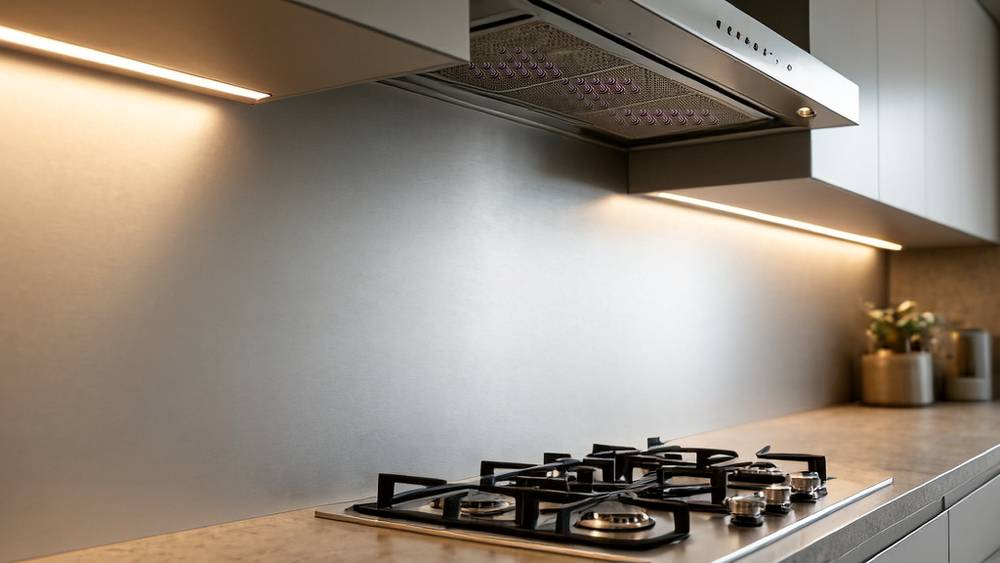
Kitchen and bathroom designers across Australia face a recurring problem: the splashback material that looks perfect in the showroom fails behind a gas cooktop six months later. Glass cracks from thermal shock. Grouted tiles trap grease in crevices that no amount of scrubbing removes. Acrylic panels warp when the wok burner gets going. This is where solid aluminium splashbacks australia suppliers have been quietly solving a problem that the industry has talked around for years — the gap between decorative appeal and genuine thermal durability in the cooking zone.
Unlike aluminium composite panels (ACP) with polyethylene cores that soften under sustained heat, solid aluminium splashbacks use monolithic metal sheet — typically 1.6 mm to 2.0 mm thick — with a powder-coated or sublimated finish that stays dimensionally stable at temperatures far beyond what any domestic or commercial cooktop produces. But not all aluminium splashbacks are equal, and the specifications that matter for fire safety are often the ones least visible on product brochures. This article examines what the Australian regulatory framework actually requires, how solid aluminium performs compared to the alternatives specifiers commonly consider, and what procurement teams should verify before placing an order.
What "Non-Combustible" Actually Means Under the NCC
Manufacturers marketing aluminium splashbacks australia frequently use the term "non-combustible" on their websites and in trade collateral. For a specifier or building certifier, that word carries a very specific meaning under the National Construction Code (NCC) of Australia — and it is a meaning that aluminium composite panels with polymer cores cannot satisfy.
NCC Clause C2D10 references AS 1530.1 as the test method for determining combustibility. A material passes as "non-combustible" when tested in accordance with AS 1530.1 and meets the criteria set out in Clause C2D10(6). Solid aluminium sheet — the base material used in DecoSplash and AluSplash products — is classified as non-combustible under this standard because the aluminium substrate itself does not contribute fuel to a fire. The powder coating applied to the surface, while organic, is applied in such thin films (typically 60–100 microns) that it does not change the non-combustible classification of the overall assembly.
This distinction matters enormously in multi-residential and commercial projects. AS 5113 (the standard for testing fire propagation in external walls) classifies ACP products with PE cores as combustible, and many jurisdictions including NSW and Victoria have tightened regulations around their use following the Lacrosse building fire. But inside kitchens, where splashbacks sit directly behind open-flame gas cooktops, the stakes are just as high — and the NCC's combustibility requirements apply equally to interior wall linings in certain building classes.
AS 1530.1 is the definitive Australian standard for combustibility testing. Solid aluminium meets the criteria. ACP with PE core does not. This single fact should anchor every procurement decision where fire safety compliance is non-negotiable.
Thermal Conductivity: Why Aluminium Works Behind Cooktops
The physics that makes solid aluminium suitable for splashback applications behind heat sources is not about fire resistance alone — it is also about thermal conductivity. Aluminium dissipates heat rapidly across its surface area. When a gas flame licks up the back of a cooktop against the splashback, a glass panel concentrates thermal stress at the point of contact, creating a temperature differential that can exceed 150°C between the flame zone and the surrounding area. Glass cracks. Solid aluminium, with a thermal conductivity of approximately 205–235 W/(m·K), spreads that heat so efficiently that the temperature gradient across the panel stays within safe limits for the powder coat finish — typically rated for continuous service at 120°C with short-term exposure tolerance well above that.
This is not marketing theory. Installers who have replaced cracked glass splashbacks with aluminium panels behind high-output wok burners and commercial-grade cooktops report zero thermal failures over multi-year service periods. The mechanism is straightforward: aluminium's thermal diffusivity prevents the localised hot spots that destroy glass and warp acrylic.
Powder Coating vs Sublimation: Two Finishing Paths with Different Cost Profiles
The aluminium splashback market in Australia has split into two distinct finishing technologies, and the choice between them affects cost, durability, and design flexibility far more than most buyers realise. Understanding the difference helps procurement teams avoid paying for capability they do not need — or worse, specifying a finish that cannot deliver the required aesthetic.
Powder coating — the dominant finish for aluminium splashbacks australia — applies a dry polyester or polyurethane powder electrostatically to the aluminium substrate, then cures it in an oven at 180–200°C. The result is a uniform, hard-wearing surface available in solid colours and subtle metallic effects. Powder-coated aluminium splashbacks from suppliers like AluSplash use this method. The coating thickness typically runs 60–80 microns for interior applications, delivering excellent scratch resistance and chemical resistance against common kitchen cleaners.
Sublimation printing — the technology behind DecoSplash's decorative range — takes a different approach. The aluminium panel first receives a powder coat base layer (usually white or light-coloured), then a printed transfer film carrying the decorative image is applied under heat and pressure. The dyes sublimate — transitioning directly from solid to gas — and penetrate the powder coat's polymer matrix, becoming part of the coating rather than sitting on top of it. This is why sublimated designs resist peeling, scratching, and fading in ways that laminated or printed films cannot match.
| Property | Powder Coat (Solid Colour) | Sublimation (Decorative Print) | Glass Splashback | Tiled Splashback |
|---|---|---|---|---|
| Combustibility (AS 1530.1) | Non-combustible substrate | Non-combustible substrate | Non-combustible | Non-combustible |
| Thermal shock resistance | Excellent — no failure mode | Excellent — no failure mode | Poor — cracks from thermal gradient | Moderate — grout can crack |
| Design flexibility | Solid colours, limited metallics | 100+ designs, custom images | Back-painted, limited range | Very high — tile combinations |
| Joint visibility | Seam joins visible | Seam joins visible | Seamless single panel | Grout lines across surface |
| Cleaning effort | Single wipe, no grout | Single wipe, no grout | Smudges visible, needs glass cleaner | Grout scrubbing required |
| Installed cost (per m², indicative) | $180–$280 AUD | $250–$400 AUD | $300–$500 AUD | $120–$250 AUD |
| Service life expectancy | 15–20 years | 15–20 years | 10–15 years (risk of breakage) | 10–20 years (grout dependent) |
| Replacement complexity | Moderate — remove and replace panel | Moderate — remove and replace panel | High — custom cut, disposal hazard | High — remove tiles, re-waterproof |
The cost difference between powder coat and sublimation is driven primarily by the printing process. Sublimation requires a dedicated transfer film for each design, making it more expensive for small runs but highly competitive at volume. For commercial projects specifying 50+ identical panels, the per-unit cost premium for sublimation narrows considerably. Futeng® aluminium processing lines handle both finishing methods under one roof, which eliminates the logistics cost of shipping panels between separate coating and printing facilities — a factor that can add 8–12% to project costs when the two processes are handled by different vendors.
Panel Thickness, Flatness, and the Problem Nobody Talks About
One of the least discussed but most visible quality issues with aluminium splashbacks australia is oil canning — the wavy distortion that appears on the surface of metal panels under certain lighting conditions. It is a cosmetic defect, not a structural one, but in a kitchen splashback where lighting is often directional and abundant, oil canning can turn an expensive installation into a constant visual irritant.
Oil canning occurs when residual stresses in the aluminium sheet — introduced during the rolling process at the mill — are released unevenly during fabrication or thermal cycling. Thinner sheet (1.2 mm or below) is far more susceptible than thicker material. This is why reputable Australian aluminium splashback systems use a minimum of 1.6 mm thickness for standard panels and 2.0 mm for larger formats exceeding 2400 mm in any dimension.
The Australian Standard AS/NZS 1734 covers aluminium and aluminium alloy flat sheet and coil for general engineering applications, specifying flatness tolerances. For splashback applications, the relevant tolerance class should be no looser than the "standard flatness" defined in AS/NZS 1734, which for 1.6 mm sheet typically allows a deviation of no more than 6 mm over a 2000 mm span when measured on a flat surface. Tighter tolerances are achievable — and should be specified — for high-gloss or dark-colour finishes where oil canning is most visible.
Procurement teams should also be aware that the alloy temper affects oil canning susceptibility. H14 (half-hard) and H24 tempers in the 3003 and 5005 alloys commonly used for splashback applications provide a good balance of formability and resistance to oil canning. Softer tempers like O (annealed) or H22 should be avoided for splashback applications because they lack the stiffness to resist waviness after installation.
Installation Methods and the Substrate Question
How an aluminium splashback is fixed to the wall determines not just how it looks but how it behaves thermally and acoustically over its service life. Three installation methods dominate the Australian market, and each suits a different project profile.
Direct adhesive fixing — using a high-tack neutral-cure silicone or polyurethane construction adhesive applied in vertical beads — is the most common method for residential and light commercial installations. The adhesive must be compatible with both the aluminium substrate and the wall material (plasterboard, fibre cement, or rendered masonry). The critical specification is that the adhesive must remain flexible after curing to accommodate differential thermal expansion between the aluminium panel and the wall substrate. A typical 2400 mm aluminium panel will expand by approximately 1.3 mm over a 40°C temperature swing — not enough to cause buckling if the adhesive allows movement, but enough to shear a rigid epoxy bond.
Mechanical fixing with concealed brackets is preferred for commercial kitchens, healthcare facilities, and any application where panels may need to be removed for access to services behind the wall. This method uses Z-clips or French cleat systems screwed to the substrate, with the panel hanging on the mounted brackets. The advantage is serviceability; the disadvantage is that it requires the wall to be flat within tighter tolerances than adhesive fixing, because any unevenness in the substrate telegraphs through the panel.
Magnetic fixing systems — a newer approach gaining traction in the Australian market — use high-strength rare-earth magnets mounted on the wall substrate with corresponding steel plates bonded to the back of the aluminium panel. This method allows tool-free removal and replacement of panels, which appeals to hospitality fit-outs where splashbacks may be changed between tenancies. The limitation is that magnetic systems add approximately 6–8 mm to the overall build-up, which can interfere with power point clearances and window reveals.
Fire Compliance Documentation: What to Demand from Suppliers
When specifying aluminium splashbacks australia for Class 2–9 buildings (multi-residential, commercial, healthcare, education), the building certifier will require evidence that the splashback system complies with the NCC's fire performance requirements. Too many projects stall at the certification stage because the procurement team accepted a supplier's marketing claim of "non-combustible" without obtaining the actual test reports.
The minimum documentation package should include:
- A test report from a NATA-accredited laboratory demonstrating compliance with AS 1530.1 for the aluminium substrate material
- A certificate of conformance stating the alloy, temper, and thickness of the aluminium sheet supplied
- For powder-coated or sublimated panels, a statement from the coating applicator confirming the coating thickness and chemistry, with evidence that the coating does not compromise the non-combustible classification of the assembly
- If the splashback is being installed behind a gas cooktop, documentation demonstrating compliance with the clearance requirements of AS/NZS 5601.1 (Gas Installations), which specifies minimum distances between cooking appliances and combustible surfaces
One point that frequently trips up specifiers: AS/NZS 5601.1 requires a minimum 200 mm vertical clearance between a gas cooktop burner and any combustible surface. Because solid aluminium is non-combustible under AS 1530.1, this clearance requirement does not apply to aluminium splashbacks — but the certifier will want to see the AS 1530.1 report to confirm this. Glass splashbacks, while also non-combustible, are often treated more cautiously by certifiers due to the thermal breakage risk discussed earlier.
Comparing the Australian Aluminium Splashback Supply Landscape
The Australian market for aluminium splashbacks has matured significantly over the past five years. Three distinct supply models have emerged, and understanding them helps procurement teams match their project requirements to the right supplier type.
Branded system suppliers — DecoSplash (DECO Australia) and AluSplash are the most visible. They offer complete systems including the aluminium panel, finishing, and proprietary installation accessories. The advantage is a fully engineered system with warranty backing. The trade-off is limited ability to customise panel dimensions outside the system's standard sizes, and lead times that are dictated by the supplier's production schedule.
Trade distributors — companies like Trademaster and Nover distribute both branded systems and generic aluminium splashback panels sourced from various manufacturers. They offer faster availability for standard products but less technical support for complex installations.
Direct-from-manufacturer supply — for larger commercial projects or multi-residential developments specifying hundreds of identical panels, sourcing directly from aluminium processing manufacturers can reduce per-unit costs by 15–25% compared to branded system pricing. Manufacturers like Futeng® can produce panels to custom dimensions, alloy specifications, and finish requirements — including matching existing colour schemes through custom powder coat formulations — with lead times that align with construction program milestones rather than retail stock cycles.
The key trade-off is that direct supply requires the project team to manage quality assurance independently — verifying mill certificates, coating thickness measurements, and flatness tolerances — rather than relying on a branded system warranty. For projects with an experienced façade engineer or building consultant on the team, this QA burden is manageable and the cost savings are real.
Cleaning, Maintenance, and the Hospitality Use Case
Commercial kitchens in restaurants, hotels, and aged care facilities represent a growing application for aluminium splashbacks australia, driven largely by council health inspections and fire safety compliance. In these environments, the splashback is not decorative — it is hygiene infrastructure.
Solid aluminium splashbacks eliminate the grout lines that become grease traps in tiled installations. The powder-coated surface resists the aggressive alkaline and solvent-based cleaners used in commercial kitchen sanitation protocols. A study of surface bacterial retention published by the Food Standards Australia New Zealand has highlighted that non-porous, grout-free surfaces reduce bacterial harbourage points compared to grouted tile assemblies — a finding that directly supports the specification of seamless aluminium panels in food preparation areas.
For hospitality fit-outs specifically, the ability to replace a single damaged panel without demolishing the entire splashback wall is a significant operational advantage. Mechanical and magnetic fixing systems enable this; adhesive-fixed panels do not. Project teams specifying for hospitality should factor in this serviceability requirement at the design stage rather than discovering after the first panel gets dented by a stockpot that the entire wall needs to be re-done.
Making the Specification Decision
Choosing an aluminium splashback system for an Australian project comes down to five questions that should be answered before a single panel is ordered:
- What building class applies? Class 2–9 projects require AS 1530.1 documentation. Class 1a (detached houses) do not, but the thermal performance advantages of aluminium behind cooktops apply regardless of building class.
- What is the heat source? Gas cooktops, especially high-output wok burners, create thermal conditions that eliminate glass and acrylic from serious consideration. Induction cooktops are less demanding, but aluminium still outperforms on cleanability.
- What finish is actually needed? Solid powder coat colours cost less and perform identically to sublimated decorative finishes in terms of durability. If the design does not require a stone-look or custom image, do not pay for sublimation capability you will not use.
- How will panels be fixed? Adhesive for permanent residential installations. Mechanical for commercial where service access matters. Magnetic for hospitality where future replacement is likely.
- Who is providing the QA? Branded system with warranty, or direct supply with independent inspection? The answer depends on the project team's technical capability and the scale of the order.
Solid aluminium splashbacks have moved beyond the early-adopter phase in the Australian market. The technology is proven, the regulatory pathway is clear, and the supply chain — from branded systems to direct manufacturer supply — is mature enough to serve projects from single-home renovations to 200-unit apartment towers. The work that remains is making sure the specification documentation matches the marketing claims, because when the building certifier asks for the AS 1530.1 report, a website banner saying "non-combustible" will not be enough.