PVDF Coating Essential for Aluminium Composite Panel Kuching in 4000 mm Rainfall
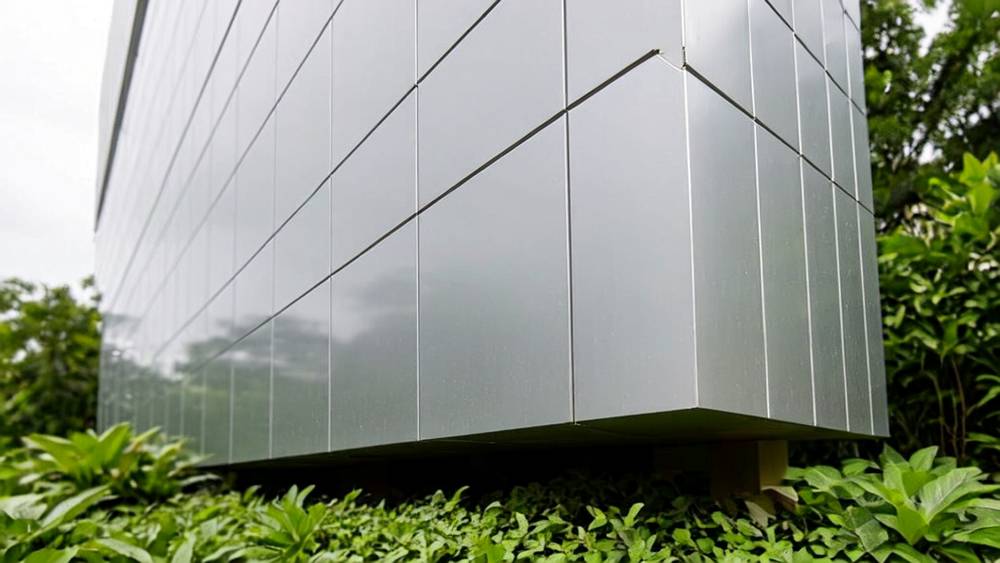
When specifying facade materials for projects in Kuching, one question surfaces repeatedly among contractors and consultants: how does the local climate actually affect the long-term performance of aluminium composite panel kuching installations? Kuching sits within a tropical rainforest climate zone under the Köppen classification, with annual rainfall exceeding 4,000 mm, average relative humidity hovering around 85%, and temperatures ranging from 23°C to 33°C year-round. These are not marginal conditions. The combination of persistent moisture, thermal cycling, and UV exposure creates a distinct set of demands on any exterior cladding system. This article examines what those demands mean for aluminium composite panel kuching specifications, from coating chemistry selection to substrate preparation and joint design, drawing on field data from completed projects across Sarawak.
The Kuching Climate Profile and What It Means for Exterior Panels
Kuching experiences between 250 and 280 rain days per year. The wettest months, December through February, coincide with the northeast monsoon, bringing sustained rainfall that can exceed 500 mm per month. Unlike coastal environments where salt spray is the primary corrosive agent, Kuching's challenge is fundamentally different: constant freshwater exposure combined with intense UV radiation averaging 4.5 to 5.0 kWh/m²/day of solar irradiance.
This dual attack — moisture from above and UV from the sky — means that any aluminium composite panel kuching specification must address two failure modes simultaneously. First, coating degradation from photo-oxidation. Second, moisture ingress at panel joints leading to substrate corrosion or delamination in lower-grade composite products. Contractors who treat Kuching as just another tropical market often learn this distinction the hard way, typically within the first three to five years of service.
The thermal expansion factor is also worth quantifying. With a diurnal temperature swing of roughly 10°C and a coefficient of linear thermal expansion for aluminium at approximately 2.4 × 10⁻⁵ per °C, a 3-metre panel can expand and contract by about 0.72 mm each day. Over thousands of cycles, this movement tests every sealant joint, fastener, and panel edge. The data comes from standard thermal expansion tables published by the Aluminium Association and is consistent with observations from Kuching-based facade contractors.
Coating Selection: Why PVDF Is Not Optional in Kuching
The coating system on an aluminium composite panel or solid aluminium sheet is the first and most critical line of defence. In temperate climates with moderate UV exposure, polyester (PE) coatings can provide acceptable performance for a decade or more. Kuching is a different calculation entirely.
Polyester coatings rely on organic resin binders that undergo chain scission when exposed to high UV doses over extended periods. The result is progressive chalking, colour fade, and gloss reduction. Laboratory accelerated weathering tests under ASTM G154 show that standard PE coatings can lose over 50% of their gloss within 1,500 hours of QUV-B exposure. In Kuching's actual UV environment, this translates to visible degradation within 3 to 5 years.
PVDF (polyvinylidene fluoride) coatings, specifically those meeting AAMA 2605 requirements, use a resin system where approximately 70% of the binder is fluoropolymer. The carbon-fluorine bond is fundamentally more resistant to photodegradation. AAMA 2605-compliant coatings must withstand 4,000 hours of accelerated weathering with a maximum of 5 Delta E colour change and no more than 50% gloss reduction. For aluminium composite panel kuching applications, this is not a premium upgrade — it is the baseline specification for any exterior installation expected to perform beyond five years.
FEVE (fluoroethylene vinyl ether) coatings offer an alternative chemistry that can also meet AAMA 2605 standards. The practical difference in Kuching is marginal; both PVDF and FEVE systems provide the UV resistance required. The more important variable is coating thickness. AAMA 2605 mandates a minimum total dry film thickness of 30 microns for a two-coat system and 40 microns for a three-coat system. Contractors should verify these figures in mill certificates rather than relying on supplier claims.
Panel Core Considerations: The Humidity Factor
While this article focuses on solid aluminium cladding panels, the reality is that many Kuching projects specify aluminium composite panels, and understanding core behaviour under high humidity is essential for anyone involved in aluminium composite panel kuching procurement.
Standard polyethylene (PE) core ACP products absorb negligible moisture themselves, but the bond between the aluminium skin and the core material is the vulnerability. In Kuching's sustained high-humidity environment, moisture can migrate through micro-cracks in edge sealants or around fastener penetrations. Once at the interface, it promotes adhesive bond degradation. The industry quantifies this risk through peel strength testing per ASTM D1781. Fresh PE-core ACP typically achieves peel strengths of 5 to 7 N/mm. After prolonged humidity exposure, values can drop below 2 N/mm if edge sealing is inadequate.
Fire-rated (FR) cores using mineral-filled formulations generally exhibit better moisture resistance at the bond line, though the core material itself can be slightly hygroscopic. The practical recommendation for Kuching projects: specify FR-grade ACP with documented humidity ageing test results, and insist on factory-applied edge sealant on all cut edges. For projects where budget allows, solid aluminium panels from manufacturers such as Futeng® eliminate the core-related moisture risk entirely by using monolithic 2.0 mm to 3.0 mm aluminium sheet with stiffening ribs.
Installation Details That Prevent Premature Failure
The best coating and the best panel material still fail if the installation detailing ignores Kuching's rainfall intensity. Rainwater in Kuching does not just fall vertically. Wind-driven rain, particularly during monsoon thunderstorms with gusts exceeding 50 km/h, can push water upward and sideways across a facade, exploiting any gap in the cladding system.
Three specific detailing decisions deserve attention:
- Joint width and sealant depth. Movement joints in aluminium composite panel kuching installations should be designed with a width-to-depth ratio of approximately 2:1 for sealant, following ASTM C1193 guidelines. A 12 mm wide joint should have sealant depth of roughly 6 mm, with backer rod installed to control depth and prevent three-sided adhesion.
- Drainage and ventilation. Rainscreen principles apply even to systems not marketed as rainscreens. A minimum 20 mm ventilated cavity behind the panels allows pressure equalisation and drainage of any water that bypasses the outer seal. Without this, trapped moisture accelerates every degradation mechanism described above.
- Fastener material compatibility. Aluminium panels in contact with dissimilar metals in a wet environment create galvanic corrosion cells. Stainless steel fasteners (grade 304 as a minimum, 316 for projects within 5 km of the coast or river estuaries) should be isolated from the aluminium panel with nylon washers where direct contact occurs.
Comparative Cost Analysis: PE vs PVDF Coated Panels Over 10 Years
Initial procurement cost comparisons between PE-coated and PVDF-coated panels often drive specification decisions, particularly in cost-sensitive projects. However, a lifecycle analysis tells a different story for aluminium composite panel kuching installations. The table below compares the estimated costs over a 10-year period for a 1,000 m² facade.
| Cost Factor | PE-Coated ACP (1,000 m²) | PVDF-Coated ACP (1,000 m²) |
|---|---|---|
| Initial material and installation cost | RM 180,000 – RM 220,000 | RM 230,000 – RM 280,000 |
| Expected coating service life (Kuching) | 3 – 5 years before visible fading | 15 – 20 years with minimal change |
| Recoating or replacement (Year 5) | RM 80,000 – RM 120,000 | Not required within 10 years |
| Maintenance cleaning (10-year total) | RM 30,000 – RM 45,000 | RM 20,000 – RM 30,000 |
| Total 10-year cost estimate | RM 290,000 – RM 385,000 | RM 250,000 – RM 310,000 |
| Cost per m² per year (10-year) | RM 29 – RM 38.50 | RM 25 – RM 31 |
The figures are indicative and based on contractor interviews and material pricing data from the Sarawak market as of early 2025. The pattern is consistent: the higher upfront cost of PVDF is recovered through avoided recoating expense and reduced maintenance. For solid aluminium panels with PVDF coating, the initial cost is higher still but the 10-year maintenance figure drops further due to the absence of edge-seal degradation concerns.
Local Supply Chain Realities in Kuching and Sarawak
Contractors working on aluminium composite panel kuching projects face a supply chain that is distinct from Peninsular Malaysia. Several factors shape procurement decisions:
Logistics costs add approximately 8% to 15% to panel pricing compared to Klang Valley projects, depending on volume and transport mode. Sea freight from Port Klang to Senari Port in Kuching is the most economical for bulk orders, but requires lead times of 7 to 14 days. Air freight is available for urgent requirements at a significant premium.
Several established distributors maintain stock in Kuching, including Polyron Industries with their Abond brand, which has distribution coverage across Sabah and Sarawak. Polyron's East Malaysia presence means standard colours and sizes can be sourced with shorter lead times than custom orders shipped from the peninsula. Local installation contractors such as EL Alphatech Construction provide supply-and-install packages that simplify procurement for main contractors unfamiliar with the local market.
For projects requiring specific PVDF colours or custom panel sizes, planning lead times of 6 to 8 weeks is prudent. This accounts for coating production, panel fabrication, quality control inspection, and shipping to Kuching.
Regulatory and Standards Landscape
Malaysia's Uniform Building By-Laws (UBBL) and the Sarawak Building Ordinance govern facade construction in Kuching. While neither mandates specific coating standards for aluminium cladding, fire safety requirements under UBBL Part VII and Part VIII are directly relevant to aluminium composite panel kuching specifications.
For buildings exceeding 18 metres in height, UBBL requires cladding materials to achieve a Class 0 surface spread of flame rating when tested to BS 476 Part 6 and Part 7. This effectively rules out standard PE-core ACP for high-rise facades in Kuching and mandates FR-core products or solid aluminium panels. The Grenfell Tower inquiry in the UK, while not directly applicable to Malaysian regulations, has heightened awareness among Kuching-based consultants, and many now specify FR-grade materials regardless of building height as a risk mitigation measure.
The key international standards referenced in Kuching project specifications include:
- AAMA 2605 — Voluntary specification for high-performance organic coatings on aluminium extrusions and panels. Referenced earlier for coating durability.
- ASTM B209 — Standard specification for aluminium and aluminium-alloy sheet and plate. Governs the aluminium skin material in ACP and solid panels.
- BS 8414-2 — Test method for non-loadbearing external cladding systems applied to masonry faces. Increasingly specified for Kuching high-rise projects.
- EN 13501-1 — Fire classification of construction products. Used alongside BS 476 in projects with European consultants.
Contractors should confirm which standards are contractually binding in their specific project, as mixing standards without understanding equivalencies can lead to non-compliance or unnecessary cost.
Common Specification Mistakes in Kuching Projects
Based on project reviews and contractor feedback from the Sarawak market, several specification errors recur with enough frequency to warrant explicit mention:
- Specifying PE coating for exterior walls. This is the single most common error. The initial cost saving of RM 50 to RM 80 per m² is dwarfed by the recoating cost within five years. For any exterior aluminium composite panel kuching application, PVDF to AAMA 2605 should be the minimum.
- Ignoring the cavity. Specifying panels without a ventilated cavity behind them is asking for moisture accumulation. Even 15 mm of air gap with top and bottom ventilation slots makes a measurable difference to long-term performance.
- Underspecifying edge treatment. Factory-cut ACP edges that are not sealed allow moisture to reach the core. On-site cutting during installation compounds the problem unless every cut edge is field-sealed immediately.
- Using the wrong sealant. Neutral-cure silicone sealants are required for aluminium panels. Acetic-cure (acetoxy) silicones release acetic acid during curing, which can corrode aluminium in the confined space of a panel joint.
- Overlooking thermal movement in fixing design. Panels fixed rigidly at all four corners without allowance for thermal movement will eventually show oil-canning, fastener pull-through, or sealant failure. Slotted holes at one end of each panel allow the movement described earlier without transferring stress to the fixing system.
Quality Verification: What to Check Before Installation
For contractors receiving aluminium composite panel kuching deliveries, a systematic incoming inspection protocol prevents installation of non-conforming material. The following checks require minimal equipment and can be completed at the site storage area:
- Coating thickness measurement. A digital coating thickness gauge (Type 2 per SSPC-PA 2) applied to five points per panel should read a minimum of 30 microns for PVDF two-coat systems. Readings below 25 microns warrant rejection or further investigation.
- Colour consistency. Visual inspection under natural daylight against the approved sample. For critical projects, a spectrophotometer reading with Delta E below 1.0 against the reference standard is achievable from quality manufacturers.
- Panel flatness. Place a 2-metre straight edge diagonally across the panel. Deviation greater than 2 mm across 2 metres indicates inadequate tension levelling during production and may result in visible waviness after installation.
- Edge condition. All factory edges should be clean, burr-free, and show evidence of edge sealant application where the core is exposed. Cut edges from fabrication should be smooth with no visible delamination between skin and core.
- Protective film integrity. The factory-applied protective film should be intact with no tears, lifting, or adhesive residue. Film that has been exposed to direct sunlight for extended periods during storage can become difficult to remove, leaving adhesive on the coated surface.
Documenting each inspection with photographs and measurements creates a record that protects the contractor in the event of a performance dispute. This practice is standard for projects following ISO 9001 quality management procedures.
Long-Term Performance: What 10 Years in Kuching Looks Like
A properly specified and installed PVDF-coated aluminium cladding system in Kuching should exhibit the following characteristics after a decade of service: colour change (Delta E) below 3.0 when measured against the original reference; gloss retention above 50% of the original value; no visible corrosion, blistering, or peeling at panel edges; and sealant joints intact with no evidence of adhesion failure or excessive hardening.
Several buildings in Kuching's commercial districts, constructed between 2013 and 2015 with PVDF-coated aluminium composite panels, demonstrate exactly this performance level. Their appearance is largely indistinguishable from newer adjacent structures, while PE-coated installations from the same period show pronounced fading, chalking, and in some cases panel edge lifting.
The lesson is unambiguous: in Kuching's climate, coating specification is not a cosmetic decision. It is the single factor that most directly determines whether a facade will look acceptable in five years or require expensive remediation. For architects, contractors, and building owners involved in aluminium composite panel kuching projects, the evidence supports specifying AAMA 2605-compliant PVDF or FEVE coatings as the minimum standard for any exterior application, combined with proper cavity ventilation, edge sealing, and movement accommodation in the fixing design. The initial premium of 20% to 30% over PE-coated alternatives is recovered well within the first recoating cycle and delivers a facade that performs reliably through Kuching's most demanding weather.