Why Sublimation Temperature Defines 15 Year Timber Aluminium Cladding Performance
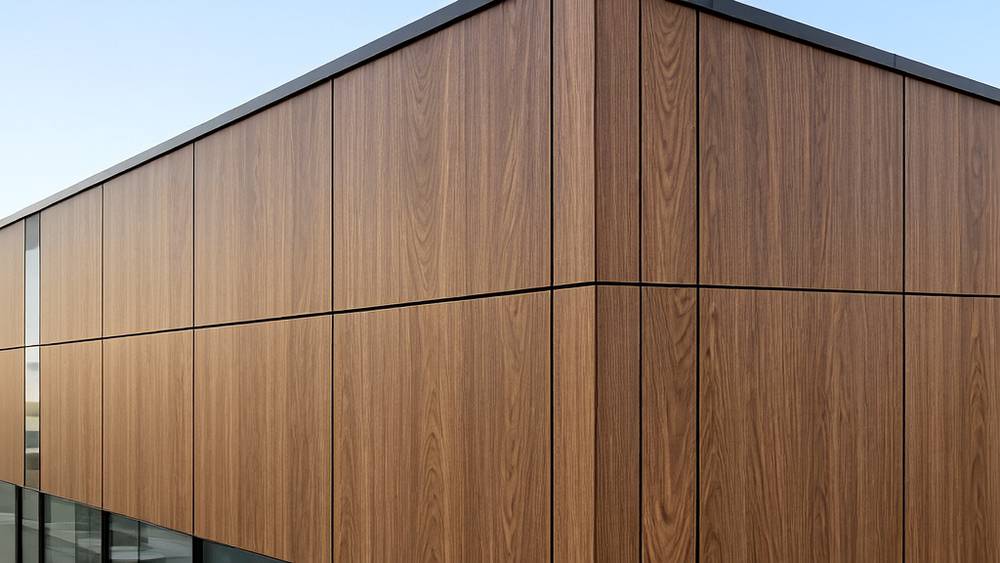
When a project specification calls for the visual warmth of timber on a facade but the fire engineer has flagged combustible materials as unacceptable, the conversation shifts quickly. Architects and contractors across Europe, Australia, and the Middle East are increasingly specifying timber aluminium cladding — solid aluminium panels with a timber-look finish — to resolve this exact tension. The technology has moved fast. Sublimation printing quality, grain pattern registration, and UV-stable clear coats have all matured to a point where visual differentiation from real cedar or larch requires close-range inspection. Yet procurement teams still encounter one recurring problem: two suppliers quoting the same "wood-effect aluminium" at price points that differ by 40-60%. The gap almost always traces back to the sublimation process itself — what temperature the film is transferred at, how the aluminium substrate is pre-treated, and whether the clear protective layer is a single-stage acrylic or a two-component fluoropolymer. This article examines why sublimation process temperature control separates decoration-grade timber aluminium cladding from facade-grade, and what that means for project specifications with a 15-year design life.
How Sublimation Transforms a Solid Aluminium Panel Into Timber Look Cladding
Sublimation is not a coating. It is a dye migration process. A printed transfer film carrying the wood-grain pattern is placed against a pre-powder-coated aluminium substrate. Under heat (typically 180°C to 215°C) and vacuum pressure, the solid dye particles convert directly to gas — no liquid phase — and penetrate the polyester-based powder coat layer. When the panel cools, the dye molecules become trapped inside the polymer matrix, permanently colouring it from within rather than sitting on top. This is why high-quality timber aluminium cladding does not peel like a vinyl wrap. The pattern exists inside the coating, not on it.
The substrate matters enormously. Solid aluminium panels used for timber aluminium cladding are typically 2.0 mm, 2.5 mm, or 3.0 mm thick Al 5005 or Al 3003 alloy, cut to size and pre-treated with a chrome-free conversion coating before the base powder coat is applied. The base coat must be a polyester or super-polyester formulation specifically engineered to accept sublimation dyes — standard architectural polyester powders will not hold the pattern with sufficient resolution. This technical constraint is why some fabricators maintain separate powder lines for wood-effect work versus solid colour architectural panels.
The key distinction: sublimated timber aluminium cladding embeds the wood pattern inside the coating matrix, whereas digital printing or vinyl wraps place it on the surface. Only sublimation offers the scratch resistance required for ground-floor commercial facades.
The Temperature Window That Defines Facade-Grade Quality
Sublimation process temperature is not a single setpoint. It is a time-temperature-pressure profile that must be tuned to the specific powder chemistry, panel gauge, and pattern density. Most polyester-based sublimation powders are designed to accept dye transfer between 195°C and 210°C with a dwell time of 8 to 15 minutes under vacuum. Operating below 190°C results in incomplete dye penetration — the pattern looks washed out on delivery and fades within 2-4 years of UV exposure. Operating above 215°C risks over-curing the powder coat, which closes the polymer surface before dye migration completes. The result is a panel that looks acceptable on the factory floor but develops blotchy fading across the facade within 18 months as the shallow dye layer photodegrades.
This is not theoretical. A 2022 technical bulletin from the Qualicoat association noted that sublimated aluminium cladding submitted for their advanced weathering protocol showed a 300% variation in colour retention (ΔE values) depending on whether the sublimation profile was calibrated to the specific batch of powder used. The best-performing panels held ΔE under 3.0 after 3,000 hours of QUV-B testing. The worst exceeded ΔE 12.0, which is visually catastrophic on a facade.
Why Batch-Level Calibration Separates Serious Suppliers
Powder chemistry varies between production batches. Ambient humidity in the factory affects how the transfer film releases dye. Even the aluminium gauge influences the thermal ramp-up rate during the sublimation cycle. Suppliers who run a single preset time-temperature program for every job will inevitably produce inconsistent results. Those who serve the architectural facade market — including manufacturers like Futeng® who supply timber aluminium cladding to projects in Southeast Asia and the Middle East — typically maintain a quality protocol requiring a small-batch test run with ΔE verification against the reference sample before full production begins. This adds half a day to the lead time and roughly 3-5% to the unit cost. It also eliminates the risk of a facade that needs recladding after three years.
Clear Coat Selection After Sublimation: The Second Critical Decision
Sublimated dye molecules, even when properly embedded, are inherently vulnerable to UV radiation. Without a protective clear topcoat, the pattern will fade — not peel, but gradually bleach — over 5-8 years of direct sun exposure. The industry offers three common pathways after sublimation, and the choice directly determines the service life of timber aluminium cladding.
| Clear Coat Option | Chemistry | Typical Dry Film Thickness | Expected Colour Retention | Relative Cost |
|---|---|---|---|---|
| Single-stage acrylic clear | Thermosetting acrylic | 25-35 μm | 5-7 years (ΔE < 5) | Base (1.0x) |
| Two-component acrylic-urethane | Acrylic-polyurethane 2K | 40-50 μm | 10-12 years (ΔE < 4) | +15-20% |
| PVDF clear (70% resin) | Polyvinylidene fluoride | 30-35 μm | 15-20 years (ΔE < 3) | +35-50% |
PVDF clear coats over sublimation are technically challenging. The PVDF resin requires a bake temperature around 230-250°C, which can degrade the previously embedded dye if the thermal profile is not carefully managed. Only a subset of manufacturers have developed the process control to do this reliably. When it works, the result is timber aluminium cladding that meets the same AAMA 2605 weathering standards as solid-colour PVDF architectural panels — a genuine 20-year facade material. The AAMA 2605 specification requires 10-year South Florida exposure testing with ΔE under 5.0, and PVDF-cleared sublimated panels from qualified applicators can meet this benchmark.
Pattern Depth and Registration: What the Eye Catches First
Beyond chemistry, the visual fidelity of timber aluminium cladding depends on two factors that procurement specifications rarely address: pattern depth of field and panel-to-panel registration. Real timber has three-dimensional grain — light catches the raised grain lines differently than the softer earlywood between them. Sublimated aluminium is physically flat. The best manufacturers compensate with a multi-layer sublimation technique: a base grain layer printed at slightly lower contrast, followed by a second transfer film that adds darker accent grain lines with a slight offset. This creates a perceived depth that single-pass sublimation cannot achieve.
Registration refers to how the pattern aligns across adjacent panels on the facade. Natural timber cladding never repeats — every board is unique. But sublimated timber aluminium cladding is produced from repeat-printed transfer films. If the same 1.2 m film repeat is applied to every panel without variation, the facade will show an obviously artificial repeating pattern visible from street level. Quality-conscious fabricators address this by stocking 4-6 different grain pattern variants per timber species and rotating them randomly during production. Some also offer a "randomised repeat" digital printing option where the transfer film itself is printed with a non-repeating pattern across multiple linear metres, though this adds cost.
Fire Classification: Where Timber Aluminium Cladding Earns Its Specification
One of the primary drivers for specifying timber aluminium cladding over real timber is fire performance. Solid aluminium panels are non-combustible (EN 13501-1 Class A1 for the aluminium substrate itself). The powder coat and sublimation dyes contribute negligible organic content — typically under 0.5% by mass. The complete panel system, when tested to EN 13501-1, routinely achieves Class A2-s1,d0 classification, which satisfies the fire safety requirements for buildings over 18 metres in the UK and similar height-restricted applications across Europe and Australia.
This is not the case for real timber cladding, which is classified as combustible (typically Class D or lower unless treated with fire retardants that themselves have durability limitations). Nor is it the case for aluminium composite panels with polyethylene cores, which have been the subject of well-documented fire safety failures. Specifying solid aluminium with a sublimated timber finish eliminates the combustible-core problem entirely while delivering the wood aesthetic the architect wants.
Thermal Movement and Joint Design for Large-Format Timber-Look Panels
Solid aluminium has a coefficient of linear thermal expansion of approximately 24 × 10⁻⁶ per °C. A 3-metre panel subjected to a 60°C temperature swing (winter night to summer sun) will expand and contract by about 4.3 mm. This is manageable with standard architectural joint design, but it becomes a specific concern for timber aluminium cladding because the visual continuity of the wood pattern across the joint gap makes any misalignment immediately obvious.
The recommended approach for large-format timber-look panels is to specify open joints (minimum 10-12 mm) with a dark-coloured backing tray or weather barrier behind. The dark background absorbs shadow depth and makes the joint visually recede, preserving the continuous timber appearance. Closed or silicone-sealed joints are technically possible but require more frequent expansion provisions and carry a higher risk of sealant staining on the timber-look surface over time. The European Aluminium Association publishes detailed thermal movement design guides that apply directly to solid aluminium cladding panel installations.
Cost Structure: Where the Money Goes in Timber Aluminium Cladding
Understanding the cost breakdown helps procurement teams evaluate whether a low quote represents genuine efficiency or corner-cutting. The figures below represent typical ranges for a mid-scale commercial project (500-2,000 m²) with 2.5 mm solid aluminium panels, single-pass sublimation, and acrylic-urethane clear coat.
| Cost Component | Percentage of Total | Key Variables |
|---|---|---|
| Aluminium substrate (coil/sheet) | 25-30% | LME aluminium price, gauge, alloy grade |
| Base powder coating | 8-12% | Polyester vs super-polyester, colour |
| Sublimation transfer film + process | 18-25% | Single vs double-pass, pattern complexity |
| Clear protective topcoat | 10-18% | Acrylic vs PVDF (see table above) |
| Fabrication (cutting, folding, routing) | 15-20% | Panel size, edge returns, perforations |
| Subframe and fixings | 10-15% | Aluminium vs steel, cavity depth |
| Logistics and site handling | 5-8% | Distance, panel size, packaging spec |
A facade-grade timber aluminium cladding system with PVDF clear coat and double-pass sublimation will typically land 50-70% above the base acrylic-clear, single-pass option. The cost difference is almost entirely in the clear coat chemistry and the additional process time. For projects where the facade must perform for 15+ years without visible fading — hospitals, university buildings, corporate headquarters — the PVDF route is the defensible engineering choice. For interior applications or sheltered exterior soffits, the acrylic-urethane option provides adequate durability at a more accessible price point.
Specimen Specification Language for Architects
Architects writing specifications for timber aluminium cladding often default to vague language — "wood-effect aluminium cladding to match architect's sample" — which gives the contractor wide latitude to source the cheapest available product. A tighter specification protects the design intent. Key clauses to include:
- Substrate: Solid aluminium sheet, Al 5005 or Al 3003, minimum 2.5 mm thickness, chromate-free pre-treatment to EN 12487.
- Base coat: Super-polyester powder coat, 60-80 μm dry film thickness, specifically formulated for sublimation dye acceptance.
- Sublimation process: Vacuum-assisted thermal dye transfer at calibrated time-temperature profile. Supplier to provide batch-specific ΔE test report against reference sample prior to production.
- Clear coat: Two-component acrylic-urethane (minimum) or PVDF clear (70% resin), with UV absorber and hindered amine light stabiliser (HALS) package.
- Pattern: Minimum 4 grain pattern variants per timber species; panels to be installed in randomised sequence.
- Fire classification: Complete panel assembly tested to EN 13501-1, minimum Class A2-s1,d0.
- Weathering warranty: 15-year film integrity and colour retention warranty (ΔE under 5.0 per ISO 2810 natural weathering or equivalent accelerated test).
These clauses draw from established standards including ISO 2810 for natural weathering of coatings and the Qualicoat specifications for architectural powder coating. They are enforceable, testable, and understood by competent facade contractors.
Common Failure Modes That Trace Back to Sublimation Process Quality
When timber aluminium cladding fails prematurely on a facade, the investigation almost always points to one of three root causes, all connected to the sublimation and coating process:
- Pattern fading (UV bleaching): Inadequate clear coat thickness or missing UV stabiliser package. The dye itself photodegrades. This is the most common failure, typically appearing on south-facing and west-facing elevations after 3-6 years. Once the dye has bleached, there is no remedial treatment — the panels must be replaced.
- Blotchy discolouration: Non-uniform dye penetration caused by inconsistent sublimation temperature across the panel surface. Often seen near folded edges where the metal gauge is effectively doubled and the thermal mass differs from the flat field of the panel. Properly calibrated vacuum sublimation beds with zoned heating minimise this.
- Clear coat delamination: Poor intercoat adhesion between the sublimated dye layer and the clear topcoat. This occurs when the sublimation process leaves residual dye on the surface (incomplete penetration) or when the clear coat is applied outside its specified recoat window. The failure appears as peeling or flaking of the clear layer, exposing the now-unprotected dye beneath.
Each of these failure modes is preventable through process control — but none of them is visible on a freshly delivered panel. They only manifest after months or years of environmental exposure. This is why the batch-level quality documentation matters more than the showroom sample.
Making the Right Procurement Decision for Long-Life Facades
Timber aluminium cladding occupies a unique position in the facade market: it solves a genuine architectural problem (achieving timber aesthetics without combustible materials or maintenance liability) but the product category spans an enormous quality range. The visual similarity between a decoration-grade panel and a facade-grade panel at the point of delivery masks differences in process engineering that determine whether the facade will still look as specified in 2035.
The three questions procurement teams should ask every supplier are straightforward. First, what is the calibrated sublimation temperature range for your specific powder system, and do you run batch-level ΔE verification before production? Second, what clear coat chemistry are you proposing, and can you provide weathering test data for the complete sublimation-plus-clear-coat system (not just the clear coat alone)? Third, how many grain pattern variants do you stock per timber species, and can you demonstrate randomised panel sequencing on a previous project?
Suppliers who answer these questions with specific data rather than generic assurances are the ones who understand the difference between decorating a panel and engineering a facade system. The timber aluminium cladding market is maturing, and project specifications are rightly becoming more demanding. The technology itself — solid aluminium, sublimated timber finish, UV-stable clear coat — is proven. The variable is the process discipline behind it.