Harga Perforated Plate What 30 Percent Open Area Does to Your Cladding Budget
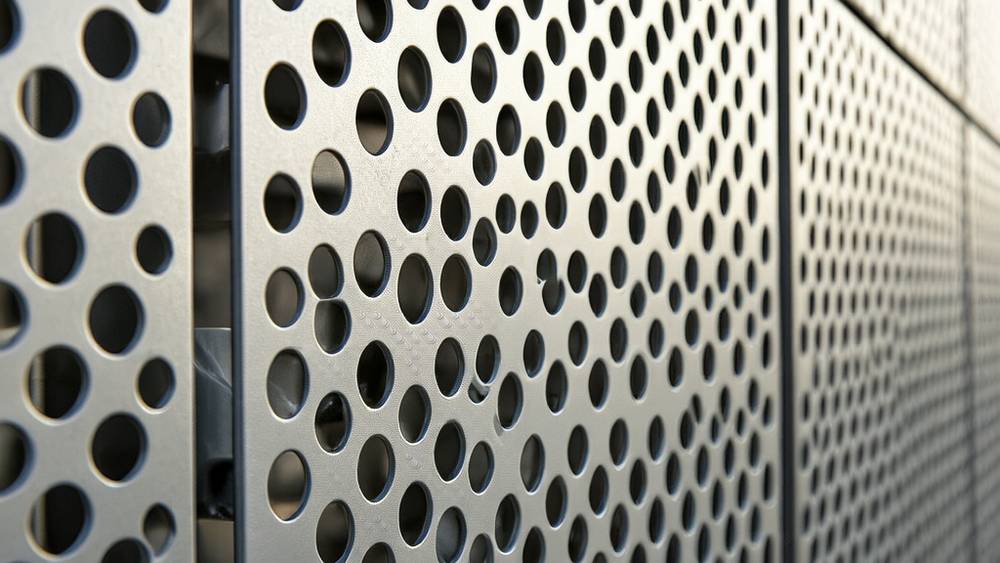
When procurement managers across Southeast Asia search for "harga perforated plate," the search results paint a fragmented picture. E-commerce platforms like Tokopedia and Shopee list perforated steel sheets at consumer-facing prices, while industrial suppliers on Indotrading and SMS Perkasa quote by the kilogram with SNI certification stamps. The gap between a Rp 85,000 decorative panel and a Rp 2.4 million architectural-grade perforated aluminium sheet isn't just about material thickness. It's about whether that perforated plate will hold its shape after five years of tropical rain, salt spray, and thermal cycling on a building facade. This article unpacks what drives the real cost of perforated solid aluminium panels for commercial cladding applications, mapping the variables that turn a commodity "harga perforated plate" into a project-specific line item that structural engineers and quantity surveyors can actually verify.
The Perforated Plate Price Paradox in Indonesian Procurement
Type "harga perforated plate" into any Indonesian e-commerce search bar and you'll get thousands of results. Most listings show mild steel or galvanized sheets with circular hole patterns, priced between Rp 60,000 and Rp 350,000 per piece depending on dimensions. These products serve filtration, screening, and light industrial applications. They are not architectural cladding materials.
The confusion starts there. A general contractor searching for cladding-grade perforated aluminium encounters the same keyword pool but an entirely different product category. Architectural perforated solid aluminium panels — typically 2.0 mm to 3.0 mm thick, with PVDF or FEVE coating systems, fabricated to specific open-area ratios and edge details — start at roughly Rp 1.2 million per square meter and can exceed Rp 3.8 million for complex patterns with high open-area percentages. The price gap exists because the two product categories share a keyword but diverge on every technical parameter that matters.
Steel perforated sheets dominate the "harga perforated plate" search landscape because Indonesia's domestic steel industry produces them at scale. Krakatau Steel and local cold-rolling mills feed a supply chain that keeps raw material costs low. Aluminium, by contrast, relies heavily on imported ingot and rolling capacity concentrated in China, the Middle East, and Australia. When a Jakarta-based fabricator quotes perforated aluminium cladding, the base metal cost alone reflects LME aluminium pricing plus import duties, freight, and currency volatility between IDR and USD.
What Actually Determines Architectural Perforated Aluminium Pricing
1. Alloy Grade and Temper
Not all aluminium is equal when perforated. The alloy selection for solid aluminium cladding panels carrying a perforation pattern directly affects both fabrication cost and long-term performance. 3003-H14 alloy remains the workhorse for architectural perforated panels — it offers good formability during the punching process without excessive tool wear, and its corrosion resistance suits most tropical and urban environments.
For coastal projects in places like Bali, Surabaya, or Manado, 5052-H32 alloy becomes necessary. Its magnesium content provides superior resistance to chloride-induced pitting. The alloy itself costs 18-25% more than 3003 at the mill level, and the punching operation runs slower because 5052 work-hardens more aggressively. These two factors compound: higher raw material cost plus higher fabrication cost per square meter.
For reference, the relevant standards are ASTM B209 for aluminium sheet and plate specifications, and EN 485 for European projects. A mill certificate confirming alloy chemistry and temper should accompany every batch. Panels fabricated from non-certified remelt scrap — a recurring issue in price-driven procurement — may look identical at installation but develop premature perforation-edge corrosion within 2-3 years.
Procurement Note: Always request the mill test certificate (MTC) with the alloy designation explicitly stated. A "harga perforated plate" quote that seems 30% below market almost certainly comes from uncertified material.
2. Hole Pattern, Open Area Ratio, and Punching Economics
The hole pattern on a perforated aluminium cladding panel is not just an aesthetic choice — it's the single largest cost driver in fabrication. A 25% open area with staggered 6 mm round holes on 10 mm pitch is a high-volume, standard-tooling job that most Indonesian perforating shops can run efficiently. The tooling exists, the CNC punch press programs are proven, and scrap rates are predictable.
Move to a 40% open area with 3 mm round holes, and the economics shift dramatically. More holes per square meter means longer machine time, faster tool wear, and higher risk of sheet distortion during punching. The panel may require intermediate stress-relief steps. For slot patterns or custom-shaped perforations, dedicated tooling must be manufactured — a one-time cost of Rp 15-50 million depending on complexity, amortized across the project square footage.
The relationship between open area and panel flatness is poorly understood by many specifiers. As open area increases beyond 30%, the residual metal between perforations acts like a network of narrow ribs. Thermal expansion stresses concentrate in these ribs. A solid aluminium panel at 2.5 mm thickness behaves predictably under thermal load; the same panel with 45% open area may buckle if the perimeter framing doesn't account for reduced panel stiffness. This engineering reality means that higher open-area panels sometimes require thicker starting material — a 3.0 mm sheet instead of 2.5 mm — which adds 20% to raw material weight and cost.
| Open Area % | Typical Hole Pattern | Tooling Status | Relative Fabrication Cost | Recommended Min. Thickness |
|---|---|---|---|---|
| 10–20% | Round Ø8–12 mm, straight pitch | Standard tooling | 1.0x (baseline) | 2.0 mm (3003-H14) |
| 20–30% | Round Ø5–8 mm, staggered 60° | Standard tooling | 1.1–1.3x | 2.0–2.5 mm (3003-H14) |
| 30–40% | Round Ø3–6 mm, staggered | Standard or semi-custom | 1.4–1.8x | 2.5 mm (3003 or 5052) |
| 40–50% | Round Ø2–4 mm or custom slots | Custom tooling likely | 1.8–2.5x | 2.5–3.0 mm (5052-H32) |
| Above 50% | Custom shapes, variable pitch | Custom tooling required | 2.5–4.0x | 3.0 mm minimum, engineering review |
3. Coating Systems and the Tropical Durability Question
Uncoated perforated aluminium has almost no place in architectural cladding. The perforation edges expose bare metal that will oxidize within weeks in humid conditions. A proper coating system must cover not just the panel face but also the interior walls of every perforation hole — a technical challenge that separates architectural-grade finishing from industrial dip-coating.
PVDF (polyvinylidene fluoride) coatings meeting AAMA 2605 specifications remain the benchmark. The standard requires a minimum 70% PVDF resin content in the colour coat, with total dry film thickness of 30-40 microns across a primer, colour, and clear coat system. For perforated panels, the spray application must achieve adequate coverage inside the holes. This typically requires multiple passes at varying angles and may necessitate manual touch-up for dense perforation patterns.
FEVE (fluoroethylene vinyl ether) coatings offer an alternative with higher gloss retention and the ability to cure at room temperature, which reduces energy cost in the finishing process. The choice between PVDF and FEVE for a given project depends on the specifier's priorities: PVDF has a longer track record (50+ years of architectural use), while FEVE offers brighter colour possibilities and comparable weathering performance per AAMA 2605 testing.
For Indonesian projects, the coating specification must also account for fungal growth. In shaded areas of a perforated facade — behind the panel where airflow is restricted — condensation can persist for hours after sunrise. A coating with anti-fungal additives, or a specification that includes periodic cleaning access, prevents the black spotting that degrades facade appearance within 2-3 years in tropical climates.
Reading Between the Lines of an Indonesian Perforated Plate Quote
When a supplier responds to a "harga perforated plate" inquiry with a per-square-meter or per-sheet price, the number alone is meaningless without understanding what's included — and what's deliberately excluded. Experienced quantity surveyors in the region know to probe for these line items:
Sheet Size and Yield Optimization
Standard aluminium coil width from major mills is 1,250 mm or 1,500 mm. A panel design that calls for 1,350 mm width forces the fabricator to use 1,500 mm coil, generating 150 mm of trim waste on every sheet. That's 10% material waste built into the price. Multiply across 2,000 square meters of facade, and the client pays for 200 square meters of aluminium that goes straight to the recycler. Smart panel dimensioning to standard coil widths is one of the simplest cost-control measures available to the design team — and it costs nothing to implement at the shop-drawing stage.
Edge Treatment and Perimeter Framing
Perforated panels used as rainscreen cladding elements typically require folded returns (20-30 mm) along all four edges to provide attachment flanges and panel stiffness. The folding operation on perforated sheet carries a risk of cracking along the fold line if the perforation pattern extends too close to the bend radius. A common fabrication rule: maintain at least 1.5x material thickness between the nearest hole edge and the bend tangent line. Violating this rule produces micro-cracks that propagate under wind-induced vibration.
Some suppliers quote "harga perforated plate" as a flat sheet price, then add separate charges for shearing, folding, corner welding, and attachment clip installation. Others bundle everything into a fabricated panel price. Comparing quotes requires normalizing to the same scope of work — otherwise, a seemingly cheaper per-sheet price masks higher total installed cost.
Certification and Traceability
Projects funded by international development banks or designed by global architecture firms increasingly require full material traceability. This means each perforated panel must be traceable back to a specific mill heat number, with corresponding chemical analysis and mechanical property test reports. Indonesian suppliers serving the domestic market do not always maintain this documentation as standard practice. Requesting it typically adds 5-8% to the unit price, reflecting the administrative overhead and the supplier's commitment to stocking certified rather than commodity-grade material.
The SNI (Standar Nasional Indonesia) mark provides a baseline quality assurance for steel products, but for aluminium cladding, the relevant international standards — ASTM B209 for sheet, AAMA 2605 for coating — carry more weight with international specifiers. A supplier who can provide both SNI and ASTM documentation demonstrates the dual-market capability that serious cladding projects require.
Logistics and the Hidden Cost of Geographic Distance
Indonesia's archipelagic geography adds a logistics layer that few "harga perforated plate" search results address. A perforated aluminium panel fabricated in Cikarang (West Java) for a project in Medan (North Sumatra) travels roughly 1,500 km by truck and ferry. For a project in Jayapura (Papua), the distance exceeds 4,000 km with multiple transshipment points.
Perforated panels present specific shipping challenges. The open-area pattern means they cannot be stacked as densely as solid sheets without risking inter-panel abrasion. Protective interleaving — typically polyethylene film or kraft paper — must be placed between every panel in the stack. For panels with PVDF coating, the interleaving material must be non-abrasive and must not transfer plasticizer to the coating surface during prolonged contact in hot container conditions.
A container loaded with perforated aluminium cladding typically achieves 60-70% of the square-meter density of a solid-panel shipment. The freight cost per square meter delivered to site is correspondingly higher. For remote project locations, logistics can add 15-25% to the ex-works panel price. This factor alone sometimes makes locally sourced steel perforated sheet — despite its shorter lifespan and higher maintenance burden — appear cheaper on an initial procurement basis, a false economy that project owners discover years later when replacement costs hit.
Real Project Cost Structuring: What a Facade Budget Should Reflect
To ground the "harga perforated plate" discussion in project reality, consider a mid-rise commercial building in Jakarta requiring 800 square meters of perforated aluminium rainscreen cladding. The specification: 2.5 mm 3003-H14 solid aluminium, 30% open area with staggered Ø6 mm round holes, PVDF coating in a custom grey, panels fabricated to 1,200 mm × 2,400 mm nominal with 25 mm folded returns and extruded aluminium clip attachment system.
A realistic cost breakdown, based on Q4 2025 Indonesian market conditions with a capable architectural metal fabricator, would allocate roughly:
- Aluminium sheet (mill-finish, certified 3003-H14): 30-35% of total panel cost — reflecting LME aluminium at approximately USD 2,500/tonne plus rolling, import, and local distribution margins.
- Perforation and fabrication: 25-30% — covering CNC punching, shearing, folding, corner welding, clip attachment, and edge dressing.
- PVDF coating (AAMA 2605 compliant): 20-25% — including pretreatment (chrome or chrome-free conversion coating), primer, colour coat, and clear coat application, with quality control on hole-edge coverage.
- Packaging, documentation, and logistics to site: 10-15% — interleaving, crating or palletizing, mill certificates, delivery within Jabodetabek.
- Supplier margin and contingency: 5-10% — covering warranty reserves, minor site adjustments, and project management overhead.
This yields a total installed panel cost in the range of Rp 2.0–2.8 million per square meter, depending on exact pattern complexity, coating colour (metallic and bright colours cost more), and project-specific documentation requirements. The figures are indicative, not quotable — every project needs its own detailed takeoff — but they establish a realistic order of magnitude that procurement teams can use to validate or challenge supplier quotes.
For projects requiring larger volumes or specialized patterns, suppliers like Futeng® with dedicated architectural aluminium production lines can offer consistent quality across thousands of square meters, though the logistics of importing from China-based fabricators must be weighed against the convenience of local Indonesian suppliers who understand domestic SNI requirements and site conditions.
Common Specification Mistakes That Inflate Perforated Panel Costs
Years of reviewing cladding specifications for Southeast Asian projects reveal patterns in how well-intentioned design decisions drive unnecessary cost into perforated aluminium packages. Three recurring issues stand out:
Over-specifying open area. A 35% open area and a 45% open area may look similar in a rendering, but the latter requires heavier gauge material, slower punching speeds, and more complex perimeter framing to maintain panel flatness. Unless the higher open area serves a specific performance requirement — daylight transmission, natural ventilation, acoustic absorption — dialing it back to the 25-35% range saves money without compromising the architectural intent.
Specifying non-standard hole diameters. Perforating tooling is manufactured in standard increments. A 5.0 mm round punch is a stock item at every perforating shop; a 5.3 mm punch is a custom order that adds tooling cost and lead time. The visual difference is imperceptible at facade viewing distances. Standardizing on commonly available hole sizes — 3, 4, 5, 6, 8, 10 mm — keeps the project in the efficient zone of every fabricator's capability.
Ignoring sheet size optimization. This point deserves repetition. A 1,220 mm panel width on 1,250 mm coil leaves 30 mm of trim — negligible. A 1,310 mm panel on 1,250 mm coil forces the fabricator to use 1,500 mm coil, wasting 190 mm per sheet (12.7% scrap). On a project with 1,500 square meters of perforated cladding, that scrap represents nearly 200 square meters of paid-but-unused aluminium. Coordinating panel dimensions with available coil widths during design development is the single most cost-effective decision the architect and facade engineer can make.
The Aluminum Association's design resources and the American Welding Society's D1.2 structural welding code for aluminium provide authoritative references for engineers detailing perforated panel systems. These documents, together with project-specific wind tunnel data where available, form the technical backbone of a defensible specification.
Where the Indonesian Market Is Heading
The "harga perforated plate" conversation in Indonesia is slowly maturing beyond commodity pricing toward value-based procurement. Three trends are accelerating this shift.
First, green building certification programs — particularly GREENSHIP in Indonesia and LEED for internationally financed projects — are driving demand for perforated aluminium facades as passive shading devices. A properly designed perforated screen can reduce solar heat gain by 40-60% while maintaining views and daylight access, directly impacting HVAC energy loads. The energy savings over a building's lifetime dwarf the incremental cost of architectural-grade perforated aluminium over basic steel mesh.
Second, the growth of data center construction across Southeast Asia is creating demand for perforated aluminium cladding with specific acoustic and ventilation performance characteristics. These projects have demanding technical specifications and budgets that support proper material selection. The perforated panel serves as both architectural finish and functional element in cooling system air paths.
Third, Indonesian fabricators are investing in CNC punching and laser cutting capacity that narrows the quality gap with imported panels. A domestically fabricated perforated aluminium panel that meets ASTM and AAMA standards, with full traceability, can now compete on quality while offering logistics advantages for projects within Indonesia. The "harga perforated plate" quote from a qualified local fabricator increasingly represents genuine value rather than a compromise.
The procurement lesson is straightforward: the price of perforated aluminium cladding is not a number to be minimized but a function of the performance specification to be met. When the alloy, coating, pattern, and certification requirements are clearly defined, the "harga perforated plate" becomes a verifiable line item rather than a gamble. The projects that get this right are the ones where the quantity surveyor and the facade engineer sit in the same room during procurement, not the ones where the cheapest online listing sets the budget benchmark.