Why NACA TN 259 Alclad Still Defines Coastal Grade Clad Aluminium Panels
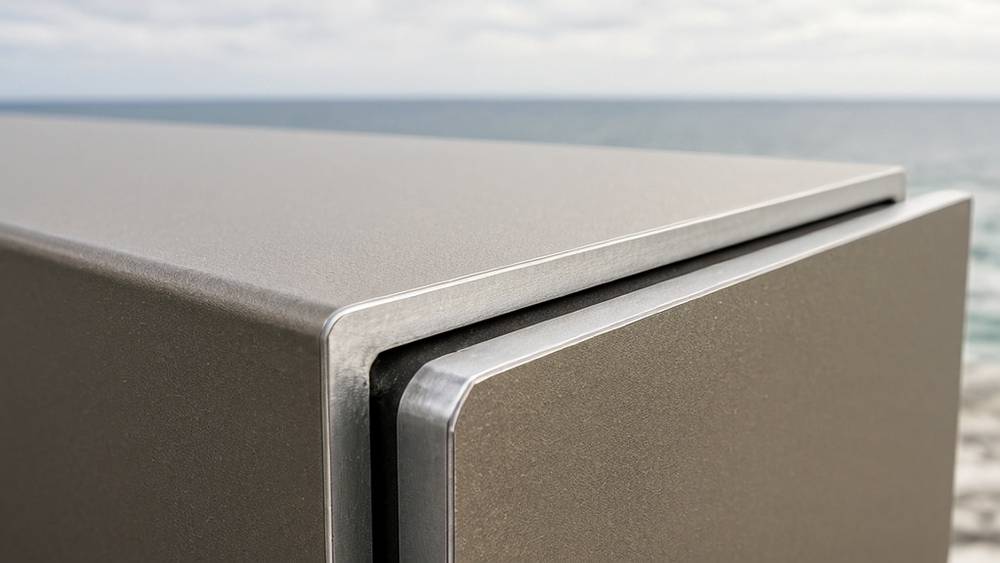
When a procurement manager for a coastal infrastructure project asks about clad aluminium, the conversation almost always narrows to one historical benchmark: Alclad. This is not a generic term. Alclad refers to a specific metallurgical process developed in 1927 and documented in NACA Technical Note 259, where a high-strength aluminium alloy core — typically from the 2000 or 7000 series — is roll-bonded between layers of commercially pure aluminium. The result is a composite sheet that delivers the tensile strength of a heat-treated structural alloy while the surface layer provides corrosion resistance approaching that of pure 1xxx-series metal. For marine environments, chemical processing plants, and high-humidity geographies, this combination matters. It means the difference between a 15-year and a 40-year service life on a curtain wall panel that costs roughly the same per square meter to fabricate and install. What follows is an engineering-focused look at how Alclad and modern clad aluminium sheet systems perform under real corrosive loading, how the standards have evolved since that 1927 NACA memo, and where the technology sits in today's architectural metal supply chain.
What NACA-TN-259 Actually Described in 1927
The August 1927 technical note from the National Advisory Committee for Aeronautics introduced Alclad as "a new corrosion resistant aluminium product which is markedly superior to the present strong alloys." The metallurgical problem it solved was straightforward but had resisted a commercial solution for years. Strong aluminium alloys — particularly those containing copper as a primary alloying element — suffered from intergranular corrosion and pitting when exposed to moisture and salt. Pure aluminium resisted corrosion well but lacked the mechanical properties needed for stressed aircraft skins and structural components.
The NACA document described a roll-bonded sandwich: an alloy core of aluminium-copper-manganese-magnesium composition, clad on both sides with a thin layer of high-purity aluminium. The cladding was not a coating. It was metallurgically bonded at the rolling mill under heat and pressure, creating a continuous crystalline interface that could not delaminate under thermal cycling or mechanical strain. The cladding thickness was specified as a percentage of total sheet thickness — typically 5% per side for sheets above 1.6 mm, and up to 10% per side for thinner gauges. This ratio remains central to modern clad aluminium specifications, including those governed by ASTM B209 and the aluminium Association's Teal Sheets.
What made NACA-TN-259 significant beyond aerospace was its demonstration that corrosion protection could be engineered into the material itself rather than applied as an aftermarket treatment. For today's building envelope engineers, this is the same principle that makes clad aluminium sheet worth specifying over bare 3003 or 5052 alloy in aggressive atmospheric conditions.
The Metallurgical Mechanism: Why the Cladding Layer Works
Understanding the corrosion mechanism in clad aluminium requires looking at galvanic potentials. Copper-bearing aluminium alloys — 2024-T3 being the classic aircraft alloy — have a corrosion potential of approximately -0.60 to -0.68 volts versus a saturated calomel electrode. Commercially pure aluminium (1100 or 1050 alloy) sits around -0.83 volts. In the presence of an electrolyte (rainwater, salt spray, industrial condensate), the cladding layer becomes anodic relative to the core. It corrodes preferentially — sacrificing itself to protect the stronger alloy beneath.
This is the opposite of what happens with a steel substrate under a zinc coating. In galvanized steel, the zinc sacrifices itself to protect the steel. In clad aluminium, the pure aluminium surface corrodes slowly and uniformly across its entire exposed area rather than forming deep pits that can perforate the sheet. Surface corrosion of the cladding layer produces a dull grey patina but does not compromise the structural integrity of the core. Testing documented in MIL-DTL-81706 and ASTM G85 salt spray protocols shows that clad 2024-T3 sheets can withstand over 3,000 hours of cyclic salt fog exposure without core alloy perforation, while unclad 2024-T3 of the same gauge will typically show through-pitting within 500 to 800 hours.
For architectural applications, the practical implication is that a 2.5 mm clad aluminium panel with a 5% cladding ratio has approximately 0.125 mm of pure aluminium on each face. In a C3 or C4 corrosion environment (as defined by ISO 9223), that sacrificial layer can provide decades of protection before the structural core is exposed. The surface may lose its aesthetic quality, which is why PVDF or FEVE coatings are typically applied over the cladding layer — but the substrate remains intact.
Clad vs Unclad Aluminium Sheet: A Decision Framework for Procurement
Procurement teams often reduce the clad versus unclad decision to a simple cost comparison. That approach misses the point. The real question is whether the installed panel will see conditions that trigger pitting corrosion in the core alloy. The table below provides an engineering reference for that decision, drawn from ISO 9223 corrosion classifications and aluminium Association performance data.
| Parameter | Clad Aluminium Sheet (e.g., Alclad 2024-T3) | Unclad 5052-H32 Sheet | Unclad 3003-H14 Sheet |
|---|---|---|---|
| Core alloy tensile strength | 440–470 MPa | 210–260 MPa | 130–170 MPa |
| Surface corrosion resistance (ISO 9223 C4) | Excellent — sacrificial cladding layer | Good — uniform corrosion, no pitting | Moderate — susceptible to pitting in chloride environments |
| Salt spray endurance (ASTM B117, hours to first pit) | 3,000+ hours (cladding protects core) | 1,000–2,000 hours | 500–1,000 hours |
| Typical cladding ratio (% per side) | 5% for sheets ≥1.6 mm; 10% for thinner gauges | N/A | N/A |
| Weldability | Requires care — cladding can contaminate weld pool | Excellent — commonly welded | Very good — widely welded |
| Coating adhesion (PVDF/FEVE) | Similar to 3003 — chromate conversion coating required | Very good with proper pretreatment | Excellent — standard pretreatment sufficient |
| Material cost index (per m², 2.5 mm gauge) | 1.3–1.5× | 1.0× (baseline) | 0.85–0.95× |
| Typical building envelope application | Coastal curtain walls, chemical plant cladding, offshore platform buildings | General commercial facades, inland installations | Interior cladding, soffits, sheltered applications |
The cost premium for clad aluminium sheet — typically 30% to 50% over an equivalent gauge of 5052 — is not trivial. But when weighed against the cost of scaffold access, panel replacement labour, and operational disruption in a working building, the premium often disappears in the lifecycle calculation. A specification consultant working on a Middle Eastern coastal project recently calculated that replacing 200 m² of failed unclad panels on a 30-story tower would cost approximately 12 times the original material premium for specifying Alclad-grade sheet from the outset.
Modern Manufacturing Routes and Standards Compliance
NACA-TN-259 described a roll-bonding process that remains the industry standard, but the control systems around it have evolved considerably. Today's clad aluminium production for architectural applications typically follows ASTM B209, which governs aluminium and aluminium-alloy sheet and plate. The standard includes provisions for alclad sheet products and specifies cladding thickness measurement methods using microscopic examination of polished cross-sections.
There are two dominant manufacturing routes. The first is hot-roll bonding, where a cleaned and brushed alloy core slab is sandwiched between cladding sheets, heated to approximately 450–500°C, and passed through a rolling mill under high reduction ratios. The heat and pressure break oxide layers and create metallic bonding across the interface. The second is explosion welding, as employed by companies like NobelClad under their DetaClad process. Explosion welding uses controlled detonation energy to drive the cladding layer onto the substrate at supersonic speed, creating a metallurgical bond without the heat-affected zone issues that can arise in roll bonding. This method is particularly useful for thick plates and for bonding dissimilar metals — aluminium to steel transition joints being a common application in LNG plant construction and shipbuilding.
For architectural metal fabricators, the relevant quality control checks are: ultrasonic inspection for bond integrity (no delamination allowed beyond 3 mm from sheet edges), microscopic measurement of cladding thickness at the thinnest point (must meet the specified minimum percentage), and tensile testing per ASTM E8 to confirm that the clad composite meets the mechanical property requirements of the core alloy designation.
EN 485 is the European counterpart standard, and it classifies alclad products under specific designations. For example, EN AW-2024 with alclad designation EN AW-1230 indicates a 2024 core with a 1230 pure aluminium cladding layer. Procurement specifications should reference both the core alloy and the cladding alloy to avoid ambiguity. Futeng® supplies clad aluminium panels manufactured to both ASTM and EN standards, with full mill certification and third-party testing available for project-specific qualification requirements.
Where Clad Aluminium Panels Outperform: Three Real-World Scenarios
Coastal Curtain Wall Systems Within 500 Meters of Shoreline
The boundary condition that triggers most clad aluminium specifications is proximity to saltwater. ISO 9223 classifies areas within 500 meters of a coastline as C4 or C5 corrosion environments depending on prevailing wind direction and surf conditions. In these zones, airborne chloride deposition rates can exceed 60 mg/m² per day. Unclad 5052 panels with PVDF coatings will perform adequately for 15–20 years if coating integrity is maintained, but any scratch, fastener penetration, or cut edge exposes the alloy core. Once exposed, chloride-induced pitting can progress at rates of 0.1–0.3 mm per year in the worst case — meaning a 2.5 mm panel could perforate within a decade of coating damage.
Clad aluminium panels change this dynamic. Even if the coating is breached, the pure aluminium cladding layer corrodes uniformly at a much slower rate — typically 0.01–0.03 mm per year in C4 environments. The structural core remains protected. This is why the aluminium Association's Designation System for Aluminum Finishes references clad products specifically for architectural applications in corrosive atmospheres.
Chemical Processing Facility Exterior Envelopes
Industrial buildings in chemical parks face a different corrosion profile: acidic or alkaline fumes, occasional chemical splash, and high humidity combined with trace process chemicals. Sulphuric acid mist from tank vents, for example, attacks aluminium rapidly. Standard 3003 or 5052 panels will show surface etching within months. Clad aluminium with a PVDF or FEVE topcoat provides two layers of defence: the organic coating handles the initial chemical contact, and the pure aluminium cladding layer acts as a secondary barrier that resists the acidic attack better than the copper-bearing core alloy would.
One specification approach used in petrochemical projects is to specify clad 2024-T3 or clad 7075-T6 panels with a minimum 5% cladding thickness and a FEVE-based fluoropolymer coating system tested to ISO 12944-6 for C5-M (marine) or C5-I (industrial) environments. The FEVE chemistry provides better resistance to chemical degradation than standard PVDF, and the cladding layer ensures that any permeation through the coating does not immediately compromise the structural sheet.
Transportation Hubs with De-icing Chemical Exposure
Airport terminal facades, train station canopies, and bus depot cladding face an underappreciated corrosion risk: de-icing chemicals. Potassium acetate and sodium formate runway de-icers, and calcium chloride or magnesium chloride used on platforms and roadways, are highly corrosive to aluminium. Runoff spray from aircraft movement areas can carry these chemicals onto terminal building cladding. The combination of mechanical stress from wind loads and chemical attack creates conditions for stress corrosion cracking in susceptible alloys.
Clad aluminium panels specified with a 7000-series core (for high strength in long-span applications) and a pure aluminium cladding layer address this risk. The cladding provides chemical isolation, while the core delivers the span capability needed for large terminal facade modules. This specification has been used in multiple Middle Eastern and Northern European airport projects where de-icing chemical exposure is a documented operational reality.
Fabrication Considerations: What Changes with Clad Aluminium Sheet
Fabricators accustomed to working with 5052 or 3003 sheet need to adjust their processes for clad aluminium. The cladding layer is soft — typically 1100 or 1050 alloy at 40–60 Brinell hardness compared to 100–120 Brinell for the underlying 2024 core. This means:
- Bending: The softer surface layer is more susceptible to die marking. Tooling should be polished and maintained more frequently. Minimum bend radii for clad sheet are the same as for the core alloy, but fabricators should account for the fact that the cladding layer can exhibit orange-peel surface texture on the tension side of tight-radius bends.
- Routing and cutting: CNC routing of clad panels exposes the core alloy at cut edges. For architectural panels, edge exposure is typically managed by fold-back hems or by specifying that cut edges be sealed with a chromate primer or epoxy edge sealer. This is particularly important for panel perimeters where moisture can wick between the cladding and core if edge sealing is inadequate.
- Welding: Welding clad aluminium requires specific procedures. The pure aluminium cladding can dilute the weld pool, reducing the mechanical properties of the welded joint. Standard practice per AWS D1.2 is to remove the cladding layer from the weld zone by machining or chemical etching before welding, then weld using filler metal matched to the core alloy. Post-weld, the exposed area can be protected with aluminium-rich epoxy coating.
- Pretreatment for coating: The pure aluminium surface responds well to standard chromate conversion coating per MIL-DTL-5541 Type I or the more recent hexavalent-chromium-free alternatives under MIL-DTL-5541 Type II. Adhesion of PVDF and FEVE topcoats to properly pretreated clad surfaces is comparable to 3003, with typical dry film adhesion exceeding 5 MPa in pull-off testing per ASTM D4541.
Explosion-Welded Clad Aluminium: Beyond Sheet into Transition Joints
While roll-bonded clad aluminium sheet dominates architectural applications, explosion welding opens up a different category of clad aluminium products relevant to building engineering: aluminium-to-steel transition joints. These are used where aluminium curtain wall framing must connect to a steel primary structure. Without a transition joint, direct aluminium-to-steel contact in the presence of moisture creates galvanic corrosion, with the aluminium acting as the anode and corroding rapidly.
Explosion-welded transition strips — typically consisting of a layer of pure aluminium, an intermediate layer of commercially pure titanium or a 1000-series aluminium alloy, and a steel backing — are bolted between the aluminium and steel components. The bond is metallurgical, electrically conductive, and leak-tight. NobelClad and similar suppliers produce these transition joints to ASTM B898, which covers reactive and refractory metal clad plate. For high-rise curtain wall projects with steel primary frames, specifying transition joints at every aluminium-to-steel interface is standard practice in corrosion-conscious design, and explosion-welded clad aluminium strips are the preferred solution.
Specifying Clad Aluminium: Key Data Points for the Tender Package
A properly written specification for clad aluminium panels eliminates ambiguity and ensures that all tenderers are pricing the same product. Based on the technical framework above, the following data points should appear in every specification section covering clad aluminium sheet for building envelopes:
- Core alloy designation: Specify per ASTM B209 or EN 485 (e.g., 2024-T3, 7075-T6). Do not accept "clad aluminium" without an alloy designation.
- Cladding alloy: Typically 1050, 1100, or 1230. The cladding alloy should be stated explicitly.
- Cladding thickness ratio: Minimum 4% per side for sheets ≥1.6 mm; 8% minimum for sheets below 1.6 mm, or as agreed with the mill.
- Bond integrity: Ultrasonic testing per ASTM B594 or equivalent, with acceptance criteria stating no unbonded areas exceeding 25 mm in any direction.
- Coating system: Specify pretreatment (chrome or non-chrome conversion coating), primer, and topcoat chemistry (PVDF Kynar 500 or FEVE), including dry film thickness per AAMA 2605 or equivalent.
- Edge treatment: All cut edges to be sealed with a two-part epoxy edge sealer or equivalent system compatible with the specified coating.
- Mill certification: EN 10204 Type 3.1 or 3.2, including chemical analysis of both core and cladding, mechanical properties, and cladding thickness measurement.
The cost of getting these details right in the specification phase is negligible. The cost of discovering during installation that the supplied material does not meet the project's corrosion resistance requirements is enormous — and almost always results in a dispute that delays the programme.
The Supply Chain Reality: Availability and Lead Times
Clad aluminium sheet is not a stock item at most metal service centres. It is typically a mill-order product with minimum order quantities that can range from 500 kg to several tonnes depending on the mill and the specific alloy combination. Lead times for architectural quantities of clad 2024-T3 sheet in 2.0 mm and 2.5 mm gauges are currently in the 8–14 week range from major North American and European mills. Asian mill lead times can be shorter but vary significantly with order book conditions.
This has practical implications for project planning. If clad aluminium is specified, the procurement schedule must account for mill lead time plus fabricator processing time (cutting, bending, welding, coating) plus logistics. A typical sequence is: 14 weeks mill delivery, 6 weeks fabrication and coating, 4 weeks shipping to site — a total of 24 weeks from order placement to panels on site. This compares to roughly 16 weeks for standard 5052 panels sourced from distributor stock. The 8-week difference is real and must be built into the construction programme.
For projects where the corrosion environment genuinely demands clad aluminium, the lead time is a scheduling constraint to be managed, not a reason to downgrade the specification. Alternative strategies include placing the mill order before the main contract is signed (with appropriate commercial protections) or working with suppliers like Futeng® who maintain buffer stocks of clad sheet in commonly specified gauges for repeat project types.
The 1927 NACA Technical Note 259 described a material innovation that solved a specific, well-defined problem: how to combine the strength of a structural aluminium alloy with the corrosion resistance of a pure metal surface. Ninety-plus years later, the same principle applies to building envelope engineering. Clad aluminium is not the right material for every project. For inland commercial buildings in C1 or C2 environments, standard 5052 or 3003 sheet with a quality PVDF coating is entirely adequate. But for coastal installations, chemical plant envelopes, and transportation infrastructure where de-icing chemicals are present, the metallurgical case for specifying clad sheet is backed by decades of corrosion science and operational data. The engineering task is to recognize which environments cross the threshold, and to write specifications that capture the alloy grades, cladding ratios, and quality control tests that ensure the material delivered matches the material intended.