2 0 mm Solid Aluminium Cladding and the Oil Canning Reality UAE Suppliers Must Address
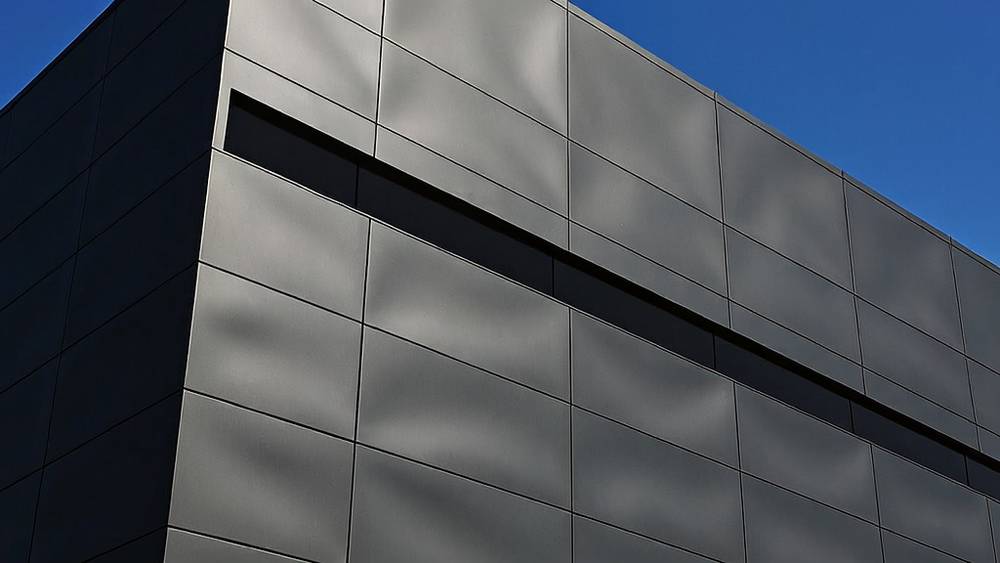
When a facade contractor in Dubai calls a shortlist of aluminium cladding sheet suppliers in uae, the first question is rarely about price per square metre. It is about gauge. Specifically, whether the supplier can deliver 2.0 mm solid aluminium sheets with flatness tolerances tight enough to eliminate the risk of oil canning across a 1,200 mm wide panel under midday Gulf sun. That question separates mills that understand architectural sheet from those that simply stock generic coil. Oil canning — the wavy, pillowed distortion visible on otherwise sound metal panels — remains the single most persistent quality complaint across UAE facade projects. And the root cause almost always traces back to how the aluminium sheet was levelled, cut, and handled before it ever reached the fabricator's brake press.
What Oil Canning Actually Looks Like on a Solid Aluminium Facade
Oil canning is not a structural failure. A panel exhibiting oil canning has not exceeded its yield strength, nor has the building envelope been compromised. What the eye sees is an elastic buckling phenomenon: alternating concave and convex undulations across the panel face, typically appearing as ripples that catch reflected light. On a 2.5 mm solid aluminium rainscreen panel spanning 900 mm between support rails, a deviation of as little as 0.8 mm from the nominal plane can become visible under glancing light. Under direct noon sun in Abu Dhabi or Sharjah, that threshold drops further.
The mechanism is straightforward. Residual stresses introduced during the aluminium rolling process remain locked in the sheet. When the panel is fabricated — cut, routed, folded — those stresses redistribute unevenly. Add thermal expansion from a surface temperature that can hit 85°C on a dark PVDF-coated panel in July, and the sheet deflects between its fixing points. The panel is not breaking. It is simply expressing stresses that were always there.
For architects and facade consultants specifying solid aluminium cladding, the problem is particularly acute because solid sheet — unlike aluminium composite material — has no polyethylene core to dampen these stress waves. A 3.0 mm solid panel is stiffer than a 4.0 mm ACP in bending, but it translates residual stress to the visible face with far less mediation. Getting the specification right at the sourcing stage is everything.
Where Oil Canning Originates: The Mill, Not the Fabricator
Many project teams assume oil canning happens during fabrication. In practice, the die is cast much earlier. The aluminium sheet arriving at a cladding fabricator's facility in Dubai Industrial City or Al Quoz already carries the stress signature of the rolling mill. The critical parameter is how the coil was processed after hot rolling.
Modern aluminium rolling for architectural sheet follows a sequence: hot rolling to approximately 6.0 mm, then cold rolling through multiple passes to achieve the final gauge — typically 2.0, 2.5, or 3.0 mm for solid cladding applications. Each cold-rolling pass introduces work hardening and directional stress. The sheet emerges with a pronounced grain direction and varying residual stress profiles across its width.
The most effective countermeasure is stretcher levelling. A stretcher-levelled sheet has been gripped along both long edges and pulled beyond its yield point — typically 1-2% permanent elongation — which uniformises the internal stress field across the entire width and length. This process is not universal. Many aluminium cladding sheet suppliers in uae source from mills that rely on roller levelling alone, which addresses cross-bow and edge wave but does not equalise through-thickness residual stress. The difference in flatness stability is measurable: stretcher-levelled 5000-series sheet can demonstrate less than 0.4% wave height relative to panel width, compared to 0.8-1.2% for roller-levelled-only material of the same gauge.
"We trace over 70% of site-level oil canning complaints back to sheet that was never stretcher-levelled. The fabricator did nothing wrong. The stress was baked in." — Senior facade engineer, Dubai-based consultancy
Alloy Selection and Temper: The 5000-Series Decision
The alloy grade specified for solid aluminium cladding directly affects oil canning susceptibility. In the GCC market, three alloys dominate:
- AA 5052 (Al-Mg 2.5): The workhorse. Moderate strength (210-260 MPa tensile), excellent corrosion resistance in coastal and industrial atmospheres, and good formability for brake-pressed panel profiles. Available in H32 (strain-hardened and stabilised) or H34 tempers. H32 temper, with its 1/4 hard condition, offers a reasonable compromise between flatness stability and bendability.
- AA 5754 (Al-Mg 3.0): Higher magnesium content than 5052, giving approximately 10-15% greater tensile strength. Preferred for marine-facing facades — think Dubai Marina, Palm Jumeirah, Abu Dhabi Corniche — where salt spray resistance matters. The higher magnesium content slightly increases work-hardening rate during forming, which can amplify residual stress if the sheet is not properly levelled.
- AA 6061 (Al-Mg-Si): A heat-treatable alloy rarely used for flat cladding panels but specified for structurally loaded feature elements. Its T6 temper delivers 310 MPa tensile strength but at the cost of significantly higher springback during folding and greater oil canning risk on large flat areas.
For most solid aluminium cladding applications across the UAE, AA 5052 H32 remains the specification benchmark. The key is not just specifying the alloy on paper but verifying that the supplier's mill source can provide certification tracing the coil through stretcher levelling. Brands like Futeng® have built their architectural sheet supply chain around mills that provide this traceability as standard, which matters when a 40-storey tower facade is on the line.
Panel Geometry: Width, Gauge, and Aspect Ratio Rules
Even perfectly levelled sheet can develop oil canning if the panel geometry pushes beyond practical limits. The relationship between panel width, sheet gauge, and visible flatness is well understood in the curtain wall industry but poorly communicated in supplier catalogues.
The governing principle is the width-to-thickness ratio. For solid aluminium panels with a single-fold perimeter flange (the most common rainscreen configuration), the following empirical limits apply for AA 5052 H32 sheet under UAE ambient conditions:
| Sheet Gauge | Maximum Panel Width (mm) | Width/Thickness Ratio | Oil Canning Risk |
|---|---|---|---|
| 2.0 mm | 800 | 400:1 | Low if stretcher-levelled |
| 2.0 mm | 1,000 | 500:1 | Moderate; stiffening required |
| 2.5 mm | 1,000 | 400:1 | Low if stretcher-levelled |
| 2.5 mm | 1,200 | 480:1 | Moderate; specify stretcher-levelled |
| 3.0 mm | 1,200 | 400:1 | Low |
| 3.0 mm | 1,500 | 500:1 | Moderate; consider ribbed profile |
These are not code-mandated limits. They reflect field experience from UAE projects where panel flatness was assessed under the AAMA 508 standard for optically flat surfaces. A panel with a width-to-thickness ratio exceeding 500:1 can still be used, but the specification should mandate stretcher levelling and ideally require a mock-up panel tested under site-typical fixing conditions before bulk fabrication begins.
The aspect ratio also plays a role. Long, narrow panels (aspect ratio 3:1 or greater) tend to exhibit oil canning as a series of transverse ripples perpendicular to the long axis. Square panels (1:1) distribute stress more evenly and are generally more forgiving, though large-format square panels — say 1,200 mm x 1,200 mm in 2.0 mm — benefit significantly from a rear stiffener bonded or mechanically fixed to the reverse face.
Stiffening Strategies That Work (and Some That Don't)
When panel geometry pushes beyond the comfortable width-to-thickness range, stiffening becomes necessary. The UAE market has seen several approaches, not all equally effective.
Aluminium stiffener ribs bonded with structural adhesive: This is the most common and generally effective method. A 2.0 mm thick aluminium hat-section or flat bar is bonded to the reverse face of the panel using a two-part epoxy or polyurethane structural adhesive. The bond line must be continuous and the adhesive must accommodate differential thermal movement between the stiffener and the panel face — a detail often overlooked. The stiffener spacing should not exceed 400 mm centres for panels above 1,000 mm width.
Mechanically fixed stiffeners with isolation tape: Where project specifications prohibit adhesives — common in some Dubai Municipality-approved systems — stiffeners are riveted or screwed through the panel reverse. A polyethylene or PVC isolation tape between the stiffener and the panel prevents galvanic contact. This method introduces point loads at each fastener, which can create localised dimpling visible from the face side if overtightened.
Return leg depth: The folded return leg around the panel perimeter acts as an integral stiffener. Increasing the return leg depth from the typical 20-25 mm to 35-40 mm significantly increases edge stiffness and reduces centre-panel deflection. This is a zero-cost change that only affects coil utilisation — and it is one of the first details an experienced aluminium cladding sheet supplier in uae will discuss during the design-assist phase.
Approaches to avoid: Lightly embossing or texturing the panel face does not meaningfully reduce oil canning. Nor does specifying a thicker coating. PVDF coatings at 30-35 microns DFT contribute negligible bending stiffness. The solution is mechanical, not cosmetic.
Thermal Effects: Why Gulf Projects Need Different Rules
Much of the published guidance on oil canning originates from North American and European trade associations — the Aluminium Association's Aluminum Design Manual, the AAMA technical information series, and the UK's CWCT standards. These documents assume temperate climate temperature ranges. A panel in London cycles between perhaps -5°C and 35°C. A dark-coloured panel on a Dubai tower cycles between 15°C and 85°C — a 70°C range that is nearly double the European assumption.
The coefficient of thermal expansion for AA 5052 is 23.8 x 10⁻⁶ /°C. A 1,200 mm wide panel subjected to a 70°C temperature rise expands by approximately 2.0 mm. If the panel is restrained at its fixing points — as most rainscreen systems are — that expansion converts to compressive stress in the plane of the sheet. For a 2.0 mm thick panel, the critical buckling stress is proportional to (thickness/width)². At 85°C panel temperature, the induced compressive stress can exceed 30% of the critical buckling stress for a panel with a 500:1 width-to-thickness ratio. That is not failure, but it is the zone where oil canning becomes visible.
This thermal reality means that UAE-spec cladding panels should be designed with either: (a) a width-to-thickness ratio conservative enough to accommodate the full thermal stress range without visible buckling, or (b) fixing systems that permit controlled in-plane movement to relieve thermal compression. Option (b) requires careful detailing of the fixing bracket and is often resisted by contractors concerned about panel rattle under wind load. Option (a) — specifying a thicker sheet or narrower panel — is simpler and more robust.
Supplier Capability: What to Ask Before You Specify
Not all aluminium cladding sheet suppliers in uae are equal in their ability to deliver sheet optimised for oil canning resistance. The following questions separate commodity stockists from architectural sheet specialists:
- Is the sheet stretcher-levelled? Ask for the mill test certificate (MTC) showing the levelling process. If the answer is "roller-levelled" or "tension-levelled," probe further. Tension levelling is not the same as stretcher levelling and addresses different flatness defects.
- What is the flatness tolerance? The industry benchmark for architectural sheet is 0.4% of panel width measured as wave height. For a 1,000 mm panel, that means no more than 4.0 mm deviation from a flat reference plane. Suppliers quoting tighter tolerances — say 0.2% — are usually sourcing from mills with stretcher-levelling capability.
- Can you supply cut-to-size panels rather than full sheets? If the supplier cuts panels from coil on a precision blanking line with in-line levelling, the cut pieces can be flatter than panels sheared from a full sheet that has relaxed after levelling. This matters for project-critical visible areas.
- What alloy and temper do you stock in architectural gauges? If the answer is limited to AA 1100 or AA 3003 in H14 temper, the supplier is serving the signage and general fabrication market, not architectural cladding. Walk away.
- Do you provide a mock-up service? Some established UAE-based suppliers, including Futeng® architectural sheet programmes, can arrange sample panels fabricated to project specifications for flatness assessment before the main order is placed. This is valuable insurance on large projects.
Coating and Oil Canning: The Visual Amplifier
The coating system applied to solid aluminium cladding does not cause oil canning, but it can dramatically affect how visible the distortion becomes. This is a matter of optics, not mechanics.
High-gloss PVDF finishes — typically 70% gloss units or higher measured at 60° — act as a mirror for environmental light. Any deviation from a true plane reflects light at a different angle, creating the characteristic light-dark banding that makes oil canning obvious. A matte finish (25-35 GU) scatters reflected light and can make the same physical distortion far less noticeable. For this reason, many UAE facade specifications now cap gloss at 40 GU for large-format solid aluminium panels, reserving high-gloss finishes for feature elements where the panel dimensions are small enough to control flatness.
Colour also matters. Dark colours — charcoal, bronze, black, deep blue — absorb more solar radiation, reach higher surface temperatures, and therefore experience greater thermal expansion. A black PVDF panel in Dubai can be 15-20°C hotter than a white panel on the same facade at the same time. The difference in thermal expansion between the two is approximately 0.35 mm per metre of panel width — enough to shift a borderline panel from acceptable to visibly distorted.
The interaction between coating colour and oil canning risk should be part of the specification review. A facade design that pairs dark colours with large, thin panels is inviting trouble regardless of the supplier's quality. The specification should either reduce panel dimensions for dark colours, increase gauge, or both.
Site Handling and Fixing: The Last Mile
Even a perfectly flat, stretcher-levelled panel can develop oil canning on site if it is mishandled or incorrectly fixed. Panels stored improperly — leaning at an angle, stacked without interleaving, exposed to direct sun while restrained — can take a permanent set before installation. Panels should be stored flat on purpose-built stillages, protected from direct sunlight, and lifted using suction handling equipment rather than slings that induce bending.
Fixing overtightening is another common site issue. A solid aluminium panel fixed with self-drilling screws or rivets that are torqued beyond the manufacturer's specification will dimple locally around each fastener. As the panel expands and contracts thermally, those localised stress concentrations can propagate into visible undulations across the panel face. The solution is torque-controlled installation tools and clear fixing schedules in the method statement — details that a competent aluminium cladding sheet supplier in uae will include in their technical submittal.
Specifying for Oil Canning Resistance: A Practical Checklist
The following checklist consolidates the key specification decisions that determine whether a solid aluminium cladding panel will remain visually flat over its service life in UAE conditions:
- Specify AA 5052 H32 or AA 5754 H32 sheet, stretcher-levelled, with mill certification
- Limit panel width-to-thickness ratio to 400:1 for standard applications, 500:1 maximum with additional stiffening
- For panels exceeding 1,000 mm width in 2.0 mm gauge, specify rear stiffener ribs at 400 mm centres maximum
- Increase return leg depth to 35 mm minimum for panels above 1,000 mm in any dimension
- Cap gloss level at 40 GU (60° meter) for large-format panels
- For dark colours (LRV below 30), reduce maximum panel dimension by 15% or increase gauge by one step
- Require a project-specific mock-up panel with flatness assessment under representative fixing conditions
- Include handling and storage requirements in the specification, not just the fabrication scope
- Verify that the supplier's mill source provides full process traceability from hot rolling through stretcher levelling
Oil canning is not a mystery. It is a predictable consequence of residual stress, panel geometry, thermal loading, and handling — all of which can be controlled through specification. The difference between a facade that looks crisp five years after handover and one that draws complaints at the defects liability inspection starts with the flatness of the sheet that enters the fabricator's shop. For project teams sourcing in the region, the capability to deliver that flatness is what separates genuine architectural-grade aluminium cladding sheet suppliers in uae from general metal stockists. Asking the right questions at the enquiry stage costs nothing. Not asking them can cost a facade.