When Aluminium Louver Spans Exceed 1800 mm The Real Cost Per Square Meter Shifts
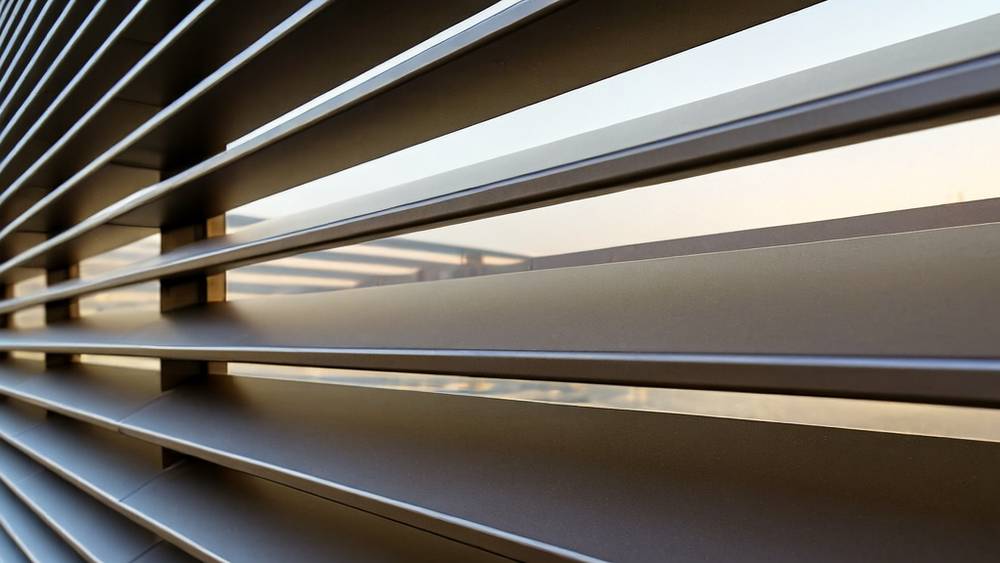
When procurement teams across Southeast Asia search for harga aluminium louvers, the query masks a deeper engineering question that few supplier catalogs address directly: at what span does a standard extruded aluminium louver profile stop being structurally adequate and start demanding either a custom die, a thicker wall section, or a completely different mounting strategy? The Indonesian and Malaysian markets are flooded with per-meter pricing for 100 mm, 150 mm, and 200 mm blade widths, but the cost conversation shifts dramatically once a project requires clear spans exceeding 1,800 mm. This article isolates that inflection point — the relationship between unsupported span length and the real, fabricated cost of aluminium louvers — drawing on extrusion physics, wind loading logic, and procurement data from active Southeast Asian projects.
The pricing tables published on e-commerce platforms and local distributor websites almost always assume spans of 1,200 mm or less. A 150 mm wide Z-louver with a 1.2 mm wall thickness, priced at IDR 350,000–450,000 per square meter on platforms like Tokopedia or Shopee, performs adequately when supported at 1,000 mm intervals. But extend that same profile across a 2,400 mm opening — common in parking structure facades, mechanical screen walls for chiller plants, and airport corridor shading systems — and the deflection under a 1.0 kPa wind load can exceed L/120, a limit that most facade consultants reject outright. The problem is not the alloy; 6063-T5 aluminium has a tensile strength around 145 MPa, sufficient for most architectural applications. The problem is section modulus. A standard louver blade with a 1.2 mm wall loses bending stiffness exponentially as span increases, and the only remedies — thicker walls, deeper profiles, or intermediate structural supports — each carry distinct cost consequences that the harga aluminium louvers conversation must account for.
Span-Dependent Cost Behavior: Where the Price-Per-Meter Model Breaks
Most B2B buyers in Indonesia approach louver procurement with a unit-price mindset shaped by retail platforms. A quick scan of BigGo or Shopee listings returns harga aluminium louvers ranging from IDR 250,000 to IDR 600,000 per square meter, depending on blade profile, finish, and supplier location. These numbers are real but dangerously narrow in scope. They describe a product sold as a commodity — standard dies, standard lengths, standard packaging — and they implicitly assume the buyer will engineer the supporting framework separately.
The structural reality is that an aluminium louver assembly is a system, not a catalog item. Three cost layers sit beneath the visible blade surface:
- Blade extrusion cost — driven by circumscribing circle diameter, wall thickness, and alloy grade. A 150 mm Z-blade with a 1.4 mm wall costs approximately 18–22% more per kilogram than a 1.2 mm equivalent, simply because the die must push more billet material through the same profile cross-section.
- Support framing cost — the steel or aluminium sub-frame that carries wind loads from the blades back to the primary structure. This cost scales almost linearly with span because longer spans require deeper mullion sections and heavier connections.
- Installation complexity cost — longer spans mean fewer vertical supports, which reduces the number of brackets but increases the weight per bracket and the precision required during alignment.
When the span moves from 1,200 mm to 2,400 mm, the blade unit cost might only increase 15–25% if the wall thickness is bumped from 1.2 mm to 1.6 mm. But the framing cost can double because the mullion spacing doubles, and each mullion now carries twice the tributary wind area. The total installed system cost, therefore, does not follow the linear per-square-meter logic that dominates online harga aluminium louvers listings.
Section Modulus and the 1,800 mm Threshold
Extruded aluminium louvers resist wind loads primarily through bending about their minor axis. For a simply supported blade under uniform wind pressure, the maximum deflection at mid-span follows the relationship:
δmax = (5 × w × L⁴) / (384 × E × I)
Where w is the uniform load per unit length (wind pressure × blade tributary width), L is the clear span, E is the elastic modulus of aluminium (approximately 69,000 MPa for 6063-T5), and I is the moment of inertia of the blade cross-section. The L⁴ term is the silent budget killer. Doubling the span from 1,200 mm to 2,400 mm increases the deflection by a factor of 16 if all other variables remain constant. To bring deflection back within acceptable limits — typically L/180 for exterior screens per ASTM E1300 guidance — the designer must either quadruple the moment of inertia or add intermediate supports.
Quadrupling I for an extruded profile generally means moving to a deeper blade or a significantly thicker wall, and neither option is free. A 200 mm deep blade extruded from a custom die costs 30–50% more than a standard 150 mm blade, and the die itself requires an upfront investment of IDR 15–25 million, amortized over the project volume. For a 500-square-meter project, that die charge adds IDR 30,000–50,000 per square meter — a line item that never appears in standard harga aluminium louvers catalogs. For a 5,000-square-meter project, the same die charge becomes negligible at IDR 3,000–5,000 per square meter.
The 1,800 mm span represents a practical threshold observed across multiple Southeast Asian projects supplied by manufacturers including Futeng®. Below 1,800 mm, standard 150 mm Z-louvers with 1.2–1.4 mm walls generally satisfy deflection criteria under wind loads up to 0.8 kPa without requiring custom profiles. Above 1,800 mm, the section modulus of standard profiles becomes marginal, and the project enters a zone where either custom extrusion dies, thicker walls, or intermediate steel supports become mandatory. Each path has a different cost signature.
Three Engineering Responses to Long Spans and Their Cost Profiles
Option A: Increase Wall Thickness (Same Profile, Heavier Blade)
The simplest response to excessive deflection is to specify a heavier wall within the same die. A 150 mm Z-louver with a 1.6 mm wall instead of 1.2 mm increases the moment of inertia by approximately 33% (the increase is less than proportional because I depends on the geometry of the cross-section, not just material volume). This option avoids die charges entirely and keeps the visual appearance identical. The cost adder is purely material: roughly 25–30% more aluminium by weight, translating to IDR 80,000–120,000 per square meter at current LME aluminium prices plus extrusion premiums. This is often the lowest-cost solution for spans between 1,800 mm and 2,200 mm.
Option B: Custom Deeper Profile (New Die, Stiffer Geometry)
Moving from a 150 mm to a 200 mm or 250 mm blade depth increases I dramatically because section depth contributes to stiffness through its cube. A 200 mm blade with the same 1.2 mm wall can achieve 2.3–2.5 times the moment of inertia of a 150 mm blade, sufficient to control deflection at spans up to 3,000 mm. The trade-off is the die investment and a higher per-kilogram extrusion cost due to the larger circumscribing circle. This option makes economic sense above approximately 2,000 square meters of louver area, where the die cost amortizes below IDR 15,000 per square meter. For smaller projects, the die charge dominates and often pushes the total harga aluminium louvers beyond budget.
Option C: Intermediate Structural Supports (Same Blade, More Steel)
Adding a horizontal steel girt at mid-span cuts the unsupported length in half, reducing deflection by a factor of 16. The blade cost stays at baseline, but the project now requires additional steelwork — typically 50×50×3.2 mm galvanized hollow sections or similar — plus connections, plus the labor to install them. In the Indonesian market, installed structural steelwork for louver support systems runs approximately IDR 350,000–550,000 per linear meter, depending on access conditions and corrosion protection requirements. For a 2,400 mm span with a mid-span girt, the steel cost adds roughly IDR 400,000 per linear meter of louver wall, which converts to approximately IDR 165,000 per square meter of louver area. This option often wins for narrow, tall openings where the linear steel quantity is small relative to the louver area.
| Span Range | Recommended Blade Profile | Typical Wall Thickness | Estimated System Cost (IDR/m²) | Key Cost Driver |
|---|---|---|---|---|
| ≤ 1,200 mm | 100–150 mm Z or C | 1.0–1.2 mm | 550,000–750,000 | Blade extrusion + simple brackets |
| 1,200–1,800 mm | 150 mm Z or box | 1.2–1.4 mm | 700,000–950,000 | Heavier blade + intermediate mullions |
| 1,800–2,400 mm | 150 mm Z (1.6 mm wall) or 200 mm custom | 1.4–1.6 mm | 950,000–1,350,000 | Material adder or die amortization |
| 2,400–3,000 mm | 200–250 mm custom profile | 1.6–2.0 mm | 1,350,000–1,850,000 | Custom die + heavier extrusion + steel |
| > 3,000 mm | Custom deep profile + mid-span steel | 2.0 mm+ | 1,850,000+ | Full system engineering required |
The table reflects installed system costs observed across Indonesian commercial projects in 2025–2026, including blades, factory-applied PVDF or anodized finishes, support framing, brackets, fasteners, and on-site installation labor in the Jabodetabek area. Costs in remote locations or for projects requiring specialized access equipment will trend higher. These figures provide a reference frame for evaluating the harga aluminium louvers quotations that contractors receive — a quotation that appears 30% below market likely excludes framing, finish, or assumes a span condition that the project does not have.
Wind Load Context: Why Location Determines the Span Limit
Wind pressure is the dominant load case for exterior aluminium louvers, and it varies dramatically across Indonesia and Malaysia. A louver screen on a low-rise building in central Jakarta might be designed for 0.5–0.6 kPa per SNI 1727:2020, while the same screen on a coastal high-rise in Surabaya or Penang could see 1.2–1.5 kPa due to higher basic wind speeds and exposure factors. Since deflection scales linearly with wind pressure, a profile that works at 2,400 mm span under 0.5 kPa may fail at 1,800 mm under 1.2 kPa.
This is where the generic harga aluminium louvers approach fails most visibly. A supplier quoting a standard 150 mm Z-louver at IDR 450,000 per square meter cannot know whether the project is an inland parking garage (low wind, low consequence) or a 40-story beachfront tower (high wind, high consequence, and possibly salt-spray corrosion requirements). The responsible procurement path is to provide the supplier with three pieces of information before requesting a quotation: the clear span between supports, the design wind pressure per the project's structural notes, and the deflection limit specified by the facade consultant (typically L/180 for screens, sometimes L/240 for louver systems adjacent to pedestrian areas). Without these, any harga aluminium louvers quote is a guess dressed as a number.
Finish Specifications and Their Interaction with Span Economics
Finish selection interacts with span economics in a subtle way that procurement teams often overlook. PVDF coil coatings — applied to the aluminium coil before roll-forming for certain louver types, or sprayed onto extruded blades — carry a cost premium of IDR 120,000–180,000 per square meter over basic polyester powder coat. Anodizing sits between them, typically IDR 80,000–120,000 per square meter for Class II architectural anodizing to 15–20 microns per AAMA 611 standards.
When a project pushes spans beyond 1,800 mm and requires a custom deep profile with a thicker wall, the finish cost also rises — not because the finish itself changes, but because the blade surface area per square meter of facade increases. A 200 mm deep blade has roughly 33% more visible surface area than a 150 mm blade covering the same opening, meaning the PVDF coating cost per square meter of screen area increases proportionally. This interaction between structural depth and finish area is rarely captured in standard harga aluminium louvers tables, but it can add IDR 40,000–60,000 per square meter to the total system cost for long-span applications.
For coastal and high-corrosion environments, specifiers should reference AAMA 2605 for PVDF performance requirements and confirm that the coating applicator holds valid qualification certificates. Aluminium alloy 6063-T5 and 6063-T6 remain the standard extrusion grades for architectural louvers across Southeast Asia, governed by AA-6063 compositional limits. For projects within 5 km of saltwater coastlines, some specifiers upgrade to 6061-T6 for its higher corrosion resistance, though the cost adder of 15–20% on billet material must be weighed against the project's expected service life.
Procurement Strategy: Separating Blade Price from System Price
The single most effective step a B2B buyer can take when evaluating harga aluminium louvers is to insist on a line-item quotation that breaks out blades, framing, finishes, and installation as separate cost categories. A lump-sum per-square-meter price reveals nothing about the engineering assumptions baked into the number. A properly structured quotation allows the buyer to compare blade costs across suppliers, verify that framing has been sized for the actual span, and confirm that the specified finish matches the project's corrosion environment.
Suppliers with in-house extrusion capability — such as Futeng®, which operates its own 6,000-ton and 3,600-ton extrusion lines — can typically offer tighter cost control on custom die projects because the die development and trial extrusion process stays within a single production ecosystem. This becomes relevant when projects cross the 1,800 mm span threshold and enter custom profile territory. The ability to iterate die design quickly, without coordinating across separate extrusion and fabrication vendors, compresses lead times and reduces the risk of die modification charges.
For international procurement, the cost equation adds freight, import duties, and the time value of shipping. A 40-foot container from Chinese or Southeast Asian manufacturers can carry approximately 800–1,200 square meters of louver blades depending on profile depth and packaging density. Ocean freight from Shanghai to Jakarta currently ranges from USD 1,800–2,800 per 40-foot container, adding roughly IDR 25,000–45,000 per square meter to the landed cost. Buyers sourcing from overseas should request Incoterms CIF or DDP pricing to avoid surprises at the port, and should verify that the supplier's ISO 9001:2015 quality management system covers both extrusion and fabrication processes.
Practical Span Selection Guidelines
Drawing on project data from Indonesian and Malaysian installations, the following guidelines help align structural requirements with realistic budgets:
- Parking structure screens (typical span 2,200–2,800 mm, low aesthetic requirement): Use 150 mm Z-louvers at 1.6 mm wall thickness with mid-span horizontal steel girts. System cost IDR 900,000–1,200,000 per square meter. Avoid custom dies — the steel girt solution is almost always cheaper for parking applications where the visible steel does not compromise architectural intent.
- Office tower mechanical screens (typical span 2,400–3,200 mm, medium-high aesthetic requirement): Use 200 mm custom box louvers at 1.6 mm wall. Die cost amortized over 2,000+ square meters. System cost IDR 1,400,000–1,700,000 per square meter. The deeper profile provides the visual solidity that architects expect on commercial facades while maintaining stiffness.
- Retail podium shading (typical span 1,500–2,000 mm, high aesthetic requirement): Use 150 mm Z-louvers at 1.4 mm wall with no intermediate supports. System cost IDR 800,000–1,000,000 per square meter. The uninterrupted horizontal lines serve the architectural language better than steel-interrupted spans.
- Industrial plant ventilation louvers (typical span 1,200–1,800 mm, low aesthetic requirement): Use 150 mm C-louvers at 1.2 mm wall. System cost IDR 600,000–800,000 per square meter. Function-first specification with no premium for visual finish beyond standard polyester powder coat.
These guidelines assume wind loads of 0.6–0.8 kPa and deflection limits of L/180. Projects outside these parameters — particularly coastal high-rises — should commission a project-specific structural check before locking in the louver specification. The cost of a half-day structural engineering review (typically IDR 5–8 million) is trivial compared to the cost of replacing an under-specified louver system after installation.
The harga aluminium louvers conversation that starts with a square-meter price on a smartphone screen ends, on every serious project, with a stack of shop drawings showing span dimensions, wind pressure notes, and section properties. The sooner procurement teams move from the first conversation to the second, the more accurately their budgets reflect what the building actually needs. Span length is not a secondary variable — it is the variable around which all other cost decisions orbit, and treating it as an afterthought is the most expensive mistake a louver specification can make.