Pre Glazed vs Site Glazed Unitized Facade Panels What 5 Percent Damage Rates Actually Cost
Every unitized facade project eventually hits the same question during the pre-construction phase: do you trust the factory to pre-glaze those massive 3.5 m x 4.2 m panels, or do you glaze on site after the aluminium frame is hung? The decision looks trivial on a Gantt chart but drives a wedge through your logistics planning, QA regime, and ultimately your water penetration risk profile. Having supplied solid aluminium cladding panels into both approaches across Southeast Asia, the Middle East, and Northern Europe, I have seen the same mistake repeated: teams treat pre-glazing versus site-glazing as a scheduling preference when it is fundamentally a quality philosophy decision. This article pulls apart the real trade-offs—cycle times, sealant integrity, damage rates during cranage, and the hidden cost of remedial work—so you can make the call with data rather than instinct.
What Actually Happens Inside a Unitized Facade Assembly Bay
Before comparing the two methods, you need a clear picture of what a factory-assembled unitized facade panel looks like before it leaves the shop floor. A typical unit comprises an extruded aluminium carrier frame, usually 6063-T6 alloy, into which solid aluminium cladding panels are mechanically fixed. The panels themselves—2.5 mm or 3.0 mm thick, PVDF-coated to AAMA 2605 specifications—are mounted onto the frame using stainless steel brackets and EPDM gaskets. Insulation, vapour barriers, and sometimes integrated spandrel glass are all packed into that single module. When pre-glazing is specified, the vision glass and spandrel glass are installed, silicone-sealed, and cured under controlled temperature and humidity before the unit ever sees a truck. When site-glazing is specified, the frame with its aluminium panels arrives as an open carcass, and glazing crews install the glass units floor by floor, often from a BMU or swing stage.
The difference sounds procedural. It is not. A pre-glazed unitized facade panel is a finished product when it leaves the factory. A site-glazed panel is a semi-finished assembly that requires secondary trades to complete the building envelope at height. That distinction cascades into every downstream decision: packaging, transport, lifting, sequencing, and defect liability.
Pre-Glazing: The Factory-Controlled Quality Argument
Proponents of pre-glazing lean heavily on one word: control. A factory environment lets you manage the three variables that kill silicone sealant performance—temperature, humidity, and substrate contamination. Two-part structural silicone, typically applied at 21°C to 25°C and 45% to 55% relative humidity, cures predictably. The aluminium frame and glass are cleaned with isopropyl alcohol immediately before application. QC technicians pull adhesion test coupons from every batch. The result is a sealant joint that consistently hits 1.0 MPa tensile adhesion strength, tested per ASTM C1135.
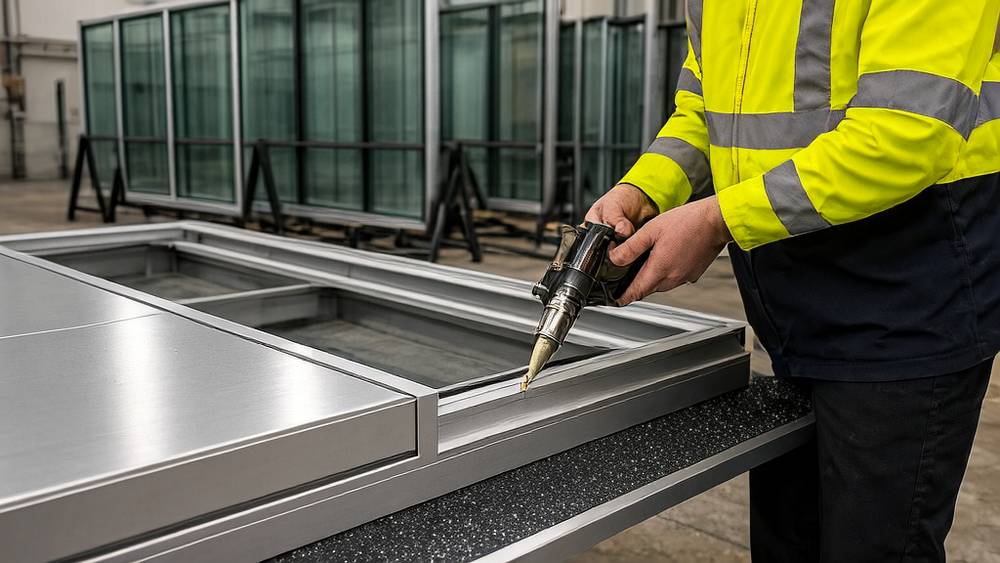
From a solid aluminium cladding perspective, pre-glazing also means the interface between the aluminium panel and the glass unit is detailed and sealed in the factory. This is critical because the panel-to-glass transition is one of the most leak-prone zones on any unitized facade. Factory technicians apply a continuous silicone weather seal along this junction, tool it properly, and let it cure undisturbed. On site, this same detail is often rushed between wind gusts and fading daylight.
Another advantage: pre-glazed units reduce the number of trades working on the façade at height. Once the unit is craned into position and bolted to the floor slab, the building envelope is closed. No follow-up glazing crew is needed. This compresses the critical path, particularly on high-rise projects where every day of crane time costs real money. Hansen Group's UnitAl® system documentation, for instance, emphasizes record-fast building enclosure as a primary driver for unitized facade adoption, and pre-glazing amplifies that speed advantage.
A project manager on a 42-storey mixed-use tower in Bangkok told me their site-glazed unitized facade required six additional weeks of crane-dependent glazing work. Pre-glazing would have eliminated that crane dependency entirely.
The Damage Rate Problem Nobody Budgets For
Here is where the pre-glazing argument gets honest. A fully glazed unitized facade panel weighing 450 kg to 700 kg is a fragile asset. It travels from factory to site on an A-frame stillage, gets offloaded, and then gets craned up 30, 60, or 100 metres. During that journey, three things can go wrong: glass edge damage from stillage vibration, sealant bond-line stress from frame racking during lifting, and impact damage from wind-driven debris or mishandling.
Industry data from façade contractors I have worked with suggests a 2% to 5% pre-glazed panel damage rate on a typical high-rise project. That means on a building requiring 1,200 unitized panels, you could be looking at 24 to 60 damaged units. Each damaged unit must be stripped, re-glazed, and re-sealed—either on site, which defeats the point, or back at the factory, which introduces lead-time chaos. The cost of replacing a single damaged vision glass unit inside a pre-glazed panel, including crane re-handling and labour, can run between $1,800 and $3,500 depending on glass specification and building height.
Solid aluminium cladding panels themselves are relatively robust during transport—3.0 mm aluminium sheet does not crack like glass—but the integrated nature of a pre-glazed unit means glass damage becomes aluminium panel rework. If the silicone seal at the panel-to-glass interface is disturbed during glass replacement, the entire weather seal integrity of that unit must be re-verified.
Site-Glazing: Flexibility at a Price
Site-glazing flips the risk profile. The aluminium frame, complete with its solid aluminium cladding panels, arrives on site unglazed. This has immediate advantages: the units are lighter (typically 30% to 45% less weight without glass), easier to handle, and far less vulnerable to glass breakage during transport and lifting. A site-glazed unitized facade approach also allows the building to be closed in stages—frames go up quickly, and glazing follows at a pace that suits the interior fit-out programme.
But site-glazing introduces its own set of problems. Silicone sealant applied at height is subject to ambient conditions that change by the hour. Wind-borne dust, condensation on aluminium surfaces, and substrate temperatures above 40°C (common on sun-exposed façades in the Middle East or Southeast Asia) all compromise sealant adhesion. The ASTM C1193 standard for structural silicone glazing explicitly warns against application when substrate temperatures exceed 50°C or when surfaces are not perfectly dry—conditions that are routine on a construction site.
The panel-to-glass weather seal, that critical junction I mentioned earlier, is particularly vulnerable in site-glazed applications. A factory technician working at a bench can tool a consistent 10 mm to 12 mm bead along the entire perimeter. A glazier hanging off a BMU at the 25th floor might produce a bead that varies from 8 mm to 15 mm, with tooling quality that depends on wind speed and fatigue. These inconsistencies do not always show up during initial water testing. They appear two or three years later, after thermal cycling has worked the sealant joints, and the building owner starts getting calls about water ingress.
Stack Joint Geometry and Its Interaction with Glazing Sequence
One technical detail that rarely surfaces in pre-glazing versus site-glazing debates is the stack joint—the horizontal interface between unitized facade panels on consecutive floors. In a unitized system, the stack joint must accommodate three things simultaneously: live-load slab deflection (typically L/360), thermal expansion of the aluminium frame, and inter-storey drift under wind or seismic loading. The joint geometry is designed with a specific movement range, usually ±15 mm to ±25 mm, using interlocking aluminium extrusions and dual EPDM gasket seals.
When panels are pre-glazed, the glass unit bridges across the stack joint zone, and the silicone sealant at the horizontal glass-to-frame interface becomes part of the movement accommodation system. This works well when the sealant is factory-applied and properly cured—the elastic recovery of structural silicone can handle ±25% joint movement reliably. But when the same detail is site-glazed, inconsistent sealant depth and incomplete curing before the building experiences its first thermal cycle can lead to cohesive failure within the silicone. Once that seal fails, water tracks horizontally along the stack joint and finds its way into the interior through the nearest discontinuity.
For engineers and specifiers, the takeaway is this: if your project has large inter-storey drift demands (above H/400), pre-glazing provides a more reliable seal at the stack joint because the factory-controlled curing process produces silicone joints with predictable movement capability. Site-glazed stack joints in high-drift buildings need additional QA measures—adhesion testing on every floor, not just every tenth floor—to catch application defects.
Cost Comparison: Beyond the Unit Rate
Procurement teams tend to compare pre-glazed and site-glazed unitized facade options by looking at the supplier's quoted rate per square metre. That number is misleading. The real cost equation includes at least six line items that do not appear on the façade subcontractor's invoice.
| Cost Factor | Pre-Glazed Unitized Facade | Site-Glazed Unitized Facade |
|---|---|---|
| Factory unit cost (m²) | $520 – $680 | $390 – $510 |
| Transport cost per unit | Higher (heavier, bulkier stillages) | Lower (lighter, denser packing) |
| Crane time per floor | 1.5 – 2.5 days | 1.0 – 1.5 days (frames only) |
| On-site glazing labour | None required | $45 – $75 per m² |
| Damage/breakage allowance | 2% – 5% of panel count | <1% (glass handled separately) |
| Remedial sealant work (2-year) | 0.5% – 1% of joints | 3% – 8% of joints |
| Water testing cost | Statistical sampling adequate | Larger sample or full-floor testing recommended |
The table reveals a pattern: pre-glazed unitized facade systems have higher upfront cost but lower long-tail remedial cost. Site-glazed systems look cheaper on bid day but carry a risk premium that materialises during the defects liability period. On a 20,000 m² façade, the 2-year remedial sealant delta alone can exceed $150,000—money that typically comes out of the main contractor's contingency if the façade subcontractor has already been discharged.
Where Solid Aluminium Cladding Panels Fit into the Decision
The choice between pre-glazing and site-glazing also affects how solid aluminium cladding panels are detailed and supplied. In a pre-glazed unit, the aluminium panel is installed, sealed, and inspected in the factory. Any panel defects—coating scratches, flatness deviations beyond the 0.5% tolerance specified in EN 485-3, or inconsistent caulking—are caught and corrected before the unit leaves the factory. This matters because rectifying a PVDF-coated solid aluminium panel on site is expensive and rarely matches the original factory finish quality.
In a site-glazed scenario, the aluminium panels are factory-installed on the frame, but the glass interface remains open. This creates a window of vulnerability: the panel is exposed to construction dust, wet trades, and accidental impact from interior fit-out work before the glass is installed. Panel protection films help, but they do not eliminate the risk of mortar splatter or scaffold-tube dings that become punch-list items at handover.
For projects specifying high-end PVDF coatings—particularly metallic or mica finishes where batch-to-batch colour consistency is already challenging—the pre-glazed route offers an additional advantage: all panels for a given building elevation can be coated in a single production run and immediately assembled into units. This minimises the risk of colour drift between panels, a problem that becomes painfully visible when site-glazed panels from different production batches end up adjacent on the façade.
When solid aluminium cladding panels are sourced from mills with integrated coating lines—Futeng® operates its own PVDF line with spectrophotometric QC per batch—the factory-controlled approach aligns naturally with pre-glazed unitized facade fabrication. The aluminium panel, the coating, the frame assembly, and the glazing all happen under one quality management system rather than being split across three or four subcontractors.
Weather Exposure During Construction: The Overlooked Variable
Construction schedules do not always align with fair-weather windows. A site-glazed unitized facade programme that looks achievable in August becomes a liability in November. Cold-weather silicone application requires heated substrates and extended curing times—a two-part structural silicone that cures in 24 hours at 23°C can take 72 hours or more at 5°C. During that extended cure window, the uncured silicone is vulnerable to rain, dust, and physical disturbance.
Pre-glazed units eliminate this weather dependency from the glazing equation. The units are assembled in a climate-controlled factory regardless of external conditions. The only weather constraint becomes cranage—wind speeds above 15 m/s typically halt panel lifting for safety reasons. This is why projects in northern Europe, where the construction season is compressed into 7-8 months, lean heavily toward pre-glazed unitized facade systems. The factory runs year-round; the site runs when the weather allows.
The British Facade Association (BDFA) notes that unitized façade programmes can compress the building enclosure timeline by 30% to 50% compared to stick-built systems. Pre-glazing pushes that compression even further by removing the follow-up glazing activity from the critical path entirely.
Testing Protocols and How They Differ
Both pre-glazed and site-glazed unitized facade systems must pass the same performance tests: air permeability (ASTM E283 / EN 12153), water penetration under static pressure (ASTM E331 / EN 12155), and structural wind load (ASTM E330 / EN 12179). But the testing strategy differs significantly between the two methods.
For pre-glazed systems, a single full-scale mock-up tested at an accredited laboratory—typically a 3-panel-wide by 2-storey-high assembly—is usually sufficient to validate the design. Because every production unit is assembled under identical factory conditions, the mock-up is genuinely representative of the installed façade. Statistical sampling of production units for simplified site testing (hose test per AAMA 501.2) provides ongoing verification.
For site-glazed systems, the mock-up test proves that the system can work, but it does not prove that the site-glazed joints will match the laboratory quality. The AAMA 501.2 hose test becomes more critical, and many specifiers require a larger sample—testing 5% to 10% of floor area rather than the 1% typical for factory-glazed work. Some specifications, particularly for government and institutional buildings, mandate a full-floor water test before the interior fit-out proceeds. This adds cost and programme time that should be factored into the initial comparison.
Making the Call: A Decision Framework
After seeing both methods succeed and fail across dozens of projects, I suggest a straightforward decision framework based on four project characteristics:
- Building height above 60 metres: Pre-glazing is strongly preferred. The logistics of site-glazing at height, combined with wind exposure during sealant curing, make site-glazing riskier and slower on tall buildings.
- Repetitive façade geometry with limited corner conditions: Pre-glazing benefits from repetition. If 80% of your panels are identical, factory assembly efficiency offsets the higher unit cost. The Simpson Gumpertz & Heger analysis of mega-panel applications confirms that repetition is the single biggest driver of unitized facade cost-effectiveness.
- Construction in a climate with extended cold or wet seasons: Pre-glazing removes weather from the glazing quality equation.
- Projects with aggressive handover deadlines and high LD penalties: Pre-glazing compresses the site programme and reduces the number of trades that can delay façade completion.
Conversely, site-glazing may be the better choice when the building has highly complex geometry requiring frequent panel size changes, when the site has excellent crane access and low wind exposure, or when the project is in a consistently warm, dry climate where field silicone application conditions are favourable year-round.
The core insight is this: the pre-glaze versus site-glaze decision for a unitized facade is not a cost question. It is a risk allocation question. Pre-glazing transfers quality risk from the site to the factory. Site-glazing retains that risk on site but offers programme flexibility and lower upfront cost. Choose based on which risk your project team is better equipped to manage.
Solid aluminium cladding panels, whether 2.5 mm or 3.0 mm thick, PVDF-coated or anodized, are a constant in both approaches. What changes is where the critical interface between panel and glass gets sealed, and who is holding the sealant gun when it happens. Getting that decision right—using data, not intuition—is what separates a unitized facade that performs quietly for 30 years from one that generates lawyer letters in year two.