100 mm Spandrel Aluminium Per Batang Cost Drivers From Alloy Grade to Coating
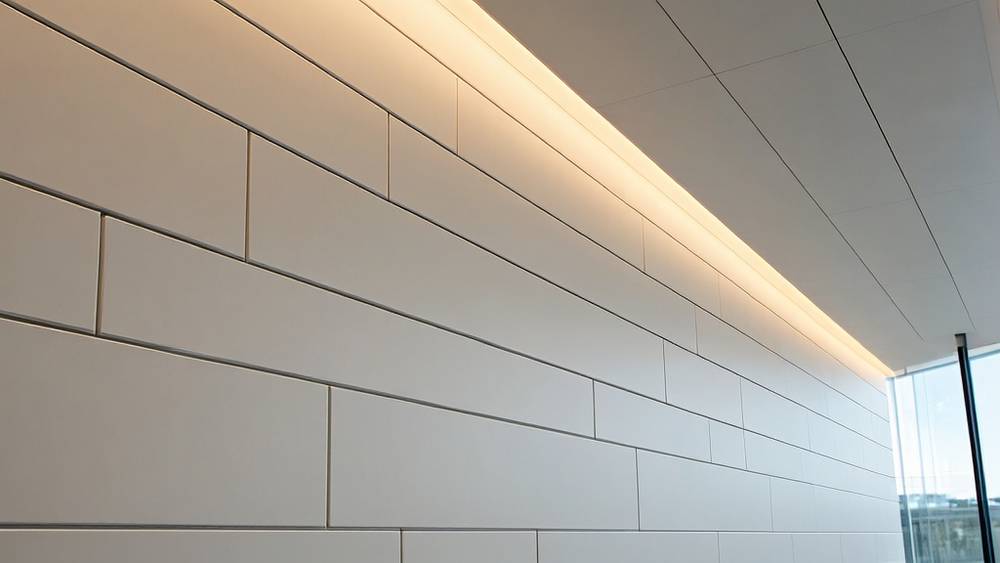
When a project tender lands on your desk specifying spandrel aluminium for a 2,500-square-metre office tower ceiling, the first question procurement managers ask is almost always the same: what does the harga spandrel aluminium per batang actually buy you, and where does the cost come from? A quick scan of Indonesian supplier listings shows per-batang prices ranging anywhere from IDR 95,000 to IDR 180,000, a spread wide enough to raise eyebrows among quantity surveyors and project estimators. The gap is not random. It tracks directly to three variables that define solid aluminium cladding economics: the alloy substrate quality, the coating system durability, and the dimensional precision of the extrusion or roll-forming process. Understanding these drivers matters because spandrel aluminium, unlike commodity ceiling materials, functions as both a visual finish and a structural infill element in curtain wall systems. Getting the specification wrong to save a few thousand rupiah per batang can cascade into warranty claims, replacement costs, and months of installation rework.
What "Per Batang" Actually Means in Spandrel Aluminium Procurement
The term harga spandrel aluminium per batang reflects a unit-pricing convention that dominates the Indonesian architectural metals market. A single "batang" typically refers to a 6-metre length of aluminium profile, though 4-metre and custom-cut lengths also circulate. The standard spandrel batang for ceiling applications comes in widths of 100 mm (10 cm) or 120 mm (12 cm), with material thickness ranging from 0.4 mm to 0.8 mm depending on the intended span and load conditions.
What complicates price comparison is that not all batang are equal. A 100 mm-wide spandrel profile in 0.5 mm gauge with a basic polyester powder coat runs toward the lower end of the price spectrum, while the same nominal dimensions in 0.7 mm gauge with a PVDF (polyvinylidene fluoride) architectural coating pushes toward the upper range. The difference can exceed 40% per batang, and on a project requiring 3,000 linear metres, that translates to real budget impact.
Contractors accustomed to buying gypsum ceiling board by the square metre often stumble here. Spandrel aluminium is priced linearly because each batang is an engineered profile with specific tongue-and-groove geometry, clip-compatibility, and coating chemistry. Comparing quotes without normalising for these variables is the fastest route to a cost-overrun dispute.
Alloy Grade and the Hidden Cost of Substrate Quality
Aluminium spandrel profiles circulating in the Indonesian market predominantly use alloys from the AA 3000 and AA 6000 series. The distinction carries structural and financial implications that directly shape harga spandrel aluminium per batang.
AA 3003 and AA 3105 alloys, both manganese-alloyed, offer moderate strength with excellent formability. They dominate the mid-range spandrel segment because they roll-form cleanly into interlocking profiles without cracking at bend radii. AA 6063, a magnesium-silicon alloy, appears in premium spandrel lines where higher tensile strength is required — particularly for exterior soffit applications exposed to wind uplift or for profiles spanning more than 1,200 mm between structural supports.
The alloy choice affects per-batang pricing through two channels. First, raw billet cost: AA 6063 typically commands a 12–18% premium over AA 3003 at the extrusion stage. Second, fabrication yield: harder alloys wear tooling faster and require tighter process control during coating pretreatment, adding marginal cost that compounds across production runs.
For interior ceiling applications in air-conditioned commercial spaces, AA 3003-based spandrel profiles generally suffice. But when the same spandrel system extends to semi-exposed areas — covered walkways, parking structure soffits, balcony undersides — the switch to 6063-grade material becomes a defensible engineering call. A reputable supplier such as Futeng® can provide mill certificates tracing the alloy chemistry back to the cast house, which matters when the project specification references ASTM B209 or EN 485 for aluminium sheet and plate.
Coating Systems and Real-World Durability Economics
Coating specification is the single largest variable driving harga spandrel aluminium per batang. Three systems dominate the market, and each carries a distinct cost-performance profile that procurement teams need to understand beyond the datasheet claims.
| Coating Type | Typical DFT (microns) | Colour Retention (AAMA 2605) | Relative Cost per Batang | Best Application |
|---|---|---|---|---|
| Polyester Powder (Standard) | 60–80 | 5–7 years before visible fade | Base (1.0x) | Interior ceilings, low-UV zones |
| Super-Durable Polyester Powder | 60–80 | 10–15 years | 1.25–1.35x | Semi-exposed soffits, covered walkways |
| PVDF Liquid (70% Kynar 500 or Hylar 5000) | 30–40 (3-coat) | 20+ years | 1.55–1.75x | Exterior spandrel panels, coastal environments |
The polyester powder coating segment sees the widest price dispersion because local applicators vary dramatically in pretreatment quality. A proper seven-stage chromate conversion pretreatment — degrease, rinse, etch, rinse, chromate, rinse, deionized rinse — adds roughly IDR 8,000–12,000 per batang compared to a three-stage wash-and-coat shortcut. The difference is invisible on day one but painfully obvious after 18 months of humidity cycling, when poorly pretreated profiles develop filiform corrosion creeping from cut edges and clip contact points.
PVDF coatings demand a different conversation entirely. These fluoropolymer systems, built on resins from suppliers like Arkema (Kynar 500®) or PPG (Duranar®), are the architectural standard for exterior aluminium cladding per AAMA 2605. The per-batang premium is significant, but for spandrel panels integrated into a unitised curtain wall where the spandrel zone sits behind glass but still faces the cavity environment, the UV and condensation resistance of PVDF justifies the cost.
Dimensional Precision and Installation Labour Arbitrage
A less obvious but equally consequential factor in harga spandrel aluminium per batang is dimensional tolerance. Spandrel profiles rely on interlocking geometry — a male rib on one edge seats into a female groove on the adjacent batang — to create a continuous, gap-free ceiling plane. When the profile width deviates by even 0.3 mm from nominal, the cumulative error across a 10-metre run can open visible gaps or force installers to apply lateral pressure that stresses the clip system.
Higher-priced spandrel batang from manufacturers operating extrusion lines with tight die control and inline laser gauging maintain width tolerance within ±0.15 mm. Budget-grade profiles sourced from lower-tier extruders may drift to ±0.4 mm or worse. The per-batang saving of IDR 8,000–15,000 evaporates rapidly when the installation crew spends an extra 30% of their time correcting alignment issues on site.
This is where the labour-cost arbitrage argument works in favour of tighter-spec material. In major Indonesian cities, skilled aluminium ceiling installers command daily rates that make rework punitive. A 2,000-batang project where 15% of profiles require field adjustment — trimming, shimming, or outright rejection — can add 40–60 person-hours to the schedule. At prevailing labour rates, those hours cost more than the upfront material saving.
Supply Chain Geography and Logistics Cost Drivers
The physical reality of a 6-metre aluminium batang shapes logistics economics in ways that affect final installed cost. Spandrel profiles cannot be folded or nested efficiently; they ship as rigid linear loads. A single 40-foot container accommodates roughly 4,000–5,000 batang depending on packing density, but the limiting factor is often weight rather than volume.
For projects in eastern Indonesia — Kalimantan, Sulawesi, Papua — the freight component of harga spandrel aluminium per batang can equal 15–25% of the ex-factory price. This creates a sharp incentive to consolidate spandrel procurement with other aluminium profiles (main ceiling runners, wall trim, expansion joint covers) from a single supplier to amortise container costs across a larger order value.
Domestic Indonesian manufacturers with production lines in Tangerang, Bekasi, and Surabaya hold a natural logistics advantage for projects on Java and Sumatra. Imported spandrel profiles from Chinese or Malaysian mills may post competitive ex-works pricing, but once import duty (typically 5–10% under ASEAN harmonised tariff schedules), PPN (value-added tax), and inland trucking are layered on, the landed cost often converges with or exceeds domestic pricing for equivalent specifications.
Fire Performance and the Insurance Premium Connection
Solid aluminium spandrel profiles carry an inherent advantage in fire-rated assemblies that directly impacts specification decisions. Aluminium is non-combustible (Euroclass A1 per EN 13501-1), and unlike ACP panels with polyethylene cores, solid spandrel profiles contribute zero fuel load to a compartment fire.
This matters because building insurers in markets like Singapore, Malaysia, and increasingly Indonesia are scrutinising facade and ceiling material specifications following high-profile cladding fires globally. Projects specifying solid aluminium spandrel — rather than composite alternatives — may qualify for lower construction-phase insurance premiums, particularly when the spandrel system forms part of the smoke management strategy in atrium ceilings or escape-route soffits.
The fire performance argument also intersects with harga spandrel aluminium per batang in a subtle way: some project specifications require batch-specific fire test reports or third-party certification (e.g., SGS, TÜV, or local SUCOFINDO verification). Suppliers who maintain current test documentation and can provide it without surcharge effectively reduce the compliance cost that procurement teams otherwise absorb through independent testing.
"The cheapest batang on a price list is rarely the cheapest batang installed. Smart procurement normalises quotes against alloy, coating, tolerance, and logistics before comparing numbers."
Practical Cost-Build-Up for Project Estimation
Quantity surveyors need a defensible cost model, not a single price point. The following build-up reflects mid-2026 market conditions for solid aluminium spandrel profiles in the Jakarta-Tangerang supply corridor, expressed as a range that accounts for specification variables discussed above.
- Ex-factory profile cost (AA 3003, 0.5 mm, 100 mm width, 6 m batang): IDR 95,000–120,000 per batang
- Coating upgrade (polyester powder, standard colours): included in ex-factory; PVDF upgrade adds IDR 18,000–28,000 per batang
- Packaging (PE film wrap, steel-strapped bundles of 20): IDR 2,500–4,000 per batang equivalent
- Inland transport (Jabodetabek, 200 batang minimum): IDR 3,000–6,000 per batang
- Accessories (spring clips, end caps, connector plates): IDR 12,000–18,000 per batang equivalent
- Installation labour (Jakarta rates, inclusive of substructure): IDR 55,000–85,000 per batang
The fully installed cost therefore ranges from approximately IDR 170,000 to IDR 260,000 per batang depending on specification and location. This range explains why procurement decisions driven purely by the ex-factory harga spandrel aluminium per batang — without modelling the downstream costs — consistently misprice projects by 25% or more.
How to Qualify a Spandrel Aluminium Supplier
Supplier qualification for spandrel aluminium should go beyond price-list comparison and address five technical checkpoints that separate reliable manufacturers from opportunistic traders.
- Mill certification: Demand traceable mill certs showing alloy grade, temper, and coating specification. A supplier who cannot produce these within 48 hours is likely a reseller with no quality control leverage over the actual extruder.
- Coating accreditation: For PVDF-coated spandrel, verify that the applicator holds current accreditation from the resin manufacturer (e.g., PPG-approved applicator or AkzoNobel-certified coater). Unaccredited PVDF lines may use sub-70% Kynar resin, compromising the warranty.
- Sample retention policy: Professional manufacturers retain production samples from each batch for a minimum of 24 months. This provides a reference if colour drift or corrosion claims arise after handover.
- Profile gauge verification: Request a dimensional inspection report for the specific die number. Tolerances should reference Aluminium Association extrusion tolerance standards or the equivalent EN 12020 for architectural profiles.
- Logistics capability: Confirm the supplier can deliver 6-metre batang without bending damage. Profiles that arrive with a 20 mm bow across the length are effectively scrap.
These checkpoints apply whether sourcing from a domestic Indonesian manufacturer or evaluating imported alternatives. The discipline of running through them systematically prevents the common scenario where a procurement team celebrates a 12% saving on paper only to discover that the delivered material requires 40% rework and generates six months of warranty correspondence.
Regional Price Benchmarks and Market Dynamics
The harga spandrel aluminium per batang landscape across Southeast Asia reveals instructive patterns for regional procurement teams. Indonesian domestic pricing sits roughly 8–15% below equivalent specification profiles in Malaysia and 18–25% below Singapore, driven by lower energy costs for extrusion and a competitive domestic coating industry centred on the Tangerang-Bekasi industrial corridor.
However, the price advantage narrows for PVDF-coated profiles because the fluoropolymer resin supply chain is global and denominated in USD. When the rupiah weakens against the dollar, the PVDF premium on Indonesian spandrel rises proportionally, eroding the domestic advantage for high-end specifications.
Chinese export pricing for spandrel aluminium profiles can undercut Indonesian domestic by 10–20% at the FOB level, but the gap closes when factoring in the logistical and compliance costs discussed earlier. For projects where the specification references ASTM International or European standards, the cost of third-party verification on imported material often eliminates the apparent saving entirely.
The practical takeaway for regional procurement managers is that harga spandrel aluminium per batang is best evaluated as a landed-and-installed figure, not an ex-works price-point. The spreadsheet that stops at the supplier gate is the spreadsheet that loses money.
Final Engineering Notes for Specification Writers
Architects and facade engineers writing spandrel aluminium specifications can improve project outcomes by addressing three points explicitly in the spec document rather than relying on supplier interpretation.
First, specify the alloy and temper. Writing "aluminium spandrel profile" without an alloy designation invites substitution of lower-grade material. A line referencing "AA 3003-H14 or AA 6063-T5 per ASTM B221" closes that gap.
Second, define the coating system with a performance standard, not a brand name. Citing AAMA 2605 for exterior spandrel or AAMA 2604 for interior applications provides an objective benchmark that multiple suppliers can meet, maintaining competitive tension in the tender process.
Third, require a mock-up installation of at least 10 batang in a representative location before approving bulk production. The mock-up reveals clip-compatibility issues, colour consistency under site lighting, and installer familiarity with the interlock mechanism — problems that are far cheaper to solve at mock-up scale than after 2,000 batang are hanging from the ceiling grid.
Solid aluminium spandrel remains one of the most cost-effective architectural ceiling solutions when specified with attention to the technical variables that drive real-world performance. The per-batang price is the starting point for the conversation, not its conclusion.