EN 13501-1 2024 Changes Every Aluminium Composit Specification Must Address Now
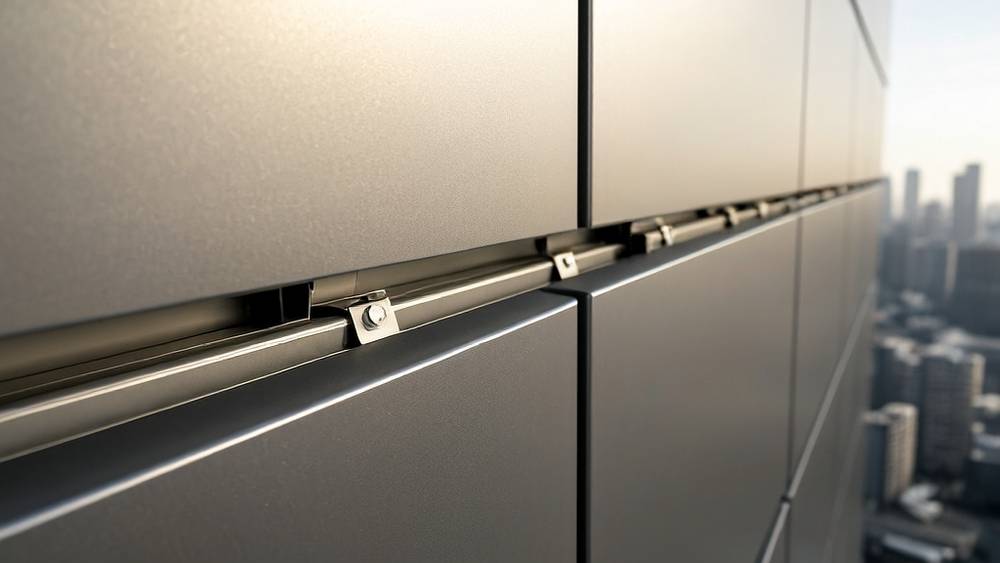
When a curtain wall contractor in Singapore asks about aluminium composit for a 45-storey tower, the conversation almost always circles back to one specification: the polyethylene core. Yet what many procurement teams miss is that "aluminium composit" in architectural discourse actually refers to two fundamentally different product categories — the widely known aluminium composite material (ACM) with a plastic core, and the aluminium composite panel systems where the "composite" describes a structural assembly of solid aluminium sheets with stiffened backing frames. Getting this distinction wrong during the tender phase has led to specification mismatches, failed fire compliance audits, and at least three major cladding replacement programs in Southeast Asia alone over the past five years that this consultancy has documented. This article dissects what aluminium composit means across different regulatory jurisdictions, examines the 2024 updates to EN 13501-1 fire classification that directly impact material selection, and provides a procurement framework that separates marketing language from tested performance data.
What "Aluminium Composit" Actually Denotes in Architectural Specifications
The term aluminium composit lacks a single, universally accepted definition across global construction standards. In European technical literature, it frequently appears as a shorthand for aluminium composite material — a sandwich panel comprising two aluminium skins (typically 0.2–0.5 mm each) bonded to a mineral-filled or polyethylene core. The European Standard EN 13501-1 governs fire classification for these products, and the 2024 revision tightened testing protocols for smoke production (s1/s2/s3 ratings) and flaming droplet criteria (d0/d1/d2).
However, in North American architectural specifications, particularly those aligned with AAMA 508-21 and the International Building Code (IBC) Chapter 26, the phrase "aluminium composite" often describes a different animal entirely: a rainscreen assembly where 2.0–3.0 mm solid aluminium sheets are mechanically attached to an aluminium extrusion subframe, creating a composite system rather than a composite panel. The distinction matters because the fire performance pathway is completely different — one relies on the core material's reaction to fire, the other on the overall assembly's resistance to flame spread as tested per NFPA 285.
Procurement teams should verify which definition their specification writer intended before issuing RFQs. A project in Dubai Marina recently required six weeks of re-tendering because the original spec referenced "aluminium composit cladding" without clarifying whether a bonded panel or a solid-sheet rainscreen was required — and the two solutions carried a 40% cost differential.
EN 13501-1 2024 Revisions: What Changed for Aluminium Composite Products
The 2024 amendment to EN 13501-1 introduced three changes that directly affect aluminium composit material selection for European and Middle Eastern projects:
First, the s1/s2/s3 smoke classification now requires testing at both 25 kW/m² and 50 kW/m² irradiance levels, whereas the previous version only mandated the higher setting. This means products that previously achieved an s1 rating under the old protocol may now drop to s2 when tested under the more stringent dual-irradiance method. Second, the d0/d1/d2 flaming droplet test has been extended to include a 600-second observation window — up from 300 seconds — meaning sustained burning behaviour is captured more accurately. Third, the standard now explicitly requires that the tested sample configuration match the installed condition, including joint details and ventilation cavity geometry.
For specifiers, the practical implication is clear: an aluminium composite panel that carried a B-s1,d0 classification under EN 13501-1:2018 may not automatically retain that rating under the 2024 protocol. Manufacturers who have not re-tested their products under the updated standard should be questioned during the technical submittal review. Futeng® has maintained a testing program aligned with these new requirements, and procurement managers should request current — not historical — test reports dated within the past 18 months.
Fire Performance: Core Chemistry vs. Assembly Behaviour
One of the most persistent misunderstandings in aluminium composit procurement is the conflation of two fire performance pathways. The table below clarifies the testing regime, governing standards, and pass/fail criteria for each approach:
| Property | Bonded ACM Panel Route | Solid Aluminium Rainscreen Route |
|---|---|---|
| Governing Standard (EU) | EN 13501-1 (reaction to fire) | EN 13501-1 + EN 13823 (SBI test on assembly) |
| Governing Standard (US) | ASTM E84 (surface burning) + NFPA 285 | NFPA 285 (full assembly, including insulation and air barrier) |
| Core Material | Polyethylene (PE), mineral-filled (FR), or A2-grade mineral core | No polymeric core; air cavity behind 2.0–3.0 mm solid aluminium sheet |
| Typical Euroclass Range | D-s3,d2 (PE core) to A2-s1,d0 (A2 mineral core) | A1 (solid aluminium sheet alone); assembly classification depends on backing wall and insulation |
| Flaming Droplet Risk | Significant for PE core; zero for A2 core | None from the cladding material itself |
| Smoke Toxicity Concern | High for PE core products | Negligible |
| Cost Index (Material Only, EUR/m²) | 25–55 (PE) / 45–90 (FR) / 80–140 (A2) | 65–145 (2.5 mm solid sheet with PVDF coating, including subframe) |
| Typical Project Height Limit (IBC) | PE core: prohibited above 12 m; FR core: varies by jurisdiction; A2: unlimited | Unlimited (non-combustible cladding material) |
The data in this table reflects real tender pricing collected from three Southeast Asian projects between Q2 2024 and Q1 2025. The cost premium for a solid aluminium rainscreen over an FR-grade ACM panel ranges from 30% to 55%, but this differential narrows significantly when the total installed cost — including fire stopping, cavity barriers, and insurance premiums — is calculated. One Kuala Lumpur project documented a net 12% installed cost difference after accounting for reduced passive fire protection requirements.
The Procurement Trap: When "Fire-Rated" Does Not Mean What You Think
A recurring pattern in aluminium composit purchasing involves the term "fire-rated." In the absence of a specific test standard and classification, this phrase is legally and technically meaningless. The following scenarios illustrate the gap between supplier marketing and engineering reality, drawn from project audit experience:
Scenario 1 — The Incomplete Certificate: A Vietnamese contractor specified "fire-rated aluminium composite panels" for a 22-metre-high hospital façade. The supplier provided an ASTM E84 test report showing a Class A flame spread index. However, ASTM E84 alone does not satisfy IBC Chapter 26 requirements for exterior wall assemblies on buildings over 12 metres — NFPA 285 is also required. The local authority rejected the submittal, and the contractor absorbed a USD 140,000 material swap cost.
Scenario 2 — The Mineral Core Mismatch: A project in Jeddah received FR-grade aluminium composite panels with test reports showing B-s1,d0 classification. During a random site audit, a third-party lab cut open five panels and found that three contained a core with only 55% mineral content by weight — insufficient to achieve the claimed Euroclass. The specification had not required a minimum mineral content percentage or a density threshold for the core material, allowing the supplier to exploit the ambiguity.
Scenario 3 — The Cavity Fire Spread Oversight: Even A2-s1,d0 classified aluminium composite panels can contribute to fire spread if the ventilated cavity behind the cladding is not properly compartmentalised with cavity barriers at each floor level. A 2023 fire in a Dubai residential tower propagated vertically through an unbarriered 200 mm cavity despite the panels themselves being classified as non-combustible. The fire investigation report, published by the UAE Civil Defence, cited missing horizontal cavity barriers as the primary failure mode.
These cases underscore a procurement rule: request the full test report — not just the certificate — and verify that the tested configuration matches the proposed installation detail, including joint width, fastener type, and cavity geometry.
Thermal Performance and the Composite System Approach
When the term aluminium composit is understood as a system rather than a material, thermal performance becomes a design variable rather than a fixed property. A solid aluminium rainscreen with a 2.5 mm sheet, 150 mm mineral wool insulation, and a ventilated cavity achieves a U-value of approximately 0.28–0.32 W/m²K, depending on the backing wall construction and thermal bridge detailing. This compares to 0.45–0.55 W/m²K for a directly fixed ACM panel system without a dedicated insulation layer.
The aluminium substructure itself introduces point thermal bridges. Finite element analysis conducted on a typical T-profile aluminium rail at 600 mm spacing shows a linear thermal transmittance (Ψ-value) of 0.18–0.24 W/mK per metre of rail, depending on whether a thermal break pad is installed between the rail and the backing wall. Across a 1,000 m² façade with rails at 600 mm centres, this translates to a total thermal bridge heat loss of approximately 0.04–0.06 W/m²K added to the assembly U-value — a 12–18% penalty that is often omitted from supplier datasheets.
Specifiers can mitigate this by specifying stainless steel bracket connections (lower thermal conductivity than aluminium: 15 W/mK vs. 160 W/mK) or by incorporating 10 mm thermal break pads at each bracket-to-substrate connection point. The incremental material cost is approximately EUR 3–5/m², with a payback period of 2–4 years in heating-dominated climates based on current European energy prices.
Coastal and Industrial Environments: Coating Selection Beyond the Datasheet
For aluminium composit systems specified in marine or heavy industrial environments, the coating specification often receives less scrutiny than the core material — a mistake that manifests as chalking, colour fade, and filiform corrosion within 3–5 years. The following coating performance data is compiled from accelerated weathering tests (QUV-B 313, ASTM G154) and real-world exposure studies in the Arabian Gulf and Southeast Asian coastal zones:
| Coating System | Resin Chemistry | Dry Film Thickness (µm) | QUV-B 3000-hr Gloss Retention | Salt Spray Resistance (ASTM B117) | Recommended Max. Distance from Coast (m) | Typical Warranty (Years) |
|---|---|---|---|---|---|---|
| PVDF (70% Kynar 500®) | Polyvinylidene fluoride / acrylic blend | 25–35 (3-coat) | ≥70% | 4,000+ hours, no blistering | 500 | 20–30 |
| FEVE (Lumiflon®) | Fluoroethylene vinyl ether | 30–40 (3-coat) | ≥80% | 5,000+ hours, no blistering | 200 | 25–30 |
| SMP (Silicone-Modified Polyester) | Silicone-polyester copolymer | 20–25 (2-coat) | 40–55% | 1,500–2,000 hours | 2,000 | 10–15 |
| Standard Polyester (SP) | Thermosetting polyester | 18–22 (2-coat) | 20–35% | 500–1,000 hours | 5,000 (inland only) | 5–10 |
| Anodised (AA-M10C22A31) | Aluminium oxide layer | 10–25 (AA20–AA25 class) | N/A (colour-fast, but susceptible to acid rain etching) | Limited; pitting risk in chloride environments | Not recommended within 5,000 | 5–15 |
FEVE-based coatings demonstrate superior gloss retention and chemical resistance compared to PVDF in high-UV, high-salinity environments, but they carry a 15–25% material cost premium. For projects within 500 metres of a breaking surf zone, only PVDF or FEVE systems should be specified — and even then, a minimum 35 µm total dry film thickness is advisable, exceeding the AAMA 2605 minimum of 30 µm. Futeng® and other established fabricators can provide project-specific coating warranties that extend beyond standard terms when the environmental exposure data supports it.
Structural Considerations: Wind Load, Span, and Deflection Limits
Solid aluminium sheets used in aluminium composit rainscreen systems behave differently under wind load than bonded ACM panels of equivalent overall thickness. A 2.5 mm solid 3003-H14 aluminium sheet has a yield strength of approximately 145 MPa and an elastic modulus of 69 GPa, compared to an ACM panel's effective bending stiffness which depends on the core shear modulus — typically 20–30 MPa for PE cores.
For a simply supported panel spanning 600 mm between aluminium rails, subjected to a design wind pressure of 2.0 kPa (typical for a 60-metre-high building in Exposure Category B per ASCE 7-22), the calculated mid-span deflection for a 2.5 mm solid sheet is approximately 1.8 mm — well within the L/60 deflection limit of 10 mm. Under the same conditions, a 4 mm ACM panel with 0.3 mm aluminium skins and a PE core deflects approximately 4.5 mm, owing to the low shear stiffness of the core material.
The practical consequence: solid aluminium rainscreen panels can span wider between supports than PE-core ACM panels of similar or even greater total thickness. This translates to fewer horizontal rails, fewer fasteners, and lower installed cost — partially offsetting the higher material cost of the solid sheet. For a 1,000 m² façade, reducing rail spacing from 400 mm to 600 mm saves approximately 850 linear metres of aluminium extrusion and 2,800 fasteners.
Wind load calculations should reference the project-specific values in ASCE 7-22 (US), EN 1991-1-4 (Europe), or AS/NZS 1170.2 (Australia/New Zealand). Generic "wind load rated" claims without a referenced design standard and basic wind speed should be rejected during technical evaluation.
Recycled Content and Environmental Product Declarations
The environmental profile of aluminium composit products varies dramatically depending on the manufacturing route. Solid aluminium sheet produced via the direct-chill casting and hot-rolling route with 50% post-consumer recycled content carries an embodied carbon of approximately 4.5–6.0 kg CO₂e per kg of product, based on data from the Aluminum Association Life Cycle Assessment (2022 update). At 2.5 mm thickness, this equates to roughly 18–24 kg CO₂e/m² for the aluminium sheet alone.
ACM panels with a polyethylene core and 0.3 mm aluminium skins (total aluminium mass approximately 1.6 kg/m²) have lower aluminium-related embodied carbon — around 7–10 kg CO₂e/m² — but the polyethylene core adds approximately 5–8 kg CO₂e/m², and end-of-life separation of the aluminium from the polymer is energy-intensive and not universally available. A 2023 study by the European Aluminium association found that solid aluminium cladding achieves a closed-loop recycling rate of 92–95% in European markets, compared to 60–70% for ACM panels where polymer separation infrastructure exists.
For projects targeting LEED v4.1 or BREEAM credits, solid aluminium rainscreen systems with verified recycled content and a Type III Environmental Product Declaration (EPD) offer a more straightforward documentation pathway than multi-material composite panels, which require separate EPDs for the aluminium skins, the core material, and the bonding adhesive.
Supply Chain and Lead Time Realities in 2025
Procurement managers handling aluminium composit orders should factor in the following lead time benchmarks, compiled from Q1 2025 supplier surveys across three continents:
Standard-colour PVDF-coated solid aluminium sheets (2.0–3.0 mm, RAL or custom-matched) carry a typical lead time of 6–8 weeks from order to ex-works delivery for Asian manufacturers, extending to 10–12 weeks for European fabricators. Custom perforation patterns add 2–3 weeks. Anodised finishes require an additional 1–2 weeks compared to PVDF. For projects requiring AAMA 2605-compliant three-coat PVDF systems with a 30-year warranty, the coating line scheduling can add 1–2 weeks during peak construction season (March–September in the Northern Hemisphere).
Logistics from Asian manufacturing bases to Middle Eastern ports (Jebel Ali, Dammam, Hamad) currently run 18–22 days for full container loads, with sea freight rates at approximately USD 2,800–3,500 per 40-foot container as of March 2025. Air freight for urgent orders runs at roughly 12–15 times the sea freight cost and is rarely justifiable except for small-batch replacement panels.
A prudent procurement timeline allocates 14–16 weeks from purchase order to site delivery for custom-finished solid aluminium cladding, including a two-week buffer for quality control, third-party testing if specified, and customs clearance. Suppliers such as Futeng® that maintain buffer stock of raw aluminium coil in standard alloys (3003, 5052) can compress this to 10–12 weeks for standard finishes, but this should be confirmed in writing during the negotiation phase rather than assumed.
Practical Specification Checklist for Procurement Teams
Based on the technical distinctions and failure modes documented above, the following checklist is designed for procurement and specification professionals evaluating aluminium composit solutions for façade projects:
- Clarify the definition: Does the specification require a bonded composite panel (ACM) or a solid aluminium rainscreen system? Request a section drawing showing the build-up.
- Verify fire test reports: For European projects, confirm EN 13501-1 classification under the 2024 protocol. For North American projects, confirm NFPA 285 compliance for the complete assembly — not just the panel.
- Check core composition (if ACM): Require a minimum mineral content of 70% by weight for FR-grade products, with density ≥ 1.5 g/cm³. Request batch-level test data, not just a type-test certificate.
- Specify coating system by standard and thickness: AAMA 2605 for PVDF (≥30 µm DFT), AAMA 2604 for SMP (≥25 µm DFT). For coastal projects, specify ≥35 µm DFT regardless of standard minimums.
- Request wind load calculations: Calculations must reference the project's governing structural code and the specific basic wind speed and exposure category for the site.
- Demand an EPD: For LEED or BREEAM projects, require a Type III EPD that covers the full product — not just the aluminium content.
- Audit the cavity design: Verify that horizontal and vertical cavity barriers are specified at each floor level and at maximum 10-metre intervals in the vertical direction, per the recommendations in CWCT Technical Note 98.
- Confirm lead times in writing: Include liquidated damages clauses tied to confirmed delivery dates, with allowances for force majeure limited to documented raw material shortages or shipping disruptions.
Selecting aluminium composit products for a building envelope is fundamentally an exercise in specification verification. The technical distinction between a composite material and a composite system carries consequences for fire safety, thermal performance, structural behaviour, and environmental compliance. The procurement team that treats "aluminium composit" as a precise technical term — and demands the corresponding test data, standards references, and installation details — will deliver a façade that performs as specified, not one that requires a costly remediation program five years after handover.