Aluminium Plastic Sheet Price Driven by 2.5 mm Solid Panel GCC Cost Factors
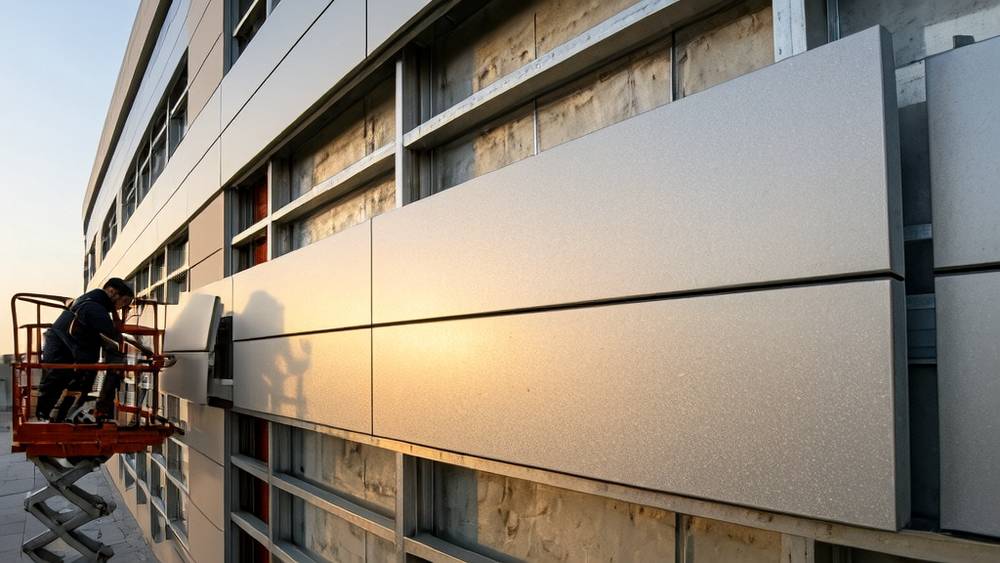
When procurement teams across the Middle East, Southeast Asia, and East Africa search for aluminium plastic sheet price data, a persistent confusion undermines their budgeting accuracy: they receive quotes for aluminium composite panels (ACP) when they actually need solid aluminium cladding sheets. The terminology overlap between "aluminium plastic sheet" and "aluminium composite panel" creates a pricing fog that leads to specification errors, fire compliance failures, and cost overruns that can reach 22-35% above initial estimates. This article unpacks the real cost drivers behind solid aluminium cladding sheets — the 2.0 mm to 3.0 mm PVDF-coated panels specified for ventilated façade systems — and provides procurement benchmarks grounded in Q3 2026 global aluminium ingot pricing, surface treatment standards, and regional logistics realities. You will walk away with a clear framework for distinguishing genuine solid panel quotes from composite alternatives, and a set of cost-calculation tools that reflect what your project actually needs.
Why the Phrase "Aluminium Plastic Sheet" Creates Procurement Confusion
The phrase "aluminium plastic sheet" sits in a linguistic grey zone between two distinct product categories. In the Chinese manufacturing ecosystem — which supplies approximately 62% of global architectural aluminium products — the term frequently appears in translated factory listings that conflate solid aluminium sheets with aluminium-plastic composite panels. A procurement manager typing aluminium plastic sheet price into a sourcing platform may receive RFQ responses for 3 mm ACP with a 0.15 mm aluminium skin, while their project specification calls for a 2.5 mm solid 3003-H14 aluminium panel with PVDF coating. The price difference between these two materials typically ranges from $12 to $28 per square meter, but the compliance gap can be catastrophic.
This ambiguity is not accidental. The rapid expansion of Chinese ACP export capacity between 2018 and 2024 — particularly from manufacturers in Linyi, Shandong, and Foshan, Guangdong — flooded international B2B platforms with listings that use "aluminium plastic sheet" as a catch-all keyword. Solid aluminium panel manufacturers, including Futeng®, often find their products listed alongside composite panels in platform search results, creating a comparison environment where buyers inadvertently compare prices across incompatible product categories.
The practical consequence: a contractor in Nairobi specifying a 1,200 m² ventilated façade may budget $38/m² based on ACP quotes they received, only to discover that compliant solid aluminium panels cost $52-$68/m² delivered. The resulting budget gap delays projects, forces value-engineering compromises, and occasionally leads to the installation of combustible ACP in buildings where non-combustible solid panels were mandatory.
Raw Material Cost: Aluminium Ingot Pricing and Sheet Yield Calculations
Solid aluminium cladding sheet pricing begins with the London Metal Exchange (LME) aluminium ingot price, which serves as the global benchmark. According to the IMARC Group's Q3 2026 aluminium sheet pricing report, regional mill prices showed significant divergence: the United States averaged $6,064/MT, Japan $4,973/MT, and the United Kingdom $4,723/MT for standard aluminium sheet products. These figures represent finished sheet pricing, which includes rolling, annealing, and basic surface preparation — but not architectural-grade PVDF or FEVE coating.
For a procurement manager calculating aluminium plastic sheet price for solid panels, the raw material cost constitutes 45-55% of the final ex-works price. A 2.5 mm thick 3003-H14 aluminium sheet weighs approximately 6.75 kg/m². At an ingot price of $2,400/MT (LME Q3 2026 average) plus a rolling premium of $450-$600/MT for architectural-grade 3xxx series alloy, the bare mill-finish sheet cost lands at roughly $19.50-$21.50/m² before any coating, fabrication, or packaging.
| Panel Thickness | Weight per m² | Mill-Finish Cost/m² (Q3 2026 Est.) | Typical Application |
|---|---|---|---|
| 2.0 mm | 5.40 kg | $15.80 – $17.50 | Interior wall cladding, soffit liners |
| 2.5 mm | 6.75 kg | $19.50 – $21.50 | Exterior ventilated façade, column covers |
| 3.0 mm | 8.10 kg | $23.20 – $25.80 | High-wind zones, large-format panels (>1.5 m span) |
| 3.0 mm (5005-H14 marine grade) | 8.10 kg | $26.50 – $29.00 | Coastal façades within 500 m of shoreline |
These mill-finish figures represent the baseline. Every subsequent processing step — coating, fabrication, quality inspection — adds layers of cost that vary significantly by specification stringency.
Coating Cost Tiers: PVDF, FEVE, and the AAMA 2605 Premium
Surface treatment is the single largest cost variable beyond raw aluminium, adding anywhere from $8 to $28 per square meter depending on the coating system selected. The architectural aluminium industry operates under three primary coating standards, each with distinct performance and cost implications. The AAMA 2605 specification governs high-performance PVDF coatings requiring a minimum 70% Kynar 500® or Hylar 5000® resin content, with a total dry film thickness of 25-35 μm over a chrome-phosphate conversion coating and epoxy primer.
The cost hierarchy for coating systems applied to solid aluminium cladding sheets breaks down as follows:
- PE (Polyester) Coating — $6-$9/m². Suitable only for interior applications or protected soffit areas. Dry film thickness of 18-22 μm. Color retention of 3-5 years in exterior conditions. Not recommended for any architectural façade application.
- PVDF 70/30 (AAMA 2605) — $12-$18/m². The industry standard for architectural façades. Minimum 25 μm dry film thickness with 70% fluoropolymer resin. Expected color retention of 15-20 years in standard urban environments. Available in solid colors, metallic finishes, and pearlescent effects.
- FEVE (Fluoroethylene Vinyl Ether) — $18-$25/m². Lumiflon®-based coatings offering superior gloss retention and chemical resistance. Preferred for coastal installations, chemical plant environments, and projects requiring extended warranties beyond 20 years.
- Anodized Finish (AA-M10C22A31 / AA-M12C22A31) — $10-$15/m² for Class I architectural anodizing (minimum 17 μm oxide thickness). Limited color range but offers superior hardness and metallic appearance. Requires 5005 or 6061 alloy substrate.
When evaluating aluminium plastic sheet price quotations from Chinese manufacturers, procurement teams must verify whether the quoted coating specification matches the project's geographic and environmental requirements. A $14/m² delta between PE and PVDF coatings on a 5,000 m² façade represents a $70,000 budget variance that should never be discovered during installation.
Fabrication Complexity: How Panel Geometry Drives Cost Per Square Meter
Fabrication costs for solid aluminium cladding sheets scale non-linearly with geometric complexity. A flat rectangular panel measuring 1,200 mm × 800 mm with simple 90-degree return edges on four sides might incur $8-$12/m² in fabrication charges. The same panel size with radiused corners, perforation patterns, a folded cassette profile, and integrated stiffener ribs can push fabrication costs to $35-$50/m².
The key fabrication cost drivers that procurement managers should itemize in RFQ evaluations include:
- Edge returns and cassette forming — Simple 20 mm returns add $3-$5/m². Deep cassette profiles exceeding 50 mm with welded corners add $10-$18/m².
- Perforation and pattern cutting — CNC turret punching for acoustic or decorative perforation patterns adds $8-$25/m² depending on open area percentage and hole diameter.
- Curved or radius forming — Single-axis curving for column covers or bullnose profiles adds $15-$30/m². Double-curvature panels requiring stretch-forming or die-pressing can exceed $60/m² in fabrication alone.
- Reinforcement and stiffener attachment — Aluminium stiffener profiles mechanically fixed or bonded to the panel rear face to prevent oil canning add $4-$8/m².
- Panel size optimization — Panels exceeding 1,500 mm in any dimension require gauge increases and additional handling, adding 8-15% to base fabrication rates.
Experienced fabricators like Futeng® typically provide a fabrication cost matrix tied to panel quantity and complexity level, which allows general contractors to model the cost impact of design revisions before finalizing shop drawings.
Logistics and Regional Price Multipliers: From Factory Gate to Job Site
International logistics represent 12-22% of the total landed aluminium plastic sheet price for projects outside the manufacturing country. For solid aluminium cladding panels shipped from Chinese ports (Shanghai, Ningbo, Qingdao, or Guangzhou) to major import destinations, the following Q3 2026 freight benchmarks apply:
| Destination Region | Sea Freight (40' HC Container) | Estimated Freight/m² | Import Duty & Port Charges |
|---|---|---|---|
| Middle East (Jebel Ali, Dammam) | $2,800 – $3,500 | $4.20 – $5.30 | 5% GCC customs + $180-$250 clearance |
| East Africa (Mombasa, Dar es Salaam) | $3,200 – $4,200 | $4.80 – $6.30 | 25% CIF (EAC CET) + $300-$500 port fees |
| Southeast Asia (Port Klang, Laem Chabang) | $1,500 – $2,200 | $2.30 – $3.30 | 0-10% ASEAN FTA rates vary by country |
| Western Europe (Rotterdam, Hamburg) | $3,500 – $4,800 | $5.30 – $7.20 | 6% EU tariff + VAT + CE marking compliance |
A 40-foot high-cube container typically accommodates 650-720 m² of fabricated solid aluminium panels, depending on packaging configuration and panel dimensions. Projects requiring less-than-container-load (LCL) shipments face an additional 30-50% freight premium per square meter, making full-container optimization a critical cost-control lever for procurement managers.
Fire Compliance and the Hidden Cost of Specification Creep
The ISO 1182 non-combustibility test and the ASTM E84 surface burning characteristics standard have become non-negotiable benchmarks for aluminium cladding specifications following the 2017 Grenfell Tower fire and subsequent regulatory reforms across the UK, Australia, the UAE, and Southeast Asia. Solid aluminium panels with a thickness of 2.0 mm or greater — when tested as standalone products without combustible core materials — achieve an A1 or A2-s1,d0 classification under BS EN 13501-1, the European fire classification standard.
This compliance carries a cost. Solid aluminium panels achieving A1 classification require no organic core material, which is inherent to the product — but the testing and certification burden for manufacturers adds $0.80-$1.50/m² to the ex-works price when amortized across production volumes. More significantly, projects that originally specified ACP at $22-$35/m² and are subsequently required to upgrade to solid aluminium panels at $52-$68/m² face a specification creep cost that can exceed 100% of the original cladding budget.
RFQ Strategy: How to Get Comparable Aluminium Plastic Sheet Price Quotes
The single most effective action a procurement manager can take when soliciting aluminium plastic sheet price quotations is to submit an RFQ that explicitly distinguishes solid aluminium panels from composite products. A well-structured RFQ should mandate the following data points from every bidder:
- Aluminium alloy grade and temper designation (e.g., 3003-H14, 5005-H14, 5052-H32)
- Panel thickness in millimeters, with tolerance per ASTM B209/B209M
- Coating system specification with resin brand, resin percentage, and dry film thickness
- Fabrication scope: edge return depth, corner treatment, stiffener type and spacing
- Packaging specification (interleaving, crate type, container loading plan)
- Ex-works price, FOB price, and CIF price broken out separately
- Production lead time and payment terms
- Third-party test certificates: mill test report, coating DFT measurements, fire classification report
Suppliers that cannot or will not provide alloy grade and coating resin brand information should be eliminated from consideration immediately. This filtering step alone can reduce RFQ response noise by 40-60% and ensure that remaining bids are genuinely comparable.
A practical benchmark: for a 2,000 m² ventilated façade project in the GCC region specifying 2.5 mm solid 3003-H14 panels with AAMA 2605 PVDF coating and simple cassette fabrication, a realistic landed budget range in Q3 2026 is $54-$68/m² delivered to site, inclusive of sea freight, customs clearance, and inland transportation.
Regional Price Benchmarks for Solid Aluminium Cladding Sheets in Q3 2026
The following table consolidates estimated landed cost ranges for solid aluminium cladding sheets across major procurement regions. These figures assume 2.5 mm 3003-H14 alloy, AAMA 2605 PVDF coating in a standard solid color, simple cassette fabrication with 20 mm returns, full-container sea freight, and standard import clearance procedures. Prices are inclusive of all costs to the job site gate.
| Region | Landed Price Range (USD/m²) | Key Cost Driver | Typical Project Volume Break |
|---|---|---|---|
| GCC / Middle East | $54 – $68 | 5% customs duty + inland transport | 1,500 – 5,000 m² |
| East Africa | $62 – $78 | 25% EAC CET duty + port congestion | 800 – 3,000 m² |
| Southeast Asia | $48 – $60 | Low freight distance + FTA benefits | 2,000 – 8,000 m² |
| Western Europe | $58 – $75 | CE marking compliance + 6% EU tariff | 1,000 – 4,000 m² |
| South Asia (India, Bangladesh) | $45 – $56 | Near-source logistics advantage | 3,000 – 15,000 m² |
These ranges reflect market conditions as of Q3 2026. Procurement teams should apply a ±12% contingency for projects with delivery timelines extending beyond six months, given the volatility of LME aluminium pricing and ocean freight rates.
Three Procurement Pitfalls That Inflate Aluminium Plastic Sheet Price Beyond Budget
Beyond specification confusion, three recurring procurement mistakes systematically inflate the final aluminium plastic sheet price that projects actually pay:
- Ignoring panel utilization rates. Standard aluminium coils come in widths of 1,220 mm, 1,250 mm, 1,500 mm, and 2,000 mm. A panel design dimension of 1,260 mm × 900 mm cut from a 1,500 mm coil generates 16% material waste, while a design adjusted to 1,200 mm × 900 mm from a 1,220 mm coil reduces waste to under 2%. Over 5,000 m², this optimization can save $8,000-$14,000 in raw material alone.
- Overlooking packaging and handling costs. Solid aluminium panels with PVDF coating require interleaving with protective film or paper, timber crate packaging, and careful container loading to prevent transit damage. These costs typically add $2.50-$4.00/m² and should never be excluded from budget comparisons.
- Neglecting local certification requirements. Projects in the UAE require Dubai Civil Defence (DCD) product registration for façade materials. Projects in the EU require EN 13501-1 classification reports from notified bodies. Obtaining these certifications post-shipment can add $3,000-$8,000 in testing costs and cause 4-8 week delays. Including certification requirements in the initial RFQ avoids this entirely.
Addressing these three factors during the specification and tendering phase — rather than during installation — consistently delivers 10-18% total cost savings on solid aluminium cladding packages.
Making the Aluminium Plastic Sheet Price Work for Your Project
The phrase aluminium plastic sheet price will continue to generate confusing search results because the underlying product taxonomy is fractured across languages and platforms. Procurement professionals who understand this ambiguity and build their RFQ processes to filter it out gain a measurable competitive advantage: faster bid comparisons, fewer specification errors, and budgets that survive through to project completion.
For projects requiring solid aluminium cladding sheets — whether 2.0 mm interior panels, 2.5 mm ventilated façade cassettes, or 3.0 mm marine-grade panels for coastal installations — the cost framework outlined here provides a defensible basis for budget development. The key variables remain aluminium ingot pricing, coating specification stringency, fabrication complexity, and logistics distance. Control these four factors in your procurement process, and the final number on your cost report will match the number on your purchase order.
When supplier evaluation reaches the shortlist stage, prioritize manufacturers that provide alloy certifications, coating warranty documentation, and fire test reports as standard deliverables rather than optional extras. These documents represent the difference between a price that looks right on a spreadsheet and a product that performs correctly on a building.