Composite Panel Terminology Errors Cause 40 Percent Facade Specification Failures
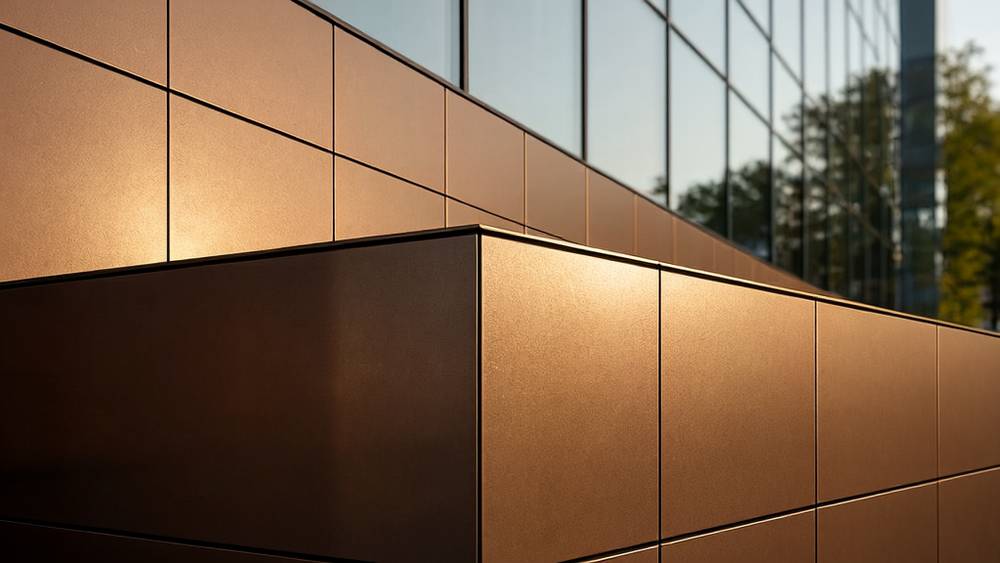
The term composite panel circulates widely across construction specifications, architectural briefs, and procurement documents, yet the confusion it generates on project sites is remarkable. Ask five people on a job site what a composite panel is and you may get five different answers: an aluminium-plastic sandwich, a honeycomb-cored lightweight board, a fibre-reinforced cement sheet, or even a decorative interior wall plank. For the facade engineer writing a performance specification, this ambiguity is not trivial. It determines fire compliance paths, structural loading assumptions, wind resistance calculations, and ultimately whether the installed system passes inspection. This article examines the definitional problem head-on by dissecting how composite panel classification intersects with the specific engineering realities of solid aluminium cladding panels, and why getting the terminology right before the tender stage prevents costly procurement errors.
The Classification Problem That Starts at Specification
Industry standards do not provide a single, unified definition of a composite panel. The Composite Panel Association (CPA) in North America covers engineered wood-based panels and decorative surfacing, while European Technical Approval Guidelines (ETAGs) address metal-faced sandwich panels under entirely different criteria. A procurement manager sourcing from McMaster-Carr encounters composite panels listed as multipurpose plastic sheets. An architect referencing ALUCOBOND deals with aluminium composite material (ACM) consisting of two thin aluminium skins bonded to a polyethylene or mineral-filled core. A lightweight panel specialist like CPT Panels or TCH offers honeycomb or corrugated polypropylene core panels for transport and industrial applications. None of these are the same product, and none should be specified interchangeably.
For the solid aluminium cladding panel—a homogeneous sheet of alloy typically 2.0 mm, 2.5 mm, or 3.0 mm thick, formed, folded, and finished with PVDF or FEVE coating—the composite panel label does not accurately describe the product. Yet in tender documents worldwide, the phrase "composite panel cladding" appears as a catch-all, forcing contractors and suppliers into clarification rounds that delay procurement by weeks. The root issue is that specifiers often use composite panel to describe any multi-layered wall assembly rather than a specific material type. This conflation has real consequences.
Fire Performance and the Composite Panel Misnomer
Post-Grenfell regulatory tightening has made fire performance the single most scrutinised characteristic of any exterior cladding material. Building codes across the UK, Australia, the Middle East, and increasingly North America now demand rigorous reaction-to-fire classification under EN 13501-1 or ASTM E84. When a specification calls for a composite panel without defining the core material, the fire engineer is left in an impossible position. An ACM panel with a polyethylene core may achieve Euroclass D or E. A mineral-filled ACM might reach B-s1,d0. A solid aluminium panel with no combustible core at all presents an entirely different risk profile, typically classified as A1 or A2-s1,d0 depending on the coating system and substrate configuration.
This is not a marginal distinction. On a high-rise residential project in Manchester in 2022, a contractor submitted a value-engineering proposal to replace specified solid aluminium panels with a generic "composite panel" alternative, believing them to be equivalent. The fire consultant flagged the substitution during a design review, revealing that the proposed product contained a polyethylene core. The resulting redesign delayed the project by four months. The lesson: the composite panel label obscures fire-critical information that must be surfaced at specification stage.
| Panel Type | Core Material | Typical Euroclass (EN 13501-1) | Combustible Content | High-Rise Suitability |
|---|---|---|---|---|
| Solid Aluminium Cladding Panel | None (homogeneous alloy) | A1 or A2-s1,d0 | Negligible | Unrestricted |
| ACM with Mineral Core | Mineral-filled polymer | B-s1,d0 | Low to moderate | Subject to project assessment |
| ACM with PE Core | Polyethylene | D or E | High | Banned in many jurisdictions |
| Honeycomb Composite Panel | Aluminium or aramid honeycomb | Varies by face sheet | Low (aluminium core) | Application-dependent |
| Fibre Cement Composite Panel | Cementitious | A1 or A2 | None | Unrestricted |
Structural Engineering Implications of Material Ambiguity
A solid aluminium panel behaves structurally in ways that a true composite panel does not. When a 3.0 mm solid aluminium sheet spans between fixing rails at 600 mm centres, the structural calculation assumes a homogeneous isotropic material with known elastic modulus (approximately 69 GPa for alloy 3003 or 5052), yield strength, and thermal expansion coefficient. The panel resists wind loads through bending stiffness derived entirely from its thickness and alloy temper, not from a composite action between dissimilar materials.
By contrast, a genuine composite panel—whether an ACM sheet or a honeycomb sandwich—derives its stiffness from the separation of face sheets by a lightweight core, functioning analogously to an I-beam. The engineering models differ fundamentally. A wind load span table developed for solid aluminium panels cannot be applied to sandwich panels, and vice versa. On a project in Singapore, a facade consultant inadvertently specified span limits from a composite panel manufacturer's literature for a solid aluminium system. The resulting panels, installed at spans 20% beyond their structural capacity, exhibited visible deflection under design wind load and required complete replacement.
For specifiers and contractors working with manufacturers such as Futeng®, which produces solid aluminium cladding panels from 2.0 mm to 3.0 mm gauge in alloys 3003, 5052, and 6061, the structural data must be panel-specific. Generalised composite panel span tables found in industry guides should never substitute for manufacturer-verified performance data tied to a specific product, alloy, and temper.
Thermal Movement and the Hidden Cost of Terminology Errors
Solid aluminium has a coefficient of thermal expansion of approximately 23.6 × 10⁻⁶ per °C. For a 3-metre-long panel subjected to a temperature swing of 80°C between winter night and summer solar exposure, the linear expansion reaches roughly 5.7 mm. Facade systems must accommodate this movement through slotted fixing holes, expansion joints, or sliding connections. Composite panels with polymer cores exhibit different thermal behaviour because the core material acts as a thermal break and absorbs some differential movement internally.
When a contractor prices a job based on a composite panel assumption but the specification ultimately requires solid aluminium panels, the fixing system costs diverge. Solid aluminium panels demand more precise fabrication tolerances and more carefully detailed movement joints. The cost differential on fixing systems alone can reach 15–25% depending on panel dimensions and joint complexity. Procurement teams that fail to clarify the composite panel versus solid aluminium distinction during bidding absorb this cost or face contractual disputes.
Coating Compatibility and Surface Performance
The surface of a solid aluminium panel receives its coating through a spray, powder, or coil process applied directly to the prepared alloy substrate. PVDF coatings, typically 70% polyvinylidene fluoride resin content applied at 25–35 microns dry film thickness, dominate architectural specifications under AAMA 2605. FEVE fluoropolymer coatings offer comparable durability with a different application chemistry suitable for complex shapes requiring post-forming coating.
Composite panels with polymer cores impose thermal limits on coating processes. Coil coating an ACM skin before lamination restricts the coating chemistry to formulations that survive the bonding process. Solid aluminium panels face no such constraints. A specifier who understands this distinction can select coating systems optimised for the project's environmental exposure—coastal salt spray, industrial SO₂, or high-UV desert conditions—without worrying about core compatibility. The Composite Panel Association provides guidance on decorative surfaces for interior applications, but exterior architectural metal coatings fall under separate standards regimes including AAMA, Qualicoat, and EN 12206.
Acoustic Performance and the Solid Panel Advantage
Facade acoustics rarely dominate specification discussions until a project fails its post-construction sound insulation test. Solid aluminium panels, with their homogeneous mass, provide predictable sound reduction that follows mass law principles. A 3.0 mm aluminium sheet offers approximately 9 kg/m² of surface mass, contributing to the overall facade sound transmission loss in combination with insulation, cavity depth, and inner leaf construction.
Lightweight composite panels with honeycomb or polymer cores deviate from mass law behaviour. Their multi-layer construction can introduce coincidence dips at specific frequencies, potentially compromising sound insulation at those frequencies even when the overall weighted reduction appears adequate on paper. The Panel Systems UK technical guidance notes that composite panel acoustic performance requires application-specific testing rather than generic estimation. For projects near airports, rail corridors, or busy urban roads, this distinction matters.
Procurement Pitfalls and the Tender Clarification Process
The ambiguity of composite panel as a procurement term creates a predictable pattern of tender queries. A typical sequence: the main contractor issues an enquiry for "composite panel cladding" without defining core type, thickness, or performance criteria. Suppliers of solid aluminium panels, ACM, honeycomb panels, and fibre cement boards all submit bids based on their interpretation of the term. Prices vary by 40–60% across the submissions. The contractor shortlists the lowest three bids, only to discover during post-tender clarification that the products are not technically equivalent.
This process wastes three to six weeks and often results in the specification being rewritten after tender award, exposing the contractor to cost increases that cannot be recovered from the client. The solution is straightforward: eliminate composite panel from tender language unless a genuinely composite product is intended. For solid aluminium cladding, specify "solid aluminium cladding panels" with the alloy, thickness, coating system, and performance standards stated explicitly. ASTM B209 for aluminium sheet, AAMA 2605 for high-performance coatings, and EN 485 for European markets provide the normative references that remove ambiguity.
Manufacturing Tolerances and Quality Control
Solid aluminium panel fabrication involves cutting, routing, folding, welding, and finishing processes applied to monolithic sheet material. The dimensional tolerances achievable depend on the panel geometry, alloy temper, and fabrication method. Flatness tolerances of 0.5 mm over 300 mm are typical for architectural solid aluminium panels, governed by manufacturer quality standards and referenced in project specifications.
For genuine composite panels, flatness is influenced by the bonding process between skin and core. Residual stresses from lamination can cause bowing that only becomes apparent after installation. The CPT Panels resource on composite panel types highlights that manufacturing process control directly affects panel flatness and dimensional stability. Specifiers who conflate solid aluminium with composite construction may inadvertently apply tolerance standards from one product category to another, creating acceptance disputes on site.
Environmental Product Declarations and Sustainability Reporting
Green building certification schemes including LEED, BREEAM, and Green Star increasingly require Environmental Product Declarations (EPDs) for facade materials. A solid aluminium panel EPD accounts for bauxite extraction, primary aluminium smelting, rolling, fabrication, and coating. Recycled content can significantly reduce embodied carbon, and solid aluminium panels are fully recyclable at end of life without separation of dissimilar materials.
Composite panels with polymer cores present end-of-life recycling challenges because separating the aluminium skins from the core material is energy-intensive and not universally available. An EPD for a composite panel reflects this additional processing burden. When a sustainability consultant specifies "composite panel" without qualification, the embodied carbon assumptions embedded in the life cycle assessment may bear no relationship to the product actually installed. The CPA Design Portfolio offers sourcing information for North American products, but EPD data must be product-specific rather than category-generic.
Installation Labour and Site Handling Differences
Solid aluminium panels weighing approximately 8–10 kg/m² at 3.0 mm thickness require different handling, lifting, and fixing techniques compared to lightweight composite panels that may weigh half as much. Site teams accustomed to handling lightweight panels may underestimate the manual handling requirements and fixing loads for solid aluminium systems. Conversely, teams used to solid metal panels may over-tighten fixings on composite panels, crushing core edges and creating visible distortions.
Installation productivity rates diverge accordingly. A two-person team installing solid aluminium panels on a mechanically fixed rainscreen system might achieve 15–20 m² per day depending on panel size and access conditions. The same team working with lightweight composite panels could install 25–30 m² daily. These productivity assumptions feed directly into programme and cost planning. Getting the panel type wrong at estimation stage creates programme risk that compounds across the facade package.
Warranty and Long-Term Performance Expectations
Solid aluminium panels with PVDF coatings carry finish warranties of 20–30 years from reputable manufacturers and applicators, backed by decades of real-world exposure data from projects in Florida, Queensland, and the Middle East. The coating system, not the substrate, determines the warranty duration and exclusions. Composite panels introduce additional warranty considerations: delamination risk, core degradation in high-humidity environments, and edge corrosion where the core is exposed at panel perimeters.
A project in Dubai reported edge delamination on ACM panels within eight years of installation, attributed to moisture ingress at unsealed cut edges combined with thermal cycling. Solid aluminium panels on the same building showed no comparable deterioration. The warranty claim process exposed a contractual gap: the specification had used composite panel as a generic term, and the installed ACM product met the letter but not the intent of the performance requirement. Legal resolution took two years.
The single most effective step a specifier can take to avoid facade procurement disputes is deleting the term composite panel from the performance specification and replacing it with a precise material designation, normative standard reference, and minimum performance threshold.
Practical Guidance for Specification Writers
Drawing on the engineering distinctions outlined above, the following practical measures reduce ambiguity and protect project outcomes:
- Replace composite panel with the exact product description: solid aluminium cladding panel, aluminium composite material panel, honeycomb sandwich panel, or fibre cement panel as appropriate.
- Reference the applicable material standard: ASTM B209 for aluminium sheet, EN 485 for European aluminium products, or the manufacturer's specific technical data sheet.
- State the minimum thickness in millimetres, the alloy designation (3003, 5052, or 6061 for architectural applications), and the temper (H14, H16, etc.).
- Specify the coating system by performance standard (AAMA 2605, Qualicoat Class 2, or EN 12206) rather than by brand name alone.
- Require product-specific fire test reports and EPDs, not generic category data.
- Include a requirement for manufacturer-approved installers where the system warranty depends on installation quality.
These measures add perhaps 15 minutes to the specification writing process and eliminate months of downstream clarification, value-engineering risk, and potential non-compliance. For international projects where multiple languages and regulatory frameworks intersect, the precision pays for itself many times over.
Solid aluminium cladding panels occupy a distinct engineering category that the composite panel label fails to describe accurately. Their homogeneous construction, predictable structural behaviour, unrestricted fire performance, and proven long-term durability make them the material of choice for demanding architectural applications, but only when specified with sufficient precision. The composite panel terminology will persist in industry conversation—it is too entrenched to eliminate entirely—but the professional specifier, contractor, and procurement manager who understands its limitations navigates the market with an edge that directly improves project outcomes.