Aluminum Coil 3003 for Solid Cladding Panels Temper Coating and Flatness Decisions That Protect Your Facade
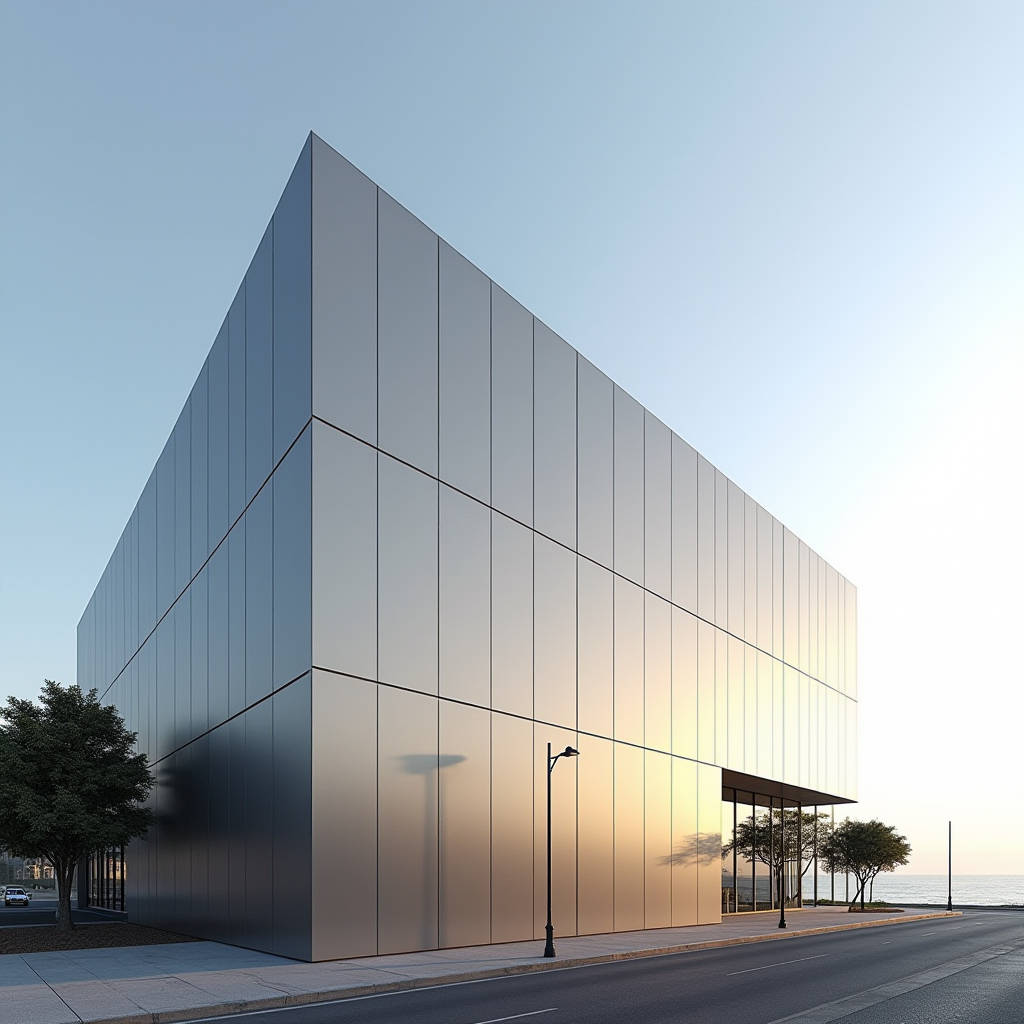
When a facade specifier in the Middle East or Southeast Asia asks for a solid cladding panel, the conversation almost always lands on Aluminum Coil 3003 before the sheet is ever cut. The reason is simple: this Al-Mn alloy, carrying roughly 1.0 to 1.5 percent manganese, sits at a practical midpoint between the soft 1100 series and the heat-treatable 5xxx and 6xxx families. It welds cleanly, forms without cracking, resists atmospheric corrosion, and cold works to a serviceable strength. For a solid aluminium cladding panel at 2.0, 2.5, or 3.0 mm, the coil is the raw feedstock, and the temper, the surface finish, and the coating stack you specify on that coil determine whether the finished panel survives a decade of coastal salt or fails within two seasons. This article walks through the engineering decisions that matter when you buy Aluminum Coil 3003 for a cladding project, from temper selection to coating chemistry and the fabrication tolerances that protect your curtain wall.
Why 3003 Is the Workhorse for Solid Cladding Coils
Aluminum Coil 3003 is a non-heat-treatable alloy, which means you cannot raise its strength through solution heat treatment. Instead, you rely on strain hardening during rolling and on the manganese that gives the alloy its identity. Compared with 1100, the 3003 grade is roughly 20 percent stronger in the annealed state, a margin that matters when a 3.0 mm panel spans a large unsupported area and must hold its flatness under wind load and thermal cycling. The manganese addition also improves resistance to general corrosion, which is why the alloy shows up in roofing, gutters, HVAC jacketing, and chemical equipment as much as in architectural cladding.
For the facade contractor, the practical consequence is that 3003 offers a forgiving balance. It forms easily, so press brakes and roll formers do not fight the material. It welds without the cracking sensitivity that plagues some higher-strength alloys. And it takes both anodizing and a full PVDF coating line without the surface defects that can appear on alloys with higher alloying content. That combination keeps scrap rates low and lets fabricators hold tight tolerances on panel edges and returns.
Temper Selection Drives Flatness and Formability
The temper you specify on Aluminum Coil 3003 is the single most under-appreciated variable in a cladding order. Suppliers commonly stock O, H14, H24, and H32 tempers, and the choice changes how the coil behaves on your line. An annealed O temper is the most formable, but it is soft enough that a large panel can oil-can or sag under its own weight during handling. A fully hard H18 temper gives the highest strength but makes tight bends and deep draws prone to cracking.
For solid cladding panels, H14 and H24 are the practical sweet spot. H14 is a strain-hardened temper with about half the full-hard strength, while H24 is strain-hardened and then partially annealed to restore formability. Both give enough stiffness for a 2.5 mm panel to hold its profile while still bending cleanly around returns and corners. If your project requires deep-formed sections or complex edge profiles, drop to H24 or even H32. If the panel is a flat, large-format sheet with minimal bending, H14 gives you the best flatness retention.
One caution: temper affects the coil's response to the coating line. PVDF cure cycles run at elevated temperatures, and a fully hard temper can relax slightly during cure, changing the panel's final dimensions. Discuss the cure profile with your coater before you lock in the temper, especially for large panels where a few tenths of a millimeter of movement across a 3-meter span is visible.
Coating Chemistry and the PVDF Stack
For architectural cladding, the coating is where most long-term failures originate. A bare Aluminum Coil 3003 will develop a natural oxide that protects it in most inland environments, but coastal, industrial, and high-UV sites demand a full coating system. The industry benchmark is a two-coat or three-coat PVDF (polyvinylidene fluoride) system, applied to a chromate or chrome-free conversion coating that bonds the finish to the metal.
The standard spec for architectural aluminum is AAMA 2605, which governs the performance of high-performance organic coatings. A 2605-compliant system typically carries a total dry film thickness of about 70 to 80 microns for a three-coat build, with a primer, a color coat, and a clear topcoat. The clear coat protects the pigment from UV degradation and is the reason a 2605 system can carry a 20-year warranty where a lesser system fails in five. If your project is coastal, insist on the 2605 spec rather than the lighter 2604, because the salt-laden atmosphere attacks the coating edge and the cut edges of the panel.
Do not neglect the cut edges. A PVDF coating protects the face, but the sheared and routed edges of a panel expose bare 3003. On a coastal facade, those edges corrode and bleed staining down the panel face. Specify an edge sealant or a clear edge coating in the fabrication shop, and make sure the installer applies a compatible sealant at the joints. This is a detail that shows up in the warranty claim file more often than any coating failure on the flat face.
Thickness, Width, and the Economics of the Coil
Aluminum Coil 3003 is stocked in a wide range of thicknesses, typically from 0.2 mm up to 6 mm, with slitting available to custom widths. For solid cladding panels, the practical range is 2.0 to 3.0 mm, with 2.5 mm as the most common default for exterior panels. Thinner material saves cost but sacrifices flatness and dent resistance; thicker material adds stiffness and impact resistance but raises both material cost and dead load on the supporting structure.
The width of the coil you buy has a direct effect on yield. A coil that matches the panel width with minimal trim waste reduces scrap, and a slitter can cut a master coil into several widths so you can run multiple panel sizes from a single purchase. For a large project, this is where the savings live. Buying a wide master coil and slitting in-house, or ordering pre-slit widths from a processor, can cut material waste by several percentage points compared with buying off-the-shelf widths and trimming every panel.
Fabrication Tolerances and Flatness Standards
Flatness is the property that separates a premium cladding panel from a reject. A coil that arrives with edge waviness or a center buckle will produce panels that oil-can the moment they are installed, and no amount of site adjustment fixes that. The flatness of the finished panel depends on the coil's own flatness, the tension leveling it receives, and the way the fabricator handles the sheet through cutting and forming.
Specify a coil that has been tension leveled, and ask your supplier for the flatness tolerance in writing. The relevant reference is the ASTM B209 standard for aluminum and aluminum-alloy sheet and plate, which sets dimensional and flatness limits. For architectural panels, a tighter-than-standard flatness is worth paying for, because a wavy panel is visible across an entire facade and is nearly impossible to correct on site.
Cutting also matters. Shear burrs and rough edges on a 3003 panel create stress risers that can initiate cracking at the bend lines, and they leave raw metal exposed to corrosion. Insist on clean shearing or CNC routing with deburring, and verify the edge condition on the first production run before the shop commits to the full batch.
Coastal and Industrial Environments: The Real Test
The environments that punish Aluminum Coil 3003 most are the ones where the alloy performs best if you specify it correctly, and worst if you do not. In a coastal site, the chloride-laden air attacks the coating edge and any exposed cut edge. In an industrial site, sulfur compounds and particulate fallout can etch the surface and accelerate corrosion at fastener holes. In both cases, the 3003 substrate is corrosion-resistant, but the system fails at the interfaces: edges, fasteners, and joints.
For these sites, specify a thicker PVDF system, seal all cut edges, use stainless steel or coated fasteners to avoid galvanic corrosion, and detail the joints so water drains rather than pooling. The alloy will hold up; the detailing is what protects the system.
Comparative Coating and Performance Data
The table below summarizes the practical performance differences between the coating systems and tempers most relevant to a solid cladding project. Use it as a working reference when you write your specification.
| Parameter | Two-coat PVDF (AAMA 2604) | Three-coat PVDF (AAMA 2605) | Bare / Anodized 3003 |
|---|---|---|---|
| Typical dry film thickness | 25-30 microns | 70-80 microns | Anodic film 15-25 microns |
| UV color retention | Moderate, 5-10 yr | High, 20 yr warranty | N/A (no pigment) |
| Coastal salt resistance | Moderate | High (edge sealing required) | Good but subject to pitting |
| Recommended temper | H14 / H24 | H14 / H24 | H24 / H32 |
| Typical application | Interior, light exterior | Exterior, coastal, high-UV | Interior, decorative |
| Relative cost per m² | Baseline | +15-25% | +10-15% (anodize) |
These figures are engineering estimates based on common industry practice and should be confirmed against the specific coating manufacturer's data sheet and the applicable AAMA standard for your project.
Sourcing and Quality Assurance
When you source Aluminum Coil 3003 for a cladding contract, verify three things before you commit: the alloy and temper certification against ASTM B209 or EN 485, the flatness and thickness tolerance, and the coating warranty documentation. A reputable supplier will provide mill test certificates and will stand behind the flatness claim. For a large facade package, it is worth auditing the coater's line and the fabricator's quality control, because the coil is only as good as the process that turns it into a panel.
Futeng® is one supplier that has built a reputation in this space by holding tight tolerances on 3003 coil and supporting fabricators with consistent temper and flatness across batches. For a procurement manager juggling multiple facade packages, a supplier who delivers a uniform product run after run reduces rework and keeps the schedule on track. That consistency is worth more than a marginal price difference on the coil.
Final Engineering Guidance
Aluminum Coil 3003 deserves its reputation as the workhorse alloy for solid cladding, but the alloy alone does not guarantee a durable facade. The temper you specify controls formability and flatness. The coating system, and whether it meets AAMA 2605, controls long-term color and corrosion performance. The edge treatment and joint detailing control where the system fails first. And the coil's flatness tolerance controls whether the finished panel looks crisp on the wall or waves in the sun.
For a coastal or high-UV project, specify a three-coat 2605 PVDF system on H14 or H24 coil, seal every cut edge, and verify flatness against a written tolerance. For an interior or sheltered application, a lighter system on H24 is adequate. In every case, confirm the mill certificates, audit the coater, and hold the fabricator to a clean edge standard. Do that, and a 3003 cladding system will deliver the service life your facade specification promises.