Aluminum Alloy Corrosion Resistance for Solid Cladding Panels and Coastal Facade Detailing
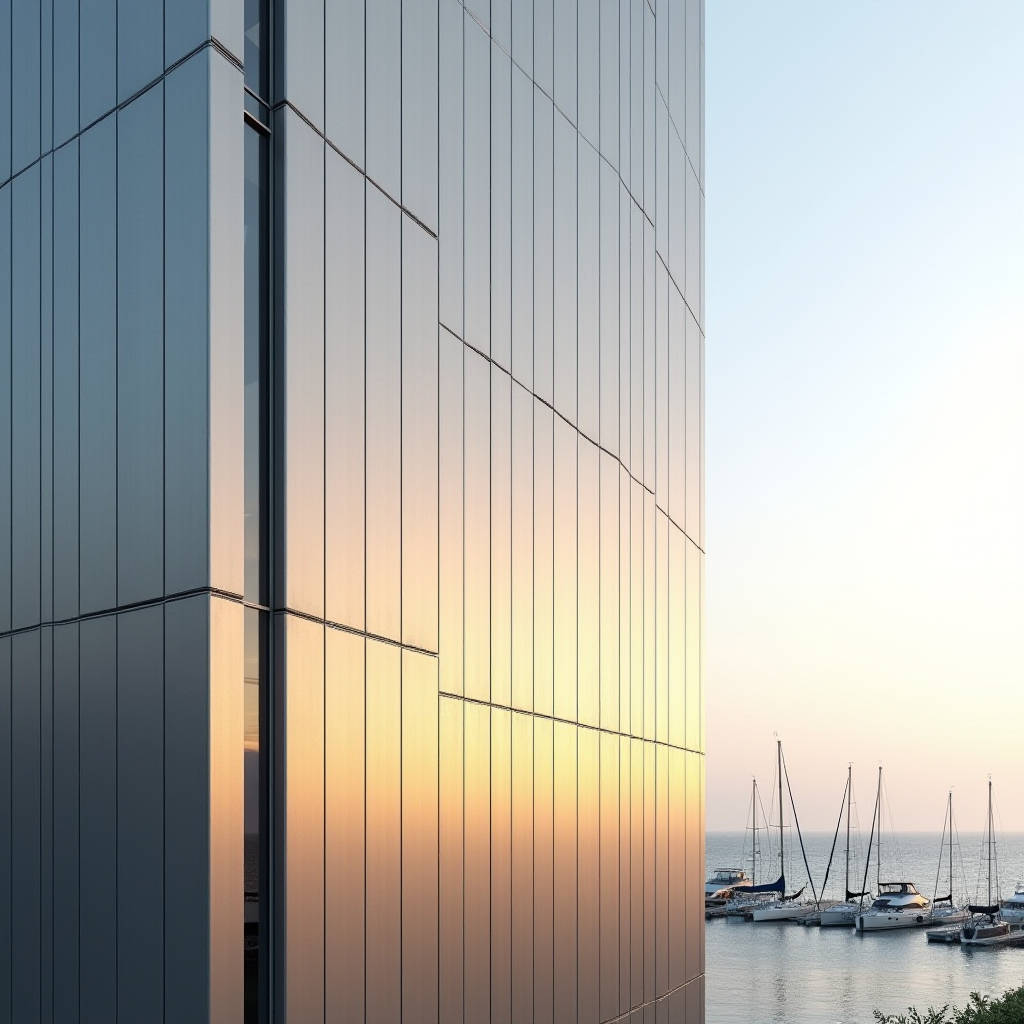
Aluminum Alloy Corrosion Resistance is not a single property but a system of interrelated decisions that begin at the alloy mill and end at the maintenance schedule. For a solid aluminium cladding panel on a coastal tower, the difference between a 25-year facade and a 7-year failure is rarely luck. It is the sum of alloy family selection, temper, surface preparation, coating chemistry, edge treatment, and galvanic isolation. This article walks through the engineering logic behind each of those layers, with the numbers that matter for a facade contractor or procurement manager who has to justify a specification to an owner. The goal is simple: give you a defensible basis for choosing a solid panel system that will not corrode, blister, or stain before its intended service life.
Why the Alloy Family Matters Before the Coating Is Even Discussed
Many procurement conversations start and end with the paint film. That is a mistake. The substrate underneath the coating determines whether a pinhole in the paint becomes a cosmetic defect or a structural one. For solid aluminium cladding panels, the two families that dominate are the 3xxx series (manganese alloys such as 3003 and 3005) and the 5xxx series (magnesium alloys such as 5052 and 5083). The 1xxx series offers the best inherent corrosion resistance but lacks the strength needed for large-format panels under wind load. The 2xxx and 7xxx series, which rely on copper and zinc for strength, are unsuited to exterior cladding because their intermetallic particles create localised galvanic cells that accelerate pitting in humid or marine air.
The practical engineering position is that 5xxx alloys give the best balance of strength and corrosion resistance for coastal and industrial facades. Magnesium in solid solution provides strength without the precipitation of copper-rich or zinc-rich phases that compromise the oxide film. The 5052 alloy, in particular, is a workhorse for marine-adjacent cladding because its magnesium content sits below the threshold where sensitisation becomes a concern in service. For less aggressive inland environments, 3003 or 3005 deliver adequate corrosion performance at a lower material cost, which matters when a project runs thousands of square metres.
The Electrochemical Reality of the Oxide Film
Aluminum Alloy Corrosion Resistance depends on a thin, self-repairing oxide layer that forms almost instantly when bare metal meets air. That film is what makes aluminium behave differently from steel. Steel rusts because its oxide is porous and flakes off, exposing fresh metal. Aluminium oxide is dense, adherent, and chemically stable across a narrow pH window. The practical consequence is that aluminium corrodes very slowly in the pH range of roughly 4 to 7, which covers most atmospheric and fresh-water exposure. Outside that window, in strongly acidic or alkaline conditions, the oxide dissolves faster than it reforms and the metal is attacked.
This explains why cement wash-down, alkaline cleaning agents, and even some grout residues are dangerous on a bare or damaged aluminium surface. A contractor who lets mortar sit on a panel edge for a week is effectively running a localised alkaline corrosion experiment. The same logic explains why coastal sites are harder on aluminium than inland sites despite the oxide film being intact: chloride ions disrupt the passive layer at localised points, and the resulting pitting is fed by the oxygen concentration gradient between the pit and the surrounding surface.
Surface Preparation Is the Difference Between a Coating and a Decoration
No coating survives a contaminated substrate. The single most common cause of premature coating failure on solid aluminium panels is not the paint chemistry but the surface condition underneath it. Anodising, chromate conversion, and the modern chrome-free conversion treatments all exist for one reason: to create a stable, chemically bonded base that gives the organic topcoat something to grip. A panel that is degreased, etched, and conversion-coated according to the coating supplier's written specification will hold its film for decades. A panel that is wiped down and painted will blister within a few years because the oxide layer is uneven and the adhesion is mechanical rather than chemical.
For a solid panel, the standard sequence is a five-stage pretreatment: alkaline clean, rinse, etch, rinse, and conversion coat. The conversion layer, whether chromate or the newer zirconium-based chemistries, is what actually ties the metal to the PVDF or polyester topcoat. Skipping any stage, or rushing the rinse, introduces salts and residues that become initiation sites for filiform corrosion under the film. Filiform corrosion is the classic failure mode of painted aluminium: thread-like filaments of corrosion that track under the coating from a damaged edge or a pinhole, lifting the paint and leaving a network of fine lines across the panel face.
Coating Chemistry and Film Thickness That Hold Up in Service
For exterior solid aluminium cladding, the coating specification is usually a two-coat or three-coat PVDF system. The resin is a polyvinylidene fluoride polymer, and the pigment is the part that actually carries the weather resistance. A genuine 70 percent PVDF resin system, verified by the pigment-to-resin ratio, is the industry benchmark for long outdoor life. The film thickness matters as much as the chemistry. AAMA 2605, the specification for high-performance organic coatings on architectural aluminium, calls for a dry film thickness of at least 70 micrometres for the total system. AAMA 2604 is the mid-range spec at roughly 50 micrometres, and AAMA 2603 is the low-cost interior-to-mild-exterior option at about 20 to 30 micrometres.
The table below summarises the practical differences a procurement manager should weigh when the coating spec is on the table.
| Coating System | Total Dry Film Thickness | Typical Spec | Expected Outdoor Life | Best Use |
|---|---|---|---|---|
| Two-coat PVDF | 70–80 µm | AAMA 2605 | 25+ years | Coastal, high-UV, landmark facades |
| Three-coat PVDF (with primer) | 80–100 µm | AAMA 2605 | 30+ years | Severe marine and industrial sites |
| Polyester (mid-grade) | 50–60 µm | AAMA 2604 | 10–15 years | Inland, moderate exposure |
| Polyester (economy) | 20–30 µm | AAMA 2603 | 5–8 years | Interior or sheltered locations |
For a coastal tower or an industrial building near a chemical plant, the three-coat PVDF system at 80 to 100 micrometres is the defensible choice. The extra primer layer is not marketing; it is a barrier that prevents the topcoat from pulling away from the conversion layer and gives the system a second line of defence at the most stressed interface. On a 2.0 mm or 3.0 mm solid panel, the coating cost is a small fraction of the total panel cost, so the marginal expense of moving from a two-coat to a three-coat system is trivial compared with the cost of a mid-life recoating exercise on a curtain wall.
Edge Treatment and Design Details That Corrosion Tests Miss
Flat-panel corrosion tests are useful, but real facades fail at edges, cut-outs, and fixings. A coating that passes a salt-spray test on a flat coupon can still fail at a sheared edge where the bare aluminium is exposed, or at a drilled hole where the fastener creates a galvanic couple with a dissimilar metal. The engineering discipline is to treat every cut edge, every fastener, and every intersection as a potential corrosion site and design it out.
Three design rules carry most of the value. First, specify edge sealing. A sheared or routed edge exposes the substrate, and unless it is sealed with a compatible edge sealer or the panel is specified with a factory-applied edge coating, that line becomes the initiation point for filiform corrosion. Second, isolate dissimilar metals. Stainless steel fasteners are common, but they sit higher in the galvanic series than aluminium, so a wet stainless-to-aluminium joint can drive corrosion of the aluminium. Use nylon or EPDM washers, or specify fasteners that are galvanically compatible, and keep the contact area dry. Third, avoid trapping water. A horizontal panel joint that holds a film of water is a continuous corrosion cell. Drainage slots, back-ventilation, and a minimum slope on any horizontal surface are not aesthetic choices; they are corrosion-control measures.
Galvanic Corrosion Is the Silent Killer of Mixed-Metal Facades
Aluminum Alloy Corrosion Resistance is compromised the moment the panel touches a more noble metal in the presence of an electrolyte. Rainwater, sea spray, and even condensation provide the electrolyte. The result is that the aluminium, being the less noble metal, becomes the anode and corrodes preferentially. The classic cases are stainless steel brackets, copper flashings, and galvanised steel fixings in contact with aluminium. The corrosion is not always visible at the contact point; it often appears as pitting or white powder on the aluminium some distance away, where the current exits.
The mitigation is straightforward. Use compatible fasteners, or interpose a non-conductive barrier such as a nylon washer or a Neoprene gasket at every dissimilar-metal interface. Where copper is unavoidable, such as a copper roof above an aluminium soffit, keep the two metals physically separated and ensure that runoff from the copper does not wash across the aluminium. Copper ions in runoff are particularly aggressive to aluminium and can cause rapid pitting even without direct contact.
Marine and Industrial Environments Demand a Higher Specification
Atmospheric corrosion rates for aluminium are low in clean inland air, often below 0.1 micrometres per year. In a coastal site within a few hundred metres of the surf, that rate rises sharply because of airborne chlorides, and in an industrial site with sulphur dioxide or other acid gases, the oxide film is attacked from both sides. The practical response is not a different alloy but a thicker, more robust coating system and stricter edge treatment. For a marine facade, the specification should move to the three-coat PVDF system at the top of the AAMA 2605 band, with every edge sealed and every fastener isolated. For an industrial site, the same coating applies, and the maintenance schedule should include a regular wash-down to remove deposited salts and particulates before they can hold moisture against the film.
ISO 12944, the standard for protective paint systems for steel, has no direct aluminium equivalent, but its principles of environment classification and coating-system selection map cleanly onto aluminium cladding. The C5-M (high marine) and C5-I (high industrial) classifications in ISO 12944 are a useful shorthand for deciding how aggressive the service environment is and therefore how robust the coating system should be. A facade designed for a C3 inland environment does not belong on a C5-M coastline.
Maintenance Is Part of the Corrosion-Resistance Equation
No coating is maintenance-free. The difference between a 25-year facade and a 12-year facade is often simply whether the building is washed. Deposited chlorides and industrial particulates hold moisture against the film and, over time, work their way through micro-defects. A regular wash schedule, even a simple fresh-water rinse every six to twelve months, removes the electrolyte before it can do sustained damage. This is not a cosmetic concern; it is a corrosion-control measure that directly extends the service life of the coating and the substrate beneath it.
For a procurement manager, the maintenance commitment should be written into the specification, not left to chance. A building owner who understands that a coastal facade needs a wash program is an owner who will not be calling back for a premature recoating. The cost of a wash program over twenty years is a fraction of the cost of a mid-life recoating exercise, which on a large curtain wall runs into six figures and disrupts the building's occupants.
A Practical Specification for a Long-Life Solid Panel Facade
Pulling the engineering thread together, a defensible specification for a long-life solid aluminium cladding facade looks like this. Use a 5xxx series alloy such as 5052 for coastal or industrial sites, or 3003/3005 for inland work. Specify a panel thickness of 2.0 mm for standard rainscreen applications and 3.0 mm for large-format or high-wind zones. Require a five-stage pretreatment with a chrome-free conversion coat, followed by a three-coat PVDF system at 80 to 100 micrometres, verified against AAMA 2605. Seal every edge, isolate every dissimilar-metal fixing, and ensure back-ventilation and drainage so no water is trapped. Finally, put a wash schedule in the operations manual. Suppliers such as Futeng® routinely deliver solid panels to this specification, and the discipline of matching the alloy, the coating, and the detailing to the actual service environment is what separates a facade that ages gracefully from one that fails early.
Aluminum Alloy Corrosion Resistance is ultimately a design decision made before the panel is ever cut. Choose the alloy for the environment, protect it with a conversion layer and a robust PVDF film, detail the edges and fixings so corrosion has nowhere to start, and maintain the surface so the electrolyte never gets a foothold. Done in that order, a solid aluminium cladding facade is one of the most durable and lowest-maintenance building envelopes available, with a service life that comfortably exceeds the design life of most commercial buildings.