Extruded Aluminum Alloy Selection for High Performance Building Facades
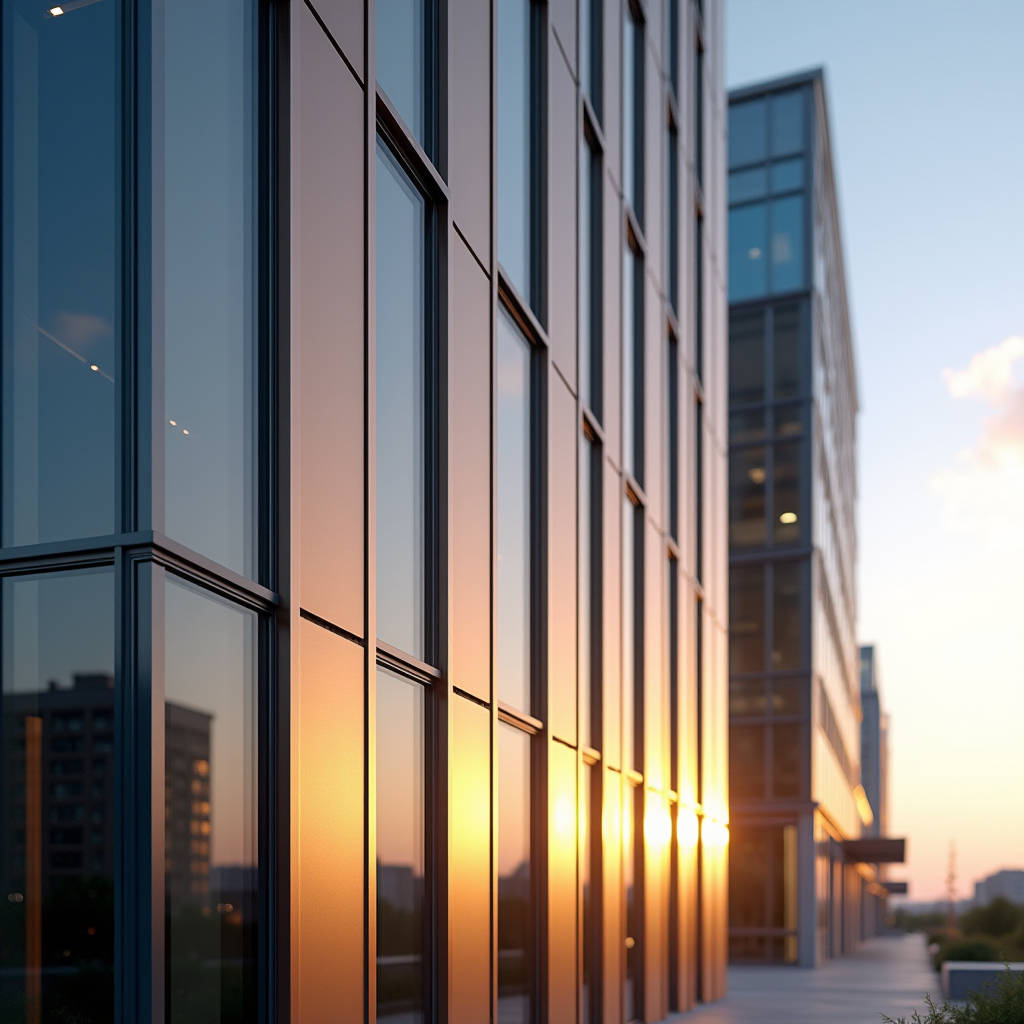
When a facade engineering team sits down to specify materials for a high-rise curtain wall, the conversation about Extruded Aluminum Alloy usually starts with one question: which alloy series actually holds up under real-world building envelope conditions? The answer is not as straightforward as pulling a data sheet off a shelf. The extrusion process transforms aluminum billets into complex architectural profiles, but the alloy chemistry determines whether those profiles will resist pitting corrosion on a coastal tower, maintain dimensional stability through thermal cycling, or survive decades of UV exposure without losing structural integrity. This article examines the intersection of alloy selection, extrusion process control, and long-term facade performance, drawing on field data from completed projects across Southeast Asia, the Middle East, and North America.
Why Alloy Chemistry Matters Before the Die Even Heats Up
The extrusion press can push aluminum through a die at speeds exceeding 50 meters per minute, but the metallurgical behavior of the billet inside that press dictates everything that follows. Extruded Aluminum Alloy grades in the 6000 series dominate architectural applications, and for good reason. These magnesium-silicon compounds form Mg₂Si precipitates during artificial aging, creating a grain structure that balances extrudability with post-forming strength. But the ratio of magnesium to silicon, the iron content, and even trace elements like manganese shift the entire performance profile of the finished profile.
Alloy 6063, often called architectural aluminum, contains roughly 0.45-0.9% magnesium and 0.2-0.6% silicon. This formulation flows through complex hollow dies with relative ease, producing the tight corner radii and thin walls that curtain wall designers demand. The trade-off is yield strength: 6063-T6 typically delivers around 170-215 MPa, which is adequate for most cladding support systems but falls short for high-load structural members. Alloy 6061 pushes magnesium up to 0.8-1.2% and adds 0.15-0.40% copper, boosting yield strength to 240-276 MPa in T6 temper. The cost is reduced extrudability and a slightly rougher as-extruded surface finish that requires more aggressive post-processing.
What gets overlooked in many specification documents is the role of quench sensitivity. Thicker profile sections in 6061 can experience reduced strength at the core if the quench rate after extrusion drops below the critical cooling threshold. This matters enormously for solid aluminum cladding panels that incorporate extruded stiffeners or mounting rails. A panel might meet the specified alloy grade on paper but underperform in practice because the extrusion facility did not control quench conditions properly.
Reading the Temper Designation: T5, T6, and the Thermal Path
The temper designation appended to any Extruded Aluminum Alloy specification tells a story about heat treatment history. T5 temper means the profile was cooled from the extrusion temperature and then artificially aged. T6 temper involves a solution heat treatment step followed by quenching and artificial aging, producing higher strength but introducing residual stress that can cause dimensional instability during machining or welding.
For facade applications, the choice between T5 and T6 often hinges on whether the profile will undergo significant fabrication after extrusion. A T5 profile may be easier to bend, cut, and weld without distortion, making it suitable for complex cladding panel assemblies. A T6 profile delivers higher strength-to-weight ratios but demands careful handling during fabrication to avoid stress corrosion cracking, particularly in environments with chloride exposure.
Field experience from coastal projects in the Gulf region has shown that 6063-T6 profiles used as cladding attachment rails can develop micro-cracks at fastener holes if the hole edge distance falls below 1.5 times the hole diameter. This is not a material defect but a design issue that arises when engineers treat all 6000-series tempers as interchangeable. The solution is not to abandon T6 but to specify minimum edge distances and, where possible, to use extruded slots rather than drilled holes to distribute stress more evenly.
Corrosion Behavior Across Climate Zones
Architectural aluminum enjoys a reputation for corrosion resistance, but that reputation depends heavily on alloy selection and surface treatment. The 6000-series alloys form a protective aluminum oxide layer naturally, yet the presence of copper in 6061 makes it slightly more susceptible to galvanic corrosion when in contact with dissimilar metals in the presence of an electrolyte. In practice, this means a 6061 extruded bracket fastened to a steel substructure with stainless steel bolts requires careful isolation strategy, particularly in marine or industrial atmospheres.
The following table summarizes corrosion performance across common architectural alloys and environments:
| Alloy & Temper | Rural/Inland | Urban/Industrial | Coastal (≥3km) | Coastal (<3km) | Typical Pitting Depth (10yr, μm) |
|---|---|---|---|---|---|
| 6063-T5 | Excellent | Good | Good | Moderate | 15-30 |
| 6063-T6 | Excellent | Good | Good | Moderate | 18-35 |
| 6061-T6 | Excellent | Good | Moderate | Requires Monitoring | 25-50 |
| 6082-T6 | Excellent | Good | Moderate | Requires Monitoring | 20-45 |
| 6005A-T6 | Excellent | Good | Good | Moderate | 15-30 |
Data compiled from field exposure studies and accelerated corrosion testing per ISO 9223 atmospheric corrosivity classifications. Actual performance depends on specific microclimate conditions, surface treatment, and maintenance practices.
Extrudability and Its Hidden Cost Implications
Extrudability is not a binary property. It exists on a spectrum that directly affects production economics. Alloy 6063 achieves extrusion speeds of 25-50 m/min for solid profiles and 15-30 m/min for hollow sections. Alloy 6061 runs 30-40% slower, which translates to higher per-meter costs. But the real cost driver is die wear. The higher magnesium and copper content in 6061 accelerates die erosion, reducing die life by 20-30% compared to equivalent production runs in 6063.
For a typical curtain wall project requiring 50,000 linear meters of extruded profiles, the alloy choice can shift the extrusion cost by $0.80 to $2.50 per meter depending on profile complexity. Multiply that across a large-scale facade project, and the numbers become material to the procurement decision. However, selecting 6063 purely on cost grounds without verifying structural adequacy is a mistake that can lead to expensive remedial work later.
Futeng® has observed a growing trend among specification writers in the Asia-Pacific region toward 6005A as a middle-ground alloy. With yield strength around 260 MPa in T6 temper and extrudability closer to 6063 than 6061, 6005A offers a pragmatic compromise for projects where 6063 strength margins are tight but 6061 costs are prohibitive. The alloy is recognized under The Aluminum Association standards and has gained traction in European and Asian facade markets.
Surface Finish: The Intersection of Alloy and Aesthetics
Architects specify Extruded Aluminum Alloy profiles for visible facade elements because they want clean lines, consistent color, and a surface that holds up under scrutiny from a few meters away. The alloy choice directly influences what surface finishes are achievable and how they perform over time.
Alloy 6063 produces a finer grain structure and smoother as-extruded surface than 6061, making it the preferred substrate for anodizing. An anodized finish on 6063 can achieve a uniform, aesthetically pleasing appearance with minimal die lines or streaking. On 6061, the same anodizing process may produce a slightly darker, less uniform tone due to the copper content and coarser grain structure. For projects where anodized aluminum is the specified finish, 6063 or 6063A (with tighter iron content limits) is almost always the correct choice.
For PVDF (polyvinylidene fluoride) coatings applied to solid aluminum cladding panels, the alloy substrate matters less for appearance but more for long-term adhesion. PVDF systems typically involve a primer layer, a color coat, and a clear topcoat, with total dry film thickness of 30-40 μm for architectural applications per AAMA 2605 standards. The chromate or chrome-free conversion coating that precedes the primer must bond effectively to the alloy surface. 6063 and 6061 both accept conversion coatings well, but 6061's higher copper content requires more stringent process control to prevent localized adhesion failures over time.
Thermal Performance and Dimensional Stability
Aluminum expands and contracts with temperature changes at roughly twice the rate of steel and three times that of concrete. The coefficient of thermal expansion for 6000-series alloys sits at approximately 23.4 × 10⁻⁶ /°C. This is consistent across 6061, 6063, and 6082, so alloy selection does not significantly alter thermal movement calculations. However, the temper condition can influence how the profile responds to constrained thermal cycling.
In unitized curtain wall systems, extruded aluminum mullions and transoms are subjected to daily thermal cycles that can exceed 40°C in desert climates. Over a 30-year building lifespan, this represents more than 10,000 thermal cycles. Profiles in T6 temper, with their higher residual stress from quenching, may exhibit slightly greater long-term creep under sustained load at elevated temperatures compared to T5 profiles. This is a second-order effect, but it can matter in tall buildings where cumulative facade movement affects gasket compression and weather seal performance.
The practical implication for solid aluminum cladding panel specification is that extruded attachment components should be designed with adequate expansion joints and sliding connections. A 3-meter panel length in 6063-T6 will expand approximately 2.1 mm across a 30°C temperature swing. If the attachment system does not accommodate this movement, the panel can buckle or the fasteners can work loose over time.
Welding Extruded Components: What Changes with Alloy
Some facade designs require welded connections between extruded aluminum profiles, particularly for complex geometric features, canopies, or structurally loaded brackets. Welding introduces a heat-affected zone (HAZ) where the mechanical properties of the base alloy degrade significantly. In 6061-T6, the HAZ can lose 40-50% of the parent material yield strength. Post-weld heat treatment can restore some of this strength, but the practical reality on a construction site is that most welded connections in extruded aluminum remain in the as-welded condition.
Alloy 6063 loses less strength in the HAZ relative to 6061, partly because its starting strength is lower and partly because the Mg₂Si precipitates in 6063 re-dissolve and re-precipitate more readily during the welding thermal cycle. For welded facade components, 6063-T5 filler material (typically 4043 or 5356 alloy) is commonly used regardless of the base alloy, but the weld design must account for the reduced HAZ strength.
6082, a medium-to-high strength alloy gaining popularity in European facade engineering, presents a different welding profile. Its manganese content helps control grain growth in the HAZ, and post-weld strength retention is marginally better than 6061. However, 6082 is more quench-sensitive than 6063, and thick sections may require forced air or water quenching after extrusion to achieve the specified mechanical properties.
Supply Chain Realities: Availability and Lead Times
Specifying an Extruded Aluminum Alloy that is technically perfect for a project means little if the required profiles cannot be sourced within the construction schedule. 6063 is the most widely available extrusion alloy globally, with virtually every aluminum extrusion facility stocking 6063 billets in standard diameters. 6061 is also broadly available but with longer lead times for non-standard profile geometries. 6082 and 6005A are less common in some regions, particularly North America, where 6061 dominates the structural extrusion market.
Procurement teams should verify alloy availability early in the design phase, especially for projects in emerging markets where the local extrusion industry may only support 6063 production. Importing 6061 or 6082 profiles adds freight costs, customs delays, and quality verification complexity. A practical approach is to design the facade system so that structural components requiring higher-strength alloys are limited to a smaller number of standardized profiles, while the bulk of the extrusion work uses 6063.
For solid aluminum cladding panels in the 2.0 mm to 3.0 mm thickness range, the panel itself is typically fabricated from sheet rather than extrusion, but the supporting framework, stiffeners, and mounting brackets are almost always extruded. The alloy choice for these extruded components should be coordinated with the panel supplier to ensure compatibility of thermal movement, galvanic corrosion potential, and mechanical load transfer.
Quality Verification: What to Check Before Signing Off
A mill test certificate (MTC) stating "6063-T6" does not guarantee that every profile in a shipment meets the specification. Reputable facade contractors implement a quality verification protocol that includes:
- Spectrographic analysis of randomly selected samples to confirm alloy chemistry within Aluminum Association specified limits
- Tensile testing per ASTM B221 or equivalent to verify yield strength, ultimate tensile strength, and elongation
- Dimensional inspection of profile cross-sections against the approved shop drawings, with particular attention to wall thickness tolerances
- Surface condition assessment for die lines, pick-up, blistering, or other extrusion defects that could affect coating adhesion or anodizing quality
- Hardness testing (Webster or Vickers) as a rapid field check that correlates reasonably well with tensile properties
For critical structural applications, some project specifications now require Charpy impact testing or fracture toughness assessment, particularly for 6061-T6 components that will experience dynamic loading from wind or seismic events. This goes beyond standard mill certification but provides additional confidence in material performance under extreme conditions.
Making the Final Alloy Decision
The choice of Extruded Aluminum Alloy for a facade project is not a single-variable optimization. It involves balancing strength requirements, corrosion resistance, surface finish quality, fabrication characteristics, cost, and availability. The following decision framework reflects what experienced facade engineers apply in practice:
For non-structural architectural trim, copings, and visible cladding profiles where appearance matters more than strength, 6063-T5 or 6063-T6 is the default choice. The alloy anodizes beautifully, accepts PVDF coatings reliably, and is available from virtually every extrusion facility worldwide.
For structural mullions, transoms, and load-bearing brackets in mid-rise buildings, 6063-T6 often suffices if the section properties are adequate. For high-rise applications or where profile dimensions are constrained, 6061-T6 or 6082-T6 provides the necessary strength margin. The cost premium for these alloys, typically 15-25% over 6063, is modest compared to the total facade cost and trivial compared to the cost of a structural failure.
For coastal projects within 3 kilometers of saltwater, 6063 with appropriate surface treatment (thick anodizing or high-performance PVDF) generally outperforms bare 6061. If 6061 is structurally necessary, the specification should mandate chromate conversion coating plus a robust primer system, and the design should include provisions for inspection and maintenance access over the building's service life.
For welded assemblies, 6063-T5 is the most forgiving option, but the reduced strength must be compensated by section design. 6082-T6 offers a better balance of weldability and strength but requires careful supply chain planning.
Alloy selection is fundamentally a risk management exercise. The cheapest alloy that meets the structural and aesthetic requirements may not be the most cost-effective over a 30-year building lifespan when maintenance, durability, and potential failure costs are factored in.
The facade industry continues to evolve, with new alloy variants and improved extrusion process controls emerging regularly. Staying current with AAMA and ISO standards, attending industry technical committees, and maintaining direct communication with extrusion mills are essential practices for any engineering team serious about facade performance. The right alloy decision, backed by rigorous quality verification and sound detailing, is the foundation of a building envelope that performs as intended for decades.