Aluminum Solid Panel Spec Review for Façade Contractors Before the Tender Drops
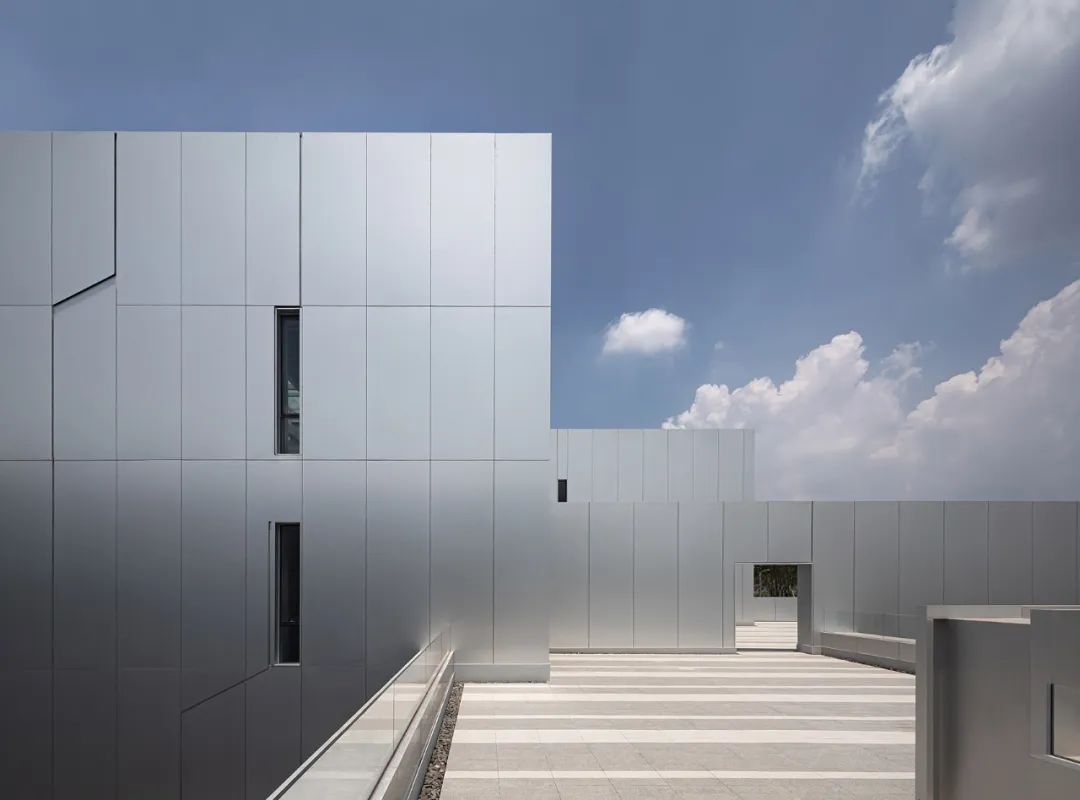
When a façade contractor in Dubai asks for a 3.0mm aluminum solid panel with a 40-micron PVDF finish, they're not guessing. They're quoting a spec that has already been locked into a tender document. The wrong response — offering a thinner gauge, quoting a polyester coating, confusing the product with an aluminum composite panel — can disqualify a supplier before the conversation even starts. For procurement managers and building envelope specialists, the decision to specify solid aluminium cladding panels comes down to four hard metrics: flatness tolerance after fabrication, coating adhesion under thermal cycling, wind load performance at the tested span, and the factory's ability to deliver mill-finish consistency across 2,000-square-meter batches. This article breaks down what those metrics actually mean on site, how to verify them before signing a PO, and where the real cost risks hide in the supply chain.
The Spec Sheet That Separates Solid Aluminium From Everything Else
Walk through any major commercial façade project in the Gulf or Southeast Asia and you'll see the same pattern. The architectural spec calls for an aluminum solid panel — not a sandwich panel, not a honeycomb core, not an ACP. The alloy is almost always 1100-H14 or 3003-H14. The temper matters because it dictates how the metal behaves when routed, folded, and welded into a rainscreen cassette. A 3003-H14 aluminum solid panel at 2.5mm thickness will take a 90-degree fold with a 2mm inside radius without micro-cracking. Drop to 1100-O temper and you'll get deeper drawability but lower tensile strength — around 90 MPa versus 150 MPa for H14 temper. That trade-off affects everything from wind load calculations to the maximum unsupported span.
Three thicknesses dominate the global market for solid aluminium cladding panels:
2.0mm — Used for interior lobby panels, soffit linings, and low-rise façades where wind pressure stays below 1.5 kPa. Minimum order quantities for custom perforation patterns start at around 300 m² at most Chinese mills.
2.5mm — The workhorse for mid-rise curtain wall applications. Handles wind loads up to 2.8 kPa on a 600mm span with intermediate stiffeners. This is the thickness most frequently specified in GCC project tenders.
3.0mm — Required for high-rise spandrel panels and areas with typhoon-level wind loading. The extra half-millimeter adds roughly 18% to material cost but eliminates the need for additional stiffener ribs on spans under 800mm.
Field Note: Always request the mill certificate (EN 10204 Type 3.1) showing both alloy designation and temper. We've seen shipments where the alloy was correct but the temper was wrong — the panels folded clean but oil-canned badly after installation because the yield strength was 30% below spec.
Coating Chemistry: Why Kynar 500 Matters More Than Color Matching
Ask any quality manager at a curtain wall subcontractor what keeps them up at night and they'll say coating failure. Not because it happens often, but because when it does, the remediation cost runs into six figures. A properly specified aluminum solid panel uses a PVDF fluoropolymer coating system based on Kynar 500 resin — minimum 70% PVDF by weight in the color coat, applied over a chrome-based conversion coating and a corrosion-resistant primer. Total dry film thickness should land between 30 and 45 microns, measured with a calibrated eddy-current gauge on the flat surface before fabrication.
The spec that gets enforced on site is AAMA 2605. That standard demands 4,000 hours of salt spray resistance (ASTM B117), 10-year South Florida exposure with no color change exceeding 5 Delta E units, and adhesion testing per ASTM D3359 Method B with a 5B rating after boiling water immersion. A supplier who quotes AAMA 2604 instead — which only requires 3,000 hours salt spray and allows 5 Delta E within 5 years — is offering a different product at a different price point. The difference in coating cost between the two specs is roughly $3-5 per square meter. On a 10,000 m² project, that's real money.
| Coating Parameter | AAMA 2604 (Standard) | AAMA 2605 (High-Performance) | On-Site Verification Method |
|---|---|---|---|
| PVDF Resin Content | ≥50% | ≥70% (Kynar 500 or Hylar 5000) | FTIR analysis of cured film sample |
| Salt Spray Resistance | 3,000 hours | 4,000 hours | ASTM B117 chamber test |
| Color Retention (5 years) | ΔE ≤ 5 | ΔE ≤ 5 | Spectrophotometer, D65 illuminant |
| Minimum Dry Film Thickness | 25 microns | 30 microns (color + clear) | Eddy-current gauge, 5 points per panel |
| Pencil Hardness | HB minimum | F minimum | ASTM D3363 |
| Impact Resistance | No cracking at 30 in-lb | No cracking at 40 in-lb | ASTM D2794, direct and reverse |
One detail that gets overlooked in tender documents: the edge treatment. When a 2.5mm aluminum solid panel is routed and folded, the cut edges expose bare aluminum. A quality fabricator will apply a touch-up pen with matching PVDF coating to every routed groove and cut edge. Without this, moisture wicks into the coating-substrate interface and filiform corrosion starts within 18 months — especially in coastal environments like Jeddah or Singapore.
Flatness Is the Real Cost Driver
Nobody writes a spec for "oil canning." But everyone notices it. The wavy distortion that appears on a large-format aluminum solid panel under certain light conditions is the single most common source of post-installation disputes between contractors and suppliers. The root cause is usually residual stress in the aluminum sheet, introduced during the rolling process at the mill and then released unevenly during fabrication.
The industry standard for flatness on a solid aluminium cladding panel is defined by ASTM B209 — specifically, the flatness tolerance for aluminum sheet in the H14 temper. For a 2.5mm sheet in a 1,500mm x 3,000mm format, the allowable deviation from a flat surface is typically 6mm over the full length. But that's the mill standard. After routing, welding, and reinforcing, a fabricated panel should hold flatness to within 2mm per linear meter when measured with a straight edge and feeler gauge. Achieving that requires:
Stress-relieved aluminum coil from mills that control cold-rolling reduction ratios below 40% per pass
CNC routing with depth tolerance of ±0.1mm to prevent uneven material removal
Reinforcement ribs attached with structural adhesive (not just spot welding) to distribute stress
Horizontal storage and transport — never lean panels at an angle for more than 24 hours
Pro Tip: Before approving a factory's first article inspection, take the largest panel in the batch and hold it at a 15-degree angle under diffuse daylight. Walk 10 meters back. If you see any wave pattern, reject it on the spot. That pattern will only get worse after thermal cycling on the building.
Supply Chain Reality: Lead Times, MOQs, and Packaging That Survives
Procurement managers working on fast-track projects need to understand the real production timeline for an aluminum solid panel order. The numbers that factories quote — "4 weeks" — assume a standard RAL color with existing coil stock. Add a custom color match, and you're looking at 6-7 weeks. Add perforation, and it's 8-9. Add a project with 15 different panel sizes requiring individual CNC programs, and you're at 10 weeks minimum. These are not pessimistic estimates. They're the reality of a factory running at 85% capacity utilization.
Here's what a typical production schedule looks like for a 5,000 m² order of 2.5mm aluminum solid panel with PVDF coating in RAL 9006:
Week 1: Material procurement — aluminum coil from the mill, PVDF paint from the coating supplier. If the mill is running a campaign for 3003-H14 that week, you're lucky. If not, add 10 days.
Week 2-3: Sheet cutting, CNC routing, folding, welding of reinforcement ribs. Quality control checks dimensions on 10% of panels per AAMA 609.1 tolerances.
Week 4-5: Surface pretreatment (chrome conversion coating), primer application, color coat, clear coat. Curing at 230°C for 10 minutes per coat. Panel-by-panel film thickness measurement.
Week 6: Final inspection, packaging, and loading. Each panel gets a PE film with UV inhibitors — not the cheap stuff that bonds to the paint after 3 weeks in a container.
Packaging deserves its own paragraph because it's where the margin-killing damage happens. A standard export pack for solid aluminium cladding panels to the Middle East uses a plywood crate with foam spacers between each panel. The crate base must be reinforced with steel angles to prevent forklift tine damage. Panels should be packed face-to-face and back-to-back with interleaving PE foam — never kraft paper, which absorbs moisture and leaves marks on the PVDF surface. A 20-foot container holds roughly 800-1,000 m² of 2.5mm panels, depending on the panel dimensions and crate configuration. FOB Shanghai to Jebel Ali runs about $1,800-2,200 for a 20-foot container as of mid-2025.
For projects specifying the aluminum solid panel through a performance-based tender, the supply chain evaluation should include a factory audit. Check whether the fabricator owns their own CNC routing centers and brake presses or subcontracts fabrication. Subcontracting adds 15-20% to cost and introduces quality variability. Suppliers like Futeng® that operate integrated production lines — from coil slitting through to final packaging — can typically hold tighter tolerances and shorter lead times because there's no handoff between facilities.
Wind Load, Span Tables, and the Engineering Behind the Panel
An aluminum solid panel on a high-rise isn't just a decorative skin. It's a structural element that must resist wind suction forces that can exceed 3.0 kPa in typhoon zones. The engineering calculation follows ASTM E330 for static wind load testing and ASTM E1996 for cyclic wind load testing. For a 2.5mm solid aluminium cladding panel with a 600mm x 1,200mm span and two intermediate stiffeners, the allowable deflection under design wind load is typically L/60 — about 10mm at mid-span. That's the serviceability limit. The ultimate limit state requires the panel and its fixings to resist 1.5 times the design wind load without failure.
The fixing system matters as much as the panel itself. Most rainscreen systems use aluminum extruded brackets and stainless steel screws (A2-70 or A4-80 grade depending on corrosion environment). The bracket spacing is typically 400-600mm vertically and matched to the floor slab anchor points. A common failure mode — and one that's entirely avoidable — is galvanic corrosion between the stainless steel fixing and the aluminum panel. The solution is a nylon isolating washer at every fixing point, specified in the shop drawing and verified during the first site inspection.
Thermal movement is another engineering consideration that gets underestimated. An aluminum solid panel at 3,000mm length will expand approximately 3.6mm across a 50°C temperature swing (coefficient of linear expansion for aluminum is 23.1 × 10⁻⁶ per °C). The joint design must accommodate this movement without buckling the panel or stressing the fixings. A 10mm open joint between panels is standard for rainscreen systems; for sealed systems, a 6mm minimum joint with a compressible backer rod and weather sealant is typical.
Cost Breakdown: Where the Money Goes on a Solid Aluminium Façade Package
When a procurement manager receives a quote for $85/m² for a 2.5mm aluminum solid panel with PVDF coating, they need to understand what's behind that number. The raw aluminum coil accounts for roughly 35-40% of the fabricated panel cost. PVDF coating adds 20-25%. Fabrication — cutting, routing, folding, welding — accounts for another 25-30%. The remaining 10-15% covers packaging, factory overhead, and margin. This breakdown shifts significantly with thickness: moving from 2.0mm to 3.0mm increases material cost by about 50% but fabrication cost by only 10%, because the processing steps are essentially the same.
What doesn't appear in the per-square-meter price but hits the project budget hard:
Custom color matching: If the architect specifies a non-standard RAL color, the paint supplier charges a matching fee of $500-1,500 and the minimum paint batch size might be 200 liters — enough for 3,000-4,000 m². On a smaller project, you're paying for paint you won't use.
Perforation: Adding a perforation pattern to an aluminum solid panel increases fabrication cost by 30-50% depending on the open area percentage. Tooling wear on the CNC punches is significant, and the scrap rate increases because perforated sheets are more prone to distortion during handling.
Site measurements: If the contractor doesn't provide accurate as-built dimensions, the factory either builds in excessive tolerance (wasting material) or produces panels that don't fit (requiring rework). The cost of sending a survey team to site is trivial compared to the cost of re-fabricating 200 panels.
Quality Control Documentation That Actually Protects the Buyer
A purchase order for solid aluminium cladding panels should specify exactly which quality documents accompany the shipment. The minimum package includes:
Mill test certificates (EN 10204 Type 3.1) for each coil batch, showing chemical composition, tensile strength, yield strength, and elongation
Coating supplier certification confirming Kynar 500 or Hylar 5000 resin content
In-house QC reports showing film thickness measurements for each panel (5-point grid pattern)
Color measurement data (Delta E values against the approved reference sample, D65/10° observer)
Dimensional inspection reports for fabricated panels, with tolerances per AAMA 609.1 or project-specific requirements
Adhesion test results (cross-hatch per ASTM D3359, wet and dry)
For critical projects — hospitals, airports, high-rise towers over 150 meters — consider specifying third-party inspection. An organization like SGS or Bureau Veritas can witness the coating application, verify film thickness, and sign off on the final inspection before the panels leave the factory. The cost is roughly $2,000-3,000 for a 3-day inspection, and it's the cheapest insurance a buyer can buy.
FAQ: Aluminum Solid Panel Procurement
What's the difference between an aluminum solid panel and an aluminum composite panel?
An aluminum solid panel is a single sheet of aluminum alloy — typically 1100-H14 or 3003-H14 — at a thickness of 2.0mm, 2.5mm, or 3.0mm. It has no core material. An aluminum composite panel (ACP) consists of two thin aluminum skins (0.3-0.5mm each) bonded to a polyethylene or mineral-filled core. Solid panels offer higher rigidity, better fire performance (they're non-combustible per EN 13501-1 Class A1), and can be welded and folded without delamination risk. ACPs are lighter and cheaper but cannot match the spanning capability or durability of a solid aluminium cladding panel in high-rise applications.
What coating specification should I require for a coastal project?
For any project within 5 kilometers of a coastline, specify AAMA 2605 with a minimum 70% PVDF resin content (Kynar 500 or Hylar 5000), a chrome-based pretreatment, and a total dry film thickness of at least 35 microns. The clear coat over the color coat is essential — it provides the UV blocking that prevents chalking. Also require the fabricator to apply edge touch-up coating to all cut and routed edges. Without this, filiform corrosion initiates at the exposed aluminum edges and creeps under the coating within 2-3 years.
How do I verify the aluminum solid panel thickness on site?
Use a calibrated digital micrometer or ultrasonic thickness gauge. Measure at five points per panel — four corners and center — and record all readings. The tolerance for a 2.5mm aluminum solid panel per ASTM B209 is ±0.08mm. If readings consistently come in below 2.4mm, the coil may have been under-gauge from the mill, or the fabricator may have substituted a thinner sheet. Either way, reject the batch. The structural calculations assume the specified thickness, and an under-gauge panel will not meet the design wind load capacity.
What lead time should I budget for a custom aluminum solid panel order?
For a standard RAL color with no perforation or special fabrication: 6-7 weeks from PO issuance to FOB. For a custom color match: add 2 weeks for paint formulation and sample approval. For perforated panels: add 2-3 weeks depending on the open area percentage and pattern complexity. For projects with more than 10 unique panel sizes: add 1 week for CNC programming. Always build in a 2-week buffer for shipping and customs clearance. A realistic total timeline from order to site delivery is 10-12 weeks for a complex project.
Can aluminum solid panels be recycled at end of life?
Yes. Aluminum is infinitely recyclable without loss of properties. The PVDF coating burns off during the remelting process (at temperatures above 660°C) and the aluminum is recovered at over 95% efficiency. The recycled content of architectural aluminum sheet is typically 30-50% post-industrial scrap, with the balance from primary smelting. Specifying aluminum solid panels with an Environmental Product Declaration (EPD) per ISO 14025 provides verified data on the embodied carbon and recycled content for LEED or BREEAM documentation.
What's the minimum order quantity for a custom aluminum solid panel project?
Most factories set MOQ at 300-500 m² for standard 2.5mm aluminum solid panel with PVDF coating in a stock RAL color. For custom colors, the MOQ is driven by the minimum paint batch size — typically 200 liters, which covers approximately 3,000-4,000 m². Below 300 m², expect a 20-30% price premium because the factory still needs to set up CNC programs, mix pretreatment chemicals, and allocate production line time regardless of order size. Some suppliers, including Futeng®, can accommodate smaller trial orders for mock-up testing, but the per-unit cost will be higher.
[xss_clean]{ "@context": "https://schema.org", "@type": "FAQPage", "mainEntity": [ { "@type": "Question", "name": "What's the difference between an aluminum solid panel and an aluminum composite panel?", "acceptedAnswer": { "@type": "Answer", "text": "An aluminum solid panel is a single sheet of aluminum alloy — typically 1100-H14 or 3003-H14 — at a thickness of 2.0mm, 2.5mm, or 3.0mm. It has no core material. An aluminum composite panel (ACP) consists of two thin aluminum skins (0.3-0.5mm each) bonded to a polyethylene or mineral-filled core. Solid panels offer higher rigidity, better fire performance (they're non-combustible per EN 13501-1 Class A1), and can be welded and folded without delamination risk." } }, { "@type": "Question", "name": "What coating specification should I require for a coastal project?", "acceptedAnswer": { "@type": "Answer", "text": "For any project within 5 kilometers of a coastline, specify AAMA 2605 with a minimum 70% PVDF resin content (Kynar 500 or Hylar 5000), a chrome-based pretreatment, and a total dry film thickness of at least 35 microns. The clear coat over the color coat is essential — it provides the UV blocking that prevents chalking. Also require the fabricator to apply edge touch-up coating to all cut and routed edges." } }, { "@type": "Question", "name": "How do I verify the aluminum solid panel thickness on site?", "acceptedAnswer": { "@type": "Answer", "text": "Use a calibrated digital micrometer or ultrasonic thickness gauge. Measure at five points per panel — four corners and center — and record all readings. The tolerance for a 2.5mm aluminum solid panel per ASTM B209 is ±0.08mm. If readings consistently come in below 2.4mm, the coil may have been under-gauge from the mill, or the fabricator may have substituted a thinner sheet." } }, { "@type": "Question", "name": "What lead time should I budget for a custom aluminum solid panel order?", "acceptedAnswer": { "@type": "Answer", "text": "For a standard RAL color with no perforation or special fabrication: 6-7 weeks from PO issuance to FOB. For a custom color match: add 2 weeks. For perforated panels: add 2-3 weeks. For projects with more than 10 unique panel sizes: add 1 week for CNC programming. A realistic total timeline from order to site delivery is 10-12 weeks for a complex project." } }, { "@type": "Question", "name": "Can aluminum solid panels be recycled at end of life?", "acceptedAnswer": { "@type": "Answer", "text": "Yes. Aluminum is infinitely recyclable without loss of properties. The PVDF coating burns off during the remelting process (at temperatures above 660°C) and the aluminum is recovered at over 95% efficiency. The recycled content of architectural aluminum sheet is typically 30-50% post-industrial scrap." } }, { "@type": "Question", "name": "What's the minimum order quantity for a custom aluminum solid panel project?", "acceptedAnswer": { "@type": "Answer", "text": "Most factories set MOQ at 300-500 m² for standard 2.5mm aluminum solid panel with PVDF coating in a stock RAL color. For custom colors, the MOQ is driven by the minimum paint batch size — typically 200 liters, which covers approximately 3,000-4,000 m². Below 300 m², expect a 20-30% price premium." } } ] } [xss_clean]