Aluminum Panel Fastener Selection for Solid Aluminium Cladding Facades Engineering Guide
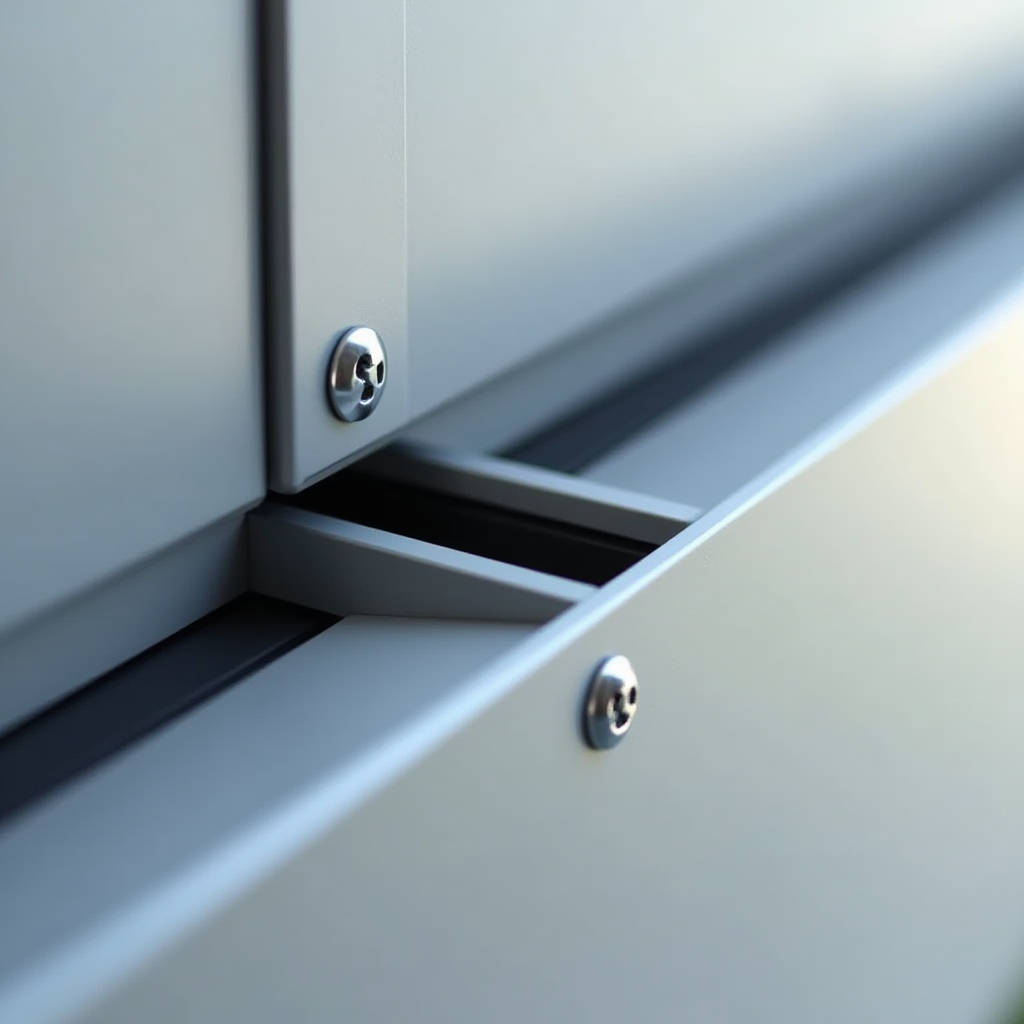
The structural integrity of any solid aluminium cladding facade depends on a component that rarely gets the attention it deserves: the Aluminum Panel Fastener. When a 2.5mm or 3.0mm solid aluminium panel detaches from a high-rise in a storm, the post-mortem rarely blames the panel itself. It blames the connection. For architects specifying rainscreen systems and for contractors managing installation on exposed coastal towers, understanding how fasteners interact with thermal movement, wind suction, and galvanic corrosion is not a theoretical exercise. It is the difference between a facade that performs for 30 years and one that becomes a liability in three. This article examines the engineering logic behind fastener selection for solid aluminium cladding, with a focus on the mechanical and electrochemical realities that govern long-term facade performance.
Why the Fastener Defines the Facade Lifecycle
A solid aluminium panel, whether 2.0mm, 2.5mm, or 3.0mm thick with a PVDF coating system applied at 30-40 microns minimum per AAMA 2605, is only as reliable as the mechanical connection that holds it to the substructure. The panel itself can withstand decades of UV exposure, acid rain, and thermal cycling. The weak link is almost always the fastener. When a building envelope consultant evaluates a rainscreen specification, the first question about the cladding attachment should concern the fastener material grade, the isolation strategy, and the fatigue behavior under cyclic wind loading. Ignoring these details leads to a facade that looks pristine from the outside while corroding silently at every connection point.
The Aluminum Panel Fastener operates in a uniquely hostile micro-environment. It sits inside the drained cavity of a rainscreen, exposed to fluctuating humidity, salt-laden air in coastal zones, and condensation cycles that can repeat hundreds of times per year. Unlike the visible panel face, the fastener cannot be inspected without dismantling sections of the facade. This inaccessibility means the specification must be conservative. A fastener that costs $0.15 more per unit can prevent a remediation bill that runs into six figures when hundreds of panels need to be removed and re-fixed on a 20-story building.
Material Selection: The Electrochemical Reality
Fastening solid aluminium panels to an aluminium substructure creates a galvanic cell if the fastener alloy is not matched correctly. Many contractors assume that any metal labelled "aluminium" is safe. The reality is that 2024-T4 aluminium fasteners, which offer excellent tensile strength in the range of 62,000 psi, contain copper as a primary alloying element. Copper-rich aluminium alloys sit at a different position on the galvanic series compared to the 3003-H14 or 5052-H32 alloys commonly used for solid aluminium cladding panels. In the presence of moisture, the fastener becomes cathodic to the panel, accelerating corrosion of the panel material around the fastener hole.
The safest approach uses 6061-T6 aluminium fasteners or 5052 alloy fasteners that sit close to the cladding panel alloy on the galvanic scale. For projects within 5 kilometers of a coastline, the specification should demand stainless steel fasteners of grade 316 (A4) rather than 304 (A2), with a mandatory isolation strategy using EPDM or nylon bushings at every penetration point. The incremental cost of upgrading from 304 to 316 stainless steel fasteners across an entire facade is typically less than 0.3% of the total cladding package value, yet the corrosion resistance improvement in chloride-rich environments is substantial.
Thermal Expansion and the Fastener That Moves
Solid aluminium has a coefficient of thermal expansion of approximately 23.1 × 10⁻⁶ /°C. A 3-meter-long panel subjected to a 60°C temperature swing between a winter night and a summer afternoon will expand by roughly 4.2mm. If the Aluminum Panel Fastener restrains this movement rigidly, the panel will buckle. The buckling load can exceed the fastener's pull-out capacity, or worse, transfer stress into the panel corners where fatigue cracking initiates.
The engineering solution is not a stronger fastener. It is a fastener system that accommodates movement. Fixed-point fasteners establish the panel's reference position, typically at the center or top edge. All other fasteners must be sliding-point connections that allow differential movement in the plane of the panel. This is achieved through slotted holes, oversized clearance holes with shouldered fasteners, or proprietary sliding clip systems. The slot length must be calculated based on the maximum expected temperature range for the project location, not a generic value pulled from a standard detail. A project in Riyadh, where surface temperatures can reach 85°C on dark PVDF finishes, requires substantially more movement accommodation than one in London.
Fixed vs. Sliding Point: A Practical Breakdown
The distinction between fixed points and sliding points is fundamental to rainscreen engineering but frequently misunderstood on site. A fixed point fastener must resist shear loads in both axes while allowing no translation. It is typically a bolt through a tight-tolerance hole, sometimes with a serrated washer to prevent rotation. A sliding point fastener, by contrast, uses a sleeve or a slotted bracket that permits movement along one axis while restraining the panel against wind suction perpendicular to the facade plane.
Contractors who install every fastener as a fixed point, often by drilling all holes to the same diameter and torquing every bolt identically, are inadvertently building a stressed skin that will telegraph movement into visible deformations. The panel will find a way to move. If the fasteners do not permit it, the panel will buckle, the fasteners will loosen, or the substructure will distort. None of these outcomes are acceptable on a commercial facade.
Wind Load and Fastener Pull-Out Calculations
Wind suction on a building corner zone can exceed 3.0 kPa on a 50-meter-tall structure in an exposed urban location. For a 1.2m × 2.4m solid aluminium panel, the total suction force on the corner panel can reach over 8.6 kN. Distributed across 8 fasteners, each connection must resist approximately 1.08 kN in tension. This is a simplified calculation; the actual distribution depends on fastener layout, panel stiffness, and the stiffness of the supporting rails. The corner fasteners invariably carry a disproportionate share of the load.
Pull-out capacity depends on the fastener diameter, the thread engagement length, and the material of the receiving member. An M6 aluminium screw into a 2.5mm aluminium rail may have a pull-out capacity of only 0.4 kN to 0.6 kN, which is insufficient for the corner zone loads described above. The solution is either to increase the fastener diameter to M8, to use a rivet nut or threaded insert in the rail, or to increase the number of fasteners in the corner zone. Each of these options has cost and installation time implications that the estimator must capture at the tender stage.
The table below summarizes typical pull-out capacities for different fastener configurations in solid aluminium substructures, based on testing conducted in accordance with ASTM E488.
| Fastener Type | Diameter | Receiving Material | Pull-Out Capacity (kN) | Recommended Max Design Load (kN) |
|---|---|---|---|---|
| Aluminium Self-Tapping Screw | M6 | 2.5mm Aluminium Rail | 0.55 | 0.18 |
| Aluminium Self-Tapping Screw | M8 | 3.0mm Aluminium Rail | 1.10 | 0.37 |
| Stainless Steel 316 Bolt | M6 | Rivet Nut in Aluminium Rail | 2.40 | 0.80 |
| Stainless Steel 316 Bolt | M8 | Rivet Nut in Aluminium Rail | 3.80 | 1.27 |
| Stainless Steel 316 Bolt | M8 | Steel Sub-Frame (4mm) | 8.50 | 2.83 |
Design loads incorporate a safety factor of 3.0, consistent with the requirements of AAMA TIR-A9 for rainscreen attachment design. Engineers should verify these values against project-specific pull-out tests, particularly when the substructure material or thickness deviates from standard assumptions.
Galvanic Isolation: The Detail That Gets Deleted
When a stainless steel fastener contacts a solid aluminium panel directly, the aluminium becomes the anode in the galvanic couple. In the presence of an electrolyte—condensation, rain penetration, or even high humidity—the aluminium corrodes sacrificially. The corrosion product, aluminium hydroxide, occupies a larger volume than the parent metal, causing the fastener hole to expand and the connection to loosen. This process, known as crevice corrosion amplification, can destroy a fastener connection within 5 to 10 years in a marine environment.
The correct detail places a non-conductive barrier between the stainless steel fastener and the aluminium panel. This barrier typically takes the form of an EPDM gasket under the fastener head, a nylon or PTFE sleeve around the shank, and a nylon washer under the nut or the panel. The fastener itself remains dry on the exterior face, while the isolation components prevent the formation of a galvanic cell inside the hole. Suppliers like Futeng® have invested in developing integrated fastener systems where the isolation components are pre-assembled, reducing the risk of installers omitting them on site.
Specifications should explicitly require isolation at every stainless-steel-to-aluminium interface. A general note stating "provide galvanic isolation" is insufficient. The specification must detail the isolation method, the material grades for bushings and washers, and the minimum thickness of the isolating elements. EPDM gaskets thinner than 0.8mm are prone to tearing during installation and should be avoided.
Installation Errors That Compromise Fastener Performance
Even a perfectly specified Aluminum Panel Fastener can fail if installed incorrectly. The most common site errors include over-torquing aluminium screws, which strips the threads in the receiving rail and reduces pull-out capacity by 40% or more. Undertorquing leaves the fastener loose, allowing water ingress and fretting under wind-induced vibration. Using impact drivers without torque limiters is a primary cause of stripped threads in aluminium substructures.
Another frequent issue is the substitution of fastener materials on site. A contractor running low on 316 stainless steel fasteners may instruct a junior to purchase replacements from a local supplier, who stocks only 304 grade or, worse, zinc-plated steel fasteners. Within months, the zinc plating is consumed, and the steel fastener begins rusting, staining the panel surface with iron oxide runoff that is difficult to remove without damaging the PVDF coating.
Quality assurance protocols should include random fastener torque testing using a calibrated torque wrench, verification of fastener material certificates against the specification, and photographic documentation of isolation component installation before panels are closed. These measures add perhaps two hours to the inspection schedule for a typical floor plate but prevent problems that would require weeks of remedial work to correct.
Fastener Spacing and Edge Distance Requirements
The spacing of Aluminum Panel Fasteners is not arbitrary. Fasteners placed too close to the panel edge risk tear-out under wind suction, where the aluminium between the fastener hole and the panel edge shears away. The minimum edge distance for an M6 fastener in 2.5mm solid aluminium is typically 12mm from the center of the hole to the panel edge, though 15mm is preferable for panels in corner zones. For M8 fasteners, the minimum edge distance increases to 16mm, with 20mm recommended.
Fastener spacing along the panel perimeter should not exceed 400mm center-to-center for panels in standard wind zones, reducing to 300mm in corner zones where wind pressures are higher. Intermediate fasteners along the panel width may be required for panels wider than 600mm to prevent oil-canning and vibration. These spacing rules interact with the substructure layout: if the vertical rails are spaced at 600mm centers, the fastener spacing along the rail must accommodate the panel dimensions and the wind zone requirements simultaneously.
Coating Compatibility and Fastener Finish
The fastener finish matters for both corrosion resistance and aesthetics. Stainless steel fasteners on a facade with visible fixings should have a finish that complements the panel coating. Passivated stainless steel has a natural metallic appearance that works with silver and grey metallic PVDF finishes. For darker panels, black oxide or PVD-coated stainless steel fasteners are available, though the cost premium can be significant. The PVD coating process, applied in a vacuum chamber, produces a durable dark finish that does not chip or peel like painted fasteners.
Aluminium fasteners can be anodized to match the panel color, but anodizing thickness must be specified. A Class I architectural anodized finish per AAMA 611 provides a minimum oxide thickness of 18 microns, suitable for most architectural applications. Thinner anodizing, such as Class II with 10 microns minimum, is inadequate for exterior exposure and will chalk and fade within a few years. The anodizing process also reduces the thread dimensions slightly, so the fastener manufacturer must account for this in the pre-plating thread tolerance.
Supply Chain Considerations for Large-Scale Projects
A 50,000-square-meter facade using 1.2m × 2.4m panels requires approximately 175,000 fasteners, assuming 8 fasteners per panel. This volume places the fastener order in the realm of industrial supply rather than catalog purchasing. Lead times for custom-length 316 stainless steel fasteners with isolation components can extend to 12-16 weeks from specialized manufacturers. Ordering standard-length fasteners and cutting them on site is not recommended, as the cut end loses its corrosion protection and creates a galvanic initiation point.
Procurement managers should treat the fastener package as a separate line item in the cladding tender, with its own technical specification, quality assurance requirements, and delivery schedule. Consolidating the fastener order with the panel supplier simplifies logistics but may limit the choice of fastener types. A better approach is to specify the fastener requirements in the cladding contractor's scope and allow them to source from approved manufacturers, with sample submissions required for engineer approval before bulk production.
Testing and Verification Protocols
ASTM E488 provides the standard test method for determining the strength of fasteners in concrete and masonry, but for fasteners in metal substrates, project-specific pull-out testing is the industry norm. A representative sample of the substructure assembly, including the rail material, thickness, and the exact fastener type, should be tested to failure. The test report should record the failure mode—whether the fastener pulled out of the rail, the fastener fractured, or the rail material failed—because each failure mode has different implications for the safety factor applied to the design.
For projects in seismic zones, cyclic testing may be required to verify that the fastener connection can withstand repeated load reversals without loosening. The testing protocol typically involves applying a sinusoidal load at a frequency of 0.5 Hz for 100 cycles, with the load amplitude set to 1.5 times the design wind load. Fasteners that survive this regime without measurable loss of preload are considered qualified for seismic applications.
Independent testing laboratories accredited to ISO/IEC 17025 should perform these tests. The cost of a pull-out test program for a typical project, including sample preparation and reporting, ranges from $3,000 to $8,000. This is a modest investment relative to the risk of a systemic fastener failure.
Making the Right Specification Decision
Selecting the right Aluminum Panel Fastener for a solid aluminium cladding project requires balancing corrosion resistance, mechanical capacity, thermal movement accommodation, and cost. The cheapest compliant fastener is rarely the best value. A fastener that saves $0.10 per unit but requires the contractor to install separate isolation washers and bushings adds labor cost that far exceeds the material saving. An integrated fastener system with pre-assembled isolation components costs more per unit but reduces installation time and eliminates the risk of missing isolation elements.
The specification should be written with enough precision that a contractor cannot substitute an inferior product without a formal deviation request. It should state the fastener material grade, the finish, the isolation requirements, the minimum edge distances, the maximum spacing, and the testing requirements. A specification that simply says "fasteners to engineer's approval" delegates too much responsibility to a reviewer who may not have the time or expertise to evaluate every substitution request.
The Aluminum Panel Fastener is a small component in the physical sense, but it carries the entire weight of the facade's long-term performance on its threads. Engineers who treat it as a commodity item are gambling with their client's building envelope. Those who specify it with the same rigor they apply to the panel material and the coating system will deliver facades that perform as designed for decades.