How Aluminum Chemical Etching Affects Solid Aluminium Cladding Panel Performance and Coating Durability
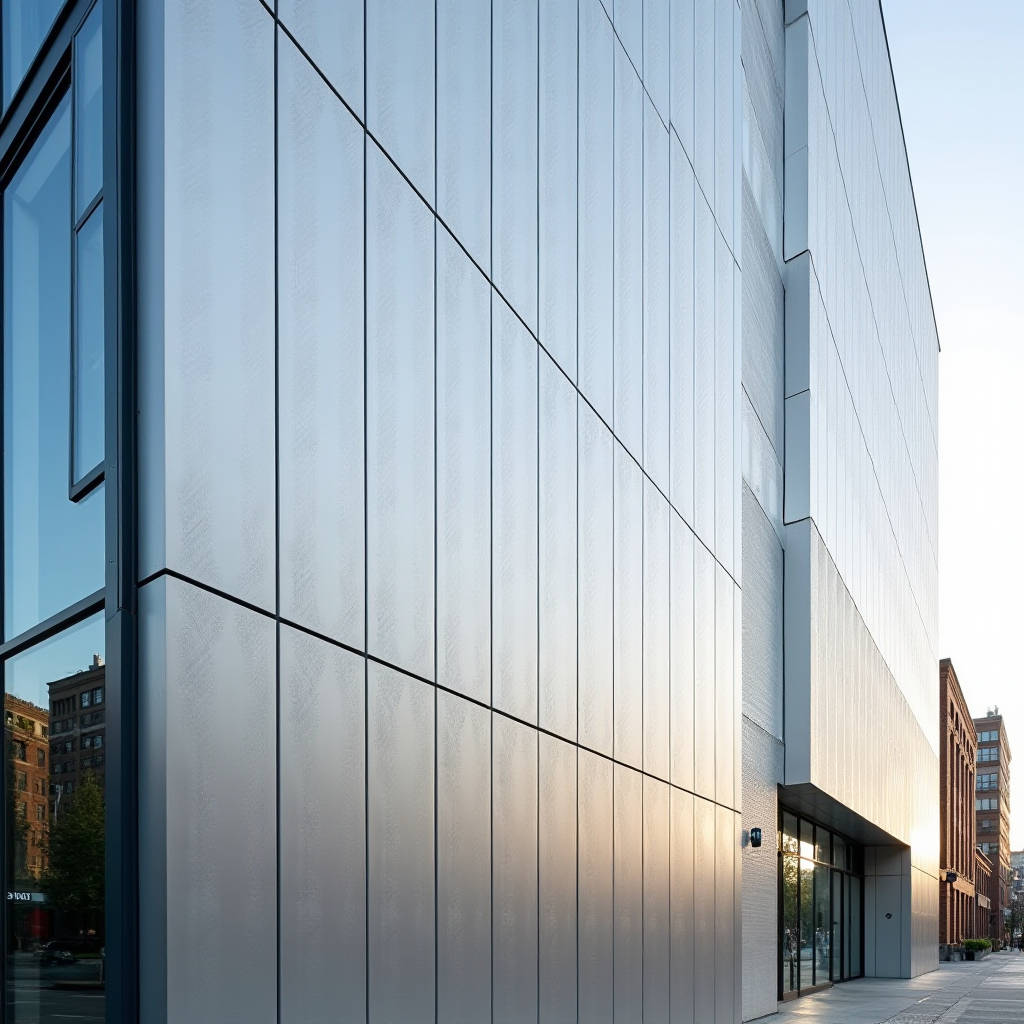
When a facade consultant specifies a decorative pattern on solid aluminium panels, the conversation almost always turns to Aluminum Chemical Etching. Not screen printing. Not laser engraving. Chemical etching. The reason is straightforward: this subtractive process removes microns of material from the aluminium surface through a controlled chemical reaction, creating patterns that become part of the metal itself rather than sitting on top of it. For building envelopes exposed to UV radiation, salt spray, and decades of thermal cycling, that distinction matters. A printed graphic delaminates. An etched pattern does not. But specifying Aluminum Chemical Etching for architectural cladding involves questions that go well beyond the basic chemistry. How does the etched surface interact with PVDF or FEVE coatings? What happens to the aluminium's natural oxide layer? Does etching compromise the 2.0mm, 2.5mm, or 3.0mm solid panel's structural integrity? These are the questions that determine whether a chemically etched facade still looks intentional after 15 years of service. This article examines the intersection of chemical etching technology and architectural aluminium cladding, focusing on what engineers and specifiers need to verify before approving etched panels for any exterior application.
What Aluminum Chemical Etching Actually Does to the Metal Surface
Aluminum Chemical Etching is a subtractive manufacturing process where a controlled chemical solution—typically ferric chloride (FeCl₃) or a proprietary alkaline etchant—selectively removes material from the aluminium surface. Unlike mechanical engraving or abrasive blasting, the chemical reaction produces no burrs, introduces no heat-affected zones, and leaves no residual stress in the metal. Research published in the Journal of Materials Processing Technology has documented that FeCl₃ etching of aluminium at controlled temperatures between 30°C and 60°C can achieve depth tolerances of ±0.025mm when process parameters are tightly managed.
For solid aluminium cladding panels, the process typically removes between 0.05mm and 0.15mm of surface material, depending on the pattern depth specified. A 2.5mm-thick panel losing 0.10mm to etching retains 96% of its original cross-section. The structural implications are negligible for wind load performance—the panel's bending stiffness, governed by the moment of inertia of its cross-section, changes by less than 2% with that degree of material removal. What does change significantly is the surface morphology. The etched area develops a micro-roughness profile that differs fundamentally from the surrounding unetched aluminium. This roughness, typically ranging from Ra 0.8μm to Ra 3.2μm depending on etchant concentration and dwell time, becomes the critical interface layer for whatever coating system follows.
Alloy Selection: Why 5005 and 5052 Dominate Architectural Etching
Not all aluminium alloys respond to chemical etching in the same way. The magnesium content, copper traces, and grain structure of each alloy series produce markedly different etching results. For architectural cladding, the industry has converged on two alloys for good reason:
AA 5005 contains 0.8% magnesium and less than 0.1% copper. Its fine, uniform grain structure produces exceptionally consistent etching results with minimal pitting. The low copper content is critical—copper-rich intermetallic particles etch at different rates than the surrounding aluminium matrix, creating microscopic galvanic cells that lead to uneven surface topography. For decorative facade patterns requiring uniform depth and matte finish consistency, 5005-H14 or H24 temper is the standard recommendation.
AA 5052 contains 2.5% magnesium and offers higher mechanical strength. It etches slightly faster than 5005 due to the higher magnesium content reacting more vigorously with acidic etchants. The resulting surface has a marginally coarser texture, which some architects prefer for patterns intended to create visual depth through shadow play. The trade-off is that 5052 requires tighter etchant temperature control (±2°C) to maintain pattern uniformity across large-format panels exceeding 1,500mm in any dimension.
AA 3003 and AA 1100 alloys are occasionally specified for interior etched applications but are generally unsuitable for exterior cladding due to their lower corrosion resistance. AA 6061, despite its popularity in structural applications, etches inconsistently due to its magnesium-silicon precipitate distribution and is rarely specified for decorative architectural etching.
| Alloy | Etching Uniformity | Typical Etch Rate (μm/min) | Surface Finish After Etching | Suitability for Exterior Cladding |
|---|---|---|---|---|
| AA 5005 | Excellent | 8–12 | Fine matte, consistent | Preferred |
| AA 5052 | Very Good | 10–15 | Slightly textured matte | Preferred |
| AA 3003 | Good | 9–13 | Moderate matte | Limited (interior only) |
| AA 6061 | Poor to Fair | Variable | Irregular, potential pitting | Not recommended |
| AA 1100 | Good | 7–10 | Fine matte | Limited (interior only) |
The Oxide Layer Problem Nobody Discusses in Spec Meetings
Aluminium forms a natural oxide layer (Al₂O₃) within minutes of exposure to air. This layer is typically 4–5 nanometers thick on freshly exposed metal and grows to 10–15 nanometers over time. It is chemically inert, electrically insulating, and—critically for etching—it acts as a barrier to chemical attack. Any etchant must first penetrate or dissolve this oxide layer before it can react with the underlying aluminium.
In practice, the etching process begins with a pre-treatment step: an alkaline cleaning solution (typically sodium hydroxide at 5–10% concentration, 50–60°C) removes the natural oxide layer and any organic contaminants. This is followed immediately by a rinse and then the controlled etching step. The pre-treatment itself removes approximately 1–3μm of material, which must be factored into the total material removal budget. For a 2.0mm panel, the combined pre-treatment and etching material loss rarely exceeds 0.20mm—well within the tolerance band specified in AAMA 2605 for architectural aluminium finishes.
What happens after etching is equally important. The freshly etched aluminium surface is highly reactive. If the panel sits exposed to ambient air for more than 4–6 hours before coating, a new oxide layer forms that can compromise coating adhesion. The standard practice in architectural fabrication is to move etched panels into the coating line within 2 hours of etching. Some manufacturers, including Futeng®, integrate the etching and coating processes into a continuous workflow specifically to eliminate this inter-stage oxidation risk. This is not a marketing detail—it is a process control requirement that directly affects the 20-year coating adhesion warranty that specifiers expect.
Coating Compatibility: PVDF, FEVE, and the Adhesion Question
The most common coating system for exterior aluminium cladding is PVDF (polyvinylidene fluoride), typically applied as a 3-coat or 4-coat system with total dry film thickness of 30–40μm per AAMA 2605 requirements. The question that arises with etched panels is whether the micro-roughness of the etched surface improves or impairs coating adhesion.
The answer, based on cross-hatch adhesion testing (ASTM D3359) and pull-off testing (ASTM D4541), is that properly executed etching improves coating adhesion. The increased surface area created by the etching profile provides more mechanical interlock sites for the primer layer. Test data from coating manufacturers indicates that etched 5005 aluminium consistently achieves 5B ratings (no coating removal) in cross-hatch tests, compared to 4B ratings on smooth, non-etched surfaces. Pull-off adhesion values typically exceed 8 MPa on etched surfaces versus 5–6 MPa on unetched surfaces.
However, there is a critical caveat: the etching depth must be controlled. If the etch profile is too aggressive—exceeding Ra 4.0μm—the peaks of the surface roughness can protrude through the primer layer, creating pinpoint sites where the PVDF topcoat is thinner than specified. These micro-thin spots become initiation points for coating failure. The specification sweet spot is an etched surface roughness of Ra 1.5–2.5μm, which provides excellent mechanical adhesion while remaining well within the coverage capability of a 5–8μm primer layer.
FEVE (fluoroethylene vinyl ether) coatings, increasingly specified for their ambient-cure properties and wider color range, exhibit similar adhesion behavior on etched surfaces. The key difference is that FEVE systems typically use a slightly thicker primer (8–12μm), which provides additional tolerance for surface roughness variation.
Pattern Resolution and the Limits of Chemical Etching on Large-Format Panels
Architects specifying etched patterns on facade panels need to understand the practical resolution limits of the process. Chemical etching can achieve feature sizes as small as 0.1mm in controlled laboratory conditions, but architectural panels present different constraints. A 1,500mm × 3,000mm solid aluminium panel undergoes slight thermal expansion during the etching process, and etchant flow dynamics across large surfaces create subtle variations in etch rate.
For production-grade architectural panels, the practical minimum feature size is 0.3mm for isolated elements and 0.5mm for repeating patterns. Line width consistency across a full panel should be specified as ±0.05mm, which is achievable with proper etchant agitation and temperature control. Pattern registration—the alignment of the etched pattern to the panel edges—should be specified as ±0.5mm for panels up to 2,000mm in any dimension.
There is also a depth-to-width ratio constraint. The isotropic nature of chemical etching means that the etchant removes material laterally as well as vertically. The undercut—lateral etching beneath the photoresist mask—is approximately equal to the etch depth. For a pattern requiring 0.10mm etch depth, the undercut will be roughly 0.10mm on each side of the feature. This means a specified 0.50mm-wide line will actually be 0.70mm wide at the surface. Designers must account for this undercut in their CAD files, typically by specifying lines 0.20mm narrower than the desired finished width when etching to 0.10mm depth.
Corrosion Resistance: What 5 Years of Salt Spray Testing Reveals
The architectural aluminium industry relies on accelerated weathering tests to predict long-term performance. For etched and coated panels, the relevant standards are ASTM B117 (salt spray), ASTM G85 (cyclic corrosion), and AAMA 2605 (combined weathering and chemical resistance).
Data from 3,000-hour neutral salt spray testing (ASTM B117) on PVDF-coated etched 5005 aluminium shows no blistering, no loss of adhesion, and no filiform corrosion at the scribe line when the following conditions are met:
- Etching depth does not exceed 0.15mm
- Post-etch chromate conversion coating is applied within 2 hours
- PVDF primer contains strontium chromate corrosion inhibitors
- Total coating DFT exceeds 30μm with no area below 25μm
Panels that fail these conditions—particularly those with excessive etching depth or delayed coating—show filiform corrosion initiating at the edges of etched areas within 1,000 hours of salt spray exposure. The mechanism is straightforward: deep etching creates micro-crevices where moisture and chloride ions accumulate, and if the conversion coating is inadequate, the aluminium in these crevices becomes anodic relative to the surrounding surface, driving localized corrosion.
For coastal installations within 500 meters of salt water, additional precautions are warranted. The specification should require a minimum 35μm total DFT, a chromate-free conversion coating with proven performance per ASTM D1730 Type B, and verification that the etched pattern does not create any horizontal surfaces where water can pond. Water ponding on etched textures accelerates chloride concentration and shortens coating life measurably.
Cost Structure: Where the Money Goes in an Etched Facade Project
Understanding the cost breakdown of chemically etched aluminium cladding helps specifiers make informed decisions about pattern complexity, coverage area, and project budgeting. The costs fall into four categories:
Tooling and photoresist masking: Each unique panel pattern requires a photoresist mask, typically a UV-exposed dry film or liquid photoresist applied to the panel surface. Mask fabrication costs range from $200–$800 per unique panel design, depending on pattern complexity and panel size. For projects with repeating patterns across multiple panels, this cost is amortized. For projects where every panel has a unique pattern, tooling becomes a significant line item.
Etching process cost: The chemical etching itself is priced per square meter of panel surface area, typically $25–$60/m² depending on etch depth, pattern complexity, and alloy. Deeper etching requires longer dwell time in the etchant bath, which ties up production capacity and consumes more chemistry. The etchant solution must be continuously monitored and replenished—FeCl₃ concentration, temperature, and dissolved aluminium content all affect etch rate and must be maintained within specified ranges.
Coating cost: PVDF coating of etched panels costs approximately $35–$55/m² for a 3-coat system. The cost premium over coating smooth panels (typically $30–$45/m²) reflects the additional primer thickness often specified for etched surfaces and the quality control required to verify coating coverage over the textured surface profile.
Quality control and testing: Etched architectural panels require additional QC steps beyond standard coated panels: surface roughness measurement, etch depth verification, adhesion testing, and visual inspection under controlled lighting. Budget approximately $5–$10/m² for this additional QC, depending on the sampling rate specified.
For a typical mid-rise commercial facade with 2,000m² of etched 2.5mm 5005 aluminium panels with a 3-coat PVDF finish, the total installed cost premium for chemical etching over smooth coated panels is approximately $40–$70/m², representing a 15–25% increase over the base panel cost. The premium is driven primarily by the etching process and additional QC, not by material costs.
Design Rules for Chemically Etched Architectural Aluminium
Based on production experience and field performance data, the following design rules should guide specification of Aluminum Chemical Etching on solid aluminium cladding panels:
1. Minimum Panel Thickness
For exterior cladding with etched patterns, specify a minimum panel thickness of 2.0mm. The 2.0mm thickness provides adequate material for the combined pre-treatment and etching material removal (up to 0.20mm) while maintaining structural performance. For panels exceeding 1,500mm in any dimension, 2.5mm or 3.0mm thickness is recommended to compensate for the slight reduction in bending stiffness at etched areas. This aligns with the standard thicknesses available from established aluminium cladding manufacturers.
2. Etch Depth Specification
Specify etch depth as a range, not a single value: 0.08–0.12mm for fine patterns, 0.10–0.15mm for patterns intended to create visible shadow effects. Do not specify depths exceeding 0.20mm for exterior applications—the corrosion risk increases disproportionately beyond this threshold, and the coating system cannot reliably protect deep micro-crevices over a 20-year service life.
3. Pattern Coverage Ratio
Limit etched areas to a maximum of 60% of the total panel surface area. Panels with higher coverage ratios experience greater cumulative material removal and increased thermal sensitivity during the etching process. The 60% guideline ensures that adequate unetched surface remains for structural integrity and that the panel's overall flatness is maintained.
4. Edge Clearance
Maintain a minimum 15mm unetched border around all panel edges. This clearance zone serves two purposes: it provides a clean surface for the panel bending and attachment system, and it prevents etchant from wicking into the panel edge grain, which can create initiation sites for edge corrosion. For panels with folded returns, increase the clearance to 25mm from the bend line.
5. Drainage and Orientation
Design etched patterns so that no etched recess creates a horizontal ledge where water can collect. On vertical facades, orient linear etched patterns vertically or at a minimum 15° angle from horizontal. This is not merely a staining concern—standing water in etched recesses concentrates atmospheric pollutants and accelerates coating degradation at those locations.
Fabrication Sequence: Why Order of Operations Determines Quality
The sequence in which etching, cutting, bending, and coating operations are performed has a significant impact on the final panel quality. The recommended sequence for architectural panels is:
- Cut panel to rough size (+10mm trim allowance on all edges)
- Apply photoresist mask and perform chemical etching
- Strip photoresist and apply conversion coating
- Precision trim to final dimensions
- Bend returns and form attachment features
- Apply PVDF or FEVE coating system
- Final inspection and packaging
This sequence ensures that the etched pattern extends to the final panel edges (accounting for the trim allowance), that bending operations do not distort the etched pattern, and that the coating system is applied after all mechanical forming is complete. Attempting to etch panels that have already been coated or bent invariably produces unsatisfactory results—the photoresist cannot conform properly to formed edges, and the etching chemistry can attack the coating at mask edges.
For projects requiring etched panels with complex 3D geometries, the fabrication sequence must be adapted. Panels with deep draws or compound curves should be formed first, then etched using a conformable photoresist system, then coated. This sequence is more expensive and requires specialized fixturing, but it is the only way to achieve pattern continuity across formed geometries.
Specifying Aluminum Chemical Etching: What to Put in the Tender Documents
A well-written specification for chemically etched aluminium cladding should address the following technical parameters. These are the items that separate a performance specification from a vague design intent:
- Alloy and temper: AA 5005-H14 or AA 5052-H32 per The Aluminum Association standards
- Panel thickness: 2.0mm, 2.5mm, or 3.0mm as required by structural calculations
- Etch depth: 0.08–0.12mm (fine pattern) or 0.10–0.15mm (shadow pattern)
- Surface roughness after etching: Ra 1.5–2.5μm measured per ISO 4287
- Conversion coating: Chromate or chromate-free per ASTM D1730, applied within 2 hours of etching
- Coating system: 3-coat PVDF per AAMA 2605, minimum 30μm DFT, or 3-coat FEVE per AAMA 2605
- Adhesion: Cross-hatch rating 5B per ASTM D3359, pull-off strength minimum 6 MPa per ASTM D4541
- Corrosion resistance: 3,000 hours ASTM B117 with no blistering, no filiform corrosion at scribe
- Pattern accuracy: Line width ±0.05mm, registration ±0.5mm from panel edges
- Edge clearance: Minimum 15mm unetched border on all edges
Requesting test coupons—small sample panels with the specified pattern, etched and coated using the production process—is standard practice and should be required as a submittal before full production begins. These coupons allow verification of pattern fidelity, coating adhesion, and color matching before the fabricator commits to full panel production.
When Chemical Etching Is Not the Right Choice
For all its advantages, Aluminum Chemical Etching is not the optimal surface treatment for every architectural application. There are specific scenarios where alternative processes should be considered:
Very large solid-color areas: If the design intent is a uniform matte finish across the entire panel with no pattern differentiation, mechanical blasting or chemical brightening is more cost-effective than photoresist-based etching. The tooling cost for a full-panel photoresist mask is difficult to justify when the entire surface receives the same treatment.
Patterns requiring multiple depths: Chemical etching produces a single depth per processing cycle. Multi-depth patterns require multiple masking and etching cycles, each with its own registration tolerance. The cumulative cost and complexity often exceed the budget. Laser engraving or CNC routing may be more practical for multi-depth patterns, though they introduce their own limitations in terms of heat input and burr formation.
Interior applications with no coating: Uncoated etched aluminium will oxidize and develop a non-uniform patina over time. For interior applications where the etched pattern is the final finish, a clear anodized or clear-coated system should be specified. If neither is acceptable, chemical etching may not be the right process.
Projects with extremely tight budgets and simple patterns: For simple linear patterns on a limited number of panels, CNC engraving with a V-bit can produce visually similar results at lower cost, though the engraved surface will have burrs that require secondary finishing and the heat-affected zone may affect coating adhesion. The trade-off must be evaluated on a project-specific basis.
Understanding the relationship between chemical etching and the full coating system is what separates successful etched facade projects from those that develop problems years after installation. The etching is only one step in a multi-stage process, and every subsequent step—conversion coating, priming, topcoating—must be compatible with the etched surface profile. When specified correctly, with attention to alloy selection, etch depth control, coating compatibility, and drainage design, chemically etched solid aluminium panels deliver a facade that performs as well as it looks. For architects and engineers evaluating this technology, the recommendation is to work with fabricators who control the entire process from etching through coating under one roof, and to insist on test coupons that prove the system performance before production begins.