Why 3 0 mm Solid Aluminum Board Panels Over 1200 mm Wide Still Risk Oil Canning Defects
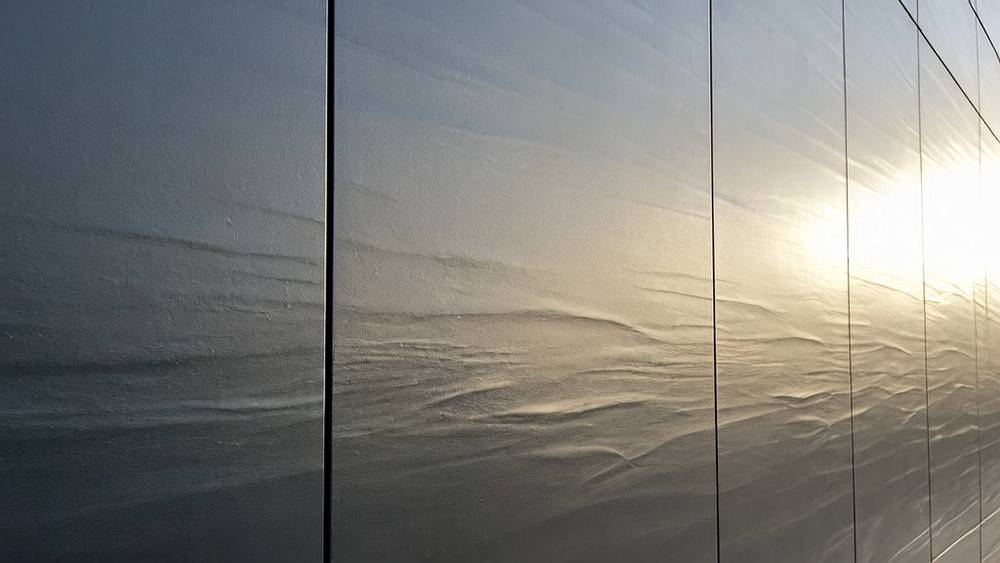
When a building envelope consultant specifies 3.0 mm solid aluminum board for a high-rise rainscreen, the conversation rarely stays at thickness. It shifts almost immediately to flatness. Panel widths exceeding 1,200 mm, particularly in dark PVDF colors, carry a known risk: oil canning. This visual defect — a waviness or pillowing across the panel face — has triggered more punch-list disputes, withheld retention payments, and contractor headaches than almost any other single issue in architectural metal cladding. Understanding what oil canning actually is, which aluminum board specifications amplify it, and what mitigation steps exist at each project phase separates teams that deliver crisp façades from those that end up negotiating remedial work under the harsh morning sun.
What Oil Canning Looks Like and Why It Matters
Oil canning describes a visible waviness or undulation across the flat surface of a metal panel. The name comes from the way an old-fashioned oil can's bottom flexes and pops. On an aluminum board façade, it manifests as ripples that become especially apparent under raking light — early morning or late afternoon sun striking the wall at a shallow angle. The panel is not structurally failing. It has not buckled. It simply will not lie optically flat.
The problem is aesthetic, but in architectural metalwork, aesthetics are contractual. The American Architectural Manufacturers Association (AAMA) and the Metal Construction Association (MCA) both acknowledge oil canning as inherent to flat metal panels, yet many project specifications fail to address it explicitly. When a specification is silent, the subjective judgment of a clerk of works or architect determines acceptance. That silence is expensive.
MCA's white paper on oil canning, widely referenced across the industry, states clearly that some degree of waviness is unavoidable in flat sheet metal products. The question is not whether it exists but whether it falls within commercially acceptable limits — and who defines those limits before the panels are fabricated.
The Metallurgical Roots: Why Aluminum Board Is Prone to Oil Canning
Solid aluminum board enters fabrication carrying residual stress from the rolling mill. Aluminum sheet and plate are produced by passing ingots through a series of reducing rollers. Each pass introduces stress patterns into the grain structure. Even after leveling, some of these stresses remain locked in. When the panel is later cut, routed, bent, or welded, those stresses release unevenly, and the panel distorts.
Three material-specific factors make aluminum board particularly susceptible compared to other metals:
- Modulus of elasticity. Aluminum's modulus runs roughly one-third that of steel — about 69 GPa versus 200 GPa. Under the same load or residual stress, aluminum deflects three times as much. This lower stiffness means aluminum board resists elastic buckling less effectively than steel of the same thickness.
- Thermal expansion coefficient. At approximately 23 × 10⁻⁶ /°C, aluminum expands nearly twice as much as steel. A 3-meter-long panel subjected to a 50°C temperature swing between fabrication shop and installed condition can grow or shrink by roughly 3.5 mm. If the attachment system does not accommodate this movement, compressive stress builds and the panel bows outward between fasteners.
- Grain direction sensitivity. Rolled aluminum board exhibits anisotropic mechanical properties. Yield strength, elongation, and residual stress patterns differ between the longitudinal (rolling) and transverse directions. Panels cut parallel to the rolling direction behave differently from those cut across it — a detail many fabricators never communicate to the design team.
Alloy selection matters here. The 3000-series alloys (3003, 3105) commonly used for architectural cladding offer good formability but lower yield strength than 5000-series marine-grade alloys (5052, 5754). Lower yield strength means the material enters the plastic deformation zone sooner under stress, making permanent oil canning more likely. Futeng®, a manufacturer specializing in solid aluminum cladding systems, has observed that switching from 3003-H14 to 5052-H32 for large-format panels above 1,000 mm width can measurably reduce field complaints — not because 5052 eliminates oil canning, but because its higher yield point pushes the threshold at which permanent waviness sets in.
Panel Geometry: The Thickness-to-Width Ratio That Predicts Trouble
The single most reliable predictor of oil canning risk is the panel's width-to-thickness ratio. The wider and thinner the aluminum board, the lower its critical buckling stress. This is straightforward plate mechanics: the elastic buckling stress of a flat rectangular plate under edge compression scales inversely with the square of its width.
Industry experience, supported by fabricator feedback aggregated through the MCA, suggests the following risk bands for solid aluminum board:
| Panel Width (mm) | 2.0 mm Thickness | 2.5 mm Thickness | 3.0 mm Thickness |
|---|---|---|---|
| Up to 600 | Low risk | Very low risk | Negligible risk |
| 600 – 900 | Moderate risk | Low risk | Very low risk |
| 900 – 1,200 | High risk | Moderate risk | Low risk |
| 1,200 – 1,500 | Very high risk — not recommended | High risk | Moderate risk |
| Above 1,500 | Unacceptable | Very high risk | High risk |
This table is empirical, not codified in any ASTM standard. It reflects the collective experience of fabricators and installers who have fielded oil canning complaints. The key takeaway: for panel widths above 900 mm, 2.0 mm aluminum board should trigger a specific review of flatness expectations. Moving to 2.5 mm or 3.0 mm is not an upsell — it is a risk management decision.
Stiffener placement modifies these risk bands. A panel with properly bonded aluminum stiffeners (hat sections or Z-profiles attached with structural adhesive, not just intermittent tack welds) behaves as a series of smaller sub-panels. Each sub-panel spans between stiffeners rather than across the full width. Stiffener spacing of 400-500 mm center-to-center can bring a 1,200 mm wide panel back into low-risk territory — provided the adhesive bond is continuous and the stiffener itself has sufficient section modulus.
Thermal Loading: The Overlooked Driver of Field Failures
Oil canning complaints surface disproportionately in two seasons: high summer and the transition from winter to spring. This is not coincidence. It is thermal physics.
A dark-colored aluminum board — charcoal, black, deep bronze — can reach surface temperatures of 80°C to 85°C under direct summer sun in temperate latitudes, and higher in desert or tropical climates. If the panel was fabricated and installed at 20°C, the temperature rise imposes a compressive strain that must go somewhere. The panel cannot expand freely because it is restrained by fasteners in a rainscreen carrier system. The resulting compressive stress can exceed the critical buckling stress of the panel, even if the panel appeared perfectly flat when installed.
The math is straightforward. Thermal strain ε = α × ΔT. For aluminum with α ≈ 23 × 10⁻⁶ /°C and ΔT = 60°C, ε ≈ 0.00138. Over a 1,200 mm panel width, that represents 1.66 mm of thermal expansion that the restraint system must absorb. If the system is too rigid — for example, if every fastener hole is drilled to exact diameter with zero allowance for sliding — the panel buckles.
Light-colored panels are not immune, but they experience lower peak temperatures (typically 50-60°C under the same conditions), which reduces the ΔT and the resulting stress. This is why specifiers in hot climates sometimes limit dark-color aluminum board to smaller panel modules or mandate thicker gauges for dark finishes.
The Metal Construction Association recommends designing attachment systems to permit thermal movement. In practice, this means slotted holes, sliding clips, or cassette systems where one edge of the panel is fixed and the opposing edge floats. The fixity should never restrain the panel in both axes across all four edges.
Fabrication Variables That Introduce Stress
Not all oil canning originates in the mill. Fabrication processes add their own stress signatures to aluminum board, and each process interacts with the residual stress already present from rolling.
Routing and V-Grooving
When a fabricator routes a V-groove into the rear face of an aluminum board to create a crisp fold line, they remove material locally. The remaining web at the groove root may be only 0.5 mm to 0.8 mm thick. This creates a stress concentration along the fold line. If the routing depth, tool sharpness, or feed rate is inconsistent, the panel folds unevenly, and the resulting face shows ripples radiating from the corner.
Best practice: specify a minimum remaining web thickness of 0.8 mm for 2.5 mm and 3.0 mm aluminum board. For 2.0 mm material, V-grooving should be avoided entirely in favor of brake-formed edges, because the remaining web becomes too thin to maintain flatness through the fold.
Welding
Aluminum welding introduces intense localized heat. The weld zone reaches temperatures above 600°C while the surrounding material remains at ambient temperature. The heat-affected zone (HAZ) experiences thermal expansion followed by contraction during cooling, which pulls the panel out of flat. TIG welding of corner joints on aluminum board is a common source of post-fabrication distortion.
Fabricators who manage this well use tack-weld sequences that distribute heat symmetrically, weld fixtures that clamp panels flat during cooling, and post-weld stress relief (a low-temperature thermal cycle that relaxes residual stresses without significantly affecting mechanical properties). These steps add labor cost but reduce the likelihood of panels arriving on site with built-in waviness.
Perforation Patterns
Perforated aluminum board presents a special case. The perforation pattern reduces the panel's effective stiffness. A panel with 30% open area has significantly lower bending stiffness than a solid panel of the same thickness. If the perforation pattern is not uniform — for example, if it includes a blank border for attachment — the stiffness discontinuity between perforated and solid zones creates a boundary where oil canning is more likely to appear.
For heavily perforated panels (above 25% open area), increasing the base material thickness by one gauge increment (e.g., from 2.5 mm to 3.0 mm) compensates for the stiffness reduction and should be standard practice.
Installation Practices That Make or Break Flatness
Even a perfectly fabricated aluminum board can develop oil canning if installed incorrectly. The most common installation errors that induce panel distortion include:
- Over-tightened fasteners. When screws or rivets compress the panel against the substructure with excessive force, they create a localized depression. The surrounding material must accommodate the displacement, and it does so by bowing outward. This is especially visible on large panels with fasteners along the perimeter.
- Substructure misalignment. If the carrier framing is not coplanar — if vertical rails are not in the same plane within a tolerance of ±2 mm over 3 meters — the aluminum board must flex to follow the substructure. The resulting stress pattern can produce oil canning that mirrors the framing irregularities.
- Panel handling damage. Aluminum board stored improperly on site, or lifted with straps that pinch the edges, can take a permanent set before it ever reaches the wall. Once a panel yields plastically, it will not return to flat.
- Sequential loading of interlocking panels. In rainscreen systems where panels interlock, installing panels in the wrong sequence can trap stress. Each subsequent panel should be engaged without forcing, and the installer should verify that previously installed panels have not shifted under the accumulated load.
The AAMA publishes installation guidelines that address many of these points under its curtain wall and storefront standards. While AAMA documents focus primarily on fenestration systems, the principles of fastener torque control, framing tolerance, and sequential installation apply directly to solid aluminum board cladding.
Specifying Flatness: How to Write an Enforceable Tolerance
The gap between expectation and reality on oil canning usually traces back to the specification. A typical architectural spec might state: "Panels shall be free of oil canning." This is unenforceable because it is absolute. Every flat metal panel exhibits some degree of waviness. A better specification defines acceptable limits in measurable terms.
ASTM International does not publish a standard specifically for oil canning in architectural metal panels. However, several approaches exist for quantifying flatness:
- I-unit flatness standards. Originally developed for steel sheet, I-units measure the maximum deviation from a flat plane per unit length. An I-unit of 10 means a deviation of 10 × 10⁻⁵ inches per inch of length. For architectural aluminum board, an I-unit specification of 10-15 is considered commercially flat; 5-10 is extra flat and achievable with stretcher-leveled material at additional cost.
- Straightedge and feeler gauge method. The simplest field method: place a 1-meter straightedge on the panel face and measure the maximum gap with a feeler gauge. A tolerance of 3 mm gap over 1 meter is commonly accepted for exposed architectural surfaces, though it should be tightened to 1.5 mm for high-gloss or mirror finishes where oil canning is more visible.
- Panel crown specification. Some fabricators intentionally produce panels with a slight crown (convex curvature) of 0.5-1.0 mm across the face. This pre-stress biases the panel toward a predictable, uniform shape rather than an unpredictable waviness. Under thermal loading, the crown may increase or decrease but the panel does not develop random oil canning patterns.
The ASTM B209 standard for aluminum and aluminum-alloy sheet and plate specifies flatness tolerances for mill-produced sheet, but these tolerances apply to the raw material before fabrication. They should not be confused with tolerances for finished fabricated panels. A separate flatness requirement for fabricated panels, measured after all cutting, routing, bending, and welding, must appear in the project specification.
Dark Colors and Gloss: Why Finish Choice Magnifies the Problem
Oil canning is a geometric defect, but its visibility depends on the optical properties of the panel surface. A waviness that is invisible on a matte, light-gray aluminum board may be glaringly obvious on a high-gloss black panel. This is not because the black panel is less flat — it is because the specular reflection of light off the glossy surface amplifies any deviation from a perfect plane.
PVDF coatings, the dominant architectural finish for solid aluminum cladding, are available in gloss ranges from 15-20 GU (matte) to 60-80 GU (high gloss) when measured at a 60° angle per ASTM D523. The same physical waviness produces approximately three to four times the visual impact on a 70 GU finish compared to a 20 GU finish.
This has practical implications for specification writing:
- For dark colors (LRV below 30) with gloss above 50 GU, tighten the flatness tolerance to 1.5 mm over 1 meter.
- Consider specifying a matte or low-gloss variant of the same color for large-format panels.
- Where high-gloss dark finishes are non-negotiable, reduce the maximum panel module size or increase the thickness by one gauge.
Some coating applicators offer textured finishes — fine wrinkles or stipples — that diffuse reflected light and dramatically reduce the visibility of oil canning. These finishes are not a substitute for proper flatness control, but they can serve as a risk-reduction layer when other variables (panel size, color, budget) are already fixed.
Testing and Mock-Up Protocols Before Full Production
The most cost-effective moment to address oil canning is before production tooling is finalized. A full-scale visual mock-up, erected outdoors on the actual substructure system and observed under natural lighting conditions, reveals flatness issues that are invisible under factory fluorescent lights.
A rigorous mock-up protocol for aluminum board flatness should include:
- Minimum mock-up size. At least two full-size panels in both width and height, installed on the actual carrier system, with all perimeter and intermediate attachments as specified.
- Lighting conditions. Evaluation at multiple times of day, including the low-angle morning or afternoon sun that produces raking light. If the project is in the northern hemisphere and the façade faces south or west, afternoon evaluation is critical.
- Viewing distance and angle. The MCA recommends evaluating oil canning from a distance of 6 meters (20 feet) at an angle of no more than 30 degrees from the plane of the wall. This approximates the most demanding viewing condition a pedestrian observer will experience.
- Documentation standard. Photograph the mock-up under agreed lighting conditions, and use these photographs as the acceptance reference for production panels. If a dispute arises later, the mock-up photos provide an objective benchmark rather than relying on memory.
- Thermal cycling. Where practical, the mock-up should remain in place for at least several weeks to experience a range of temperature conditions. Some projects use infrared heaters to simulate summer surface temperatures if the mock-up is erected in cool weather.
Remediation: What to Do When Oil Canning Appears on Site
Despite the best preparation, oil canning sometimes appears after installation. The available remediation options are limited and none are ideal, which is why prevention dominates the conversation.
Panel replacement is the most definitive fix but also the most expensive and time-consuming. If the root cause was a specific batch of material with high residual stress or a fabrication error, replacement panels from a corrected process may solve the problem. If the root cause is systemic — panel geometry, color, or attachment design — replacement panels will exhibit the same defect.
On-site stress relief through heat treatment is sometimes attempted but rarely successful for installed panels. Aluminum's thermal conductivity is high, making localized heating difficult to control. Uneven heating can worsen distortion. This approach is not recommended except under the direction of a metallurgical engineer with specific experience in aluminum cladding.
Stiffener retrofit — bonding additional stiffeners to the rear face of installed panels — can reduce the amplitude of oil canning. This requires access to the panel rear, which in rainscreen systems may be possible by removing adjacent panels. The stiffeners subdivide the panel into smaller spans, increasing the critical buckling stress. This approach has been used successfully on several high-profile projects where full replacement was not feasible.
Acceptance with compensation is the commercial reality in some cases. If the oil canning meets the objective flatness criteria defined in the specification and mock-up, but the architect or owner remains dissatisfied, the issue becomes commercial rather than technical. This is why enforceable, objective flatness criteria in the specification serve all parties: they provide a clear line between acceptable and unacceptable, and they protect the contractor from moving goalposts.
Ultimately, oil canning in solid aluminum board is a problem of managing expectations, material selection, fabrication control, and installation discipline. None of these four elements alone can eliminate it. Together, applied systematically from specification through mock-up to final installation, they reduce it to a level that satisfies even the most demanding architectural vision — the one that looks flawless when the morning light hits the façade at just the wrong angle.