Why Aluminium Gevelbekleding Prijs Swings From 100 to 200 Euro Per m2 Installed
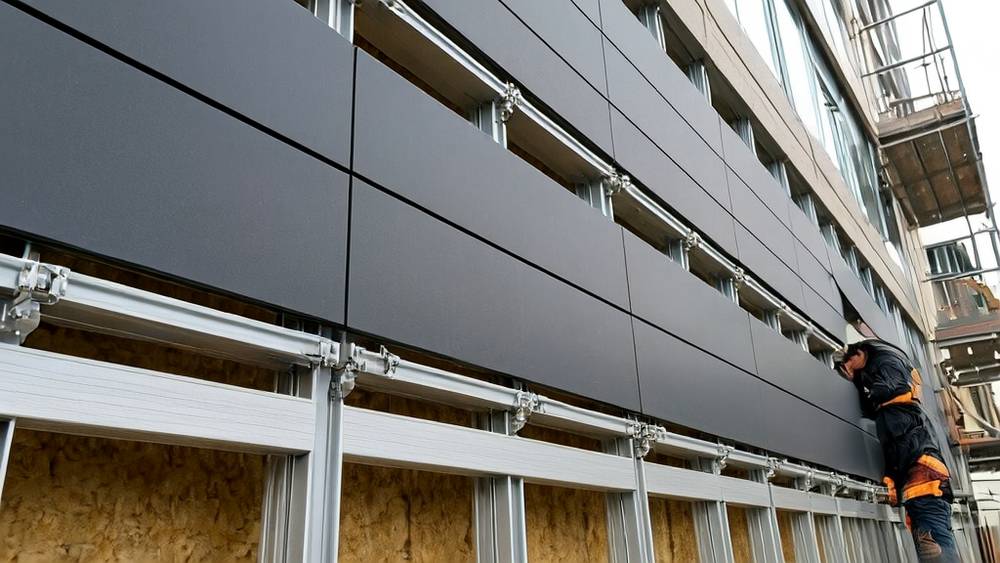
The phrase aluminium gevelbekleding prijs gets searched thousands of times each month by contractors and architects across the Benelux region, yet the numbers they find are almost always the same vague range: €100 to €200 per square metre, including VAT and installation. That bracket is so wide it borders on useless for anyone trying to build a real budget. The difference between paying €105/m² and €195/m² on a 600 m² commercial facade is €54,000. That is not a rounding error. It is a subcontractor's margin, or a project's entire contingency fund, evaporating because nobody specified what actually drives the cost. This article breaks down the exact variables that push solid aluminium cladding panel pricing from the low end to the high end of that spectrum, using real project data from the Dutch and Belgian markets. We focus exclusively on solid aluminium sheets, not composite panels, and we examine why two identical-looking facades can land at radically different aluminium gevelbekleding prijs points.
Why the €100–€200 Range Exists and What It Hides
The standard aluminium gevelbekleding prijs band of €100–€200/m² installed appears in nearly every Dutch-language trade portal and installer comparison site. It is not wrong, but it collapses at least six independent cost variables into a single number that tells you nothing about your specific project. A small residential rear extension clad with 2.0 mm mill-finish aluminium panels on a timber subframe by a local contractor in rural Drenthe will hit the bottom of that range. A 40-metre-tall commercial tower in central Rotterdam requiring 3.0 mm PVDF-coated panels on a ventilated aluminium rail system with fire-stopping at every floor level will land at or above the top. Understanding the spread means understanding each variable individually. The six primary cost drivers are: panel thickness and alloy grade, coating system and finish, subframe material and complexity, project height and access requirements, fire classification obligations under NEN-EN 13501-1, and the difference between standard panel sizes versus custom perforated or curved elements.
Panel Thickness: The Single Largest Material Cost Lever
Solid aluminium cladding panels in the European market are typically specified at 2.0 mm, 2.5 mm, or 3.0 mm thickness. The raw aluminium cost scales almost linearly with thickness, but the fabrication cost does not. A 3.0 mm panel requires more force to bend, fold, and route, which means slower machine speeds and higher tool wear. For a straightforward rainscreen facade with standard 600 mm × 3000 mm panels, moving from 2.0 mm to 3.0 mm adds roughly €18–€25/m² in material cost alone before any fabrication or coating. The engineering justification for thicker panels is wind load. Under Eurocode 1 (EN 1991-1-4), a building in wind zone II (coastal Netherlands and Belgium) with a height above 20 metres can generate design wind pressures exceeding 1.5 kN/m². At those loads, a 2.0 mm panel on standard clip spacing may deflect unacceptably or fail the serviceability limit state. The solution is either thicker panels, reduced fixing centres, or stiffener ribs welded to the rear face. Each route has a different aluminium gevelbekleding prijs impact, and none of them appear in the generic €100–€200 figure.
Alloy Selection and Its Hidden Cost Signals
Most solid aluminium facade panels in Europe are manufactured from EN AW-3003, EN AW-5005, or EN AW-3105 alloys. The differences in raw ingot price between these alloys are minor (typically under €3/m²), but their formability characteristics affect fabrication cost significantly. EN AW-3003 in the H14 temper offers an excellent balance of bendability and strength for panels with simple edge returns and no complex perforations. EN AW-5005 in H14 provides slightly higher tensile strength for applications requiring larger unsupported spans, but it is stiffer to brake-form and may require larger bend radii to avoid surface cracking. For projects with extensive perforation patterns or complex folded geometries, alloy choice directly impacts scrap rates during fabrication. A 12% fabrication scrap rate on a 500 m² order versus a 5% rate represents a real cost difference that gets baked into the aluminium gevelbekleding prijs quoted to the contractor. Suppliers like Futeng® typically work with project-specific alloy recommendations based on the fabrication complexity, rather than defaulting to a single alloy for all applications.
Coating Systems and the Real Cost of Colour
Coating is the second-largest cost variable after panel thickness, and it is the one most frequently misunderstood by purchasers who compare quotes solely on a per-square-metre basis. The European market offers three principal coating technologies for solid aluminium cladding: polyester (SP), polyvinylidene fluoride (PVDF), and powder coating (qualicoat-certified). Each has a different cost base and a different service life, and picking the wrong one for the wrong location generates a long-term cost that far exceeds the initial aluminium gevelbekleding prijs saving.
| Coating Type | Typical Cost Adder | Service Life (EN 1396) | Gloss Retention | Suitable Environments |
|---|---|---|---|---|
| Polyester (SP) 25 µm | Base (€0) | 10–15 years | Poor after 5 years | Interior, sheltered soffits |
| PVDF (Kynar 500®) 30 µm | +€25–€38/m² | 25–35 years | Excellent | Coastal, industrial, high-UV |
| Qualicoat Class 2 Powder 80 µm | +€15–€22/m² | 20–30 years | Very good | Urban, inland commercial |
| Qualicoat Class 3 Powder 80 µm | +€20–€28/m² | 30+ years | Excellent | Marine, heavy industrial |
| Anodised (AA20) 20 µm | +€30–€45/m² | 30–40 years | N/A (metallic) | Premium architectural |
What the table does not show is the cost of getting it wrong. A polyester-coated panel installed on a building 500 metres from the North Sea will show chalk lines and colour fade within three to five years. The remedial cost, including access scaffolding, removal, and replacement, can exceed three times the original installation cost. The aluminium gevelbekleding prijs conversation should therefore always start with the environmental exposure category, not with the coating price per square metre. For coastal installations anywhere from Zeeland to Den Helder, PVDF or Qualicoat Class 3 is not an upgrade option. It is the minimum viable specification.
Subframe Systems: The Invisible Half of the Budget
Many contractors focus laser-like on the panel price per square metre while barely glancing at the subframe line item. This is a mistake. On a typical ventilated rainscreen facade in the Netherlands or Belgium, the aluminium subframe and fixing system represents 35% to 55% of the total installed aluminium gevelbekleding prijs. Three subframe types dominate the market:
- Timber battens (vertical counter-battens on breather membrane): Lowest material cost at €8–€15/m². Suitable only for low-rise residential projects under 10 metres where fire classification permits combustible substrates. Increasingly restricted under revised Bouwbesluit 2012 fire safety provisions for buildings above 7 metres.
- Aluminium T-profile rails on adjustable brackets: Mid-range at €22–€40/m² for the complete system including brackets, fixings, and thermal isolators. This is the standard solution for most commercial and mid-rise residential projects. Adjustable brackets accommodate substrate irregularities up to ±40 mm, which reduces the need for preparatory rendering or levelling of the backing wall.
- Unitised aluminium grid systems with integrated thermal break: High-end at €45–€70/m². Used on high-rise towers and projects with stringent thermal performance requirements under BENG (Bijna EnergieNeutrale Gebouwen) standards. The thermal break pads between bracket and wall reduce point thermal transmittance (χ-value), which matters when the building's total U-value must stay below 0.25 W/m²K.
The subframe cost is also heavily influenced by the building's existing substrate condition. A flat, newly constructed concrete wall with minimal deviation allows for short bracket projection and standard fixing lengths. A 1960s brick cavity wall in Amsterdam with 30 mm of uneven render and unpredictable mortar joints requires longer brackets, more shims, and more installation labour. That difference alone can swing the subframe portion of the aluminium gevelbekleding prijs by €12–€18/m².
Fire Classification and the Bouwbesluit Cost Cliff
Dutch building regulations (Bouwbesluit 2012, incorporating NEN-EN 13501-1) impose increasingly strict fire performance requirements as building height and occupancy type escalate. For buildings with a floor above 13 metres (roughly five storeys), the external wall construction must achieve at least class B-s2,d0 or better. This has direct cost consequences for aluminium cladding systems. The panel material itself is inherently non-combustible (class A1 per EN 13501-1), but the complete system includes the subframe, insulation, breather membrane, and any cavity barriers. Achieving a system-level fire classification often requires:
- Non-combustible mineral wool insulation (stone wool) instead of PIR or phenolic foam boards, adding €8–€15/m².
- Horizontal and vertical cavity fire barriers at every floor level and every 20 metres horizontally, adding €12–€25 per linear metre of barrier.
- Steel or aluminium subframe components with verified melt points above 550°C, which may preclude certain aluminium alloy brackets with lower melting ranges.
A project that falls just above the 13-metre threshold can see its aluminium gevelbekleding prijs jump by €25–€40/m² compared to an architecturally similar project at 12 metres. Smart value engineering sometimes involves adjusting floor-to-floor heights or reconfiguring the topmost occupied floor to stay below the threshold, but this is a design-stage decision, not something a contractor can fix at tender stage.
Panel Geometry: Standard Rectangles Versus Custom Complexity
Standard rectangular panels in sizes like 600 mm × 3000 mm or 1200 mm × 2400 mm are priced competitively because they run efficiently on CNC folding and routing lines with minimal material waste. The moment a project introduces non-standard geometries, the aluminium gevelbekleding prijs diverges sharply from the published ranges. The three most common cost escalators are:
- Perforated panels: Perforation rates above 15% open area require specialised tooling and significantly longer machine cycle times. A panel with 25% perforation and 8 mm diameter holes on a staggered 12 mm pitch can take four to six times longer to fabricate than a solid panel of the same dimensions. The scrap rate also increases because a single misaligned hole pattern ruins the entire panel.
- Curved or radiused panels: Solid aluminium panels can be roll-curved to a minimum radius of approximately 600 mm for 3.0 mm material, depending on alloy and temper. Each curved panel requires a custom former, and the process is inherently slower than flat panel production. Curved panels typically add 40% to 70% to the base panel fabrication cost.
- Large-format panels exceeding 1500 mm in any dimension: Panels above 1500 mm wide require thicker material to control flatness and resist oil canning. They also require special handling equipment and packaging to prevent transit damage. The raw material utilisation rate drops because aluminium coil stock comes in standard widths, and large panels force less efficient nesting.
For a facade with 30% perforated panels, 10% curved panels, and the remainder standard rectangles, the blended aluminium gevelbekleding prijs can easily land 35% above the base rate for an all-rectangular project.
Installation Labour: The Regional and Seasonal Reality
Dutch and Belgian installation rates for aluminium facade systems vary significantly by region and season. In the Randstad (Amsterdam, Rotterdam, Utrecht, The Hague), certified facade installers charge €38–€52 per hour as of early 2026. In Limburg or Groningen, the same work costs €30–€40 per hour. The difference is not just the hourly rate. Urban projects in the Randstad also incur additional costs for restricted access, limited material laydown areas, and requirements for quiet installation methods during early-morning hours near residential zones. A project in central Amsterdam with scaffold-wrapped access on a canal-side facade, requiring all materials to be delivered by barge because truck access is impossible, will carry an installation premium of 20% to 35% over a suburban industrial park project with unrestricted truck access and ample laydown space.
On a recent mid-rise residential project in Rotterdam, the contractor budgeted €55/m² for installation labour based on a suburban productivity rate of 8 m² per installer per day. The actual productivity on the constrained city-centre site was 4.5 m² per installer per day, nearly doubling the effective labour cost. The aluminium gevelbekleding prijs quoted at tender stage bore no resemblance to the final installed cost.
Transport, Packaging, and the Cross-Border Factor
Much of the solid aluminium cladding installed in the Benelux region is fabricated in Germany, Poland, or China, with China increasingly dominant for large-scale projects due to competitive fabrication costs even after shipping and EU anti-dumping duties of 21.2% on certain aluminium products. A container from Shanghai to Rotterdam costs approximately €3,500–€5,500 depending on spot rates, and can hold roughly 800–1,200 m² of panels depending on packaging density. That works out to €3–€7/m² in ocean freight. Add European inland transport, customs brokerage, and the cost of replacing panels damaged in transit (typically 0.5% to 2% of the order), and the total logistics cost lands at €8–€15/m². This is significant but often still lower than the premium charged by European fabricators for equivalent specifications. The trade-off is lead time: Chinese-fabricated panels require 8–12 weeks from order to delivery at Rotterdam, versus 3–5 weeks from a German or Polish fabricator. For projects with tight construction schedules, the logistics-driven aluminium gevelbekleding prijs difference may be irrelevant if the shorter lead time prevents liquidated damages for late completion.
VAT, Certifications, and the Tender Trap
All the prices discussed in Dutch and Belgian consumer-facing sources include 21% BTW (VAT). For B2B transactions between registered entities, VAT is reverse-charged and does not affect the net project cost. However, contractors who source panels from non-EU suppliers must account for import VAT at the point of entry, even if it is later reclaimable. This creates a cash-flow timing difference that project controllers should model. A €120,000 panel order from China attracts €25,200 in import VAT at Rotterdam, recoverable but only after the next VAT return filing cycle, which may be quarterly. For a contractor operating on thin margins, that working capital requirement is real.
Also relevant: CE marking under EN 1090-1 is mandatory for aluminium structural components in the EU. Panels used in structural applications (as opposed to purely decorative rainscreens with no load-bearing function) must carry a factory production control certificate and a declaration of performance. Non-compliant panels can be stopped at customs or rejected by the building control authority (Bouw- en Woningtoezicht). The cost of compliance, including annual auditing and testing, is built into the aluminium gevelbekleding prijs of legitimate suppliers but absent from grey-market imports. A panel price that seems 20% below market may simply reflect non-compliance with mandatory EU construction product regulations.
How to Read a Quotation: A Practical Breakdown
When comparing aluminium gevelbekleding prijs quotations from multiple suppliers or installers, the single most important discipline is to demand a fully itemised breakdown. A quotation that states "aluminium facade panels supplied and installed: €155/m²" with no further detail is not comparable to anything. The minimum acceptable breakdown should separate:
- Panel material: alloy, thickness, temper, and mill source
- Coating: system type, applicator, film thickness, and warranty period
- Fabrication: cutting, routing, folding, stiffener attachment, and any perforation or curving
- Subframe: system manufacturer, material, bracket type, thermal break specification
- Fixings: fastener material grade (A2 or A4 stainless steel), quantity per panel
- Installation labour: rate per square metre or per hour, with assumptions about productivity
- Access: scaffolding, mast climbers, or mobile elevating work platforms, including duration
- Transport and packaging
- Fire-stopping and cavity barriers
- Warranty and documentation: as-built drawings, maintenance manuals, CE documentation
Two quotations that both land at €155/m² installed may be radically different in specification. One might include PVDF coating and A4 (316-grade) stainless fixings suitable for coastal exposure; the other might use polyester coating and A2 (304-grade) fixings that will corrode within a decade. The aluminium gevelbekleding prijs number alone is meaningless without the specification behind it.
Long-Term Cost: Maintenance, Lifespan, and End-of-Life Value
Solid aluminium cladding panels with PVDF or Qualicoat Class 3 coating carry a design service life of 30 to 40 years with minimal maintenance, typically one or two cleaning cycles per year using neutral detergent and low-pressure water. The maintenance cost over 30 years is roughly €3–€8/m²/year including access equipment rental. Compare this to timber cladding, which requires recoating every three to five years at €25–€40/m² per cycle, and the whole-life cost argument for aluminium becomes overwhelming despite a higher initial aluminium gevelbekleding prijs.
At end of life, solid aluminium panels have high scrap value. Aluminium recycling requires approximately 5% of the energy needed for primary smelting, and clean, uncoated aluminium scrap trades at €800–€1,200 per tonne depending on alloy grade and market conditions. For a 600 m² facade using 3.0 mm panels (roughly 4.8 tonnes of aluminium), the scrap value at end of life could recover €3,800–€5,800, offsetting a portion of the original material cost. Coated panels carry a slightly lower scrap price because the coating must be burned off or mechanically removed before remelting, but the differential is typically under €100/tonne.
None of the generic €100–€200/m² aluminium gevelbekleding prijs figures account for this residual value, nor for the avoided maintenance costs compared to alternative materials. For a building owner with a 30-year investment horizon, the total cost of ownership calculation paints a very different picture from the initial installation price alone.
For international procurement teams and facade contractors working across the European market, the key takeaway is straightforward: the aluminium gevelbekleding prijs you pay is a function of the specification you write. Vague specifications produce vague pricing and unpredictable project outcomes. Detailed specifications that lock down alloy, thickness, coating system, subframe type, and fire performance requirements produce quotations that can be compared meaningfully. The difference between the best and worst value in this market is rarely the headline per-square-metre rate. It is the long-term cost of corners cut in the wrong places. Spend the engineering time upfront to define exactly what each square metre needs to do, and the pricing will take care of itself.