RAL 7016 Anthracite Grey Cladding Sheet Colours and 15 Year Delta-E Performance Data
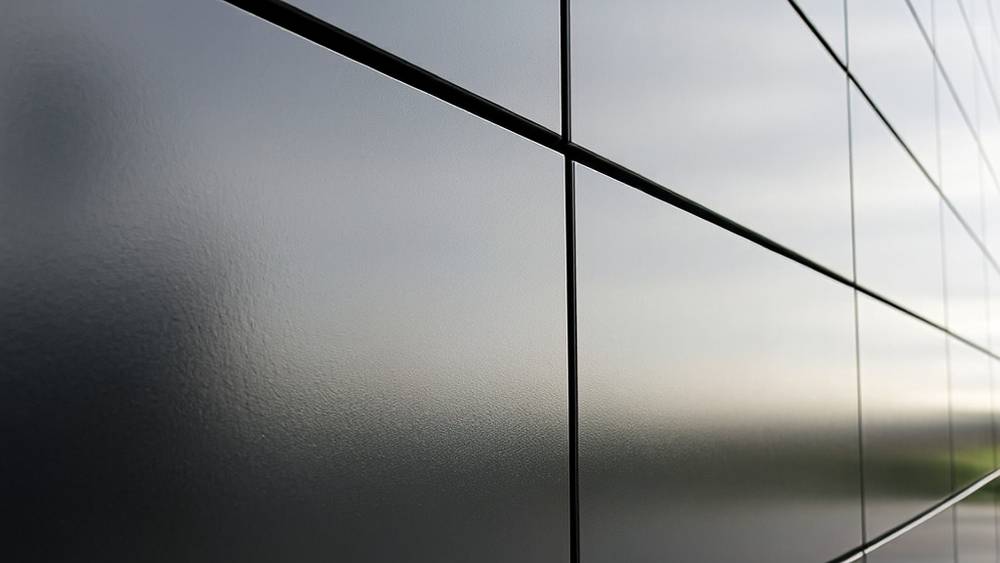
When a facade consultant specifies RAL 7016 Anthracite Grey for a 22-storey mixed-use tower in Manchester, the conversation rarely stays on colour alone. Within 72 hours, the procurement team needs answers about batch consistency across 4,200 m² of solid aluminium cladding, the colour stability delta-E threshold after 15 years of northern European UV exposure, and whether the coating system behind that specific shade can survive a coastal chloride environment 800 metres from the Irish Sea. cladding sheet colours sit at the intersection of architectural intent and hard engineering constraints. This article strips away the marketing gloss and examines what actually determines whether a specified colour performs on a real building over a real service life.
Why Colour Selection Is a Performance Decision Before It Is an Aesthetic One
Architects select cladding sheet colours from swatches under controlled lighting. Facade engineers inherit those choices and immediately confront a different problem set: solar reflectance index (SRI), thermal expansion coefficients linked to pigment chemistry, and the long-term fade resistance of the coating system that carries the pigment. A dark colour on a 3.0 mm solid aluminium panel absorbs significantly more solar radiation than a light one. That absorbed energy translates into surface temperature differentials that can exceed 40°C between a white panel and a near-black panel on the same elevation, same orientation, same time of day.
This is not theoretical. ASTM C1549 sets out the method for determining solar reflectance using a portable solar reflectometer. A standard PVDF-coated panel in Signal White (RAL 9003) typically achieves an SRI above 90. The same coating system in Jet Black (RAL 9005) might deliver an SRI below 30. The consequence: a dark panel on a south-facing elevation in Madrid can reach surface temperatures of 80°C in July, while the white panel beside it sits at 50°C. That 30°C differential drives differential thermal expansion that the framing system must accommodate — or the panels will buckle.
Pigment Chemistry and the Longevity Problem
Not all pigments survive weather equally. Organic pigments — common in bright reds, vivid blues, and some yellows — are inherently more vulnerable to UV degradation than inorganic oxides. A PVDF topcoat loaded with inorganic ceramic pigments (mixed metal oxides) will typically show a delta-E colour shift of less than 2.0 units after 10 years of Florida-equivalent exposure. The same PVDF system carrying an organic red pigment might exceed delta-E 5.0 in half that time.
The specification language matters here. AAMA 2605 requires colour change not to exceed delta-E 5.0 after 10 years South Florida exposure. That is a pass/fail threshold, not a guarantee of imperceptible shift. For projects where adjacent panels must remain visually identical — a uniform facade without deliberate colour variation — even a delta-E of 3.0 can become visible to a trained eye under overcast sky conditions. Specifiers who understand this often push for inorganic pigment formulations on large-area monolithic facades, even when the initial colour match to the architect's swatch requires additional formulation work at the coater.
Coating Systems That Carry the Colour: PVDF, FEVE, and Polyester Compared
The colour on a solid aluminium cladding panel is not paint in the decorative sense. It is a multi-layer engineered coating system. The base layer is typically a chromate or chromium-free conversion coating applied directly to the pretreated aluminium substrate. Above that sits a primer — usually epoxy-based — that provides adhesion and corrosion inhibition. The colour layer (basecoat) carries the pigment and typically accounts for 70–80% of total dry film thickness. The clear topcoat provides UV blocking, gloss control, and the first line of defence against airborne contaminants.
The resin chemistry of that topcoat determines how long the colour beneath it survives. Three systems dominate the global market for cladding sheet colours on architectural aluminium:
| Coating System | Resin Chemistry | Typical DFT (μm) | AAMA Standard | Colour Retention (Delta-E, 10yr Florida) | Best Application |
|---|---|---|---|---|---|
| PVDF (70% Kynar 500® or Hylar 5000®) | Polyvinylidene fluoride + acrylic | 25–35 (3-coat) | AAMA 2605 | < 5.0 (inorganic pigments) | High-rise facades, coastal, industrial atmospheres |
| FEVE (Lumiflon® based) | Fluoroethylene vinyl ether | 30–40 (3-coat) | AAMA 2605 | < 3.0 (inorganic pigments) | Complex geometries requiring shop-applied field touch-up |
| SMP (Silicone-modified polyester) | Polyester + silicone intermediate | 20–25 (2-coat) | AAMA 2604 | < 8.0 (inorganic pigments) | Low-rise commercial, interior applications, budget-sensitive projects |
| Standard polyester | Polyester (no silicone/fluorocarbon) | 18–22 (2-coat) | AAMA 2603 | > 10.0 typical | Interior only; not recommended for exterior cladding |
One under-discussed variable: gloss level. A 70% PVDF coating at 30 gloss units will show surface degradation differently than the same formulation at 70 gloss units. High-gloss finishes amplify the visual perception of scratches, chalking, and colour shift. For large-format solid aluminium panels exceeding 1,500 mm in any dimension, many specifiers now default to 25–35 gloss units — enough to provide visual depth without turning every minor surface imperfection into a visible defect.
Batch Consistency: The Problem That Site Superintendents Inherit
A colour swatch measures roughly 100 mm × 150 mm. A single solid aluminium panel on a commercial facade can measure 2,000 mm × 1,200 mm. A typical project order runs to hundreds of panels produced over multiple coating batches spanning weeks. The question that matters on site: will panel 17 from batch 3 look the same as panel 142 from batch 6 when they are installed adjacent to each other on elevation?
Batch-to-batch colour consistency is governed by spectrophotometric measurement, typically using a CIELAB colour space with tolerance defined as delta-E (CMC) or delta-E (CIELAB). A reputable coater working to AAMA 2605 will maintain batch-to-batch delta-E below 1.0 for the same colour formulation. Below 0.5 is achievable with automated dosing and spectrophotometer-controlled colour matching at the paint kitchen.
Three practical checks that procurement teams should specify in purchase orders:
- Require retained colour swatches from each production batch, signed off by the coater's QC department, and physically attached to the batch certificate.
- Specify that all panels for a single visible elevation must come from the same coating batch. If production volume forces multiple batches, panels from different batches should be installed on different elevations or separated by a building movement joint.
- Request a spectral reflectance curve, not just a delta-E number. Two colours can have the same delta-E under D65 illuminant (daylight) but diverge visibly under cooler fluorescent lighting — a phenomenon known as metamerism.
Metamerism is particularly cruel with complex greys and beiges. RAL 7047 Telegrey 4, a popular specification for office facades, is notorious for metameric mismatch when formulated with different pigment combinations by different coaters. The only reliable defence: physical panel samples evaluated under multiple light sources before mass production begins.
Gloss, Texture, and the Perception of Colour Uniformity
Colour is not solely about pigment. The surface texture of a solid aluminium panel modifies how light scatters from its surface, which in turn modifies perceived colour. A smooth PVDF finish at 30 gloss units will read differently from a textured PVDF finish — even when the basecoat is identical. Textured finishes, including fine stucco and coarse sandtex profiles, reduce the perception of oil canning and surface irregularities but also tend to make colours appear lighter and less saturated than their smooth-coat equivalents.
For project teams evaluating cladding sheet colours on textured solid aluminium, the correct procedure is to request a physical sample panel — not just a flat colour chip — with the specified texture and gloss. A colour measured as RAL 7021 Black Grey on a smooth coupon can appear visually closer to RAL 7015 Slate Grey when applied over a coarse texture. This shift is measurable with a spectrophotometer but the instrument must be set to exclude specular reflectance (SCE mode) to capture what the human eye actually sees.
Environmental Exposure and Colour Degradation Mechanisms
Colour fades. The question is how fast and whether the rate is acceptable for the building's design life. The primary degradation mechanisms for cladding sheet colours on architectural aluminium are:
UV Radiation
Ultraviolet light breaks chemical bonds in the coating resin and in organic pigment molecules. This is the dominant fade mechanism for most exterior facades. UV exposure is measured in megajoules per square metre (MJ/m²) and varies dramatically by geography. A facade in Singapore receives roughly 6,000 MJ/m² of annual UV radiation. A facade in Glasgow receives approximately 2,200 MJ/m². All else being equal, the Singapore panel will reach its colour-fastness limit roughly three times faster.
Humidity and Condensation
Moisture penetration into the coating film — particularly at cut edges, fastener penetrations, and scratches — initiates hydrolysis of the resin binder and corrosion of the aluminium substrate. A panel that retains its colour on the face but shows visible edge creep after five years is failing not on colour but on coating integrity. The colour becomes a secondary concern once the substrate is compromised.
Chlorides and Industrial Pollutants
Coastal salt spray and industrial sulphur dioxide both attack coating systems, though through different mechanisms. Chlorides accelerate filiform corrosion at coating defects. SO₂ combines with atmospheric moisture to form sulphurous acid, which etches the coating surface and increases chalking rate. AAMA 2605 includes specific salt-spray resistance tests (ASTM B117, 4,000 hours minimum) that are directly relevant to colour durability in marine environments.
For coastal installations within 500 metres of breaking surf, FEVE-based systems often outperform standard PVDF in colour retention — not because the fluoropolymer is inherently better, but because FEVE coatings can be formulated at higher film builds with fewer pinhole defects, reducing the pathways for chloride ion ingress.
Specialty Colours and Their Engineering Trade-offs
Not all cladding sheet colours are created equal from a manufacturing perspective. Certain colour families impose constraints that affect cost, lead time, and minimum order quantities.
Metallic and Mica Finishes: Aluminium flake and mica pigments create directional reflectance — the colour shifts depending on viewing angle. This is aesthetically desirable but creates two practical problems. First, metallic pigments orient differently in the coating film depending on application technique; panels coated on different days can show visible orientation differences. Second, touch-up repairs on metallic finishes are inherently visible because brush or spray application cannot replicate the original electrostatic orientation of the flakes. The industry consensus: specify metallics only when the design intent explicitly requires them, and accept that field repairs will be visible on close inspection.
Very Dark Colours (L* < 30 in CIELAB): Colours at the dark end of the lightness scale — think RAL 9004 Signal Black, RAL 7022 Umbra Grey — present thermal management challenges. Surface temperatures can exceed 85°C in direct summer sun. This drives two risks: accelerated coating degradation (the Arrhenius equation tells us that chemical reaction rates roughly double for every 10°C increase) and thermal movement that stresses the panel-to-frame connections. Solid aluminium panels at 3.0 mm thickness can handle these temperatures structurally, but the framing system's thermal movement capacity must be verified against the specific colour choice.
Bright Whites and Near-Whites: The opposite problem. High-SRI whites reduce cooling loads and thermal stress but make dirt and environmental staining visible. A white panel with 85 SRI in year one can drop to 65 SRI after three years of urban exposure simply from particulate deposition. Some manufacturers offer photocatalytic self-cleaning clear coats that use titanium dioxide to break down organic soiling under UV exposure. The technology works but adds roughly 15–25% to the coating cost.
Digital Tools and the Limitations of On-Screen Colour Selection
The construction industry increasingly selects cladding sheet colours from digital configurators and PDF swatches. This introduces a systematic error: every screen is calibrated differently, and RGB colour spaces cannot accurately represent the spectral reflectance of a physical coating. A RAL 9006 White Aluminium viewed on an uncalibrated laptop screen can look entirely different from the physical panel that arrives on site.
Best practice for professional procurement:
- Use digital tools only for initial shortlisting — never for final sign-off.
- Request physical A5-sized coated aluminium samples (not paper swatches) in the specified gloss and texture.
- Evaluate samples outdoors, under overcast sky if possible, and at multiple viewing angles including the angle at which the facade will most commonly be seen.
- For projects exceeding 2,000 m², commission a full-size mock-up panel and evaluate it on the actual framing system under site lighting conditions before releasing the full production order.
Futeng® has supplied solid aluminium cladding systems to facade contractors across Southeast Asia, the Middle East, and Europe where colour-critical projects demanded batch retention samples and spectrophotometric certification against international standards including AAMA 2605 and ISO 16474 for accelerated weathering.
Specifying Colour for Long-Term Performance: A Practical Checklist
Based on the failure modes observed across real projects, here is a specification checklist that addresses cladding sheet colours as an engineering parameter rather than a purely aesthetic choice:
- Coating standard: Specify AAMA 2605 for exterior solid aluminium cladding on buildings over three storeys or within 5 km of marine/industrial exposure. AAMA 2604 may be acceptable for low-rise inland projects with a design life under 20 years.
- Pigment type: Require inorganic (ceramic/mixed metal oxide) pigments for all colours where long-term colour stability is critical. Accept organic pigments only for short-lifecycle projects or where the specific hue cannot be achieved with inorganics and the client accepts accelerated fade risk.
- Batch control: Mandate single-batch production for each visible elevation. Specify maximum batch-to-batch delta-E (CMC) of 1.0.
- Gloss range: Define acceptable gloss unit range (typically ±5 units from nominal) and measurement standard (ASTM D523 at 60° geometry).
- Physical samples: Require retained samples from production batches, minimum A5 size, stored by both manufacturer and client for the warranty period.
- Warranty: Coating warranty should explicitly reference colour change limits (delta-E) and chalking rating (ASTM D4214, rating not less than 8 after 10 years for AAMA 2605).
- Mock-up panel: For projects over 2,000 m², a full-size mock-up panel evaluated on-site is not optional — it is the only reliable method to validate colour, gloss, texture, and flatness under real lighting and viewing conditions.
The solid aluminium cladding industry has the technical capability to deliver precise, durable colour that matches the architect's vision. The gap is rarely in the coating technology itself. It is in the specification language that connects colour selection to the engineering realities of batch production, environmental exposure, and thermal performance. When the specification treats colour as a data set — with measurable parameters, defined tolerances, and verifiable test methods — the result is a facade that looks the same in year 15 as it did on day one.