NFPA 285 and EN 13501-1 Fire Code Gaps That Trap Aluminium Panel Wall Specifiers in 2026
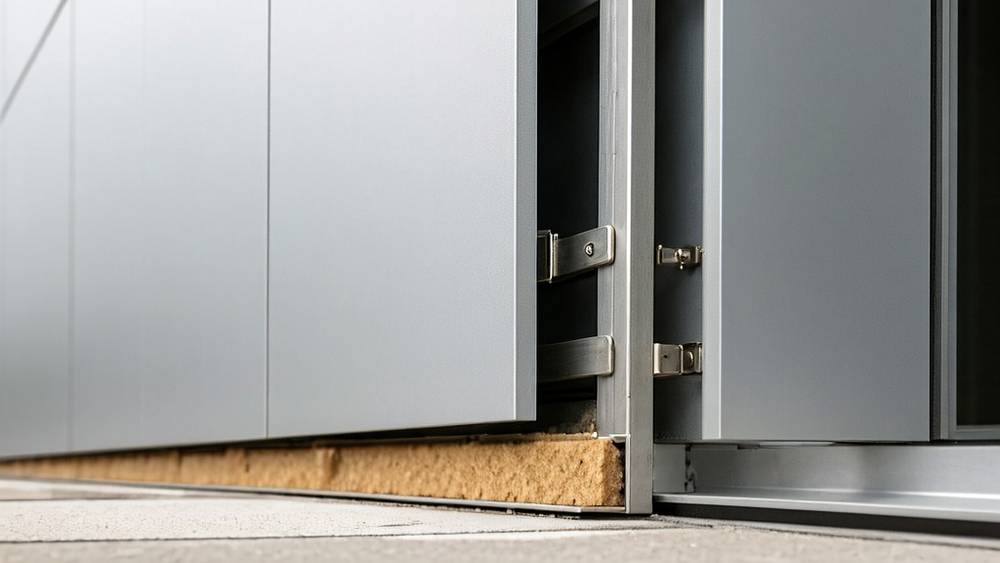
When a project specification calls for an aluminium panel wall with a fire rating that satisfies both the local building code and the insurer's underwriter, the conversation almost always narrows to one question: solid aluminium or composite? The answer carries consequences that ripple through fabrication tolerances, attachment engineering, and long-term warranty liability. Over the past five years, I have watched jurisdictions from Dubai to Melbourne tighten their combustible cladding regulations in ways that directly reshape how solid aluminium panels are specified, tested, and installed on mid-rise and high-rise facades. This article unpacks what those regulatory shifts mean for the solid aluminium panel supply chain in 2026, and why the distinction between "non-combustible" and "limited combustibility" now determines which aluminium panel wall systems get approved and which get value-engineered out.
The Regulatory Earthquake That Still Hasn't Settled
The Grenfell Tower fire in 2017 rewrote the global rulebook for exterior wall assemblies. What followed was not a single unified standard but a patchwork of national responses, each with its own testing protocols and material classification thresholds. For solid aluminium cladding panels — typically 2.0 mm to 3.0 mm thick, 1xxx, 3xxx, or 5xxx series alloy, with PVDF or polyester coil-coated finishes — the practical impact has been a shift from prescriptive compliance to performance-based testing that scrutinises the entire wall assembly, not just the panel in isolation.
In the United Kingdom, the Building (Amendment) Regulations 2018 effectively banned the use of materials with a polyethylene core on buildings over 18 metres. This pushed specifiers toward solid aluminium as a default alternative. But the nuance that many miss is that the UK's Approved Document B now requires system-level testing to BS 8414, and solid aluminium panels — while inherently non-combustible — still sit within an assembly that includes insulation, breather membranes, and cavity barriers. A panel alone does not a compliant wall make.
Australia moved even faster. The National Construction Code (NCC) 2019 Amendment 1 prohibited the use of aluminium composite panels with a core containing more than 30% polyethylene by mass on Type A and Type B construction. By NCC 2022, the language tightened further around solid aluminium panels used in external walls, requiring evidence of suitability under AS 1530.1 for combustibility and AS 1530.3 for flame spread. For procurement managers, this means requesting test reports that show the specific alloy, thickness, and coating system — not a generic datasheet.
The Middle East presents a different picture. The UAE Fire and Life Safety Code of Practice (2018 edition, updated 2023) mandates that external cladding on buildings taller than 15 metres meet the criteria for "non-combustible" as defined by ASTM E136 or EN 13501-1 Class A1. Solid aluminium panels, being metallic and free of organic cores, achieve A1 classification without difficulty. The challenge lies in the supporting framework and the thermal break materials, which can drag the assembly rating down if not specified carefully.
What "Non-Combustible" Actually Means for Solid Aluminium
There is a persistent misunderstanding that aluminium itself is fireproof. Aluminium melts at approximately 660°C. In a fully developed compartment fire, temperatures can exceed 1,000°C. The reason solid aluminium panels pass non-combustibility tests is not because they are impervious to heat — they are not — but because they do not contribute fuel to the fire, do not produce flaming droplets, and do not release significant heat when exposed to the test furnace conditions defined in ASTM E136 or ISO 1182.
The critical distinction for specifiers is between the panel material and the panel system. A 2.5 mm solid aluminium panel with a PVDF coating will typically achieve an A1 rating under EN 13501-1 when tested alone. But once that panel is installed over mineral wool insulation with a vapour-permeable membrane and stainless steel fixings, the assembly requires its own classification. This is where EN 13501-1 Class A2-s1,d0 often becomes the realistic target for the complete aluminium panel wall build-up.
Manufacturers who invest in full-scale facade fire testing — such as the BS 8414 or NFPA 285 test — provide their clients with assembly-level data that eliminates guesswork during the building permit stage. Suppliers like Futeng® have developed standardised fixing systems and tested assembly configurations that streamline this compliance path, particularly for projects in markets where local regulators lack the bandwidth to evaluate bespoke wall assemblies on a case-by-case basis.
NFPA 285 and the American Compliance Pathway
In the United States, the International Building Code (IBC) requires that exterior wall assemblies on buildings of Type I, II, III, and IV construction with combustible water-resistive barriers meet NFPA 285 fire propagation test criteria. The test evaluates a two-storey mock-up of the wall assembly under an exterior fire exposure and measures flame spread both vertically and laterally, as well as temperature rise within the stud cavity.
Solid aluminium panels, being non-combustible, simplify the NFPA 285 equation considerably. The variables that typically cause failures — combustible insulation cores, plastic-based weather barriers, or thermoplastic gaskets — are not introduced by the panel itself. However, the attachment system matters. Clip-and-rail systems that use nylon thermal isolators must verify that those isolators do not melt and create a ventilation path during the test. Stainless steel or aluminium stand-offs with mineral wool thermal breaks are increasingly specified to eliminate this risk.
The following table summarises the fire classification pathways relevant to solid aluminium cladding panels across major markets:
| Market | Key Standard | Panel-Level Test | Assembly-Level Test | Typical Solid Aluminium Result |
|---|---|---|---|---|
| UK / Europe | EN 13501-1 | EN ISO 1182 (non-combustibility) | BS 8414 / EN 13501-1 system classification | Panel: Class A1; Assembly: A2-s1,d0 (with mineral wool) |
| Australia | NCC 2022 / AS 1530 | AS 1530.1 (combustibility) | AS 5113 (full-scale facade test) | Panel: deemed non-combustible; Assembly: passes with non-combustible insulation |
| United States | IBC / NFPA 285 | ASTM E136 (non-combustibility) | NFPA 285 (multi-storey facade test) | Panel: passes ASTM E136; Assembly: passes NFPA 285 with tested components |
| UAE / GCC | UAE Fire Code / ASTM E136 | ASTM E136 or EN ISO 1182 | NFPA 285 or BS 8414 (project-dependent) | Panel: non-combustible; Assembly: compliant with tested build-up |
| Singapore | SCDF Fire Code / SS 332 | SS 332 combustibility test | Cladding system certification by accredited lab | Panel: non-combustible; System: certification required per project |
Alloy Selection and Fire Performance: The Overlooked Variable
Not all solid aluminium panels behave identically under fire conditions. The alloy series influences melting point, thermal conductivity, and the rate at which the panel loses structural integrity. The 3xxx series (aluminium-manganese, typically 3003 or 3105 alloy) is the most common choice for architectural cladding because it offers a balance of formability, corrosion resistance, and cost. Its melting range of 643–654°C sits near pure aluminium's melting point.
The 5xxx series (aluminium-magnesium, typically 5052 or 5754) provides higher tensile strength — roughly 30% greater than 3003 in the H14 temper — but introduces a subtle fire consideration. Magnesium content above 3% can theoretically increase the metal's reactivity in a fire scenario, though in practice, solid 5xxx panels with standard architectural coatings have passed ASTM E136 without issue. The key is to verify that the specific temper and thickness have been tested, not just the alloy family.
For projects in jurisdictions that require EN 13501-1 Class A1, the panel supplier must provide a classification report that lists the exact alloy, thickness range, and coating system. A generic certificate stating "aluminium panels are non-combustible" will not satisfy a diligent building control officer. Request the extended application report (EXAP) if the tested thickness differs from the specified thickness — EN standards allow interpolation within defined ranges, but the documentation must support it.
Coating Chemistry in a Fire Event
The organic coating on a solid aluminium panel — typically a PVDF (polyvinylidene fluoride) system applied at 25–35 microns dry film thickness — represents a negligible fuel load. At roughly 0.1 kg of organic material per square metre for a standard two-coat PVDF system, the calorific contribution is dwarfed by even a thin layer of combustible insulation. Nonetheless, some regulators in Scandinavia and Central Europe now request EN 13501-1 testing on coated samples rather than bare metal, to confirm that the coating does not alter the classification.
PVDF coatings have an additional advantage: they do not support sustained flaming once the external ignition source is removed. This characteristic, combined with the fact that the coating thickness is measured in microns rather than millimetres, means that PVDF-coated solid aluminium panels consistently achieve A1 or A2-s1,d0 classifications. Powder-coated panels using polyester or epoxy-polyester chemistry may have a slightly higher organic content per square metre, though still well within non-combustible thresholds for the panel itself.
Cavity Barriers and the Rainscreen Principle
A solid aluminium panel wall is almost always installed as a rainscreen — an outer skin separated from the structural wall by a ventilated cavity. That cavity, typically 25–50 mm deep, serves to equalise air pressure and drain any moisture that penetrates the panel joints. In a fire scenario, that same cavity becomes a potential chimney.
Modern fire codes address this through mandatory cavity barriers: horizontal fire stops at each floor level and vertical cavity closers at prescribed intervals. In the UK, cavity barriers must provide at least 30 minutes of fire resistance (EI 30) and be installed in accordance with BS 9991 or the recommendations of a fire engineer. The interaction between the solid aluminium panel, the cavity barrier, and the supporting rail system must be detailed on the facade shop drawings — a point that separates experienced cladding subcontractors from those new to regulated markets.
A common site defect occurs when cavity barriers are compressed or misaligned during panel installation, creating gaps that compromise their effectiveness. Specifying an aluminium panel wall system with integrated cavity barrier channels — where the barrier sits within a dedicated track in the subframe — reduces installation error and simplifies inspection. This detail adds perhaps 3–5% to the subframe cost but can prevent a costly remediation order down the line.
Insurance Underwriters Are Now Driving Specification
Beyond building codes, the insurance market has become a de facto regulator of facade materials. Following several high-profile cladding fire losses, insurers in the London market, as well as major carriers in North America and Asia-Pacific, now require detailed facade risk assessments before binding coverage on mid-rise and high-rise buildings. These assessments typically ask:
- What is the combustibility classification of the external wall panels?
- Has the complete wall assembly been tested to a recognised large-scale fire standard?
- What cavity barrier system is installed, and at what intervals?
- Who manufactured the panels, and can full traceability be provided?
Solid aluminium panels with documented ASTM E136 or EN ISO 1182 test reports generally satisfy the first question. The second question is where many projects fall short — they have panel-level data but no assembly-level test. Forward-thinking suppliers now maintain a library of NFPA 285 or BS 8414 test reports for common assembly configurations, allowing project teams to demonstrate compliance without commissioning a bespoke test.
Traceability has also emerged as a quiet requirement. Insurers want to know that the panels installed on site are the same panels that were tested. This means batch-level certification, typically referencing the cast number of the aluminium coil, the coating batch number, and the fabrication date. Suppliers operating under ISO 9001 quality management systems can provide this documentation as standard.
Cost Implications of Fire Compliance
Fire-compliant solid aluminium cladding does cost more than non-compliant alternatives, but the premium is often smaller than project teams anticipate. The cost delta breaks down into three components: material, testing, and installation complexity.
Material costs for solid aluminium panels (2.5 mm, PVDF-coated, non-combustible) typically range from $45 to $75 per square metre ex-works, depending on alloy, finish complexity, and order volume. This compares to $35–$55 per square metre for unrated composite panels. The 20–40% material premium is offset by avoiding the testing and certification costs that combustible panels would require to achieve equivalent compliance — costs that can run to $50,000–$150,000 for a single BS 8414 or NFPA 285 test.
Installation costs for solid aluminium rainscreen systems are generally comparable to composite systems. The panels are heavier — approximately 6.8 kg/m² for 2.5 mm solid aluminium versus 5.5 kg/m² for a typical 4 mm composite — but the difference is absorbed by standard subframe designs without requiring heavier-duty brackets. Cavity barrier installation adds labour, typically $8–$15 per linear metre, which translates to roughly $3–$5 per square metre of wall area for a typical floor-to-floor cavity barrier layout.
Procurement Checklist for Fire-Rated Aluminium Panel Walls
Based on lessons learned from projects where facade fire compliance became a programme-critical issue, here is a practical procurement sequence for any aluminium panel wall specification where fire performance is a gatekeeper:
- Establish the regulatory baseline. Identify which fire code applies (IBC, NCC, UK Building Regulations, UAE Fire Code) and whether the building height, occupancy type, or proximity to boundaries triggers enhanced cladding requirements.
- Request panel-level test reports. ASTM E136, EN ISO 1182, or AS 1530.1 reports must reference the specific alloy, temper, thickness, and coating system. Generic certificates are insufficient.
- Request assembly-level test evidence. If the project requires NFPA 285, BS 8414, or AS 5113 compliance, the panel supplier should provide test reports for a wall build-up that matches or closely resembles the specified assembly.
- Audit the cavity barrier interface. Confirm that the subframe design accommodates the specified cavity barrier system and that the barrier manufacturer's installation instructions are compatible with the panel joint layout.
- Lock in traceability. Include in the purchase order the requirement for batch-level certification linking installed panels to tested configurations.
- Engage the insurer early. Share the facade fire test documentation with the project's insurance broker or underwriter before construction begins. Resolving queries at the design stage is orders of magnitude cheaper than negotiating during the defects liability period.
For procurement teams working across multiple jurisdictions, manufacturers like Futeng® that maintain region-specific test portfolios — including EN 13501-1 classification reports, NFPA 285 engineering judgements, and AS 1530.1 test certificates — reduce the administrative burden of compiling compliance documentation from disparate sources.
Where the Industry Is Heading
The trajectory of facade fire regulation points toward greater harmonisation and stricter enforcement. The ISO 13785 series, which specifies test methods for facade fire propagation, is gradually being adopted as a reference standard in markets that previously relied on national tests. The European Commission's revision of the Construction Products Regulation (CPR) is expected to tighten the requirements for third-party testing and factory production control of cladding products.
Meanwhile, digital traceability is moving from a differentiator to a baseline expectation. Blockchain-based material passports and QR-coded panel labels that link to test certificates are being piloted on major projects in Singapore and the Netherlands. These systems address the persistent problem of substitution — where compliant panels are specified but non-compliant panels arrive on site — by creating an auditable chain of custody from the coil supplier to the installed elevation.
For the solid aluminium cladding sector, these trends reinforce the value proposition of an inherently non-combustible panel material. The regulatory headwinds that have buffeted composite products are tailwinds for solid aluminium, provided that suppliers invest in the testing, certification, and documentation infrastructure that the market now demands. The days of specifying an aluminium panel wall based on a one-page datasheet and a colour swatch are over — and that is, on balance, a good thing for everyone who lives or works behind one.