Where Can I Buy Perforated Metal Sheets That Meet 3 mm Architectural Facade Specs
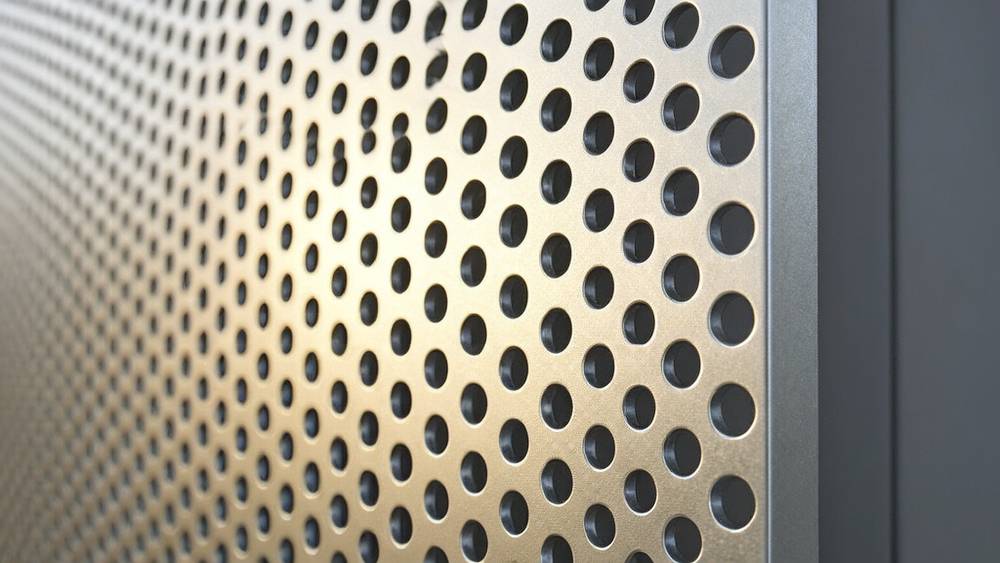
When your project calls for perforated metal sheets, the first question is almost always the same: where can i buy perforated metal sheets that meet commercial-grade specifications, not just the thin decorative stock sold at home improvement chains. The answer depends heavily on what you are building. A 3 mm solid aluminium panel with staggered round perforations for a 12-metre curtain wall span has nothing in common with a 0.8 mm galvanised sheet used for a workshop ventilation grille. Yet search results lump them together. This article focuses on the procurement reality for mid-to-large scale architectural and industrial projects — the kind where mill certifications, open area percentages, and structural substrate integrity determine whether your order succeeds or fails at the jobsite.
The Gap Between Retail Stock and Project-Grade Perforated Aluminium
Open a browser tab and search where can i buy perforated metal sheets. You will find McMaster-Carr, OnlineMetals, Metal Supermarkets, Lowe's, and Amazon. These sources serve a real need: small-quantity, off-the-shelf stock in standard 12" × 24" or 24" × 36" sheets, typically 0.6 mm to 1.5 mm thick, with common round-hole patterns. For a prototype, a machine guard, or a small filtration panel, these work. For a building envelope, they rarely do.
Three things separate retail perforated sheet from project-grade material:
- Alloy and temper. Retail aluminium perforated sheets are often 3003-H14 — fine for general use but lacking the tensile strength of 5052-H32 or 5754 required for structural facade applications where wind loads exceed 1.5 kPa.
- Flatness after perforating. The punching process introduces internal stress. Thin gauge sheets (under 1.5 mm) frequently arrive with edge wave and centre buckle. For a 1,200 mm × 2,400 mm panel with 40% open area, flatness tolerances of ±3 mm over the diagonal are achievable only with post-perforation stretcher levelling — a process most retail suppliers skip.
- Coating compatibility. A PVDF architectural coating applied after perforating must wrap the interior hole walls to meet AAMA 2605 standards. Retail sheets are almost never coated to architectural spec.
How Perforation Specifications Shape Your Supply Chain
Before you ask where can i buy perforated metal sheets, the more precise question is: what does your perforation specification demand from the supply chain? The answer determines whether you buy from a local service centre, a dedicated perforator, or an integrated aluminium cladding manufacturer.
Hole Shape, Pattern, and Pitch: The Tooling Constraint
Round holes on a 60° staggered pitch account for roughly 70% of architectural perforated aluminium. The tooling is widely available, and most perforating shops in North America, Europe, and Asia run it routinely. But when your design calls for square holes, slots, hexagonal openings, or a custom decorative pattern, the supplier pool shrinks dramatically.
Custom perforating dies cost USD 2,000 to 8,000 depending on pattern complexity and tool steel grade. For projects under 500 m², this tooling charge can exceed the material cost. Some manufacturers, including Futeng®, maintain an extensive die library that can match many architectural patterns without new tooling — a practical consideration when evaluating suppliers.
Open Area Percentage: More Than a Visual Choice
Open area percentage — the ratio of perforated void to solid metal — directly governs structural capacity, airflow, light transmission, and panel weight. A 20% open area panel retains substantial bending stiffness. A 50% open area panel behaves closer to a mesh, requiring a backing frame or stiffener system. The table below shows how open area interacts with solid aluminium substrate thickness for typical facade applications:
| Open Area | Minimum Solid Aluminium Thickness | Typical Max Panel Size (mm) | Stiffener Requirement | Suitable Application |
|---|---|---|---|---|
| 10–20% | 2.0 mm | 1,500 × 3,000 | Edge returns only | Rainscreen cladding, column covers |
| 20–35% | 2.5 mm | 1,200 × 2,400 | Perimeter frame recommended | Sunshades, acoustic panels |
| 35–50% | 3.0 mm | 1,000 × 2,000 | Full welded stiffener grid | Decorative screens, parking facades |
| 50–65% | 3.0 mm + backing mesh | 800 × 1,500 | Integrated sub-frame | Ceiling panels, interior partitions |
These values assume 5052-H32 aluminium alloy, four-edge support, and a design wind load of 1.0 kPa. For higher wind zones — coastal high-rise towers, for instance — consult a facade engineer and increase substrate thickness or reduce panel dimensions accordingly.
Four Procurement Channels and What They Actually Deliver
When you ask where can i buy perforated metal sheets for a serious project, the answer breaks into four distinct procurement channels. Each has a different risk profile.
1. Online Metal Service Centres (McMaster-Carr, OnlineMetals, Metal Supermarkets)
Best for: samples, mock-ups, small replacement panels, and quantities under 10 sheets. These suppliers stock standard perforated patterns in aluminium, stainless steel, and carbon steel. Cut-to-size services are available. What you do not get: mill test reports for the aluminium substrate, architectural coating, or post-perforation flatness guarantees. Sheet thicknesses above 2.0 mm are rarely stocked in perforated form. If you need 20 sheets of 2.5 mm 5052 aluminium with 12 mm round holes on 16 mm staggered centres, these channels cannot supply it.
2. Dedicated Perforating Shops
These companies — often regional, occasionally national — take solid coil or sheet from mills and perforate to order. They maintain large die inventories and can match most standard patterns. Lead times run 3–6 weeks for custom work, 1–2 weeks for stock patterns. The limitation: they perforate but do not fabricate. If your panels need shearing to final size, bending edge returns, welding stiffeners, and applying PVDF coating, you need a separate fabricator. Coordinating two vendors adds schedule risk and quality accountability gaps.
3. Integrated Aluminium Cladding Manufacturers
A full-service manufacturer handles the entire chain: sourcing certified aluminium coil (typically from mills in China, Europe, or the Middle East), perforating to specification, fabricating panels with returns and stiffeners, applying architectural coatings, and packaging for export. This is the channel where Futeng® and similar manufacturers operate. The advantage is single-point accountability: one purchase order covers perforated, fabricated, coated, crated panels delivered to site. Lead times run 6–10 weeks for standard patterns, 8–14 weeks for custom tooling. Minimum order quantities typically start around 200–300 m².
4. Local Metal Fabricators with In-House CNC Punching
Some regional fabricators run CNC turret punch presses capable of perforating sheet metal. This route suits small-to-medium projects (50–500 m²) where the pattern is simple and the required open area is under 30%. CNC punching is slower than dedicated perforating lines but eliminates tooling costs for simple patterns. The trade-off: per-sheet cost is higher, and maximum sheet thickness is typically 2.0 mm for aluminium on a turret punch. For 3.0 mm solid aluminium panels with 40% open area, a dedicated perforating press is necessary.
Coating Perforated Aluminium: The Hidden Complexity
Coating a perforated panel is fundamentally different from coating a solid sheet. The holes create edge surfaces that must be covered, drainage paths that must remain open, and a risk of coating bridging that closes small perforations entirely.
For architectural perforated aluminium, the industry benchmark is AAMA 2605-compliant PVDF coating applied as a spray system. The key parameters:
- Dry film thickness: 30–40 microns minimum on the face, with adequate coverage inside holes down to at least 3 mm from the face surface. Achieving this on hole diameters below 6 mm requires careful gun angle adjustment and multiple passes.
- Hole bridging: For holes under 4 mm diameter, coating can accumulate at edges and partially close the opening. This reduces effective open area and alters appearance. A pre-production sample is essential to validate the coating process against the specified hole size.
- Two-coat vs three-coat: Most perforated panels use a two-coat system (primer + colour coat) to minimise bridging. A three-coat system (primer + colour + clear) adds 10–15 microns and increases bridging risk on small holes.
For interior applications or non-architectural exterior use, polyester powder coating offers a lower-cost alternative. However, powder coating perforated sheets presents its own challenges: electrostatic application can result in uneven coverage around hole edges, and Faraday cage effects can leave bare metal inside small holes. Wet spray PVDF remains the preferred method for any project requiring warranty-backed weathering performance.
Material Certifications: What to Demand Before You Buy
When you find an answer to where can i buy perforated metal sheets for a commercial building project, the paperwork matters as much as the product. The following documentation should be specified in your purchase order and reviewed before shipment:
- Mill Test Certificate (MTC) to EN 10204 Type 3.1 for the aluminium substrate, confirming alloy designation (e.g., 5052-H32), chemical composition, and mechanical properties per ASTM B209 or EN 485.
- Coating performance test reports demonstrating compliance with AAMA 2605 or AAMA 2604 as specified, including adhesion (cross-hatch), impact resistance, and accelerated weathering (QUV or Xenon arc) results.
- Dimensional inspection report covering sheet thickness, hole diameter tolerance (±0.1 mm for architectural work), pitch accuracy, flatness, and panel squareness.
- Open area verification by calculation or optical measurement, particularly for panels where open area affects mechanical performance or airflow specification.
On a 2022 mixed-use tower project in Southeast Asia, a batch of 3.0 mm perforated aluminium sunshade panels arrived with an actual open area of 38% against a specified 32%. The 6% deviation — caused by incorrect die selection at the perforating stage — was enough to alter the structural behaviour under wind load. The panels were rejected. The cost of rework exceeded USD 40,000. The lesson: verify open area at the pre-production sample stage, not upon delivery.
Pricing Structure: What Drives the Cost of Perforated Aluminium Sheets
Understanding the cost breakdown helps you evaluate whether a supplier quote is competitive or inflated. For a typical architectural order — say 500 m² of 2.5 mm 5052 aluminium, 25% open area, PVDF coated — the cost structure roughly follows this distribution:
- Aluminium substrate (coil or sheet): 35–45% of total cost. Aluminium pricing follows LME (London Metal Exchange) plus regional conversion premiums. Alloy 5052 carries a premium over 3003; 5754 (marine grade) costs more again.
- Perforating: 15–25%. Higher open area means more punches per sheet and longer press time. Custom patterns with new tooling add one-time charges of USD 2,000–8,000.
- Fabrication (cutting, bending, welding stiffeners): 15–20%. Panel complexity drives this: simple flat panels cost less; panels with folded returns on all four edges and welded stiffener grids cost more.
- PVDF coating: 15–20%. Two-coat systems are standard; three-coat or metallic finishes add 20–40% to the coating line item.
- Packaging and export logistics: 5–10%. Perforated panels require careful crating with interleaving to prevent abrasion between panels during transit.
Retail pricing from online service centres runs USD 8–15 per square foot for standard perforated aluminium sheet (1.5 mm, 3003, mill finish, no fabrication). Project-grade material from an integrated manufacturer typically ranges USD 12–25 per square foot depending on thickness, pattern complexity, coating specification, and fabrication requirements. The gap reflects real differences in material, process control, and documentation — not just margin.
Lead Time Realities and How to Plan Around Them
Anyone who has asked where can i buy perforated metal sheets on a tight deadline knows the standard answer: retail channels ship in days; everything else takes weeks. For project planning, here are realistic lead times:
- Stock perforated sheets from service centres: 1–5 business days for in-stock items; 1–2 weeks for cut-to-size orders.
- Custom perforated sheets from dedicated perforators: 3–5 weeks for standard patterns on stocked coil; 6–10 weeks if mill-order coil is required for specific alloy and gauge.
- Fully fabricated and coated panels from integrated manufacturers: 6–10 weeks for standard patterns; 10–14 weeks for custom patterns or large orders exceeding 2,000 m²; add 4–6 weeks for ocean freight to North America or Europe.
The longest single lead time element is often the aluminium coil itself. Mills in Asia and the Middle East run specific alloy/gauge combinations on production schedules that may not align with your order. If your specification calls for 2.5 mm 5052-H32 in a width of 1,500 mm, and no mill has that combination running in the next four weeks, your lead time extends accordingly. Early engagement with your supplier — ideally at the design development stage — allows them to reserve mill capacity or identify alternative coil sources.
QA Checklist for Incoming Perforated Aluminium Panels
When the shipment arrives, a systematic inspection prevents costly installation rework. Based on field experience across multiple international projects, here is a practical checklist:
- Verify quantity and dimensions against the packing list. Check panel length, width, and diagonal — a 2 mm diagonal error on a 1,200 mm panel is unacceptable for facade work.
- Measure sheet thickness with a calibrated micrometer. For 2.5 mm nominal, readings below 2.40 mm indicate the wrong gauge or excessive thinning during perforating.
- Check hole diameter with a go/no-go gauge. For a 10 mm specified hole, a 9.8 mm pin should pass; a 10.2 mm pin should not. Random-sample 5% of panels, minimum 10 panels per batch.
- Verify open area on at least three panels using optical comparison or a portable digital microscope with measurement software.
- Inspect coating coverage inside holes using a borescope or by cutting a sacrificial sample. Bare aluminium visible inside holes beyond 3 mm from the face surface indicates inadequate spray penetration.
- Check flatness by placing panels on a granite surface plate. Warp exceeding 2 mm per 600 mm of panel length should trigger rejection or rework.
- Perform a cross-hatch adhesion test per ASTM D3359 on one panel from each production batch. Results should meet Classification 4B or 5B.
For projects where the perforated aluminium serves as a rainscreen element, also verify that drainage and ventilation openings in the supporting subframe align correctly with the panel perforations. Misalignment can trap water behind the panel, accelerating corrosion of the aluminium substrate and the supporting steelwork.
When Retail Actually Makes Sense
To be fair to the retail channels that dominate search results for where can i buy perforated metal sheets, there are legitimate project scenarios where buying from McMaster-Carr, OnlineMetals, or Metal Supermarkets is the right call:
- Mock-ups and design studies. Before committing to a 1,000 m² order, purchase 5–10 sheets in the nearest available pattern to evaluate appearance, light transmission, and visual massing.
- Small mechanical rooms and plant screens where structural performance is secondary and the visual standard is industrial, not architectural.
- Replacement panels for existing installations where matching the original pattern matters more than mill certification.
- Interior feature elements not exposed to weather, where polyester powder coat or even mill finish is acceptable.
For the main building envelope — rainscreens, sunshades, spandrel covers, balcony balustrades — retail stock is a false economy. The cost of replacing non-compliant panels after installation dwarfs any upfront savings.
Procurement of perforated aluminium sheets for commercial projects demands clarity on four things before you contact suppliers: the alloy and thickness, the perforation pattern and open area, the coating specification, and the fabrication requirements. With those defined, the question of where can i buy perforated metal sheets answers itself: from the channel whose capabilities match your specification. For integrated supply covering perforation, fabrication, and architectural coating under one quality system, manufacturers like Futeng® provide a streamlined path from specification to delivery. For small quantities and simple needs, the online service centres work well. The key is matching the procurement channel to the project's technical demands — not the other way around.