Primary Aluminum Alloy Grades for Solid Cladding Panels What Specifiers Must Verify
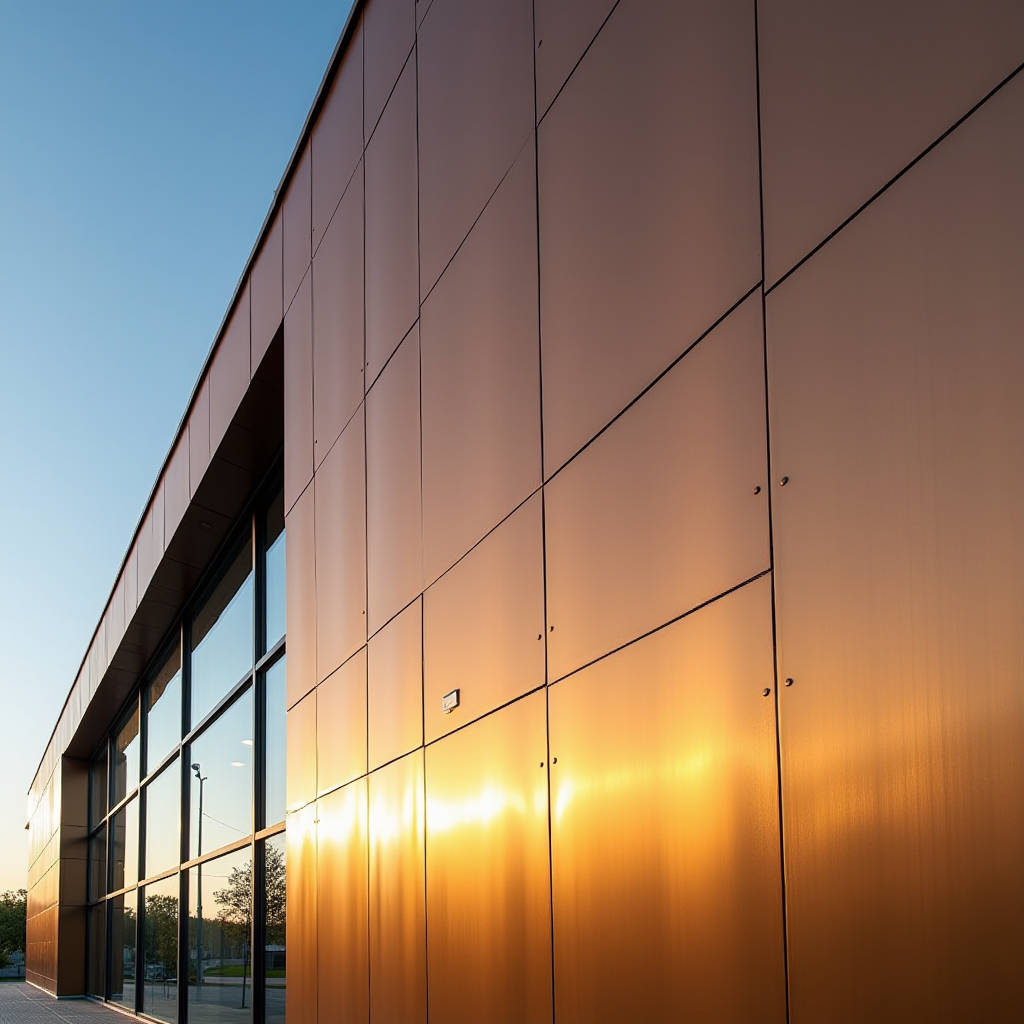
Specifying solid aluminium cladding panels for a large-scale facade project starts with a single decision that echoes through every performance metric that follows: the grade of Primary Aluminum Alloy entering the supply chain. This is not a metallurgical abstraction. The alloy designation stamped on the mill certificate determines formability during CNC routing, reaction to thermal cycling across a 40-storey elevation, and whether the anodised finish will remain uniform after five years of UV exposure. When a procurement team in Dubai or Singapore evaluates technical submissions, the first line item scrutinised is the base metal chemistry, because no coating system, however advanced, can compensate for substrate inconsistencies originating from the smelter. Understanding what Primary Aluminum Alloy actually means, how it differs from secondary blends, and why grades like AA1100 and AA3003 dominate architectural cladding specifications is the foundation of competent material selection.
What Primary Aluminum Alloy Means in Metallurgical Terms
The International Aluminium Institute defines primary aluminium as metal tapped directly from electrolytic reduction cells, where alumina (Al₂O₃) is reduced to metallic aluminium through the Hall-Héroult process. This metal, before any alloying elements or scrap additions, carries a purity floor that typically exceeds 99.5%. The benchmark grade P1020, containing 99.7% minimum aluminium with iron and silicon as the principal impurities, serves as the global reference point for primary smelter output. What distinguishes Primary Aluminum Alloy from secondary or recycled material is the controlled impurity profile. Secondary aluminium, derived from end-of-life scrap and manufacturing returns, inevitably accumulates tramp elements such as lead, tin, and chromium that cannot be economically removed through conventional remelting. For architectural cladding applications where surface appearance and corrosion resistance are non-negotiable, these trace contaminants represent a risk that most specification writers refuse to accept.
The distinction matters because aluminium cladding panels undergo multiple forming operations. A 2.5mm or 3.0mm solid sheet destined for a rainscreen system will be sheared, punched, routed, and folded. Each deformation step tests the material's ductility, which is directly influenced by the concentration of iron-rich intermetallic phases in the microstructure. Primary Aluminum Alloy produced from virgin alumina exhibits a cleaner, more predictable distribution of these phases compared to secondary material, where the accumulation of insoluble intermetallics from mixed scrap sources can create localised brittleness. This is not a theoretical concern; fabricators across the Gulf region have documented elevated rejection rates when processing panels manufactured from non-primary feedstock, particularly on projects requiring tight-radius returns or complex perforation patterns.
AA1100 vs AA3003: The Two Primary Alloys That Define Architectural Cladding
The aluminium cladding industry has converged on two primary alloy designations for solid panel applications: AA1100 and AA3003. Both are classified as non-heat-treatable wrought alloys, meaning their mechanical properties are developed through work hardening rather than precipitation hardening. AA1100 is essentially commercially pure aluminium, with a minimum aluminium content of 99.0%. It represents the closest commercially available product to the Primary Aluminum Alloy tapped from reduction cells, with only minor additions of iron and silicon. AA3003, by contrast, incorporates approximately 1.0-1.5% manganese as its principal alloying element, which boosts tensile strength by roughly 20-25% over AA1100 without sacrificing the corrosion resistance that makes the 1xxx and 3xxx series attractive for exterior applications.
The selection between these two grades is not arbitrary. AA1100 delivers superior reflectivity and a softer visual character that architects favour for applications where the natural metal finish will be exposed. Its lower strength, however, means that panels must be specified at adequate thickness to resist wind-induced deflection. A 2.0mm AA1100 panel spanning 600mm between fixing points may exhibit deflection exceeding L/90 under a design wind pressure of 2.0 kPa, whereas the same geometry in AA3003 at 2.5mm thickness typically stays within the L/180 limit commonly referenced in curtain wall specifications. AA3003 has become the default choice for the majority of solid aluminium cladding projects globally because it offers a practical balance of formability, strength, and cost. The manganese addition also improves work-hardening characteristics, which is beneficial when panels require edge returns formed by CNC folding machines.
Why Tramp Elements in Secondary Material Threaten Facade Performance
Every tonne of secondary aluminium introduced into a cladding panel billet carries a metallurgical fingerprint that reflects its prior life. Automotive castings contribute silicon at levels that can exceed 0.5%. Aerospace scrap introduces copper and zinc. Post-consumer packaging brings magnesium, titanium, and occasionally vanadium from foil alloys. These elements, collectively termed tramp elements, are not inherently problematic in all applications. Cast aluminium components for engine blocks routinely tolerate impurity levels that would be catastrophic for a PVDF-coated facade panel. The issue is specific to architectural cladding, where the visual and corrosion performance requirements are among the most demanding in the aluminium industry.
Consider anodising, the electrochemical surface treatment that builds a controlled oxide layer on the aluminium substrate. Anodising quality is exquisitely sensitive to the metallurgical condition of the base metal. Iron-rich intermetallic particles in the aluminium matrix do not anodise at the same rate as the surrounding aluminium, creating microscopic pits and colour variations that become visible as the oxide layer thickens. Secondary aluminium, with its elevated and unpredictable iron content, produces anodised finishes that can appear mottled under glancing light. For this reason, architectural anodising specifications in North America, governed by AAMA 611, effectively mandate Primary Aluminum Alloy substrates. The risk of field rejection and the cost of replacing panels on an installed facade far outweigh any upfront material savings from secondary feedstock.
PVDF coil coatings, while more forgiving than anodising, are not immune to substrate effects. The pretreatment system that applies a chromate or titanium-zirconium conversion coating before the primer layer relies on a uniform surface chemistry to achieve consistent adhesion. Tramp elements concentrated at the surface of secondary aluminium can create localised galvanic cells that undermine pretreatment effectiveness. The result is not immediate failure but a statistical increase in the probability of coating delamination at cut edges and fastener penetrations over a 20-year service life. For a general contractor warrantying a building envelope, that statistical tail is unacceptable.
Carbon Footprint and the Regulatory Pressure on Primary Aluminium Sourcing
The environmental profile of Primary Aluminum Alloy has become a procurement consideration equal in weight to technical performance. Primary aluminium smelting is energy-intensive, with global average emissions of approximately 16 tonnes of CO₂ equivalent per tonne of aluminium produced, though this figure varies dramatically depending on the electricity source powering the smelter. Chinese smelters, which rely predominantly on coal-fired electricity, typically emit 18-20 tonnes CO₂e per tonne. Smelters in Norway and Iceland, drawing on hydropower and geothermal energy, can achieve footprints below 4 tonnes CO₂e per tonne. This four-to-five-fold differential has concrete implications for projects pursuing green building certifications such as LEED v4.1 or BREEAM International.
Specifiers are increasingly requiring Environmental Product Declarations (EPDs) that document the carbon intensity of the aluminium used in cladding systems. A project in London or Singapore may mandate that Primary Aluminum Alloy be sourced from smelters certified by the Aluminium Stewardship Initiative (ASI), which audits chain-of-custody from bauxite mine to finished product. This creates a sourcing challenge for fabricators who must balance carbon constraints against the commercial reality that low-carbon primary aluminium commands a premium of $30-80 per tonne in the current market. The practical solution adopted by leading suppliers, including Futeng®, involves maintaining relationships with multiple ASI-certified smelters and offering clients a menu of carbon intensity options that can be documented through mill certificates and third-party verified EPDs.
Reading a Mill Certificate: What Procurement Teams Must Verify
A mill certificate, or material test report (MTR), is the foundational document that confirms whether the aluminium delivered to a fabrication facility actually meets the specification. For Primary Aluminum Alloy destined for cladding panels, the certificate must identify the smelter of origin, the alloy designation, the temper condition, and the results of chemical analysis against the relevant ASTM or EN standard. The key standard for wrought aluminium chemical composition is ASTM B209 (for sheet and plate) or EN 485 (the European equivalent). A compliant AA3003-H14 sheet, for example, must show manganese between 1.0% and 1.5%, iron not exceeding 0.7%, silicon not exceeding 0.6%, and copper held below 0.20%. Any deviation from these ranges indicates either a different alloy or contamination from secondary sources.
Procurement teams should pay particular attention to elements that are not explicitly specified in the alloy standard but are indicative of secondary content. Zinc, magnesium, and chromium are rarely added intentionally to AA1100 or AA3003. Their presence at levels above 0.05% each, particularly when observed together, suggests that the melt incorporated recycled material. A single tramp element at trace level might be dismissed as analytical noise. The combination of multiple tramp elements is a pattern that warrants investigation. Reputable suppliers will provide full optical emission spectroscopy (OES) results rather than a simple pass/fail statement, allowing the buyer to make an informed assessment of melt purity.
Thermal and Mechanical Behaviour in Service
Solid aluminium cladding panels on a ventilated rainscreen facade experience daily temperature swings that can exceed 50°C in arid climates. The coefficient of thermal expansion for aluminium is approximately 23.6 × 10⁻⁶ per °C, meaning a 3-metre panel will expand and contract by roughly 3.5mm across a 50°C temperature range. This movement must be accommodated by the fixing system, typically through slotted holes or sliding clips that allow the panel to move independently of the supporting subframe. The thermal conductivity of Primary Aluminum Alloy, around 220 W/m·K for AA1100 and 190 W/m·K for AA3003, also influences the thermal performance of the building envelope. While the aluminium itself is a poor insulator, the ventilated cavity behind the cladding decouples the rainscreen from the thermal barrier, allowing the insulation layer to function without thermal bridging through the panel.
Mechanical properties at the temper conditions commonly specified for cladding (H14 for AA3003, H14 or H16 for AA1100) are well-documented. AA3003-H14 delivers a minimum tensile strength of 140 MPa, yield strength of 115 MPa, and elongation of 8-10% in 50mm. These values are sufficient for the structural demands of a rainscreen panel, where the primary load is wind pressure distributed across the panel face and transferred to the substructure through the fixing points. The allowable deflection criteria in most curtain wall standards (typically L/60 for aluminium panels under wind load, per ASTM E330) are comfortably met by 2.5mm and 3.0mm solid panels at the spans commonly encountered in commercial construction. Where larger spans or higher wind loads are specified, finite element analysis of the panel geometry, including stiffener ribs and return leg dimensions, provides the necessary engineering verification.
Supply Chain Integrity: Tracing Primary Aluminium from Smelter to Fabricator
The global primary aluminium supply chain is concentrated in a relatively small number of countries. China accounts for approximately 58% of world production, followed by India, Russia, Canada, and the UAE. Each jurisdiction has its own regulatory framework governing environmental performance, labour standards, and export documentation. For a procurement manager in Europe or North America, the chain of custody from smelter to fabrication facility can involve multiple intermediaries: a primary producer, a rolling mill, a stockist or distributor, and finally the fabricator who cuts and forms the panels. At each transfer point, the opportunity exists for material substitution or commingling with secondary product.
Mitigating this risk requires a combination of contractual language and technical verification. Purchase orders should explicitly state that only Primary Aluminum Alloy is acceptable, with secondary or recycled content prohibited unless specifically agreed. The supplier should be required to provide smelter-level mill certificates that can be traced to specific production lots. On-site verification using portable X-ray fluorescence (XRF) analysers can provide a rapid, non-destructive check of alloy chemistry, though XRF is less sensitive than OES for light elements such as magnesium. For critical projects, independent laboratory analysis of retained samples provides the definitive assurance that the installed product matches the specification. These measures add cost to the procurement process, but they are negligible compared to the expense of replacing non-compliant cladding after installation.
Comparative Analysis of Primary Aluminium Alloy Grades for Cladding
The table below provides a structured comparison of the three primary aluminium grades most relevant to solid cladding panel specification, with data drawn from ASTM B209 and industry practice.
| Property | AA1100-H14 | AA3003-H14 | AA5005-H14 |
|---|---|---|---|
| Minimum Aluminium Content | 99.0% | 96.8% (balance Al) | 97.0% (balance Al) |
| Principal Alloying Element | None (commercially pure) | Manganese 1.0-1.5% | Magnesium 0.5-1.1% |
| Tensile Strength (MPa) | 110-145 | 140-180 | 145-185 |
| Yield Strength (MPa) | 95 min | 115 min | 120 min |
| Elongation (% in 50mm) | 6-12 | 8-14 | 6-10 |
| Corrosion Resistance | Excellent | Excellent | Very Good (marine grade) |
| Anodising Response | Superior - bright, uniform | Good - slight grey tint | Good - protective only |
| Formability (Bend Radius) | 1.0t typical | 1.0-1.5t typical | 1.5t typical |
| Typical Cladding Application | Anodised feature panels, soffits | PVDF-coated rainscreen panels | Coastal/marine environments |
| Relative Cost Index | 1.00 (baseline) | 1.05-1.10 | 1.15-1.25 |
AA5005, while less common in solid cladding than AA3003, deserves mention for projects in aggressive marine environments. The magnesium content provides enhanced resistance to salt spray corrosion, a consideration documented in ASTM B117 salt fog testing where AA5005 consistently outperforms AA3003 by 20-30% in time-to-first-pitting metrics. The trade-off is reduced formability and a higher cost, which limits its use to projects where the environmental exposure justifies the premium.
Coating Compatibility and Surface Preparation
The surface of a Primary Aluminum Alloy panel arriving from the rolling mill is not ready for coating. Mill-finish aluminium carries a thin, naturally formed oxide layer, residual rolling lubricants, and potentially light surface contamination from handling and storage. The pretreatment process, whether chromate-based or chrome-free, must remove these contaminants and establish a uniform conversion coating that promotes paint adhesion. The consistency of this pretreatment step is directly influenced by the uniformity of the substrate. Primary aluminium, with its controlled impurity profile, responds predictably to pretreatment chemistry. Secondary material, with its heterogeneous surface composition, introduces variability that can manifest as coating defects.
PVDF (polyvinylidene fluoride) coatings, typically applied as a two-coat (primer plus colour coat) or three-coat (primer, colour coat, clear coat) system, are the dominant finish for architectural aluminium cladding. The performance standard is AAMA 2605, which requires a minimum total dry film thickness of 30 microns for a two-coat system and 40 microns for a three-coat system. The specification also mandates colour retention, chalk resistance, and gloss retention after 10 years of South Florida exposure. These requirements are demanding, and coating manufacturers such as PPG and AkzoNobel warrant their products only when applied to substrates that meet their published specifications, which invariably require Primary Aluminum Alloy.
Cost Structure and the Economics of Primary vs Secondary Aluminium
The price differential between primary and secondary aluminium fluctuates with market conditions, but a structural gap of $200-400 per tonne has persisted over the past decade. For a cladding project consuming 50 tonnes of aluminium sheet, the premium for primary material amounts to $10,000-20,000. Set against a total facade contract value that may run into millions, this represents a fraction of one percent of the project budget. The risk-adjusted cost comparison is even more favourable to primary material when the potential costs of coating failure, panel replacement, and project delay are factored into the analysis.
The London Metal Exchange (LME) provides the benchmark pricing for primary aluminium, with regional premiums added for delivery to specific locations. The Midwest Premium in the United States, the Rotterdam Premium in Europe, and the Main Japanese Port Premium in Asia reflect local supply-demand dynamics and logistics costs. Secondary aluminium prices are typically quoted as a percentage of the LME price, with discounts ranging from 5% to 20% depending on the scrap quality and alloy specification. For architectural cladding, where the alloy must conform to a tightly defined chemical composition, the effective discount for secondary material narrows considerably because only the highest-quality scrap fractions can be used without exceeding impurity limits.
Practical Recommendations for Specification Writers and Procurement Teams
Based on the technical and commercial considerations outlined above, the following recommendations are offered for professionals specifying or procuring solid aluminium cladding panels:
- Specify the alloy explicitly. A generic reference to "aluminium" is insufficient. The specification should state the alloy designation (e.g., AA3003-H14), the applicable standard (ASTM B209 or EN 485), and the requirement that the material be produced from Primary Aluminum Alloy with no secondary or recycled content.
- Require smelter-level mill certificates. The MTR should identify the smelter of origin and provide full chemical analysis by OES. Certificates that aggregate material from multiple sources or provide only pass/fail statements should be rejected.
- Verify carbon intensity if required. For projects pursuing green building certification, request an EPD that documents the carbon footprint of the aluminium. Confirm that the smelter holds ASI certification if chain-of-custody assurance is required.
- Conduct incoming inspection. Use portable XRF to verify alloy chemistry on receipt of material. Retain samples for independent laboratory analysis on projects where the consequences of non-compliance are severe.
- Align coating specification with substrate. Ensure that the coating system (PVDF, anodising, or other) is compatible with the specified alloy and that the pretreatment process is qualified for the substrate chemistry.
The selection of Primary Aluminum Alloy for solid aluminium cladding panels is a decision that reverberates through fabrication quality, installed appearance, long-term durability, and environmental compliance. The incremental cost of specifying primary material is trivial in the context of total project expenditure. The cost of getting it wrong is not.
"The quality of the aluminium substrate is the single most important factor determining the performance of architectural cladding over a 30-year service life. No coating can compensate for an inconsistent base metal." — Technical Committee, The Aluminum Association