Aluminum Panel Specification Guide: Alloy, Coating, and Procurement for Façade Projects
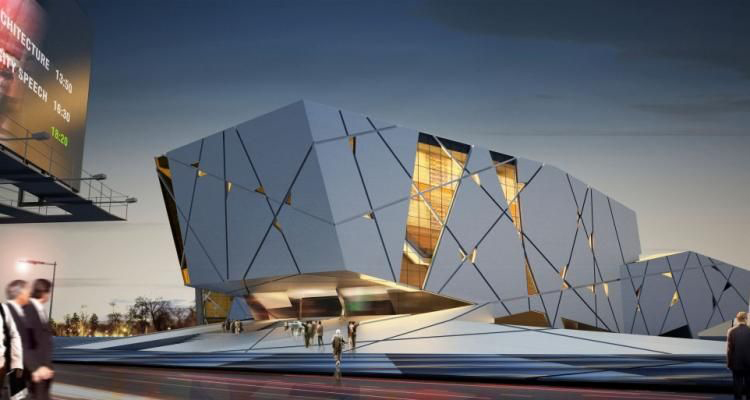
When a project specification lands on your desk calling for "aluminum panel" cladding, the first question procurement teams should ask is not about price per square meter. It is about whether the supplier understands the difference between a solid 2.5mm or 3.0mm PVDF-coated sheet and the thinner composite alternatives that dominate budget-driven bids. A solid aluminum panel is a single-skin, non-combustible metal façade product formed from mill-finish alloy sheet — typically 1100, 3003, or 5052 series — cut, routed, bent, and reinforced to match the architect's panelisation drawing. Getting this right at the tender stage determines whether the curtain wall performs for 20 years or becomes a liability in five.
What Defines a Solid Aluminum Panel in Commercial Façade Engineering
In the supply chain for rainscreen cladding and unitized curtain wall systems, a solid aluminum panel carries a specific technical identity. It is not a sandwich panel. It has no polyethylene core. The raw material is a coil or flat sheet of wrought aluminum alloy, most commonly grade 3003-H14 or 5052-H32, with thickness ranging from 2.0mm to 3.0mm for standard external applications. Some coastal or high-wind projects push specifiers toward 3.0mm minimum, especially when panel dimensions exceed 1,200mm in any direction.
The manufacturing process follows a predictable sequence: CNC punching or turret punching for perimeter cutouts and ventilation slots, grooving on a V-groove machine to create sharp fold lines, bending on a press brake, and then assembling with aluminum stiffeners bonded or mechanically fixed to the rear face. The stiffener grid prevents oil-canning — that wavy distortion visible under raking light that architects despise. A well-engineered stiffener layout, combined with the correct alloy temper, keeps the panel flat within a tolerance of ±1.5mm per linear meter under thermal load.
Field Note: On a 2022 mixed-use tower in Dubai, the design team switched from 2.5mm to 3.0mm solid aluminum panel after mock-up testing revealed visible deflection at the 1,800mm span under 45°C ambient heat. The cost increase was 12% on material, but the alternative — re-engineering the support framing — would have added 18% to the steel tonnage. Always run the numbers on both sides of the equation.
Alloy Selection: 1100, 3003, or 5052?
Not all aluminum panel substrates are equal. Grade 1100 offers the highest corrosion resistance and formability but lower tensile strength, making it suitable for interior decorative panels or soffit liners where wind load is negligible. Grade 3003 sits in the sweet spot for most external cladding — moderate strength, excellent workability, and good weldability for corner joints. Grade 5052, with its higher magnesium content, delivers superior tensile strength (up to 228 MPa in H32 temper) and is the preferred choice for marine environments or high-rise façades exposed to extreme wind pressures.
The selection decision should reference ASTM B209/B209M for aluminum sheet specifications and ISO 6361 for wrought aluminum alloy sheet tolerances. Procurement managers who skip alloy verification during QA inspection often receive panels that meet thickness but fail on flatness because the mill used a softer temper than specified.
Surface Treatment: PVDF, FEVE, and Powder Coating Compared
Surface finish is where the aluminum panel earns its long-term performance credentials. The dominant specification for exterior façades remains PVDF (polyvinylidene fluoride) liquid coating, applied via a multi-stage spray line. The industry benchmark is a three-coat system: a chromate or chrome-free conversion primer (5–8μm), a color base coat (20–25μm), and a clear topcoat (10–15μm) containing PVDF resin. Total dry film thickness lands between 35μm and 45μm. The resin formulation must contain a minimum 70% PVDF — Kynar 500® or Hylar 5000® are the recognized trade names that specifiers should look for in the coating warranty.
For projects demanding extended color retention beyond 20 years, FEVE (fluoroethylene vinyl ether) fluoropolymer coatings offer an alternative with higher gloss retention and a wider color gamut, though at a 15–20% cost premium over standard PVDF. Powder coating — polyester or super-durable polyester — provides a lower-cost option for interior applications or sheltered exterior areas, but its UV resistance and film integrity generally fall short of liquid PVDF in direct exposure conditions.
| Application | Recommended Panel Thickness | Coating System | Typical DFT | Expected Service Life |
|---|---|---|---|---|
| High-rise curtain wall (urban) | 2.5mm – 3.0mm | 3-coat PVDF (Kynar 500) | 35–45μm | 25–30 years |
| Coastal façade (marine exposure) | 3.0mm (5052 alloy) | 4-coat PVDF + primer | 45–55μm | 20–25 years |
| Interior feature wall | 1.5mm – 2.0mm | Polyester powder coat | 60–80μm | 15+ years (indoor) |
| Soffit / canopy cladding | 2.0mm – 2.5mm | 2-coat PVDF or FEVE | 25–35μm | 20–25 years |
| Column cladding (ground level) | 2.5mm | 3-coat PVDF (anti-graffiti clear coat) | 40–50μm | 20+ years |
Color Consistency and Delta E Tolerances
One of the most underrated risks in aluminum panel procurement is batch-to-batch color variation. Architects specify RAL, Pantone, or custom-matched colors, but the reality on a production line involves multiple coil batches, varying oven dwell times, and ambient humidity fluctuations. The accepted industry tolerance for solid aluminum panel color consistency is a Delta E (ΔE) value of ≤1.5 when measured with a spectrophotometer under D65 illuminant, referencing ISO 11664 colorimetry standards.
Experienced procurement teams build a color approval gate into the contract: the supplier must submit three A4-sized sample panels from the actual production batch, not a hand-sprayed lab sample. The architect signs off on these physical swatches, and they become the contractual reference for the entire shipment. Any panel exceeding ΔE 2.0 should be rejected at the factory gate, not on the construction site where replacement timelines are compressed.
Fabrication Tolerances and Quality Control Benchmarks
On a typical curtain wall project, the aluminum panel interacts with extruded aluminum mullions, gaskets, thermal breaks, and steel sub-frames. The panel's dimensional accuracy directly affects installation speed and weather seal integrity. The following fabrication tolerances represent the baseline that tier-one suppliers should meet:
Length and width: ±1.0mm for panels up to 1,200mm; ±1.5mm for panels 1,200mm to 2,500mm
Diagonal difference: ≤2.0mm for rectangular panels
Flatness: ≤1.5mm deviation per 1,000mm of panel length
Bend angle: ±0.5° from specified angle
Hole position (CNC punched): ±0.3mm from drawing coordinates
Coating adhesion: Pass cross-hatch test per ASTM D3359, Class 5B
These numbers are not aspirational. They are the minimum required to prevent field rework. A 2mm diagonal error on a 2,500mm panel translates to a visible gap at the joint, which either gets filled with sealant — compromising the open-joint rainscreen design intent — or forces the installer to shim the framing, eating into the adjustment margin of the entire elevation.
Packaging, Logistics, and Site Handling for International Procurement
For procurement managers importing aluminum panel shipments from manufacturing hubs in Asia, the logistics chain demands as much attention as the factory quality audit. A solid aluminum panel with a finished PVDF surface is a high-value, damage-sensitive product. Surface scratches, edge dents, and coating abrasion during ocean freight account for a significant percentage of claims.
Standard export packaging for solid aluminum panels includes: a polyethylene film interleave between each panel face, edge protectors on all four corners, a full wooden crate or fumigated plywood pallet with steel banding, and a waterproof wrapping layer. For FOB shipments, the supplier's responsibility ends when the cargo crosses the ship's rail, but experienced buyers specify packaging requirements in the purchase order itself — not just the technical data sheet — to avoid disputes.
Pro Tip: If your project is in the Middle East during summer, specify that containers must be lined with a vapor barrier. The temperature swing between factory (25°C) and port storage (50°C+) inside a sealed container can cause condensation that etches the PVDF clear coat. We have seen entire container loads rejected at Jebel Ali because of moisture rings on the panel face.
Cost Drivers Beyond the Square Meter Rate
Bid comparisons for aluminum panel supply often focus narrowly on the ex-factory price per square meter. That number is misleading. A comprehensive cost model should factor in at least seven variables:
Alloy grade and temper: 5052-H32 carries a 8–12% material premium over 3003-H14
Panel thickness: Moving from 2.0mm to 3.0mm adds roughly 50% to raw material weight and cost
Coating system: 3-coat PVDF costs approximately 2.5–3× more than polyester powder per square meter
Perforation ratio: Panels with high open-area perforation require longer CNC runtime and generate more scrap
Panel complexity: Folded returns, welded corners, and integrated stiffeners increase labor hours
Color matching: Custom RAL matches or metallic finishes may require additional spray trials
Packaging and freight: Crated volumetric weight often exceeds actual weight, driving up shipping costs
Suppliers like Futeng®, who operate dedicated solid aluminum panel production lines with in-house PVDF coating facilities, can often compress the cost-quality gap by eliminating subcontracting markups on surface treatment. When evaluating a factory, ask whether the coating line is on-site or outsourced. The answer reveals a lot about their quality control span.
Specification Compliance and Fire Performance
Fire safety is non-negotiable in modern façade engineering, and this is where the solid aluminum panel distinguishes itself categorically. A solid aluminum sheet with no combustible core achieves an A1 or A2-s1,d0 fire classification under EN 13501-1, depending on the coating system. This meets the stringent requirements of building codes in the UK (Approved Document B), the UAE Fire and Life Safety Code, and the International Building Code for non-combustible cladding on buildings above 18m.
Specifiers should require test reports from an accredited laboratory — not just a supplier declaration — confirming the panel assembly's reaction to fire classification. The test should cover the complete build-up: aluminum skin, coating, stiffener, and any mounting clips or brackets, as these components can influence the overall classification.
FAQ: Procurement and Engineering Decisions
What is the minimum order quantity for custom aluminum panel fabrication?
Most tier-one manufacturers set MOQs between 200 and 500 square meters for standard PVDF colors and panel sizes. For custom RAL-matched colors, the MOQ typically rises to 500–800 square meters because the coating line requires a minimum batch volume to justify paint mixing and line setup. Small mock-up orders (50–100 square meters) are possible but carry a significant price premium — sometimes 40–60% above the volume rate.
How long does production and delivery take for a typical curtain wall package?
Assuming a 2,000–5,000 square meter order of standard 2.5mm PVDF aluminum panel, the production timeline from drawing approval to ex-factory dispatch runs 25–35 working days. Add 15–25 days for sea freight from Asia to Europe or North America, plus 5–7 days for customs clearance and inland transport. Total lead time: 45–60 days. Rush orders can compress production to 18–22 days, but the coating cure time cannot be shortened without risking film integrity.
Can solid aluminum panels be curved or formed into complex geometries?
Yes. Three methods are common: roll bending for single-curvature cylindrical panels, press forming for double-curvature shapes, and CNC routing with folded returns for faceted geometries. The minimum bend radius for a 2.5mm 3003 alloy panel is approximately 2.5× the material thickness (6–7mm inside radius). Tighter radii require annealing or switching to 1100 alloy. Each forming method adds cost and lead time, so complex geometries should be value-engineered early in the design phase.
What warranty should I expect on PVDF-coated aluminum panels?
Standard PVDF coating warranties from reputable applicators cover film integrity, color retention, and chalk resistance for 20–25 years, provided the panels are installed in a non-industrial, non-coastal environment. Coastal projects may receive a 15–20 year warranty. The warranty document should name the PVDF resin supplier (e.g., Kynar 500®) and specify the test standards used for color and gloss retention claims. Always verify that the warranty is backed by the coating manufacturer, not just the panel fabricator.
How do I verify aluminum panel thickness and coating quality during a factory inspection?
Bring a calibrated digital micrometer and measure panel thickness at multiple points — edge, center, and near stiffener attachment locations. For coating thickness, use a calibrated eddy-current gauge (e.g., Elcometer 456) and take readings across a grid of at least 9 points per panel. Record the minimum, maximum, and average DFT. For adhesion, request an on-site cross-hatch test per ASTM D3359. If the factory hesitates on any of these, that is a red flag.
What is the cost difference between solid aluminum panel and other cladding materials?
Solid aluminum panel cladding, supplied and installed, typically ranges from $180 to $350 per square meter depending on thickness, coating, complexity, and region. This positions it above ACP ($80–$150/sqm installed) and fiber cement panels ($100–$180/sqm), but below unitized stone or terracotta systems ($400–$800+/sqm). The value proposition lies in the combination of non-combustibility, design flexibility, and a 25+ year service life with minimal maintenance — factors that building owners increasingly weigh against initial material cost.
Procurement decisions on aluminum panel systems ultimately hinge on technical due diligence that goes far deeper than a price comparison spreadsheet. The alloy, the coating chemistry, the fabrication tolerances, and the packaging protocol each represent a potential failure point if left unverified. For project teams managing international supply chains, the most reliable approach is to anchor the specification in recognized standards — ASTM, ISO, EN — and to audit the factory against those standards before the first sheet is cut. A properly specified and quality-controlled solid aluminum panel will outlast the building's first major refurbishment cycle, and that is the metric that matters to the asset owner writing the cheque.