How the Aluminum Degreasing Process Determines Coating Adhesion on Solid Aluminium Cladding Panels
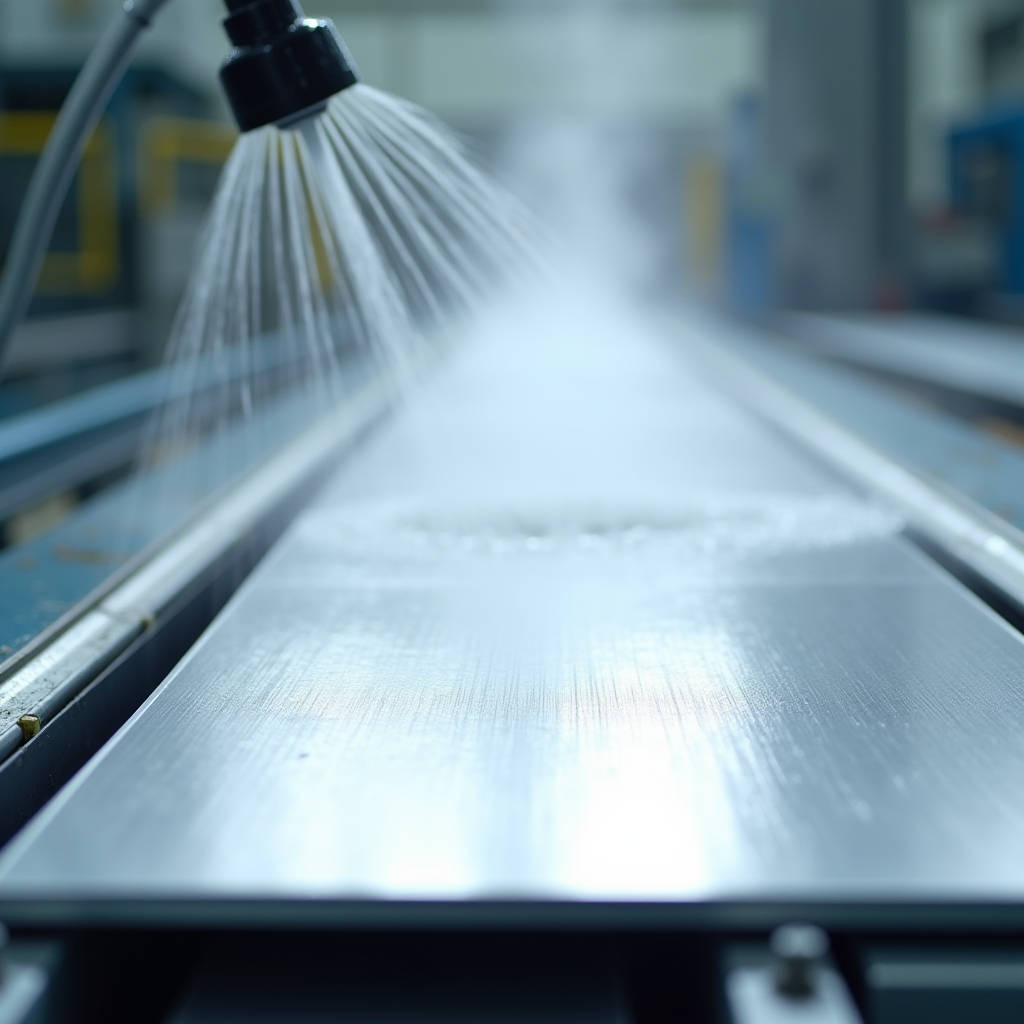
Getting the Aluminum Degreasing Process right before any coating or fabrication step is not just a quality checkbox. It is the single most decisive factor in whether a PVDF or polyester finish will hold up for 15 years or start peeling in 18 months. On solid aluminium cladding panels, where thicknesses range from 2.0mm to 3.0mm and surface integrity directly determines coating adhesion, skipping or shortchanging degreasing introduces a failure chain that no topcoat can fix. Mill oils, rolling lubricants, shop dust, and handling residues all sit on the raw aluminium surface the moment sheets leave the rolling mill. If these contaminants are not fully removed, the conversion coating cannot anchor properly, the primer loses grip, and the entire paint system becomes a liability. This article breaks down what actually happens at the chemical level during degreasing, which cleaning chemistries work on 1xxx, 3xxx, and 5xxx series aluminium alloys used in architectural cladding, and how to specify the right pretreatment parameters in a project quality plan.
Why Degreasing Aluminium Is Fundamentally Different from Steel
Steel and aluminium respond to cleaning chemicals in opposite ways. Heavy-duty alkaline and caustic-based cleaners that strip steel effectively will attack aluminium. Sodium hydroxide at concentrations above 2% begins dissolving the aluminium substrate itself, producing hydrogen gas and leaving a blackened, etched surface that is structurally compromised. The reason is electrochemical: aluminium is amphoteric, meaning it reacts with both strong acids and strong alkalis. This is not a minor surface effect. A 3.0mm solid aluminium cladding panel that loses even 15 microns of substrate during overly aggressive degreasing will show visible pitting after anodizing or PVDF coating. The specifier needs to understand that the Aluminum Degreasing Process for architectural panels operates in a narrow pH window, typically between 9.0 and 10.5 when using mild alkaline cleaners, or between 4.5 and 6.0 when using acid-based degreasers formulated specifically for aluminium. Anything outside these ranges risks substrate damage that no amount of post-treatment can reverse.
What Contaminants Are Actually on the Aluminium Surface
Raw aluminium coil and sheet arrive at the fabricator with a predictable set of contaminants, but the exact mix depends on the rolling process and subsequent handling. The primary categories are:
- Mill oils and rolling lubricants: Hydrocarbon-based oils applied during hot and cold rolling to reduce friction and prevent galling. These are the most common contaminants and the primary target of degreasing.
- Protective oils and interleaving residues: Applied after rolling to prevent oxidation during storage and transit. These can be mineral oil, synthetic ester, or solvent-based formulations.
- Metal fines and particulate: Microscopic aluminium particles generated during slitting, shearing, and CNC routing. These embed into the oil film and must be removed before coating.
- Fingerprints and handling residues: Chloride-containing sweat residues that initiate pitting corrosion if left under a coating system.
- Atmospheric soiling: Dust, shop grime, and condensed volatile organic compounds that accumulate during open-air storage.
Each contaminant type requires a specific cleaning mechanism. Oils need emulsification or saponification. Particulates need mechanical displacement or surfactant wetting. Chlorides need thorough rinsing. A well-designed Aluminum Degreasing Process addresses all three mechanisms in sequence.
Cleaning Chemistry: Alkaline, Acidic, and Solvent-Based Approaches
Mild Alkaline Degreasers (pH 9.0–10.5)
This is the workhorse chemistry for solid aluminium cladding panels. Mild alkaline cleaners use a blend of sodium carbonate, sodium silicates, and phosphate esters to emulsify oils without attacking the substrate. The silicate component provides a secondary benefit: it forms a thin protective layer on the aluminium surface that inhibits flash rusting during the rinse stage. Typical bath concentration runs at 2–5% by volume, operating at 50–65°C, with immersion times of 3–8 minutes. For spray application, concentration drops to 1–3% and contact time shortens to 60–120 seconds. This chemistry works reliably on 1xxx (pure aluminium), 3xxx (Al-Mn), and 5xxx (Al-Mg) alloys used in architectural cladding. The key parameter to monitor is free alkalinity, which should stay between 8 and 14 points depending on the specific formulation. When free alkalinity drops below 6 points, oil emulsification capacity declines sharply.
Acid-Based Degreasers (pH 4.5–6.0)
Acid degreasers formulated for aluminium use phosphoric acid or citric acid blends combined with surfactants. These are particularly effective at removing oxide layers along with embedded oils, providing a simultaneous clean-and-etch function. The etch rate is typically 0.5–1.5 microns per minute, which is acceptable for 2.5mm and 3.0mm panels but must be tightly controlled. Acid degreasers are the preferred choice when the next step is chromate conversion coating or anodizing, because they leave the surface in a slightly acidic condition that promotes uniform conversion coating deposition. Operating temperature is lower than alkaline systems, typically 35–50°C, which reduces energy costs. The trade-off is that acid degreasers are less effective at removing heavy mill oil loads and may require a pre-cleaning stage for heavily soiled material.
Solvent Degreasing (Vapor and Immersion)
Solvent-based degreasing using modified alcohols, hydrocarbons, or halogenated solvents offers the fastest cycle times and the lowest water usage. Parts emerge dry and ready for coating with no rinse step. However, solvent degreasing does not remove metal fines or particulate, and it leaves behind any non-soluble residues. For architectural aluminium panels, solvent degreasing is typically used as a spot-cleaning method for rework or for small batch production, not as the primary pretreatment line. Environmental regulations on VOC emissions also constrain solvent use in many jurisdictions. When solvent degreasing is specified, the solvent must be verified as compatible with aluminium; some chlorinated solvents can cause stress corrosion cracking in certain aluminium alloys if not properly inhibited.
Process Parameters That Determine Coating Adhesion
The Aluminum Degreasing Process is not just about chemical selection. The physical parameters of the cleaning line dictate whether the chemistry actually works. Five variables demand attention in any quality plan:
Temperature control: Every 10°C increase in bath temperature roughly doubles the reaction rate of the cleaning chemistry. But exceeding 70°C with alkaline cleaners on aluminium risks etching. The sweet spot is 55–65°C for alkaline immersion and 45–55°C for spray. Temperature must be maintained within ±3°C of the setpoint across the entire bath volume.
Contact time: Immersion tanks need 3–8 minutes of dwell time. Spray systems need 60–180 seconds. Conveyor speed must be calculated to ensure the minimum contact time is met for the longest panel in the batch. Rushing panels through degreasing to increase throughput is the single most common cause of coating failure seen in the field.
Agitation: Stagnant baths develop depleted boundary layers at the aluminium surface. Pump-driven circulation, ultrasonic transducers, or spray impingement all serve to refresh the chemical interface. For immersion tanks, a turnover rate of 2–4 tank volumes per hour is the minimum. Ultrasonic degreasing at 25–40 kHz provides the most thorough cleaning for complex geometries but is rarely needed for flat cladding panels.
Rinse quality: The rinse stage after degreasing is just as critical as the cleaning itself. Residual cleaner left on the panel surface will interfere with conversion coating. A two-stage counterflow rinse system with deionized water at the final stage is the standard for architectural aluminium. Final rinse conductivity should be below 50 µS/cm. Anything above 100 µS/cm indicates insufficient rinsing and will result in osmotic blistering of the coating system over time.
Bath life management: Degreasing baths accumulate emulsified oils, dissolved aluminium, and suspended solids over time. Oil skimming, filtration, and regular titration of bath chemistry are essential. A bath that looks clean can still be chemically exhausted. Free alkalinity titration and oil loading tests (measured by hexane extraction) should be performed at minimum once per shift. When oil loading exceeds 2% by volume, bath performance degrades regardless of chemical concentration.
Water Break Test: The 30-Second Quality Gate
The water break test is the simplest and most reliable method for verifying degreasing effectiveness on the production floor. After the final rinse, a panel is held vertically and sprayed with deionized water. On a properly cleaned surface, the water will sheet uniformly without beading or breaking for at least 30 seconds. Any area where the water film breaks, beads, or retracts within 30 seconds indicates residual oil or contamination. The test must be performed on multiple panels per shift and on different areas of each panel. The water break test is referenced in ASTM F22 and is the universal pass/fail criterion for degreasing quality in architectural aluminium coating lines. A panel that passes the water break test has a surface energy above 72 dynes/cm, which is the minimum threshold for reliable conversion coating and paint adhesion.
Degreasing Methods: Immersion, Spray, and Ultrasonic Compared
| Parameter | Immersion Degreasing | Spray Degreasing | Ultrasonic Degreasing |
|---|---|---|---|
| Typical cycle time | 3–8 minutes | 60–180 seconds | 2–5 minutes |
| Operating temperature | 55–65°C | 45–55°C | 50–60°C |
| Chemical consumption per m² | 0.15–0.30 L | 0.08–0.15 L | 0.10–0.20 L |
| Cleaning uniformity | Good on flat panels | Excellent, mechanical action | Excellent, reaches micro-pores |
| Equipment cost (relative) | Low | Medium | High |
| Best application | Batch processing of cut panels | Continuous coil coating lines | Precision parts, rework |
| Water consumption per m² | 3–5 L | 2–4 L | 3–6 L |
| Substrate etch risk | Low (if temp controlled) | Very low | Low to moderate |
For solid aluminium cladding panels in the 2.0mm to 3.0mm thickness range, spray degreasing integrated into a continuous pretreatment line is the most common configuration in high-volume production. Immersion systems are more practical for fabricators processing cut-to-size panels in batch mode. The choice between the two depends on production volume, panel dimensions, and the specific coating specification being targeted.
Alloy-Specific Considerations for Architectural Aluminium
Not all aluminium alloys behave identically in the degreasing bath. The three alloy families most commonly used in solid aluminium cladding panels each have distinct characteristics that affect cleaning chemistry selection:
AA 1050/1060/1100 (1xxx series, 99.5%+ Al): These commercially pure aluminium grades have the highest corrosion resistance and the lowest sensitivity to alkaline attack. They tolerate the widest pH range in degreasing, from 8.5 to 11.0 with mild alkaline cleaners. However, their softness (H14 temper, approximately 30–35 HB) means that mechanical agitation must be gentle to avoid surface scratching. These alloys are commonly specified for interior cladding and soffit panels where formability is prioritized over strength.
AA 3003/3004/3105 (3xxx series, Al-Mn): The addition of manganese (1.0–1.5%) increases strength by approximately 20% over 1xxx series while maintaining good corrosion resistance. These alloys are slightly more susceptible to alkaline etching than 1xxx grades. The recommended pH ceiling is 10.5. At pH above 10.5, manganese-rich intermetallic particles at the surface can act as local cathodes, accelerating pitting. 3xxx alloys are the most common choice for exterior rainscreen cladding panels.
AA 5005/5052 (5xxx series, Al-Mg): Magnesium content (0.8–2.5%) provides the highest strength of the three families, but also the highest sensitivity to chemical attack. The magnesium oxide layer that forms naturally on 5xxx alloys is more reactive with alkaline cleaners than the aluminium oxide layer on 1xxx and 3xxx grades. Degreasing pH must be kept below 10.0, and bath temperature should not exceed 60°C. 5xxx alloys are specified for high-wind-load applications and large-format panels requiring maximum stiffness.
Futeng® supplies solid aluminium cladding panels in all three alloy families, with 3xxx series being the standard recommendation for exterior architectural applications. The mill test certificate accompanying each batch includes alloy composition and temper, which should be cross-referenced with the degreasing specification before processing begins.
Converting Degreasing Quality into Coating Longevity
The link between degreasing quality and coating service life is direct and measurable. A PVDF coating system applied over a properly degreased and conversion-coated aluminium surface will reliably achieve 20–25 years of exterior performance in architectural applications, as defined by AAMA 2605. The same coating system applied over a surface with residual oil contamination will show adhesion failure within 2–5 years, typically manifesting as blistering, peeling, or filiform corrosion initiating at cut edges and fastener penetrations.
The failure mechanism is straightforward: residual oil creates a weak boundary layer between the aluminium substrate and the conversion coating. Chromate or titanium-zirconium conversion coatings cannot react with the aluminium surface through an oil film. The primer then bonds to the conversion coating, not to the substrate. When moisture penetrates the paint film through micro-cracks or edge exposure, it reaches the oil-contaminated interface and initiates delamination. The osmotic pressure generated by soluble contaminants at the interface accelerates the process. What starts as a 2mm blister becomes a 50mm paint peel within 12 months of the first breach.
Specifying the Aluminum Degreasing Process in a project quality plan means defining not just the chemical type but the complete process window: bath concentration, temperature range, contact time, rinse conductivity, and water break test frequency. These parameters should be written into the pretreatment section of the coating specification, referenced to ASTM D1730 for surface preparation of aluminium, and verified during first-article inspection and at regular intervals throughout production.
Environmental and Regulatory Factors Shaping Degreasing Choices
Wastewater from aluminium degreasing lines contains emulsified oils, spent surfactants, dissolved aluminium, and trace metals. Direct discharge to municipal sewers is regulated under local effluent limits, typically requiring oil and grease levels below 100 mg/L and pH between 6.0 and 9.0. The most practical approach for architectural aluminium fabricators is a closed-loop water treatment system incorporating oil-water separation, pH neutralization, and sludge dewatering. The capital cost of a basic treatment system ranges from $25,000 to $80,000 depending on throughput, but the operating cost savings from reduced water consumption and sewer discharge fees typically achieve payback within 18–36 months.
Solvent degreasing faces additional regulatory pressure. The U.S. EPA's National Emission Standards for Hazardous Air Pollutants (NESHAP) for halogenated solvent cleaning sets strict emission limits. Many fabricators have transitioned from trichloroethylene and perchloroethylene to modified alcohol solvents or aqueous cleaning systems. In the European Union, the Industrial Emissions Directive (IED) 2010/75/EU requires Best Available Techniques (BAT) for surface treatment, which effectively mandates aqueous degreasing for most aluminium finishing operations.
The trend toward chromium-free conversion coatings also influences degreasing. Titanium-zirconium conversion coatings, which are replacing hexavalent chromium systems under REACH and OSHA regulations, are more sensitive to surface cleanliness than chromate systems. The tolerance for residual oil is lower, making the degreasing step even more critical. A surface that would have passed with a chromate conversion coating may fail with a chrome-free alternative if degreasing is not optimized.
Building a Degreasing Quality Protocol for Cladding Projects
A practical quality protocol for the Aluminum Degreasing Process on a cladding project should include the following elements, written into the project specification and verified during factory inspection:
- Incoming material inspection: Document the type and approximate loading of mill oils on the aluminium as received. This determines the starting point for degreasing intensity.
- Chemical specification: Define the cleaner type (mild alkaline, acid, or solvent), approved product list, and operating parameters including concentration, temperature, and pH range.
- Process control plan: Specify bath titration frequency, oil loading limits, and bath change-out criteria. Include rinse water conductivity limits.
- Verification testing: Require water break testing per ASTM F22 at minimum once per shift, with results recorded in the batch quality record.
- Coating adhesion testing: Perform cross-hatch adhesion testing per ASTM D3359 on coated samples from each production batch. Method B (tape test) on a 0–5 scale, with 5B being the minimum acceptable result for architectural cladding.
- Long-term performance validation: For projects requiring AAMA 2605 compliance, the full coating system including pretreatment must pass 4,000 hours of accelerated weathering with less than 5 Delta E color change and no adhesion loss.
The cost of implementing this protocol is modest relative to the cost of coating failure remediation on a completed building. Recoating a single elevation of a mid-rise commercial building can exceed $150,000 when access equipment, labor, and disruption are accounted for. The incremental cost of proper degreasing during original fabrication is measured in cents per square meter.
Getting the Aluminum Degreasing Process right is fundamentally an exercise in risk management. The chemistry is well understood. The process parameters are well defined. The testing methods are standardized and simple. What separates successful projects from failures is the discipline to specify, verify, and document every step of the pretreatment chain, starting with degreasing, and the refusal to accept shortcuts that compromise coating adhesion for the sake of production speed.