5052 vs 3003 Perforated Aluminium Sheets Which Alloy Survives Anodising Without Edge Halos
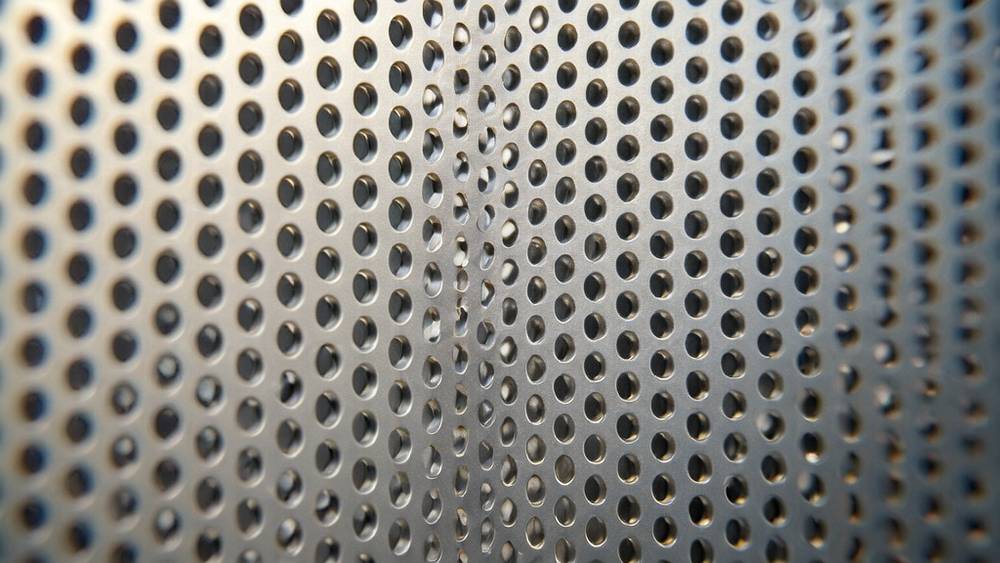
Specifying perforated aluminium sheets for a rainscreen facade or exterior soffit is rarely about picking a hole pattern from a catalogue and moving on. The decision that catches engineers and procurement teams off guard happens when the panel arrives on site with a raw mill finish and the project specification demands a Class II anodised coating. Suddenly the conversation shifts from aesthetics to whether the 5052-H32 alloy sitting in crates can even be anodised to a uniform architectural standard without streaking, colour mismatch, or pitting that shows up under grazing light. This is where alloy selection stops being a metallurgical footnote and becomes the single variable that determines whether the perforated aluminium sheets pass the facade consultant's mock-up review on the first attempt.
The relationship between aluminium alloy grade and coating performance on perforated sheet is poorly documented in most supplier datasheets. A mill might certify that a 3003-H14 sheet meets ASTM B209 for dimensional tolerance, but that same datasheet says nothing about whether the punched hole edges will accept anodising evenly or whether the PVDF primer will bridge the micro-fractures that form around each perforation during the stamping process. These are not hypothetical problems. They appear on projects where the specifier assumed that "aluminium is aluminium" and the fabricator did not flag the mismatch between the specified alloy and the specified finish until panels were already in production.
Why Perforation Changes the Coating Equation
A solid aluminium panel presents a continuous flat surface to the coating line. Pretreatment chemicals flow across it uniformly. Anodising current density distributes evenly. Powder coat particles build a consistent film. Perforated aluminium sheets break that continuity. Every punched hole creates two new surfaces: the interior wall of the perforation and a micro-lip at the exit side where the punch tool has torn rather than sheared the metal. These surfaces have different roughness, different residual stress, and different oxide layer thickness than the parent sheet surface.
The practical consequence is that coating behaviour at hole edges diverges from coating behaviour on the flat web between holes. With anodising, the edge effect is pronounced. The higher surface energy at the torn edge attracts current during the anodising bath, leading to localised thickening of the oxide layer that reads as a lighter halo around each hole. On a panel with 23% open area in a staggered round pattern, those halos create a visible texture that no amount of process tweaking can fully eliminate on certain alloys. Architects who specify bright anodised finishes on perforated aluminium sheets with open areas above 30% need to understand that they are asking for a finish where edge effects will be visible at close range, regardless of the anodiser's skill.
Alloy Families and Their Finishing Limits
Three aluminium alloy families dominate the perforated sheet market: 3000 series (primarily 3003 and 3105), 5000 series (5052, 5754, and occasionally 5083), and 6000 series (6061 and 6063). Each behaves differently when perforated and subsequently finished.
3003-H14 is the workhorse. It punches cleanly, costs less per square metre than 5052, and accepts most PVDF and polyester powder coat systems without issue. Its weakness appears in anodising. The manganese content (1.0–1.5%) that gives 3003 its strength also creates intermetallic particles that do not anodise at the same rate as the surrounding aluminium matrix. The result is a slightly cloudy anodised finish that becomes more pronounced as coating thickness increases beyond 15 microns. For Class I architectural anodising (>18 microns) on 3003 perforated aluminium sheets, the specifier should require a mock-up panel with the exact hole pattern and open area percentage, viewed under the lighting conditions expected on the building. Some anodisers can achieve acceptable uniformity on 3003 with open areas below 20%; above that, the risk of visible edge effects rises sharply.
5052-H32 offers higher tensile strength (approximately 255 MPa ultimate versus 150 MPa for 3003-H14) and better corrosion resistance in marine environments. It anodises to a more uniform appearance than 3003 because its magnesium content (2.2–2.8%) produces a clearer oxide layer. This makes 5052 the default choice when the specification calls for anodised perforated aluminium sheets on coastal buildings or anywhere the architect wants a clean metallic finish. The trade-off is cost: 5052 sheet typically runs 15–25% above 3003, and the punching operation requires slightly more tonnage and generates more tool wear. For projects specifying 5052 with open areas above 40%, fabricators should expect to replace punch tooling more frequently than on 3003 jobs, and that cost flows into the panel price.
6061-T6 enters the conversation when structural demands are high or when the perforated panels must integrate with extruded aluminium framing systems that are already specified in 6061. It punches acceptably but work-hardens rapidly, which means tight hole spacing can lead to micro-cracking between perforations if the tooling is not maintained to close tolerances. Anodising 6061 perforated sheets produces a finish that can appear slightly grey or yellowish depending on the specific heat treatment batch. This colour shift is inherent to the alloy's silicon and copper content and cannot be eliminated. Specifiers who want a bright, colour-neutral anodised finish should avoid 6061 in favour of 5052 or, for the highest aesthetic standard, 5005-H34.
Coating System Compatibility by Alloy: A Reference Table
The table below summarises the practical compatibility of common finishing systems with the three main perforated sheet alloys. This is based on field experience across multiple suppliers and anodising lines, not theoretical capability. "Good" means the system consistently produces acceptable architectural results. "Caution" means a mock-up is essential and the specifier should manage expectations about edge effects or colour uniformity. "Not recommended" means the combination has a high probability of rejection at mock-up stage.
| Coating System | 3003-H14 | 5052-H32 | 6061-T6 | Key Consideration for Perforated Sheets |
|---|---|---|---|---|
| Class I Architectural Anodising (>18 µm) | Caution | Good | Caution | Edge halo visible above 20% open area on 3003; colour shift risk on 6061 |
| Class II Commercial Anodising (10–15 µm) | Acceptable | Good | Acceptable | Thinner coating reduces but does not eliminate edge effect |
| PVDF 70% (AAMA 2605) | Good | Good | Good | Primer must bridge punch-edge micro-roughness; specify chrome pretreatment |
| Polyester Powder Coat | Good | Good | Good | Least sensitive to alloy choice; edge coverage depends on application method |
| Bright Dip Anodising | Not recommended | Caution | Not recommended | Requires 5005 or 5657 alloy for best results; 5052 minimum requirement |
| Mill Finish (No Coating) | Acceptable | Good | Acceptable | 5052 offers best natural corrosion resistance; 3003 will dull faster outdoors |
This table should be used as a starting point for specification conversations, not as a substitute for mock-up testing. Every perforation pattern, open area percentage, and sheet thickness introduces variables that a generic compatibility chart cannot capture. Suppliers such as Futeng® that operate their own punching and finishing lines can offer practical guidance on which combinations they have successfully delivered on previous projects, reducing the trial-and-error burden on the specifier.
The Mill Finish Fallacy
A recurring procurement error on perforated aluminium sheets is ordering panels in mill finish with the assumption that fabricating the perforations and then sending the panels to a third-party anodiser is a cost-saving strategy. The logic seems sound: buy standard mill-finish sheet, punch the holes, then anodise. The reality is that mill-finish sheet accumulates surface contamination during punching, handling, and storage. Lubricants from the punch press, fingerprints, and ambient shop dust embed into the surface oxide layer. When the panels arrive at the anodiser, the pretreatment line must remove all of this contamination uniformly, and it rarely does.
The better approach is to specify the finishing process as part of the supply contract and let the fabricator manage the sequence. Most experienced perforated sheet suppliers either punch pre-anodised sheet (and accept that the hole edges will be bare metal) or punch mill-finish sheet and send it immediately to their in-house or contracted anodising line before the surface has time to degrade. The pre-anodised route works for interior applications where the exposed edge at each perforation is not a corrosion concern. For exterior applications, post-punch finishing is mandatory because the hole edges must be protected.
Perforation Pattern Density and Its Effect on Coating Uniformity
Open area percentage – the ratio of hole area to total panel area – is the parameter that most directly influences coating behaviour. Below 15% open area, the coating system sees what is essentially a solid sheet with minor interruptions, and alloy-related edge effects are usually invisible at normal viewing distances. Between 15% and 35% open area, edge effects become measurable with instruments and potentially visible to the naked eye, particularly under low-angle sunlight that rakes across the facade. Above 35% open area, the panel behaves more like an expanded mesh than a perforated sheet, and coating uniformity becomes a function of pattern geometry as much as alloy chemistry.
Round holes on a 60-degree staggered pattern – the most common configuration in architectural perforated aluminium sheets – produce the most predictable finishing results because the geometry is symmetric and the distance between holes is uniform. Slotted patterns and custom decorative perforations introduce asymmetry that complicates coating flow. A slot punched into 3003 sheet will show anodising variation along its length, with the ends of the slot appearing slightly darker than the middle due to current concentration effects. Specifiers of slotted or custom-pattern perforated sheets should budget for at least two rounds of mock-up panels to dial in the finishing parameters, and they should select 5052 alloy if anodising is the specified finish.
Corrosion Performance: Where Alloy and Coating Intersect at the Hole Edge
The hole edge is the most vulnerable point on a coated perforated aluminium sheet. Even when the flat surfaces carry a full PVDF or anodised coating, the interior wall of each perforation may have thinner coverage or, in the case of post-punch anodising, a slightly different oxide structure than the face. In coastal or industrial environments where chloride or sulphur compounds are present in the atmosphere, these edges become initiation points for filiform corrosion.
The alloy choice directly affects how aggressively this corrosion propagates. 5052, with its higher magnesium content and inherently better marine corrosion resistance, shows measurably slower filiform growth from perforation edges than 3003 in salt-spray testing per ASTM B117. Data from accelerated weathering programmes suggest that 5052-H32 perforated sheets with a properly applied Class I anodised coating can withstand 3,000 hours of neutral salt spray with filiform encroachment of less than 0.5 mm from the hole edge, compared to 1.0–1.5 mm for similarly finished 3003-H14. These numbers matter when the building is 200 metres from a breaking surf line and the warranty period is 20 years.
For PVDF-coated perforated aluminium sheets, the primer system plays the dominant role in edge protection. A chrome-based pretreatment followed by a high-solids epoxy primer provides the best adhesion to the torn metal at the hole edge. Some coaters now offer non-chrome pretreatment systems for environmental compliance reasons, but specifiers should verify that the alternative pretreatment has been qualified on perforated sheet specifically, not just on solid panel stock. The geometry of a perforated sheet challenges pretreatment penetration in ways that a flat panel does not.
Supply Chain Reality: Not Every Mill Can Deliver Every Combination
The global supply chain for perforated aluminium sheets fragments at the intersection of alloy and finish. A mill that produces excellent 3003-H14 sheet in coil form may not stock 5052-H32 in the gauge required. A service centre that punches perforated sheet efficiently may not have access to an anodising line that is qualified for architectural work. The procurement team that writes a specification for 5052-H32 perforated aluminium sheets with Class I anodised finish and 33% open area in a 1.5 mm gauge may discover that only two or three suppliers worldwide can deliver that combination on programme.
Lead times reflect this fragmentation. Standard 3003-H14 perforated sheet with a polyester powder coat in common hole patterns can ship in 3–4 weeks from multiple sources. Moving to 5052-H32 with architectural anodising pushes lead times to 6–10 weeks. Adding a custom perforation pattern extends that further. Procurement managers should engage suppliers early, ideally at the design development stage, to map out which alloy-finish-pattern combinations are achievable within the project schedule and budget. The alternative is a value-engineering exercise conducted under time pressure, which often produces a compromise that satisfies neither the architect nor the cost consultant.
Practical Specification Guidance
When writing a perforated aluminium sheets specification section, the following sequence reduces the risk of a coating failure at mock-up or, worse, after installation:
- Define the open area and pattern first. These are driven by the functional requirements: solar shading, ventilation, acoustic absorption, or aesthetic effect. Do not specify a pattern and then discover that the preferred alloy cannot deliver the required open area without structural or finishing problems.
- Select the alloy based on the environment and the finish. For inland applications with PVDF coating, 3003-H14 is usually adequate. For coastal locations or anodised finishes, specify 5052-H32 as a minimum. For the highest anodised finish quality on visually prominent facades, consider 5005-H34, which anodises to a brighter, more colour-neutral appearance than either 3003 or 5052.
- Require a mock-up panel. The mock-up should be at least 600 mm × 600 mm with the exact hole pattern, open area percentage, sheet thickness, alloy, and finishing process proposed for production. Review it under the lighting conditions that will exist on the installed facade. Mock-up cost is trivial compared to the cost of replacing finished panels.
- Reference the relevant standards explicitly. For anodising, specify AA-M12C22A31 (Class I) or AA-M12C22A41 (Class II) architectural anodising per the Aluminium Association designation system. For PVDF, reference AAMA 2605. For the base metal, ASTM B209/B209M covers aluminium and aluminium-alloy sheet and plate.
- Verify the supply chain before finalising the specification. Ask potential suppliers to confirm in writing that they can deliver the specified alloy-finish-pattern combination within the project timeline. If only one supplier can meet the spec, the project carries a single-point-of-failure risk that warrants a contingency plan.
Material Selection and the Total Cost Picture
The unit price difference between 3003 and 5052 perforated aluminium sheets is easy to calculate. The harder number to capture is the cost of getting the finish wrong. A mock-up rejection that triggers a re-specification cycle can add four to six weeks to the programme. If panels are already in production when the finish problem is discovered, the financial impact includes material write-off, re-fabrication, and the knock-on effect on other trades waiting for the facade to be closed.
On a mid-rise commercial project with 2,000 square metres of perforated aluminium sheets, upgrading from 3003-H14 with powder coat to 5052-H32 with Class I anodising might add £12–18 per square metre to the material cost. That is £24,000–36,000 on a contract where the facade package may be valued at £600,000–800,000. Viewed against the cost of a single mock-up failure and programme delay, the upgrade is cheap insurance if the project location or aesthetic ambition demands it. The calculation shifts in the other direction on an inland industrial building where perforated sheets are being used for equipment screening rather than architectural expression: there, 3003-H14 with a standard polyester powder coat is almost certainly the right commercial choice.
Perforated aluminium sheets sit at the intersection of structural, architectural, and finishing disciplines. The projects that go smoothly are the ones where the specifier recognises that alloy and finish are not independent variables. They are two halves of the same decision, and making that decision early, with data and mock-ups rather than assumptions, is what separates a facade that looks exactly as rendered from one that becomes a lesson in the cost of metallurgical optimism.