030 Inch Aluminium Side Panels Alloy Coating and Fastener Specs for Carports and Trailers
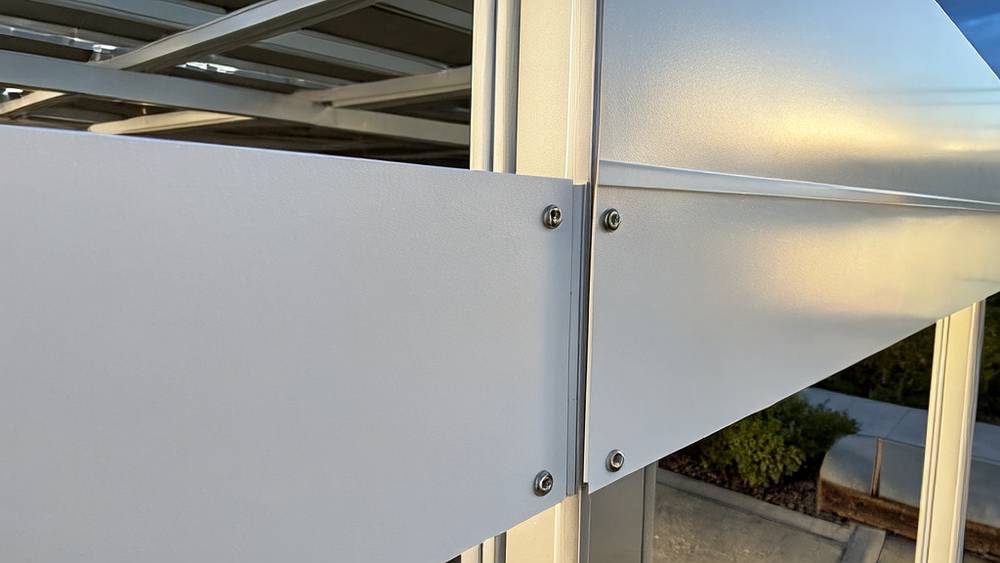
Aluminium side panels have become a common sight across North American carports, patio covers, and semi-trailer bodies. But the difference between a panel that still looks factory-fresh after eight winters and one that shows chalk lines and fastener fretting by year three comes down to specifications most procurement documents never mention. The .030" painted trailer sheet — a gauge reference that appears repeatedly in industrial supply channels — represents a distinct product category with its own metallurgical constraints, coating limitations, and attachment logic. If you are specifying aluminium side panels for outdoor structures, transportation equipment, or architectural screening where 0.76 mm stock is on the table, the decisions you make about alloy temper, paint system chemistry, and fastening detail determine whether the installation holds up or becomes a warranty claim.
What .030" Actually Means in Aluminium Side Panel Supply
When a supplier lists a sheet as ".030 aluminium," they are referencing nominal decimal-inch thickness: 0.030 inches, or roughly 0.76 mm. This gauge sits in a territory that is structurally functional but unforgiving. It is thicker than the 0.5 mm foil-like stock found in consumer-grade composite products, yet thinner than the 2.0–3.0 mm solid aluminium cladding panels specified for architectural curtain walls under standards like AAMA 508. For aluminium side panels used in carports, RV siding, and trailer bodies, .030" has emerged as a de facto standard — thin enough to keep weight and material cost manageable across large surface areas, thick enough to survive wind loading and impact when supported at appropriate framing intervals.
The distinction matters because procurement teams sometimes conflate .030" painted trailer sheet with architectural-grade aluminium cladding. They are not the same product. Trailer sheet is typically supplied in 3003-H14 or 5052-H32 alloy, coil-coated with a single-stage polyester or modified polyester finish, and cut to length for specific bay dimensions. Architectural solid aluminium panels, by contrast, are more commonly 3003-H14 or 5005-H34 at 2.0 mm minimum, with PVDF (polyvinylidene fluoride) two-coat or three-coat systems applied post-fabrication. Confusing these two product categories leads to panels that meet dimensional specs but fail on coating durability within 24 months of installation.
Alloy Selection for .030" Aluminium Side Panels
The alloy and temper designation stamped into each sheet determines formability, corrosion resistance, and how the panel behaves when subjected to thermal cycling. For .030" aluminium side panels, three alloys dominate the supply chain:
- 3003-H14 — General-purpose manganese-alloyed sheet with moderate strength (yield around 145 MPa) and excellent corrosion resistance in rural and suburban atmospheres. This is the most common alloy for painted trailer sheet and carport side panels because it balances cost, formability, and atmospheric durability.
- 5052-H32 — Magnesium-alloyed sheet with higher strength (yield around 195 MPa) and superior resistance to salt-laden air. For aluminium side panels installed within 5 km of coastline, this alloy significantly reduces pitting risk compared to 3003.
- 3105-H14 — A lower-cost alternative to 3003, sometimes used in residential siding and RV exterior panels. It offers slightly lower corrosion resistance but can be acceptable for inland applications where the primary demand is visual, not structural.
The temper designation — H14 for strain-hardened and partially annealed, H32 for strain-hardened and stabilized — affects how the panel responds to bending during installation. H14 tempers are more prone to springback when brake-formed into corner profiles, which matters if your aluminium side panels include return flanges or interlocking edge details.
| Alloy & Temper | Yield Strength (MPa) | Coastal Suitability | Typical .030" Application | Relative Cost |
|---|---|---|---|---|
| 3003-H14 | ~145 | Moderate — avoid salt spray | Trailer side panels, carport walls | Baseline |
| 5052-H32 | ~195 | Excellent — marine-rated | Coastal carports, refrigerated truck bodies | +18–25% |
| 3105-H14 | ~130 | Fair — inland only | RV siding, residential screening | -5–10% |
| 5005-H34 | ~160 | Good — architectural grade | Premium soffit and fascia panels | +12–18% |
The Paint System: Where .030" Panels Fall Short of Architectural Specs
Most .030" painted aluminium side panels in the trailer and carport market use a single-coat polyester or modified polyester (sometimes labelled "PE" or "SMP" — silicone-modified polyester) system applied by coil coating. These systems are cost-effective and provide acceptable colour retention for 5–7 years in moderate climates. But they are not designed to meet AAMA 2605, the architectural standard for PVDF coatings that demands 10-year minimum South Florida exposure performance with a delta-E colour change below 5 units.
For procurement managers, the practical question is: does the application demand architectural-grade coating, or is an industrial polyester sufficient? Here is the breakdown:
- Polyester coil coating (.030" typical): 18–22 microns dry film thickness, gloss retention of 50–60% after 5 years, prone to chalking in UV-intensive regions. Suitable for carports, trailer bodies, and non-architectural screening where periodic replacement or repainting is acceptable.
- SMP coil coating: 20–25 microns DFT, improved chalk resistance versus straight polyester, 7–10 year colour stability in temperate zones. Often specified for premium RV siding and agricultural building panels.
- PVDF spray coating (architectural, typically 2.0 mm+ sheet): 30–40 microns DFT two-coat or three-coat system, tested to AAMA 2605, 10+ year colour and gloss retention. Rarely applied to .030" stock because the substrate's own corrosion and deformation characteristics do not justify the coating investment.
If your aluminium side panels will face direct sun in Arizona, Texas, inland Australia, or the Middle East, polyester-coated .030" sheet will begin showing visible chalk after 3–4 years. The coating itself may remain intact, but the aesthetic degradation can trigger client complaints long before structural failure occurs. In these cases, upgrading to SMP or switching to 2.0 mm solid aluminium with PVDF may be the more defensible specification — even if the initial material cost increases by 30–40%.
Fastener Compatibility and Galvanic Corrosion on .030" Panels
At 0.76 mm thickness, aluminium side panels have limited bearing capacity around fastener holes. This creates two related failure modes that are common in carport and trailer installations:
First, fastener pull-through. When wind uplift loads are transferred through the panel to the fastener head, the aluminium around the hole can deform, elongate, or tear if the panel is unsupported over wide spans. For .030" 3003-H14 sheet, fastener spacing should not exceed 300 mm on centre along edges and 400 mm in the field for wind zones up to 1.5 kPa (ASCE 7-16, Risk Category I). Wider spacing demands thicker sheet or additional intermediate framing.
Second, galvanic corrosion at dissimilar metal contacts. The most common mistake in aluminium side panel installation is using zinc-plated carbon steel screws with neoprene washers. Even with the washer isolating the screw head from the panel face, the threaded shank cuts into the aluminium at the hole edge, creating a direct aluminium-to-steel contact point. In the presence of moisture — inevitable for any outdoor structure — this becomes a galvanic cell. The aluminium, being anodic to steel, corrodes preferentially. Within 2–3 years in humid or coastal environments, white powdery corrosion product appears around every fastener head.
The correct specification is either:
- 300-series stainless steel fasteners (304 for inland, 316 for coastal/marine), or
- Aluminium fasteners of matching alloy (5056 or 6061), with anodized or Alodine-treated finishes
For .030" painted trailer sheet specifically, painted-head fasteners matched to the panel colour are available from industrial suppliers. The paint on the fastener head does not prevent galvanic action at the shank, so the base metal of the fastener remains the critical variable.
Thermal Movement in .030" Aluminium Side Panels: Smaller Than You Think
A common concern with any aluminium cladding product is thermal expansion. The coefficient of linear thermal expansion for 3003 aluminium is approximately 23.2 × 10⁻⁶ per °C. For a 3-metre-long aluminium side panel subjected to a 60°C temperature swing (from -10°C winter night to 50°C summer sun on a dark colour), the calculated free expansion is:
23.2 × 10⁻⁶ × 3000 mm × 60°C = 4.18 mm
This is less than 5 mm over a 3-metre panel — a movement that slotted fastener holes or a 6 mm perimeter gap can accommodate without buckling. Compared to thicker architectural panels (2.0–3.0 mm) where the same calculation applies but the panel's own stiffness resists movement and can cause oil-canning, .030" sheet is actually more forgiving. Its lower bending stiffness means thermal stress tends to dissipate through micro-flexing rather than accumulating into visible warping.
The thermal issue that does affect .030" aluminium side panels is not expansion but paint system degradation under heat. Dark-coloured panels in direct sun can reach surface temperatures of 70–80°C. Polyester coatings begin to soften and lose cross-link density above 90°C, so while they rarely melt, the accelerated oxidation at sustained high temperatures shortens gloss retention. This is why white and light-grey .030" trailer panels consistently outlast dark blue or black panels of identical specification — not because the aluminium behaves differently, but because the coating's thermal load is lower.
Supply Chain Realities: Where .030" Panels Come From
The North American market for .030" painted aluminium side panels is supplied through a mix of domestic coil coaters and Asian mills. The trailer sheet segment — panels sold in standard widths like 49" × 120" for semi-trailer side walls — is dominated by a few large distributors who stock painted coil from multiple sources. Pricing follows aluminium commodity markets with a conversion premium for painting and slitting.
For B2B buyers sourcing aluminium side panels in volume, key supply chain variables include:
- Mill certification: Reputable suppliers provide mill test certificates (MTCs) per EN 10204 Type 3.1 or 3.2, confirming alloy chemistry and mechanical properties. For .030" stock, insist on certificates that verify gauge tolerance (typically ±0.002" for commercial grade, ±0.001" for precision-slit stock).
- Coil coating line capability: The paint system quality depends heavily on pretreatment. Chromate conversion coating (still used in some regions, though restricted under REACH) or chrome-free zirconium/titanium-based pretreatments provide the adhesion base. Ask for pretreatment type and coating DFT data, not just a colour code.
- Slitting and cut-to-length tolerances: For aluminium side panels that must fit into pre-fabricated framing systems (carports, trailer body rails), dimensional tolerance on cut length should be ±1.5 mm or better. Panels cut 3–4 mm oversize create installation bottlenecks that add field labour cost exceeding the material saving.
For projects requiring custom dimensions, alloy selection, or coating upgrades on .030" stock, manufacturers like Futeng® offer mill-direct purchasing options with documented traceability from coil to cut panel. This eliminates the distributor markup that can add 15–25% to per-sheet pricing on standard trailer-panel stock while providing specification flexibility that off-the-shelf suppliers cannot match.
Installation Best Practices for .030" Aluminium Side Panels
Field experience across thousands of carport and trailer installations points to a few practices that separate durable installations from premature failures:
- Support framing alignment: .030" panels will telegraph any unevenness in the supporting structure. Steel or aluminium framing members should be aligned to within ±2 mm across the plane before panel attachment. A panel that is forced to bridge a 5 mm gap between adjacent framing members will develop a visible low spot that grows more pronounced with thermal cycling.
- Edge stiffening: Where panels terminate at open edges (door openings, gable ends on carports), the .030" sheet benefits from a 90-degree return flange — typically 15–20 mm — brake-formed along the free edge. This increases edge stiffness by a factor of roughly 4–6 compared to a flat cut edge and eliminates the "wavy edge" appearance that can develop within the first year.
- Drainage at base: Aluminium side panels in carport applications should stop 25–50 mm above finished grade. Direct ground contact traps moisture against the panel edge, promotes capillary wicking into fastener holes, and accelerates corrosion at the cut edge where the aluminium core is exposed. A pressure-treated timber or aluminium base channel provides a durable separation.
- Protective film removal timing: Many .030" painted sheets ship with a PE protective film on the exposed face. Remove this film within 30 days of installation. Films left in place for months — especially on dark-coloured panels in sunny conditions — can bake onto the paint surface and leave adhesive residue that requires solvent cleaning, adding unnecessary labour cost.
When .030" Is the Wrong Choice
Not every aluminium side panel application suits .030" stock. There are clear thresholds where moving to thicker solid aluminium sheet becomes the only defensible decision:
- Unsupported spans exceeding 600 mm: At 600 mm between framing members, .030" 3003-H14 sheet deflects visibly under wind loads of 1.0 kPa — not to failure, but enough that the panel appears "pillowy" between supports. For spans of 600–900 mm, 1.5–2.0 mm sheet is a better match.
- Architectural visibility: If the aluminium side panels form part of a building facade visible from street level or public spaces, the flatness tolerances achievable with .030" coil-coated sheet (±3 mm per metre) may not meet architectural expectations. In these cases, 2.0 mm or 2.5 mm solid aluminium panels with PVDF coating, fabricated with formed returns on all edges, deliver the flatness and coating durability that architectural specifications demand under standards like AAMA 508 and EN 13501 for fire performance.
- High-traffic impact zones: Carport side panels at vehicle door height, trailer panels in loading-dock environments, and any panel below 2 metres in public areas will sustain occasional impacts. .030" sheet dents permanently under relatively light impacts (a shopping cart, a carelessly opened car door). Where impact resistance matters, 2.0 mm 5052-H32 provides significantly better dent resistance without adding prohibitive weight.
Specifying .030" aluminium side panels is not about saving money at all costs. It is about matching the material to the mechanical, environmental, and aesthetic demands of the specific installation — and understanding where the threshold sits between "fit for purpose" and "future warranty claim."
Summary: Specifying .030" Aluminium Side Panels for Long-Term Performance
The .030" painted aluminium side panel occupies a well-defined niche in the cladding supply chain. It is the workhorse product for carports, trailer bodies, RV siding, and light outdoor screening — applications where weight, cost, and basic weather protection outweigh the need for architectural-grade flatness and coating longevity. Getting the specification right means paying attention to alloy choice (3003-H14 for general use, 5052-H32 for coastal), paint system chemistry (polyester for budget, SMP for extended UV exposure), fastener compatibility (stainless or aluminium, never zinc-plated steel), and support framing design (spacing, alignment, edge stiffening).
For procurement managers and specifiers, the most useful exercise is to run through the failure modes before finalizing the purchase order. If a panel shows corrosion at fasteners after two winters, is that a coating problem or a galvanic one? If a panel looks wavy at midday, is that thermal expansion or insufficient edge stiffening? Answering these questions at the specification stage — and sourcing from suppliers who can provide mill certifications, coating data, and cut-to-length accuracy — turns aluminium side panels from a commodity purchase into an engineered component that performs as intended for its full service life.