A2 s1 d0 Compozit Panel Fire Classification What EN 13501 1 Really Demands
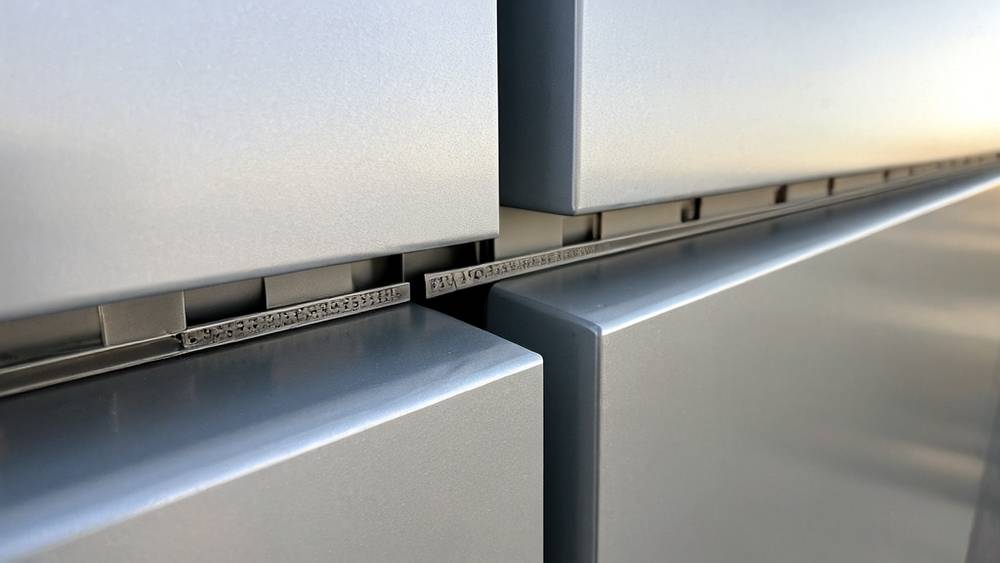
When a facade consultant specifies a compozit panel for a high-rise project, the conversation almost always turns to fire performance within the first ten minutes. This is not a theoretical concern. The Grenfell Tower tragedy of 2017 rewrote the global rulebook for cladding materials, and the ripple effects are still being felt across procurement offices from Dubai to Melbourne. A compozit panel, in the broadest sense, describes a sandwich-structured sheet — but the core material inside that sandwich is what separates a compliant building envelope from one that will fail a regulatory audit. For solid aluminium cladding panels, the fire conversation shifts from the core to the coating, the installation system, and the supporting documentation chain. This article examines the A2-s1,d0 classification pathway, what it actually demands of a compozit panel system, and how project teams can avoid the documentation traps that derail facade approvals.
Why A2-s1,d0 Became the Global Benchmark for Facade Panels
The European reaction-to-fire classification system under EN 13501-1 divides construction products into seven main classes: A1, A2, B, C, D, E, and F. The addition of smoke production (s1, s2, s3) and flaming droplets (d0, d1, d2) creates a matrix that regulators use to determine what can legally go onto a building. For a compozit panel system destined for buildings over 18 metres in many jurisdictions, A2-s1,d0 has become the de facto minimum threshold.
What does A2-s1,d0 actually mean in engineering terms? A2 classification requires that the product makes no significant contribution to a developing fire. The calorific value — measured as the gross heat of combustion (PCS) — must not exceed 3.0 MJ/kg for homogeneous products. For a compozit panel with multiple layers, this means every component in the assembly matters: the aluminium skin, any backing material, the coating, and the mounting substructure. The s1 designation limits smoke production to minimal levels during the first 600 seconds of exposure. The d0 rating means no flaming droplets or particles are produced within the same period.
Several Turkish manufacturers, including Saray and ASAŞ, now prominently feature A2-classified compozit panel products in their catalogues. Saray specifically markets an A2-S1,d0 mineral-filled variant alongside B1 and B2 alternatives. This tiered approach reflects the reality that not every project demands the highest fire rating — but for those that do, the documentation burden increases exponentially.
The Core Problem That Solid Aluminium Panels Solve
Aluminium composite panels — the type with a polyethylene (PE) core — sit in the E or F classification range under EN 13501-1. Their calorific values routinely exceed 20 MJ/kg, which is why they have been banned or severely restricted on high-rise facades in over 40 countries since 2017. A mineral-filled compozit panel can reach A2, but the manufacturing process requires the core material to be replaced with a non-combustible mineral compound, typically magnesium hydroxide or aluminium trihydroxide. This adds weight, changes fabrication behaviour, and increases cost by roughly 25–40% compared to PE-core equivalents.
Solid aluminium cladding panels — 2.0 mm, 2.5 mm, or 3.0 mm thick sheets with no composite core — sidestep this entire problem. Aluminium itself is classified A1 under EN 13501-1 when used as a sheet product. There is no core to test, no lamination to delaminate under heat, and no debate about whether the fire rating of the panel applies when installed vertically versus horizontally. For project teams who have been burned (literally and contractually) by ambiguous compozit panel certifications, solid aluminium offers a simpler compliance narrative.
This does not mean solid panels are automatically compliant. The overall facade system — including insulation, vapour barriers, and mounting brackets — must still achieve the required classification. But the panel itself removes the single biggest variable from the fire engineering equation.
"The shift toward solid aluminium panels on high-risk buildings is not about aesthetics or cost. It is about removing the core as a failure point. When the panel is inherently A1, the system certification becomes a discussion about detailing rather than material chemistry." — Facade engineer, London-based consultancy
Reading a Fire Certificate: What Project Teams Get Wrong
One of the most common mistakes in compozit panel procurement is accepting a fire test report as proof of system compliance. A test report — typically based on the SBI (Single Burning Item) test per EN 13823 — describes the behaviour of one specific sample configuration on one specific date. It is not a blanket approval for every installation variation. The document that matters for regulatory submission is the Classification Report, which interprets the test data and assigns the Euroclass rating.
Even then, the scope is narrow. A compozit panel tested with a 150 mm air cavity and stone wool insulation cannot automatically claim the same classification when installed with PIR foam and a 50 mm cavity. The entire tested assembly — panel, fixing method, insulation type, cavity depth, substrate — must match the as-built condition. Procurement teams who order panels based on a brochure claim of "A2 rated" without verifying the tested configuration are building a compliance gap into their project.
Key documents to request from any compozit panel supplier include the EN 13501-1 Classification Report, the corresponding EN 13823 test report, and the factory production control (FPC) certificate. The FPC certificate, issued by a notified body, confirms that the manufacturer has a quality management system capable of reproducing the tested product consistently. Without it, the test reports are essentially meaningless for regulatory purposes.
Coating Fire Behaviour: The Overlooked Variable
When solid aluminium panels carry a PVDF or FEVE coating, the coating itself contributes to the fire load — albeit minimally. A 2.5 mm solid aluminium sheet with a 35-micron PVDF topcoat has a total organic content of less than 1% by mass. This is negligible for classification purposes, and solid aluminium sheets routinely achieve A1 classification even with factory-applied coatings.
The situation changes when panels receive on-site applied finishes, adhesive-applied decorative films, or thick intumescent coatings. These additions introduce combustible materials that may not be captured in the original classification. For projects where fire performance is critical, the specification should mandate that all coatings and finishes are applied under factory-controlled conditions and covered by the FPC scope.
Some compozit panel suppliers offer PVDF coatings with specific formulations designed to resist ignition propagation. These are typically Kynar 500 or Hylar 5000 resin-based systems with ceramic pigment loadings. While the contribution to overall fire performance is small, specifying a recognised resin system provides an additional layer of documentation that regulators appreciate.
Comparing Fire Classifications Across International Standards
The A2-s1,d0 classification under EN 13501-1 does not have a direct equivalent in other international standards, which creates confusion on multinational projects. The table below maps the key reaction-to-fire classifications across the major regulatory frameworks that affect compozit panel specifications.
| Standard | Classification | Core Test Method | Typical Application | Solid Aluminium Position |
|---|---|---|---|---|
| EN 13501-1 (EU/UK) | A2-s1,d0 | EN 13823 (SBI) + EN ISO 1716 (calorific) | High-rise facades over 18 m | A1 achievable; A2 minimum guaranteed |
| ASTM E84 (USA) | Class A (FSI ≤25, SDI ≤450) | Steiner tunnel test | IBC Chapter 26 exterior walls | Class A with any coating |
| AS 1530.1 (Australia) | Non-combustible | Furnace test at 750°C | NCC Type A/B construction | Deemed non-combustible |
| GB 8624 (China) | A2 (A2-s1,d0) | GB/T 20284 (SBI equivalent) | Curtain wall over 24 m | A1 classification |
| BS 476 Part 6/7 (UK legacy) | Class 0 (combined index ≤12) | Fire propagation + surface spread | Legacy projects and refurbishment | Class 0 verified |
This mapping is approximate. Each jurisdiction applies additional constraints — maximum building height limits, sprinkler trade-offs, and facade engineering assessments — that go beyond the raw material classification. For projects in the Middle East, the UAE Fire and Life Safety Code adds specific requirements for compozit panel systems that differ from the EN framework, including mandatory large-scale facade tests under NFPA 285 or BS 8414 depending on the emirate.
System-Level Testing: NFPA 285 and BS 8414
Material classification alone is insufficient for projects in North America and certain Middle Eastern markets. NFPA 285 — Standard Fire Test Method for Evaluation of Fire Propagation Characteristics of Exterior Wall Assemblies Containing Combustible Components — is a full-scale test that evaluates the entire wall assembly, including the compozit panel, insulation, air barrier, and window details. A panel that achieves A2-s1,d0 in a small-scale EN test may still fail NFPA 285 if the system design allows vertical flame spread within the cavity.
BS 8414, the British large-scale facade test, similarly evaluates the full system. It has become the reference standard for compozit panel systems in the UK, especially following the 2018 ban on combustible materials in the external walls of residential buildings over 18 metres. The test measures flame spread over the external face and within the cavity, with pass/fail criteria based on temperature thresholds and damage extent.
Solid aluminium panels, when tested as part of a properly designed system, perform predictably in these large-scale tests. The absence of a combustible core eliminates the risk of delamination-driven flame spread within the panel itself. However, the cavity design — fire stops, cavity barriers, and ventilation detailing — remains critical. A well-designed compozit panel system with solid aluminium sheets can pass BS 8414, but the same panels installed without horizontal cavity barriers at each floor level may not.
The Documentation Chain: From Mill to Municipality
Regulators now demand traceability that extends far beyond a single test certificate. For a compozit panel on a high-rise project, the documentation package typically includes the mill certificate for the aluminium coil, the coating batch records, the factory production control log, the classification report, the test report, and the installer's statement of conformity.
A gap anywhere in this chain can halt a project. In one recent Middle Eastern project, a shipment of compozit panels was quarantined at the port because the coating batch number on the delivery note did not match the batch number on the fire certificate. The panels were chemically identical, but the paperwork mismatch took three weeks to resolve. The lesson: fire compliance for compozit panel systems is as much about document control as it is about material science.
Suppliers like Futeng® address this by maintaining full digital traceability — every panel can be traced from the aluminium ingot through rolling, coating, fabrication, and shipping. For project teams managing multiple facade packages, this level of documentation reduces the risk of regulatory rejection at the final inspection stage.
Mineral-Filled Composite vs Solid Aluminium: A Practical Decision Matrix
The choice between a mineral-filled compozit panel and a solid aluminium sheet is not simply about fire rating. The table below compares the factors that influence this decision on real projects.
| Factor | Mineral-Filled Composite Panel (A2) | Solid Aluminium Panel (2.5-3.0 mm) |
|---|---|---|
| Fire classification (panel only) | A2-s1,d0 (system-dependent) | A1 (inherent) |
| Weight per m² | 7.5-9.0 kg (4 mm total thickness) | 6.8-8.1 kg |
| Flatness (visual) | Excellent; core provides stiffness | Good; requires correct fixing and stiffener design |
| Fabrication complexity | Routing and folding; limited welding | Full welding, bending, perforation possible |
| Cost index (material only) | 100 (baseline) | 85-110 (thickness-dependent) |
| Recyclability | Difficult; core must be separated | 100% recyclable as aluminium scrap |
| Documentation risk | High; core composition changes must be re-tested | Low; no core variable |
The cost comparison requires careful interpretation. A 4 mm mineral-filled compozit panel and a 2.5 mm solid aluminium sheet may be within 10% of each other on material price alone. But the fabrication cost diverges: composite panels are typically routed and folded, which is fast and inexpensive, while solid aluminium requires welding, reinforcing, and more complex bracketry. The installed cost — including substructure, labour, and waste — often favours the composite panel for simple flat facades but shifts toward solid aluminium for complex geometries where welding flexibility is valuable.
Regional Regulatory Trajectories and What They Mean for Procurement
The global trend is unmistakable: more jurisdictions are moving toward requiring non-combustible or limited-combustibility materials on building exteriors. The UK's 2018 ban on combustible materials is being expanded in scope. Australia's 2019 Building Ministers' Forum resulted in state-level bans on ACP with PE cores. The UAE's 2020 Fire and Life Safety Code update tightened requirements for compozit panel systems. Even markets without explicit bans — parts of Southeast Asia, Africa, and South America — are seeing insurers and international developers impose A2 or equivalent requirements as a condition of coverage.
For procurement managers, this means that specifying a compozit panel with a PE core — even where locally permitted — creates a future liability. A building sold to an international investor five years after completion may be subject to a technical due diligence that flags non-compliant cladding. The cost of replacement, including access, labour, and business interruption, can exceed the original facade budget by a factor of three.
The practical recommendation is to align compozit panel specifications with the most stringent standard among the project's stakeholders — typically the insurer, the funder, or the anchor tenant's technical standards — rather than the local building code minimum. This approach front-loads material cost but eliminates the risk of a retrospective cladding remediation program.
Specifying Fire Performance in Tender Documents
A tightly written performance specification is the first line of defence against non-compliant compozit panel submissions. The following clauses represent best practice for projects where A2-s1,d0 or equivalent is required:
- Require the EN 13501-1 Classification Report as a submission document, not just a data sheet reference.
- State explicitly that the classification must cover the full proposed system configuration: panel, fixing method, insulation type and thickness, cavity depth, and substrate.
- Mandate factory production control certification from a notified body with scope covering the specific compozit panel product.
- For projects in North America, require NFPA 285 test reports for the specific wall assembly.
- Include a clause requiring re-testing or engineering justification if any component of the tested system changes during construction.
- Require batch-level traceability from the aluminium coil through to the delivered panels.
These requirements add administrative cost, but they also filter out suppliers who cannot substantiate their fire claims. On projects where Futeng® and similar reputable manufacturers compete, the specification effectively disqualifies vendors who trade on price alone without the supporting documentation infrastructure.
The Cavity Barrier Factor
A compozit panel fire strategy cannot rely on the panel alone. Cavity barriers — horizontal and vertical fire stops within the ventilated cavity behind the cladding — are equally important. Under EN 13501-1, the classification of the panel system assumes a specific cavity configuration. Changing the cavity barrier spacing, material, or installation detail can invalidate the classification.
BS 8414 tests have demonstrated that a ventilated cavity without adequate horizontal barriers can accelerate vertical flame spread even when the cladding material itself is non-combustible. The mechanism is radiative heat transfer across the cavity, which can ignite combustible insulation or allow flames to bypass barriers through installation gaps. For solid aluminium compozit panel systems, the cavity barrier specification should follow the guidance in BS 9991 or the relevant national standard, with barriers at every floor level and around openings as a minimum.
The interaction between the compozit panel fixing system and the cavity barrier is a common detailing failure. Brackets that penetrate the barrier create gaps; intumescent gaskets or fire-rated sealants must restore the barrier's integrity at every penetration point. This detailing is often overlooked in shop drawings and only caught during installation inspections — at which point rectification is expensive and schedule-impacting.
What to Ask Your Compozit Panel Supplier About Fire
Before placing an order, the project team should obtain clear answers to the following questions. These are the questions that experienced facade consultants ask, and the answers reveal whether a supplier understands fire compliance as a systemic requirement or merely as a certificate to be supplied on request.
- What is the tested system configuration behind the classification, and does it match our as-built design?
- Has the product been tested to BS 8414 or NFPA 285 as part of a complete wall assembly?
- Can you provide batch-specific traceability from the aluminium mill through to the finished panel?
- What is the calorific value (PCS) of the panel, including all coatings and any applied films?
- Does your factory production control certificate cover this specific product and fire classification?
- What happens to the classification if we change the insulation type or cavity depth?
- Can you supply a declaration of performance (DoP) under EU Regulation 305/2011 for the specific batch?
Suppliers who can answer these questions with documentation rather than verbal assurances are the ones worth shortlisting. The compozit panel market includes many traders who buy and resell panels without understanding — or caring about — the fire engineering behind them. Distinguishing between manufacturers and traders is one of the most important steps in the procurement process.
The fire performance of a compozit panel system is not a single number on a certificate. It is the result of material chemistry, system design, installation quality, and documentation discipline working together. Solid aluminium panels remove the core material variable entirely, simplifying the compliance picture without eliminating the need for proper system-level engineering. For projects where fire safety is non-negotiable — and increasingly, that means every project — the specification should treat fire classification as a system property, not a product attribute. The documentation chain must be complete from the aluminium mill to the building inspector's file. And the questions asked during procurement are the cheapest insurance against a facade that fails before it ever faces a fire.