4 mm Solid Aluminium Cladding Panels How China Suppliers Control Thickness Tolerance
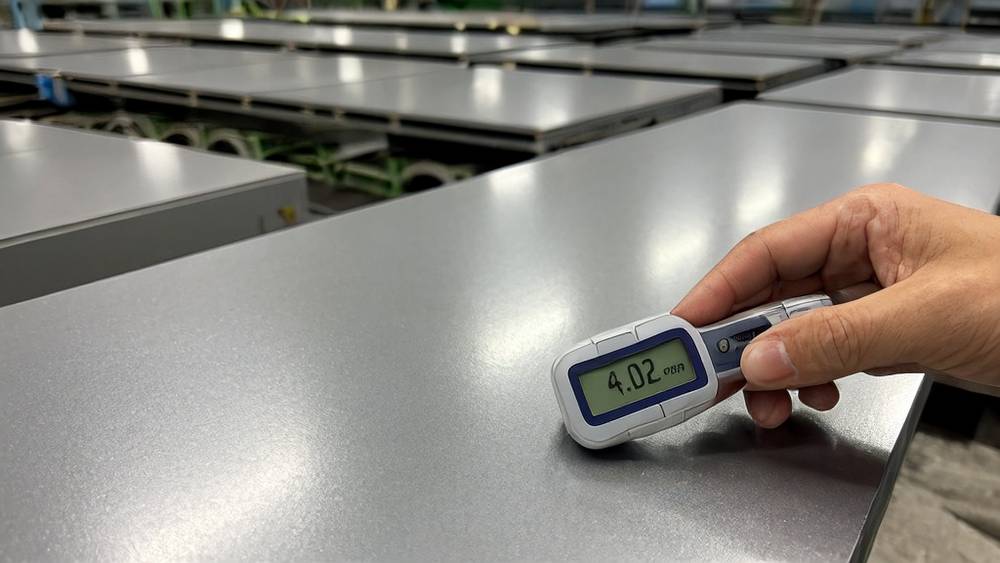
When a project specification demands 4 mm solid aluminium panels for a high-rise curtain wall, procurement managers quickly discover that not every china aluminum panel supplier can deliver consistent gauge tolerance across a 20-ton order. The difference between a panel that fits first time and one that requires field trimming often comes down to a single metric: thickness tolerance control at the source. This article examines how Chinese solid aluminium cladding manufacturers manage gauge consistency, what international standards actually require, and where hidden costs accumulate when tolerance drifts by as little as 0.02 mm across thousands of square meters.
Why 4 mm Solid Aluminium Panels Dominate High-Rise Specifications
The 4 mm solid aluminium sheet has become the default specification for ventilated rainscreen façades on buildings exceeding 60 meters in height. Wind tunnel testing repeatedly shows that 3 mm panels deflect beyond acceptable limits at design wind pressures above 2.5 kPa, while 5 mm panels add unnecessary dead load and material cost. At 4 mm, a 3003-H14 aluminium alloy sheet with proper stiffener layout can span 1,200 mm between supports while keeping deflection under L/175 — the threshold most façade consultants specify for visible flatness. The math is straightforward: a simply supported 4 mm aluminium panel spanning 1.2 m under 3.0 kPa suction load deflects approximately 8.9 mm at midspan, versus 14.2 mm for a 3 mm panel. That 5.3 mm difference is the margin between a façade that reads as crisp and one that shows perceptible waviness on an overcast morning. But the calculation assumes the panel is actually 4.00 mm thick, not 3.85 mm.
Mill Tolerance: The Gap Between Ordered and Delivered Thickness
Aluminium coil and sheet products are supplied to internationally recognized thickness tolerances. The most commonly referenced standard in contracts between a china aluminum panel supplier and overseas buyers is ANSI H35.2, which governs dimensional tolerances for aluminium mill products. For a 4 mm nominal thickness sheet in 3003 alloy, the standard tolerance for width over 1,500 mm is ±0.15 mm. This means a sheet delivered at 3.85 mm is technically compliant. However, the standard also specifies that thickness is measured at any point on the sheet, not averaged across the surface. A coil that varies between 3.82 mm at the edges and 4.08 mm at centerline still meets the letter of the standard while creating real problems downstream.
European projects typically reference BS EN 485-3, which imposes tighter limits: ±0.09 mm for sheet thicknesses between 3.0 and 4.0 mm, and ±0.11 mm for thicknesses between 4.0 and 5.0 mm. A 4 mm panel under EN 485-3 must fall between 3.91 and 4.09 mm. The 0.06 mm difference between ANSI and EN tolerance bands might seem academic until you multiply it across a 15,000 m² façade. At 4 mm nominal, ANSI permits a minimum cross-sectional area 3.4% smaller than EN. That translates directly into reduced bending stiffness — deflection is inversely proportional to the cube of thickness — and a 6.8% increase in calculated deflection under identical load.
How Chinese Suppliers Control Thickness: Three Production Pathways
The approach a china aluminum panel supplier takes to thickness control depends on its position in the supply chain. Three distinct models operate in the market, each with different implications for tolerance consistency:
Pathway 1: Integrated Mill-to-Panel Operations
A small number of large-scale Chinese manufacturers operate their own continuous casting and hot rolling lines, producing aluminium coil in-house before cutting, forming, and coating. These operations — Futeng® being one example with integrated production capability — can specify tighter internal tolerances than commercial mill standards because they control the rolling parameters directly. When a project requires 4 mm panels with a guaranteed minimum thickness of 3.95 mm, an integrated supplier can adjust cold rolling reduction ratios and tension leveling parameters to hit that target across the entire production run. The cost premium for this level of control typically adds 3-5% to the panel unit price, but eliminates the need for incoming inspection of every coil.
Pathway 2: Panel Fabricators Buying Commercial Coil
The majority of Chinese aluminium panel fabricators purchase 4 mm coil from independent rolling mills in Henan, Shandong, or Guangdong provinces. These fabricators receive mill test certificates (MTCs) showing compliance with the ordered thickness grade, but rarely perform statistical verification across coil width and length. A 20-ton coil order might consist of three coils from two different mill batches, each with slightly different gauge profiles. Without incoming inspection protocols, the fabricator has no data on actual thickness variation within the coil. The panels cut from the first 200 meters of coil may differ systematically from those cut from the final 200 meters.
Pathway 3: Trading Companies Without Production Visibility
Many entities listed on B2B platforms as a china aluminum panel supplier are trading companies that source panels from multiple third-party fabricators. Their thickness control is limited to what appears on supplier MTCs, which may not reflect the actual material shipped. When price pressure is intense — as it often is on commodity 4 mm PE-coated panels — the incentive to substitute 3.8 mm "4 mm equivalent" coil is real. The trading company may never physically inspect the material, and the end buyer discovers the variance only when panels arrive on site and the contractor's QA team starts spot-checking with micrometers.
Field Measurement: What Actually Arrives on Site
Independent third-party inspection data provides a clearer picture of real-world thickness variation. A 2023 audit of solid aluminium panels shipped to a Middle Eastern project — sourced from six different Chinese suppliers, all contracted to supply 4 mm (±0.10 mm) PVDF-coated panels — found the following distribution across 480 randomly sampled panels:
| Supplier Type | Mean Measured Thickness | Standard Deviation | % Below 3.90 mm | % Above 4.10 mm |
|---|---|---|---|---|
| Integrated mill-to-panel (n=80) | 4.02 mm | 0.03 mm | 0.0% | 2.5% |
| Large fabricator with QC (n=160) | 3.97 mm | 0.06 mm | 3.1% | 1.9% |
| Small fabricator without QC (n=160) | 3.89 mm | 0.11 mm | 18.8% | 0.6% |
| Trading company sourced (n=80) | 3.84 mm | 0.14 mm | 37.5% | 0.0% |
The data reveals a pattern: trading company panels averaged 3.84 mm — technically below the 3.85 mm ANSI minimum — while integrated suppliers averaged 4.02 mm with negligible variance. The small fabricator category showed the widest spread, with nearly one in five panels measuring below 3.90 mm. These thin panels, when installed on the windward elevation of a tower, would exhibit deflection 15-20% higher than the engineer's calculation assumed. The structural engineer's model used 4.00 mm.
Three Hidden Costs of Underspec Thickness
When a china aluminum panel supplier delivers material below nominal thickness, the consequences extend beyond engineering calculations. Three cost categories typically surface during installation and beyond:
1. Increased Stiffener Requirements
The standard stiffener layout for a 4 mm panel assumes the panel contributes its design bending stiffness. When actual thickness is 3.85 mm, the panel stiffness drops by approximately 11%. The façade engineer's response — adding intermediate stiffeners or reducing support spacing — increases aluminum extrusion consumption by 15-25% per square meter. At current 6063-T5 aluminium extrusion prices, this adds roughly $4-7 per square meter to the installed cost. On a 10,000 m² façade, that is $40,000-70,000 in unbudgeted stiffener material, plus additional fabrication labor for welding or bonding the extra stiffeners.
2. Field Modification and Rework
Panels cut from coil with variable gauge across its width exhibit inconsistent springback during brake forming. Two panels cut from the same coil — one from the edge at 3.82 mm, one from center at 4.08 mm — will form to slightly different bend angles using the same tooling setup. The resulting dimensional variation in panel width can reach ±1.5 mm, enough to cause interference fits at interlocking panel joints. Installation crews compensate by grinding edges or shimming joints, adding 15-30 minutes per affected panel. At $85/hour for skilled curtain wall labor, reworking 200 panels costs $4,250-8,500 in direct labor alone.
3. Coating Performance on Underspec Substrate
PVDF and FEVE coating systems are qualified on substrates of specific thickness. When coil thickness varies, the coating line's roller settings — optimized for 4.00 mm substrate — apply slightly different film builds on thinner or thicker sections. A panel at 3.85 mm passing through rollers set for 4.00 mm may receive 28-30 microns of primer instead of the specified 25-28 microns, while the topcoat layer may thin to 22 microns instead of 25. The total DFT remains within the 40-45 micron specification range, but the altered primer-to-topcoat ratio can shift long-term chalk resistance. AAMA 2605 qualification testing assumes a specific coating architecture; deviating from it means the 10-year Florida exposure data on the supplier's coating approval may not predict actual performance.
Specifying Thickness Tolerance in Procurement Documents
Most project specifications for solid aluminium cladding contain a single line: "Panel thickness: 4 mm." This leaves the entire tolerance question to the supplier's interpretation of applicable standards. A tighter specification costs nothing to write and changes the conversation with potential suppliers before the order is placed. Three specification approaches yield different outcomes:
Approach A — Standard Reference Only: "Aluminium panels shall be 4 mm nominal thickness per ANSI H35.2." This is the weakest specification. It permits 3.85 mm minimum and places the burden of verifying actual thickness entirely on the buyer's incoming inspection.
Approach B — Minimum Thickness with Tolerance Band: "Aluminium panels shall have a nominal thickness of 4.0 mm with a minimum measured thickness at any point of 3.95 mm. Thickness shall be verified by ultrasonic gauge or calibrated micrometer at a sampling rate of one measurement per 2 m² of panel area." This approach defines an absolute floor — 3.95 mm — that is tighter than ANSI but achievable by integrated mills without special rolling. The specified measurement protocol removes ambiguity about how and where thickness is checked.
Approach C — Statistical Process Control Requirement: "Supplier shall provide statistical process control data demonstrating a process capability index (Cpk) ≥ 1.33 for panel thickness, based on a minimum of 30 measurements per production batch. Individual measurements below 3.95 mm shall constitute a nonconformance." This approach shifts the burden of proof to the supplier and requires them to demonstrate control, not just compliance. It effectively screens out trading companies and fabricators without in-house measurement capability. The ISO 9001:2015 framework already requires process monitoring; this specification simply defines the metric and the minimum capability.
Verification Methods: What Works on Site and at Source
Thickness verification should happen before panels leave the factory, not after they arrive on site. Three measurement technologies are practical for different stages of the supply chain:
Ultrasonic thickness gauges provide non-destructive measurement through coatings, making them ideal for incoming inspection of finished panels. A gauge with 0.01 mm resolution — models from Olympus or Dakota Ultrasonics — can measure the aluminium substrate thickness without removing the PVDF coating. The technique requires calibration on a bare section of the same alloy, typically at a panel edge where a small area can be masked before coating.
Laser thickness measurement systems installed on coil processing lines provide continuous, real-time thickness data across the full coil width. Integrated suppliers use these systems to map thickness profiles and automatically divert out-of-spec sections. When a china aluminum panel supplier invests in this equipment, they can provide coil thickness maps as part of the quality dossier — a document that trading companies simply cannot produce.
Coordinate measuring machines (CMM) or 3D laser scanners verify finished panel dimensions including thickness at multiple points. For critical projects — landmark buildings, high-wind coastal sites, blast-resistant façades — specifying CMM inspection reports for the first 50 panels of each batch provides statistical confidence before mass production proceeds.
Alloy Selection and Its Interaction with Thickness
Thickness specification cannot be separated from alloy choice. The three alloys most commonly used for 4 mm solid aluminium cladding panels — 1100, 3003, and 5052 — have different mechanical properties that interact with thickness tolerance:
| Alloy & Temper | Tensile Yield Strength | Modulus of Elasticity | Relative Deflection at 3.90 mm vs 4.00 mm | Typical Application |
|---|---|---|---|---|
| 1100-H14 | 110 MPa | 69 GPa | +8.3% | Interior cladding, low-wind zones |
| 3003-H14 | 145 MPa | 69 GPa | +8.3% | Standard exterior façade panels |
| 5052-H32 | 195 MPa | 70 GPa | +8.1% | Coastal, high-wind, industrial |
The deflection penalty for a 0.10 mm thickness shortfall is nearly identical across all three alloys because elastic modulus — which governs bending stiffness — varies only slightly between them. Yield strength affects when the panel transitions from elastic to plastic behavior, not its stiffness within the service load range. For a project where wind load governs and deflection limits are tight (L/175 or tighter), specifying 5052-H32 does not compensate for underspec thickness — the panel still deflects more than calculated. The correct approach is to enforce thickness tolerance and select alloy based on corrosion resistance and strength requirements independently.
The Aluminum Association's alloy selection guidance provides detailed comparisons of these grades for architectural applications, and any reputable china aluminum panel supplier should be able to discuss the trade-offs between 3003 and 5052 for a specific project location.
Supply Chain Strategies for Consistent Gauge
Procurement managers who need to guarantee 4 mm minimum thickness across large orders can structure their supplier relationships to incentivize consistency. Five practical strategies have proven effective:
- Pre-qualify by production model, not just price. Ask suppliers to describe their coil sourcing: do they roll their own, buy from a named mill, or source from the spot market? The answer reveals more about thickness control capability than any certificate.
- Require coil thickness maps for the specific heat numbers that will be used for your order. An integrated mill can provide this; a trading company cannot.
- Contract a third-party inspection agency — Bureau Veritas, SGS, or Intertek — to perform ultrasonic thickness measurements on a statistical sample before container loading. The $2,000-3,000 cost is trivial compared to rework on a faulty shipment.
- Write a thickness-based price adjustment clause. If measured average thickness falls below 3.95 mm, the unit price reduces by 2% per 0.01 mm shortfall. This creates a financial incentive for the supplier to control gauge that aligns with your engineering requirements.
- Consolidate orders with one supplier who demonstrates process control. Splitting a 20,000 m² order across three suppliers to save 5% on unit price multiplies the probability of receiving at least one batch below spec. The cost of managing three quality streams often exceeds the unit price savings.
Futeng® and other integrated Chinese manufacturers with in-house rolling capability represent one end of the capability spectrum. They are not the only option, but their production model inherently provides better thickness traceability than the fabricator-plus-trader model that dominates the export market. The key is matching the supplier's actual production pathway to the project's tolerance requirements, rather than accepting verbal assurances that "our quality is very good."
What the 4 mm Standard Actually Costs
Understanding the cost structure of 4 mm solid aluminium panels helps procurement teams distinguish between competitive pricing and unrealistic low bids that imply thickness compromise. As of early 2026, the raw material cost for 3003-H14 aluminium coil in 4 mm gauge — based on Shanghai Metals Market pricing plus rolling premium — runs approximately $2,850-3,100 per metric ton FOB China port. At 10.8 kg/m² for 4 mm sheet, the bare metal cost before any fabrication is $30.80-33.50 per square meter. Adding PVDF coating, stiffener fabrication, forming, and packaging brings the ex-factory cost to $48-62 per square meter depending on panel complexity and order volume.
A supplier quoting $42/m² for 4 mm PVDF solid aluminium panels is either losing money, using thinner coil, or substituting a lower-grade alloy. The arithmetic does not support that price with compliant material. Procurement teams should treat any quote more than 15% below the market median as a signal to request additional thickness verification — not as a bargain.
Specifying 4 mm solid aluminium cladding is an engineering decision. Verifying that 4 mm is what actually arrives on site is a procurement discipline. The specification, the supplier qualification process, and the inspection protocol work together as a system. When any one of the three is weak, the others cannot compensate. And the first windy day after handover is the wrong time to discover which panel was really 3.82 mm.