Pre Coated or Post Coated Aluminium Panel How the 30 Year Warranty Differs
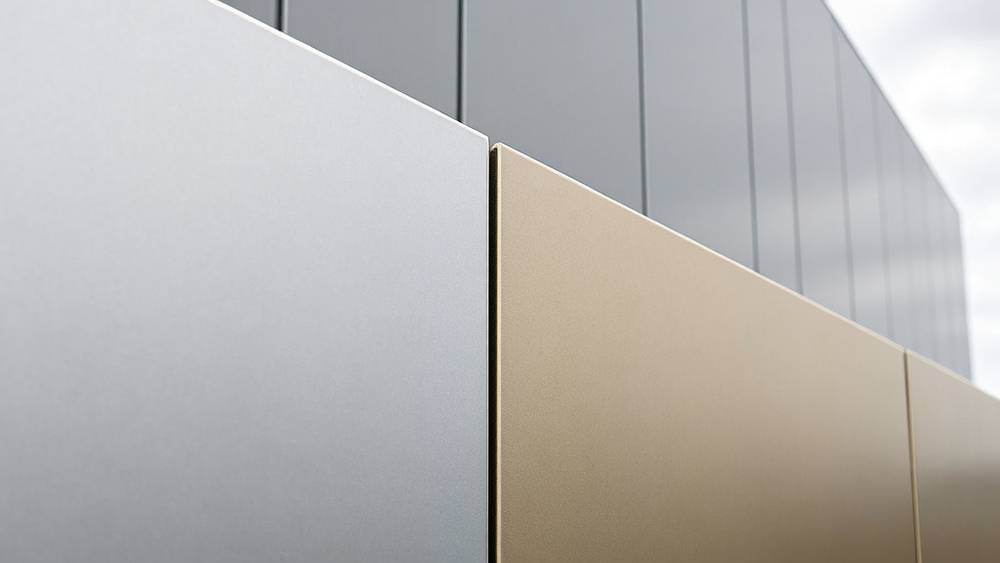
When a cladding order lands on a procurement desk with the specification "aluminium coated panel," the immediate question is rarely about the aluminium itself. It is about the coating: which chemistry, applied how, cured to what standard. A pre-coated solid aluminium panel arriving on site with its finish already baked on is a fundamentally different product from one that gets sprayed after fabrication. The distinction reshapes lead times, cost structures, and long-term colour consistency across a facade. This article drills into the pre-coating versus post-coating decision for solid aluminium cladding panels, using measurable criteria that procurement teams and facade engineers can act on.
What "Pre-Coated" Actually Means in Solid Aluminium Production
In coil coating, sometimes called continuous coating, a full coil of aluminium strip runs through a series of chemical pre-treatment baths, rinse stations, drying ovens, primer applicators, topcoat rollers, and curing furnaces in one uninterrupted pass. The aluminium coated panel emerges with a finish that has been baked at a precise peak metal temperature, typically 232–249°C for PVDF systems, under tightly controlled line speeds of 30–80 metres per minute. The result is a cured film that is molecularly uniform across every square millimetre of the sheet.
This is not the same as spray coating a fabricated panel. In post-coating, the aluminium sheet is first cut, routed, folded, and welded into its final panel shape. Only then does it go into a spray booth where a manual or robotic gun applies liquid coating. Curing happens in a batch oven, where temperature ramp-up and airflow around complex geometries can vary. For flat panels this difference may be negligible. For panels with returns, stiffeners, or perforations, coating thickness at edges and corners often deviates from the flat face.
The core variables that separate the two routes are film thickness control, edge coverage, colour batch matching, and the maximum panel size that can be finished in one piece. These variables cascade into decisions about warranty duration, on-site touch-up, and whether a facade will read as uniform from 20 metres away.
Coil Coating Line Capabilities and Their Procurement Implications
A modern coil coating line can handle aluminium strip widths up to 2,000 mm and gauge ranges from 0.5 mm to 4.0 mm, though solid cladding panels typically sit at 2.0 mm, 2.5 mm, or 3.0 mm. The line applies a chromate or chrome-free conversion coating, then a primer at 5–8 microns dry film thickness (DFT), then a PVDF or FEVE topcoat at 25–35 microns DFT. Some specifications call for a backer coat on the reverse side to balance stress and prevent corrosion.
Because the entire coil is coated before any mechanical processing, the procurement team orders coated coil by the tonne rather than fabricated panels by the piece. This changes the commercial conversation: minimum order quantities are higher, typically 2–3 tonnes per colour, but the cost per square metre drops by 12–18% compared to post-coating the same panel geometry. The trade-off is that the fabricator must then cut and form panels without damaging the cured surface, which demands protective film, clean tooling, and handling protocols that not every workshop maintains.
For projects exceeding 5,000 square metres of a single colour, coil coating becomes the default economic choice. For smaller jobs or multi-colour facades, post-coating offers flexibility that a coil line's minimum runs cannot match. Neither route is universally superior; the numbers decide.
Post-Coating: The Spray-and-Bake Route for Fabricated Panels
In post-coating, a fabricator cuts and forms solid aluminium panels first, then sends them to a finishing shop. The panels hang on a conveyor, pass through a pre-treatment spray tunnel, dry, enter a spray booth where operators apply primer and topcoat, and finally cure in a batch or continuous oven at 220–240°C. The key advantage is that edges, returns, and welded joints all receive coating coverage during the same spray cycle.
However, film thickness consistency depends heavily on operator skill and booth conditions. The AAMA 2605 specification, which governs high-performance architectural coatings on aluminium, requires a minimum total DFT of 30 microns for a two-coat system and 40 microns for a three-coat system. On a spray-coated aluminium coated panel, measuring DFT at the centre of the flat face might show 38 microns while a folded return edge measures 22 microns. The spec allows some variation, but the architectural intent of a uniform finish can be compromised if the fabricator and coater do not coordinate on rack positioning and gun settings.
Post-coating also introduces batch-to-batch colour variation. Two panels fabricated from the same aluminium heat but sprayed on different days may show a Delta E of 0.8–1.5, visible to a trained eye under overcast sky conditions. Coil coating, by contrast, produces an entire project's worth of material from a single coil lot with a Delta E below 0.5 across the full run, provided the line's spectrophotometer feedback loop is calibrated correctly.
Film Integrity at Fabrication Edges: The Hidden Durability Variable
One of the least discussed failure modes in solid aluminium cladding is edge creep: corrosion that starts at a cut edge where the coating is absent and creeps under the paint film. Pre-coated panels have zero coating on cut edges because the sheet was coated before cutting. Fabricators address this by specifying a post-fabrication edge treatment, typically a touch-up pen or brush-applied repair coating that matches the topcoat chemistry. The quality of this touch-up varies enormously between fabricators.
Post-coated panels, by contrast, receive their full coating system after all cutting and forming, so edges are theoretically covered. In practice, sharp edges tend to have thinner coating due to surface tension pulling liquid paint away from the apex during curing. A well-run spray operation compensates by orienting panels so that critical exposed edges face the spray gun directly, but this requires communication between the fabricator and the coating shop that does not always happen on fast-track projects.
The relevant testing standard is ASTM B117 salt spray resistance. Panels with edge creep typically show blistering or filiform corrosion at cut edges after 1,000–2,000 hours, whereas properly coated edges can exceed 4,000 hours without failure. Specifiers should ask for edge-specific salt spray results, not just flat-panel data.
Colour Matching Across Large Facades: Coil Lot vs. Spray Batch
Large-scale facades expose colour variation that goes unnoticed on small sample chips. A 50-metre elevation clad in solid aluminium panels will reveal Delta E differences that a 300 mm × 300 mm sample never shows. This is where the coil coating route provides an inherent advantage: the entire facade comes from one aluminium coil and one coating run, so the pigment dispersion, film thickness, and cure conditions are identical for every panel.
Post-coating across multiple spray batches introduces variability from several sources: ambient humidity affecting paint viscosity, oven loading density changing the cure profile, and even different operators spraying with slightly different gun distances. A reputable coating shop maintains spectrophotometer records for every batch and can demonstrate that consecutive batches fall within a Delta E of 1.0 relative to the master standard. For critical elevations, some specifiers require that all panels for a single visible plane be sprayed in one continuous production run, which limits the maximum area that can be guaranteed colour-consistent.
The industry reference for colour measurement is ASTM D2244, which defines the CIELAB colour space and Delta E calculation. Specifiers should state the maximum acceptable Delta E and the measurement geometry, typically 45°:0° or sphere-based spectrophotometry, directly in the coating specification rather than relying on a vague "colour to match architect's sample" clause.
Warranty Reality: What Pre-Coating and Post-Coating Suppliers Actually Cover
Coating warranties for architectural aluminium follow a tiered structure that mirrors the coating chemistry and application method. PVDF coil-coated products from major mills routinely carry a 30-year film integrity warranty and a 20–25-year colour retention warranty, backed by the paint manufacturer (PPG, AkzoNobel, Sherwin-Williams) as well as the coil coater. These warranties assume the panels are fabricated and installed according to published guidelines, and they typically exclude damage from fabrication edges, which is why edge treatment matters.
Post-coated panels carry warranties from the applicator rather than the paint manufacturer, because the paint company cannot control how the liquid coating was applied and cured. A reputable applicator using licensed PVDF coatings will offer 15–20 years on film integrity and 10–15 years on colour retention. The shorter term reflects the reality that batch curing is less controlled than continuous coil curing.
The following table compares the measurable performance parameters that differentiate coil-coated and spray-coated solid aluminium panels across the criteria most relevant to procurement evaluation.
| Performance Parameter | Coil-Coated (Pre-Coated) | Spray-Coated (Post-Coated) |
|---|---|---|
| DFT tolerance (flat face) | ±2 microns across full coil | ±5 microns typical, operator-dependent |
| Edge coverage | None; requires post-fab touch-up | Partial; thinner at sharp apexes |
| Colour consistency (single project) | Delta E < 0.5 (single coil lot) | Delta E 0.8–1.5 across spray batches |
| Minimum order quantity | 2–3 tonnes per colour | No minimum; per-panel pricing |
| Cost per m² (2.5 mm solid, PVDF) | Baseline; 12–18% below post-coat | 12–18% above coil-coat baseline |
| Max panel size (single piece) | Limited by fabricator handling of coated sheet | Limited by spray booth and oven dimensions |
| Salt spray resistance (ASTM B117) | 4,000+ hours on flat surface | 3,000–4,000 hours; edges may fail earlier |
| Warranty (film integrity) | 30 years (mill-backed) | 15–20 years (applicator-backed) |
| Rework flexibility | Low; touch-up only | High; full respray possible |
| Lead time (typical) | 6–10 weeks (coil production + fabrication) | 4–6 weeks (fabrication + coating) |
Project Scale and Geometry: The Real Deciding Factors
Beyond the technical data, two project-specific factors override most theoretical comparisons. The first is total area per colour. A project with 8,000 square metres of a single custom grey is a strong candidate for coil coating. A project with 800 square metres each of six different colours will almost certainly use post-coating because six coil runs at minimum order quantities would generate excessive waste.
The second factor is panel geometry complexity. A flat or simply folded panel with no perforations travels through coil coating and subsequent fabrication with minimal risk. A panel with extensive perforations, complex returns, or welded corner joints benefits from post-coating because the spray process can reach internal surfaces that a pre-coated sheet would leave bare after perforation.
Fabricators like Futeng® that operate both supply chains, stocking pre-coated coil for large-volume runs and maintaining in-house spray lines for complex or small-batch work, give procurement teams the option to mix approaches within a single project. The main elevation might use coil-coated material for cost and colour consistency, while feature panels, soffits, and trim pieces are post-coated to handle geometric complexity without compromising edge protection.
Pre-Treatment Chemistry: The Step That Determines Everything
Whether pre-coated or post-coated, an aluminium coated panel lives or dies by its pre-treatment. The conversion coating that sits between bare aluminium and primer must etch the surface, remove oxides, and deposit a chemically bonded layer that locks the primer in place. Traditional hexavalent chrome pre-treatment delivers the highest corrosion resistance but faces increasing regulatory restriction under REACH in Europe and similar frameworks elsewhere. Chrome-free alternatives using titanium, zirconium, or silane chemistries now match chrome performance on most accelerated weathering tests, but the process window is narrower.
On a coil line, pre-treatment is applied by roller or spray within seconds and dried immediately before primer application, so the aluminium surface is pristine when coating begins. In post-coating, panels may sit for hours or days between pre-treatment and spraying, during which time ambient humidity can re-oxidise the surface. A well-managed post-coating operation minimises this dwell time and controls shop humidity, but the inherent advantage of continuous processing remains with coil coating.
The relevant specification is AAMA 2605, which requires a minimum of five years of South Florida exposure testing for coating system qualification. This testing encompasses pre-treatment, primer, and topcoat as a complete system, which is why switching pre-treatment chemistry without re-qualifying the full system invalidates the warranty.
Cost Breakdown: Where the Money Goes in Each Route
Procurement teams comparing pre-coated and post-coated solid aluminium panels need to look beyond the per-square-metre price on a quotation. The total installed cost includes material, fabrication, coating, packaging, transport, installation, and the cost of on-site touch-up and rectification. Coil coating shifts cost upstream: the coated coil is more expensive per kilogram than bare coil, but the fabricator spends less on finishing labour. Post-coating shifts cost downstream: the fabricator buys cheaper bare coil but pays a separate coating shop for spraying.
For a typical 2.5 mm solid aluminium panel with a three-coat PVDF finish, the ex-works cost of a coil-coated panel runs approximately 12–18% lower than a post-coated equivalent when the order exceeds 3,000 square metres of a single colour. Below 1,000 square metres, the post-coated route is usually cheaper because the coil coating minimum order penalty outweighs the per-unit savings. Transport cost differences are negligible because the same number of panels ship regardless of when they were coated.
Installation costs diverge if post-coated panels require less on-site touch-up due to better edge coverage, or if coil-coated panels arrive with more handling damage because the pre-applied finish was not adequately protected during fabrication. These are process-quality variables that depend on the specific fabricator, not inherent to either route.
Making the Specification Decision Stick
A specification that simply says "solid aluminium panel with PVDF coating" leaves the pre-coat versus post-coat decision entirely to the contractor, who will choose whichever route costs them less. If the architect or facade engineer has a genuine preference based on the visual and durability criteria discussed above, the specification must state it explicitly: "Coil-coated aluminium sheet to AAMA 2605, fabricated into panels after coating, with all cut edges treated using manufacturer-approved liquid PVDF repair coating to 25 microns minimum DFT," or "Post-coated fabricated aluminium panels to AAMA 2605, with all edges and returns receiving full spray coverage during a single coating cycle."
The specification should also define who is responsible for edge treatment on pre-coated panels, what the acceptance criteria are for colour consistency (Delta E measured per ASTM D2244), and what documentation the coating applicator must submit. A mill test report for the coil coating run or a batch report from the spray shop, including DFT measurements at five points per panel and spectrophotometer readings, provides the baseline for any future warranty claim.
The choice between pre-coating and post-coating for an aluminium coated panel is not a matter of one being better. It is a matter of matching the process to the project's scale, geometry, colour requirements, and risk tolerance. Getting that match right at the specification stage prevents the expensive discovery, months into installation, that the panels on the north elevation do not quite match those on the south.