واجهات المنيوم كلادينج From 180 to 400 SAR Real Cost Drivers in 2025
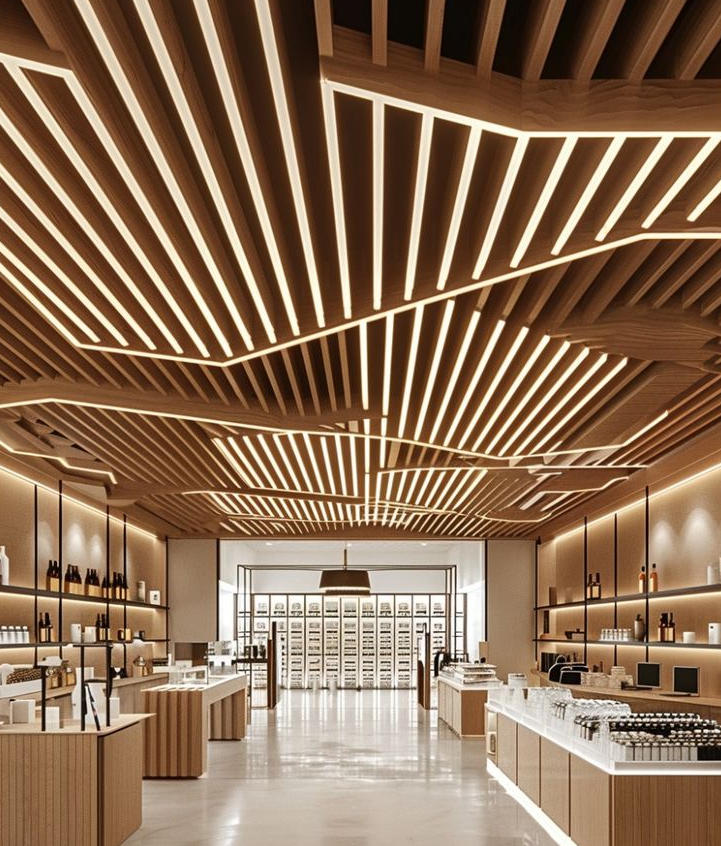
When a project tender lands on the desk of a procurement manager in Riyadh or Jeddah, the line item that triggers the most internal debate is rarely the aluminium itself. It is the installed rate per square metre. A search for واجهات المنيوم كلادينج across Saudi contractor forums reveals price quotes spanning from 150 SAR to over 400 SAR per square metre supplied and installed. That spread, nearly 300%, is not random. It reflects genuine differences in panel thickness, alloy grade, coating system, substructure design, and fixing methodology. Yet too many tender evaluations compress all bids into a single spreadsheet column labelled "Aluminium Cladding Rate" and award to the lowest number. This article dissects what actually separates the 180 SAR quote from the 380 SAR quote, mapped against the real cost drivers in solid aluminium cladding panel procurement across the Gulf region in 2025.
The 180 SAR Price Point What It Buys and What It Skips
A survey of publicly listed prices from Saudi-based fabricators, including the widely cited starting rate of 180 SAR per square metre from Qusoor Al Sultan in Makkah, establishes the baseline for واجهات المنيوم كلادينج in the current market. At this tier, the specification typically includes a 1.5 mm to 2.0 mm thick aluminium skin using standard 3003-H14 alloy, a polyester (PE) paint finish with approximately 25–30 microns dry film thickness, visible rivet or screw fixing, and a basic galvanised steel subframe with no thermal isolation. The panel format is almost always a flat rectangular sheet with simple edge returns, fabricated on a CNC turret punch and press brake. Labour for installation is bundled into the rate, assuming a straightforward building elevation without complex geometric features.
This price point serves small commercial shopfronts, single-storey retail units, and low-budget villa renovations where the client's primary requirement is covering a masonry wall with a metallic appearance. The polyester coating carries a realistic service life of 5–8 years under Saudi solar exposure before noticeable chalking and colour fade appear. No independent third-party testing for wind load resistance is typically included; the fabricator relies on prescriptive framing tables. For a 200-square-metre shopfront in Dammam, this specification may be entirely adequate. The problem arises when the same 180 SAR specification is ported into a six-storey commercial building or a coastal hotel project without adjusting any technical parameter.
Panel Thickness and Alloy Selection The First Real Cost Ladder
Moving from 2.0 mm to 3.0 mm solid aluminium sheet adds roughly 40–55 SAR per square metre in raw material cost alone, assuming current LME aluminium pricing around 2,300 USD per tonne plus regional fabrication premiums. This is not a linear increase. A 3.0 mm 5005-H14 or 5052-H32 alloy panel costs more than a 3.0 mm 3003-H14 panel because the magnesium content in 5xxx-series alloys improves corrosion resistance and tensile strength but raises the base metal price by approximately 8–12%. For واجهات المنيوم كلادينج specified on coastal projects in Jeddah or Al Khobar, 5052-H32 is the minimum recommended grade. Some specifications incorrectly allow 3003 for marine environments, which leads to pitting corrosion within 3–5 years. The alloy choice alone can swing the installed rate by 25–35 SAR per square metre, yet many tender documents do not even name an alloy grade, leaving the decision to the lowest-bidding fabricator.
Panel flatness is another thickness-dependent variable that procurement teams often overlook. A 2.0 mm panel spanning 600 mm between support rails will exhibit visible oil-canning under thermal cycling, particularly on dark-coloured PVDF finishes where surface temperatures can reach 85°C. Increasing to 3.0 mm reduces the oil-canning index by approximately 40% based on the relationship between flexural rigidity and thickness cubed. The cost of post-installation panel replacement due to unacceptable waviness far exceeds the incremental material cost of specifying the correct thickness at tender stage.
Coating Systems PE Powder PVDF and FEVE Cost Versus Longevity
| Coating Type | Dry Film Thickness | Colour Retention (Saudi Climate) | Installed Cost Premium (vs PE) | Warranty Life |
|---|---|---|---|---|
| Polyester Powder (PE) | 60–80 microns | 3–5 years before chalking | Base (0 SAR) | 5 years |
| Super Durable Polyester | 60–80 microns | 7–10 years | +15–20 SAR/m² | 10 years |
| PVDF 70% (Kynar 500) | 25–35 microns (3-coat) | 15–20 years | +55–75 SAR/m² | 20 years |
| PVDF 70% (4-coat with primer barrier) | 40–50 microns | 20–25 years | +75–95 SAR/m² | 25 years |
| FEVE (Lumiflon-based) | 30–40 microns (3-coat) | 25–30 years | +90–120 SAR/m² | 30 years |
The coating decision for واجهات المنيوم كلادينج is where specifiers most frequently underinvest. A polyester powder coat looks identical to PVDF on day one. After three Saudi summers, the difference is unmistakable. PVDF coatings using Kynar 500 resin with minimum 70% fluoropolymer content, applied through a three-coat system incorporating a chrome-based primer and colour coat topped with a clear fluorocarbon layer, resist UV degradation through the carbon-fluorine bond strength of approximately 485 kJ/mol, far exceeding the carbon-carbon bonds in polyester. For any project where the building owner intends to hold the asset beyond seven years, the PVDF premium amortises to roughly 3–4 SAR per square metre per year, less than the cost of scaffolding alone for a recoating programme.
FEVE-based coatings represent the top tier, specified for prestige projects and extreme environments. The fluoroethylene vinyl ether resin system offers gloss retention above 80% after 4,000 hours of accelerated QUV-B testing per ASTM G154, compared to PVDF at approximately 70% under identical conditions. The installed cost premium of 90–120 SAR per square metre limits FEVE to landmark towers, airport terminals, and coastal five-star resorts where the façade is a long-term brand asset.
Substructure Engineering The Hidden Half of the Façade Cost
The aluminium panel itself accounts for roughly 35–45% of the total installed cost of واجهات المنيوم كلادينج. The substructure, comprising vertical mullions, horizontal rails, thermal isolation pads, brackets, and anchors, consumes 40–50%. The remaining 10–15% covers fixings, sealants, flashings, and labour. Yet substructure design is the component least scrutinised during tender evaluation.
At the 180 SAR level, the substructure is typically a site-fabricated arrangement of 40×40 mm galvanised steel hollow sections, welded or mechanically fixed to the structural wall, with no engineered thermal breaks. This approach works for low-rise buildings where thermal movement is small and condensation risk is managed by natural cavity ventilation. For medium and high-rise projects, however, a fully engineered aluminium subframe with nylon thermal breaks, stainless steel brackets, and slotted connections for thermal expansion becomes necessary. This system adds 80–120 SAR per square metre to the installed rate but eliminates the risk of galvanic corrosion at steel-aluminium interfaces and accommodates the 2–3 mm per linear metre thermal expansion that aluminium panels experience between winter nights and summer afternoons in Riyadh.
Wind load engineering for the subframe is governed by ASCE 7-22 in most Gulf projects, with basic wind speeds ranging from 38 m/s (136 km/h) in inland cities to 45 m/s (162 km/h) in coastal zones. A subframe designed for 1.5 kPa wind pressure cannot be simply replicated for a site requiring 2.3 kPa resistance. The difference in steel or aluminium section sizes, bracket spacing, and anchor embedment depth adds 25–40 SAR per square metre. Fabricators like Futeng®, who supply solid aluminium cladding panels to GCC projects, routinely provide wind load calculation reports and subframe shop drawings as part of the technical submittal, enabling the contractor to verify that the quoted rate includes structural adequacy rather than relying on generic assumptions.
Fixing Systems Visible Versus Concealed and the Labour Factor
The choice between exposed fastener fixing and concealed cassette or tray systems affects both aesthetics and installation productivity. Exposed rivet or screw fixing, common at the 180–220 SAR price band, allows a two-person installation team to cover 25–35 square metres per day. The visible fasteners are colour-matched with PVDF-capped heads, but the dimple effect remains visible from street level and accumulates dust in the recess.
Concealed fixing systems, using folded aluminium trays that hook onto horizontal carrier rails with interlocking tongue-and-groove joints, slow installation to 15–20 square metres per team per day. The panels require tighter fabrication tolerances (±1 mm on fold lines) and the carrier rail system costs 30–50% more than simple galvanised hat sections. The installed premium for concealed fixing over exposed fixing runs 50–80 SAR per square metre. For واجهات المنيوم كلادينج on corporate headquarters, luxury hotels, and high-end retail, the clean joint line and absence of visible fasteners justify the premium. For industrial buildings and back-of-house elevations, exposed fixing remains the rational economic choice.
The single largest cost risk in aluminium cladding procurement is not the panel price. It is the variation order for substructure redesign after the shop drawing stage reveals that the quoted system cannot meet the project wind load or thermal movement requirements.
Geometric Complexity Flat Panels Curves and Perforations
Every fold, curve, perforation, or non-rectangular shape added to a solid aluminium panel increases fabrication cost. A simple rectangular panel with four edge returns might take 12 minutes of CNC processing time. A panel with a 200 mm radius curved return, two folded corners with welded mitre joints, and a perforated pattern covering 30% of the surface area can take 45–60 minutes. The material yield also drops: a 3,000 × 1,500 mm sheet may yield 85% usable area for simple rectangles but only 65–70% for complex shapes. These two factors combined can double the ex-factory panel price before any coating or substructure is added.
Perforated panels, increasingly specified for car park façades, plant room screens, and solar shading elements, introduce additional variables: hole diameter (commonly 3 mm to 12 mm), pitch (hole centre-to-centre spacing), open area ratio (typically 20–40%), and edge margin. A 3 mm hole on 6 mm staggered pitch at 23% open area is a standard specification that most fabricators can produce on a turret punch. Moving to a custom pattern with graduated hole sizes or a logo perforation requires laser cutting or single-tool CNC punching, increasing the processing cost by 60–100 SAR per square metre. Procurement teams evaluating واجهات المنيوم كلادينج tenders should request a separate line item for perforated panels rather than averaging the cost across the entire façade area, which masks the true cost of decorative elements.
Fire Performance and Core Material A Critical Distinction
Solid aluminium panels contain no polyethylene core, no mineral fill, and no laminating adhesive. This is their fundamental fire safety advantage. When tested to EN 13501-1, a 3.0 mm solid aluminium sheet achieves A1 or A2-s1,d0 classification depending on the coating system, meaning no contribution to fire, minimal smoke production, and no flaming droplets. This contrasts with ACP panels where the core material dictates the entire fire classification. For buildings over 18 metres in height, the NFPA 285 multi-storey fire propagation test is often mandated, and solid aluminium panels with appropriate insulation behind them have a well-documented compliance path that avoids the complications associated with combustible-core products.
The fire compliance premium for solid aluminium over basic ACP is approximately 30–50 SAR per square metre at the panel level. When the total installed cost including substructure is considered, the differential is often smaller because the substructure requirements for non-combustible systems may be less onerous than for combustible cladding requiring additional fire barriers. Insurance underwriters in the Gulf are increasingly factoring cladding type into building insurance premiums, with solid aluminium façades attracting lower rates. This operational cost saving, while not visible in the construction tender, accrues directly to the building owner over the asset lifecycle.
Quality Assurance and Third-Party Testing Costs
A technically complete واجهات المنيوم كلادينج package includes more than panels and brackets. It includes a quality assurance dossier: mill test certificates for the aluminium coil confirming alloy chemistry and mechanical properties per ASTM B209, coating performance test reports covering adhesion (ASTM D3359), impact resistance (ASTM D2794), pencil hardness (ASTM D3363), and accelerated weathering (ASTM G154), and a first-article inspection report for the fabricated panels. For projects requiring AAMA 2605 compliance for PVDF coatings, the full test suite costs approximately 8,000–12,000 SAR and takes four to six weeks. This cost is typically amortised across the project square metreage, adding 5–15 SAR per square metre depending on project size.
On-site pull-off adhesion testing of installed panels, conducted per ASTM D4541 using a portable adhesion tester, verifies that the coating bond strength exceeds the specified minimum (typically 5 MPa for PVDF). This test costs roughly 1,500–2,500 SAR for a representative sample of 10–15 locations. Projects that skip this step risk discovering coating delamination only after the defects liability period expires.
Logistics and Regional Supply Chain Considerations
For GCC projects, the logistics cost embedded in واجهات المنيوم كلادينج procurement varies significantly with panel dimensions and origin. Panels sourced from Chinese fabricators and shipped in 20-foot containers to Dammam or Jeddah incur sea freight of approximately 1,800–2,500 SAR per container, plus 5% customs duty and 15% VAT on the CIF value. A container typically holds 400–600 square metres of cladding panels depending on nesting efficiency. The logistics cost per square metre thus ranges from 12–18 SAR, which must be added to the ex-factory price for comparison with locally fabricated panels.
Local Saudi fabrication offers shorter lead times (typically 4–6 weeks versus 10–14 weeks for imported panels including sea transit) and eliminates customs clearance uncertainty. However, local fabricators often rely on imported aluminium coil stock from the same Chinese, European, or Bahraini mills, so the raw material cost floor is similar. The decision between local and imported fabrication hinges on project schedule, panel quantity, and whether the specification demands coating capabilities that may not be available locally, such as FEVE spray application or custom wood-grain sublimation finishes.
Making the Tender Comparison Work
Procurement teams evaluating bids for واجهات المنيوم كلادينج should structure their comparison spreadsheet to expose specification differences rather than conceal them. A single "rate per square metre" column is worse than useless; it is actively misleading. At minimum, the comparison should include separate columns for panel thickness and alloy, coating type and warranty period, substructure material and design wind pressure, fixing method, inclusion of thermal breaks, perforation or geometric complexity surcharge, testing and QA scope, and logistics terms.
When two bids are genuinely comparable on all these parameters, the rate difference should fall within 10–15%. A spread wider than that indicates that at least one bidder has either misinterpreted the specification or is deliberately under-specifying to win the tender. The cost of discovering this after contract award, when the shop drawing submission reveals that the substructure needs upgrading or the coating needs upgrading, routinely exceeds the apparent saving from accepting the lower bid.
The 180 SAR starting price for solid aluminium cladding is real, and for the right project type it represents fair value. The danger lies not in the price itself but in the assumption that the same number applies to every building, every location, and every performance requirement. A 30-metre coastal tower with concealed-fix PVDF-coated 3.0 mm 5052 panels on an engineered aluminium subframe with thermal breaks will cost 340–400 SAR per square metre. That is not a contractor inflating a price. That is the cost of a façade system engineered to perform without failure for 25 years under the specific environmental and structural demands of its site.