Anodised Aluminium Temper Choice Reshapes Colour Consistency
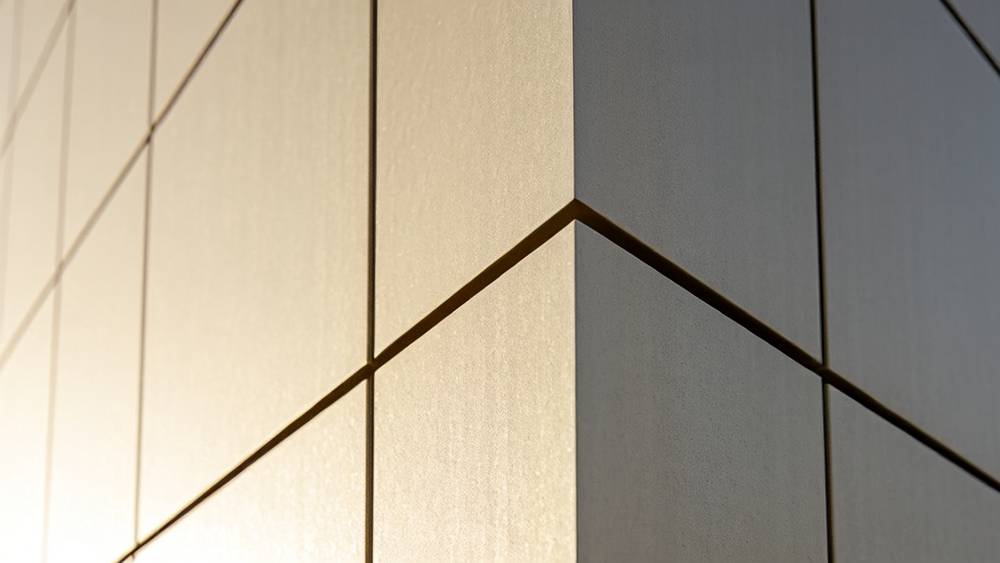
When a project specification calls for anodised aluminium cladding panels, the conversation almost always starts with colour. Architects fixate on champagne versus bronze, matte versus gloss. But the question that determines whether a facade still looks uniform five years later is rarely about colour at all. It is about temper. Specifically, whether the 3 mm solid aluminium sheet behind that anodic layer was supplied in H14 or H18 temper — and whether anyone on the procurement side knew to ask.
The temper grade of the base metal shapes how anodised aluminium responds to forming, how uniformly the oxide layer builds during electrolysis, and how the finished panel behaves under thermal cycling. Yet across hundreds of cladding projects reviewed over the past decade, temper designation remains one of the most overlooked variables in facade specification. This article examines why that gap matters, what the temper designations actually mean for solid aluminium cladding, and how to align temper selection with the realities of anodising line batch chemistry.
What Temper Actually Means in Solid Aluminium Sheet
Aluminium temper designations — governed by The Aluminium Association system and referenced in ASTM and EN standards — describe the combination of work hardening and thermal treatment applied to the metal after rolling. For the 5000-series and 6000-series alloys commonly used in solid aluminium cladding panels, temper has a direct effect on three properties that matter for anodised finishes: surface hardness, grain structure uniformity, and residual stress distribution.
H14 temper means strain-hardened to half-hard condition. The sheet undergoes controlled cold reduction after annealing, typically producing tensile strength in the range of 140–180 MPa for alloy 5005. H18 temper means full-hard, with the maximum cold reduction the mill can apply — tensile strength pushes toward 200 MPa and above. The difference sounds modest on a datasheet. In practice, it changes everything about how the anodised layer forms and performs.
The H14 Default Problem
Many cladding fabricators default to H14 temper for solid aluminium panels. It offers a reasonable balance of formability and strength, bends without cracking at standard radii, and costs less than H18. For painted finishes — PVDF or polyester powder coat — H14 works without issue. The coating sits on top of the metal; the substrate temper affects only mechanical performance, not appearance.
Anodising is different. The anodic layer grows from the aluminium itself. The oxide film does not sit on the surface — it converts the surface. Every variation in the base metal's grain structure, every micro-level stress concentration, every trace of intermetallic particle distribution gets amplified through the anodising bath. H14 temper, with its partially recrystallised grain structure, can produce perceptible differences in oxide layer thickness across a single panel — differences that manifest as colour variation, particularly in lighter anodised aluminium tones like natural silver or light champagne.
How Temper Selection Affects Anodising Consistency
The anodising process is electrochemical. The aluminium panel serves as the anode in an acid electrolyte bath — typically sulphuric acid for architectural applications. Current passes through the bath, and oxygen ions react with the aluminium surface to grow a porous oxide layer. The thickness of that layer, typically specified between 10 and 25 microns for exterior cladding per AAMA 611 standards, depends on current density, bath temperature, and treatment time.
What the specification rarely captures is that oxide growth rate varies with grain orientation. Cold-rolled aluminium sheet develops a pronounced rolling texture — grains elongated in the rolling direction. In H14 temper, partial annealing leaves a mixed grain population: some recrystallised equiaxed grains, some retained deformation structure. When that mixed-grain surface enters the anodising bath, different grains oxidise at slightly different rates. The result, visible under certain lighting conditions, is a subtle but real variation in reflectance across the panel surface.
H18 temper, by retaining a more uniform deformation structure throughout the sheet thickness, can actually produce a more consistent anodised finish — but only if the fabricator manages the trade-offs. The higher strength of H18 makes bending more difficult. Springback increases. Minimum bend radii grow larger. Tooling wear accelerates. These are real costs that must be weighed against the aesthetic benefit.
Alloy and Temper Combinations That Work for Anodised Cladding
Not all aluminium alloys anodise equally well. The 5000-series — particularly 5005 and 5052 — are widely regarded as the best substrates for architectural anodised aluminium. Their magnesium content stays low enough to avoid the smut problems that plague high-magnesium alloys during caustic etching, yet high enough to provide solid mechanical properties.
The 6000-series alloys — 6061 and 6063 — also anodise well but behave differently. Their silicon and magnesium content forms Mg₂Si precipitates that influence oxide layer colour. 6061-T6, commonly used for extruded framing members, can produce a slightly grey-brown cast when anodised, especially in thicker oxide layers. For sheet cladding panels, 5005-H14 and 5005-H18 remain the workhorse specifications, with 5052-H32 offering a compromise for applications requiring higher strength and better corrosion resistance in marine environments.
The table below summarises the key alloy-temper combinations relevant to anodised aluminium cladding, with practical notes drawn from fabrication experience rather than mill datasheets alone.
| Alloy & Temper | Tensile Strength (MPa) | Anodising Quality | Formability | Best Application |
|---|---|---|---|---|
| 5005-H14 | 140–165 | Good; minor grain variation possible in light colours | Good; standard bend radii | General exterior cladding, moderate forming |
| 5005-H18 | 195–220 | Excellent; uniform oxide growth | Limited; larger bend radii required | Flat panels, high-aesthetic facades |
| 5052-H32 | 210–260 | Good; slightly warmer tone after anodising | Good; similar to 5005-H14 | Coastal cladding, high-wind zones |
| 6061-T6 | 290–310 | Fair; grey cast possible; best for dark colours | Poor; requires large radii | Structural panels, not recommended for visible cladding |
| 5005-O | 105–125 | Excellent; fully recrystallised, uniform | Excellent; tight radii possible | Complex formed panels where post-form anodising is viable |
One nuance worth noting: 5005-O (annealed) actually produces the most uniform anodised finish of all because its fully recrystallised grain structure eliminates the deformation texture entirely. The problem is strength — 5005-O panels at 3 mm thickness may not meet wind-load deflection limits without additional stiffening. This is the fundamental tension in anodised aluminium cladding: the tempers that form best anodise least uniformly, and the tempers that anodise best form worst.
Batch Chemistry: Why Temper Alone Is Not Enough
Even with the correct temper specification, anodised aluminium colour consistency across a large facade depends on something the mill datasheet never mentions: batch-to-batch traceability of the base metal chemistry.
Within a single alloy designation — say 5005 — the aluminium association standards allow composition ranges. Iron can vary from 0.0 to 0.7%. Silicon from 0.0 to 0.3%. These permitted variations seem trivial in mechanical terms. In anodising, they are not trivial at all. Iron content above 0.15% begins to darken the anodic layer perceptibly. A batch of 5005-H14 sheet with 0.6% iron will anodise to a noticeably different shade than a batch with 0.1% iron — even though both meet the alloy specification.
This is why experienced cladding fabricators like Futeng® insist on single-cast-lot aluminium for any project where anodised panels will be installed on the same elevation. The requirement adds cost and lead-time pressure, but the alternative — panels from different mill casts, processed through the same anodising line, producing visibly different tones on the same wall — is far more expensive to rectify.
Anodising does not hide variation in the base metal. It amplifies it. That is the single most important thing to understand when specifying temper and alloy for anodised aluminium cladding.
Thermal Considerations: Temper Stability Under Solar Load
Anodised aluminium cladding panels in exterior applications face daily thermal cycles that can push surface temperatures past 80°C on dark-coloured facades in summer sun. The oxide layer itself is thermally stable — aluminium oxide melts above 2000°C — but the base metal underneath is not indifferent to repeated thermal excursions.
H18 temper, produced by maximum cold work, retains a higher dislocation density in the aluminium crystal lattice than H14. Under sustained thermal cycling, those dislocations can begin to rearrange — a process metallurgists call recovery. Recovery reduces strength incrementally over time. For a cladding panel subject to wind loads, the effect is negligible within the design life of the building. But for panels that have been formed to tight tolerances — folded edges, interlocking joints — even minor dimensional relaxation from recovery can affect fit.
H14 temper, with its partial anneal, has already undergone some recovery during processing. Its dislocation structure is more thermally stable. For projects in hot climates with dark anodised aluminium finishes — bronze, black, dark grey — H14 may actually be the safer choice despite its slightly less uniform anodising performance. The thermal stability argument flips the conventional wisdom on its head.
Specifying Temper in Practice: What the Standards Say
The primary North American standard governing anodised architectural aluminium is AAMA 611, "Voluntary Specification for Anodized Architectural Aluminum." It addresses oxide layer thickness, seal quality, and colour matching. It does not prescribe base metal temper. That responsibility falls to the project specification writer, who must understand the interaction between temper and anodising performance well enough to specify appropriately.
In Europe, EN 12373 (now largely superseded by parts of EN ISO 7599) covers anodising for architectural applications. Again, the standard focuses on the anodic coating itself — thickness classes AA10 through AA25, sealing quality, abrasion resistance — while remaining silent on substrate temper.
This gap in the standards framework is exactly why temper selection becomes a procurement problem. The architect specifies "anodised aluminium cladding panels, 5005 alloy, 3 mm thickness, AAMA 611 Class I finish" — and considers the specification complete. The fabricator sources whatever 5005 sheet is available at the best price, which is almost always H14 from multiple mill sources. Nobody flags the temper question until panels start arriving on site and the colour mismatch becomes apparent.
Practical Specification Language for Project Documents
Closing this gap requires adding temper and traceability language directly into cladding specifications. The following is a practical template, not legal boilerplate, drawn from project experience:
- Specify the alloy and temper explicitly: "Solid aluminium cladding panels shall be fabricated from 5005-H18 aluminium sheet, 3.0 mm nominal thickness, conforming to ASTM B209."
- Require single-cast-lot traceability: "All panels installed on any single building elevation shall be fabricated from aluminium sheet produced from a single mill cast lot. Mill certificates documenting cast lot numbers shall be submitted for review."
- Address colour range expectations: "Anodised finish colour variation shall not exceed a Delta E of 2.0 when measured per ASTM D2244 across any single elevation."
- Require sample panels: "The contractor shall produce three full-size sample panels using the specified alloy, temper, and anodising parameters for architect approval prior to production."
These four lines, added to a specification, eliminate the temper ambiguity that causes most anodised aluminium colour consistency problems. The cost impact is real — single-cast-lot requirements may add 5–8% to material costs — but the alternative cost of removing and replacing mismatched panels on an installed facade is orders of magnitude higher.
The Forming Trade-Off: When H14 Makes More Sense
Not every anodised aluminium cladding project should default to H18. The temper decision depends on the panel geometry. Flat panels with simple folded returns — the majority of rainscreen cladding — benefit from H18's anodising uniformity. Panels that require brake-formed stiffening ribs, complex perforation patterns, or tight-radius folds may need H14 simply to avoid cracking during fabrication.
The key is making the decision consciously rather than letting the supply chain make it by default. A project with 2,000 square metres of flat anodised panels on a prominent street-facing elevation should absolutely insist on H18 temper and single-cast-lot traceability. A project with heavily formed anodised panels where colour uniformity is secondary — soffit liners, concealed flashings — can use H14 without consequence.
Thickness of the Anodic Layer: Matching Class to Exposure
The temper discussion connects directly to anodic layer thickness specification. AAMA 611 defines Class I (minimum 18 microns, or 0.7 mils) for exterior architectural applications and Class II (minimum 10 microns, or 0.4 mils) for interior or less demanding exterior use. Coastal and industrial environments push the requirement toward 25 microns minimum, per ISO 7599 guidance.
Thicker anodic layers amplify the visibility of substrate grain structure variation. A Class I 18-micron layer on H14 temper may show acceptable uniformity. The same H14 temper under a 25-micron Class I-plus coating for marine exposure will show more pronounced variation because the longer anodising time exaggerates differential oxide growth rates across mixed grain populations. The practical implication: projects requiring thick anodic layers for harsh environments should pair that requirement with H18 temper to minimise the aesthetic penalty.
The interplay of temper, alloy, and anodic layer thickness is not academic. It determines whether a completed facade reads as a single uniform surface or as a patchwork of subtly different panels. On overcast days, the differences may be invisible. Under direct low-angle sunlight — the condition that reveals every flaw in a facade — they become unmistakable.
Cost Implications: Temper, Traceability, and the Real Price of Consistency
Procurement managers evaluating anodised aluminium cladding bids often compare prices on a per-square-metre basis without accounting for the temper and traceability requirements buried in the specification. This creates a structural incentive for fabricators to bid based on the cheapest compliant substrate — typically multi-source 5005-H14 — and hope the anodising line can compensate for the variation.
The real cost of H18 temper with single-cast-lot traceability includes several components that should be understood upfront rather than discovered through change orders. Mill minimum order quantities for a specific cast lot may exceed the project's actual sheet requirement, leaving the fabricator holding inventory. H18 sheet costs 8–12% more than H14 from the same mill. Scrap rates during forming run higher — typically 3–5% for H18 versus 1–2% for H14 — because of cracking at fold lines.
These costs are real but manageable when they are anticipated in the budget. A 10,000-square-metre anodised aluminium cladding package might see a 6–9% total cost increase from H14 to H18 with full traceability. For a high-visibility facade where colour uniformity is non-negotiable, that premium purchases certainty. For a warehouse or industrial building where aesthetics are secondary, it purchases nothing of value.
Making the Temper Decision: A Field Guide
After a decade of reviewing anodised aluminium cladding specifications and investigating colour consistency complaints, the decision framework has become relatively straightforward. Three questions determine the right temper choice for any given project.
First, how visible is the cladding? A street-level facade on a commercial high street demands H18 and single-cast-lot. A rooftop plant screen visible only from adjacent towers can use H14 without concern.
Second, what colour is the anodised finish? Light colours — natural, silver, light champagne, gold tones — show substrate variation more than dark colours. A dark bronze or black anodised panel can tolerate H14 temper with less visible consequence than a natural silver panel can.
Third, what is the panel geometry? Flat panels are H18-friendly. Heavily formed panels with multiple folds, ribs, or returns are H14 territory. The forming limits of H18 are real and must be respected.
The answers to these three questions should drive the temper specification. Not habit. Not supply chain convenience. Not the default setting in the fabricator's ERP system. The specification exists to serve the project outcome, and for anodised aluminium cladding, that outcome is defined by what the facade looks like five years after handover.