Wood Look External Aluminium Cladding Why the Clear Topcoat Determines 15 Year Performance
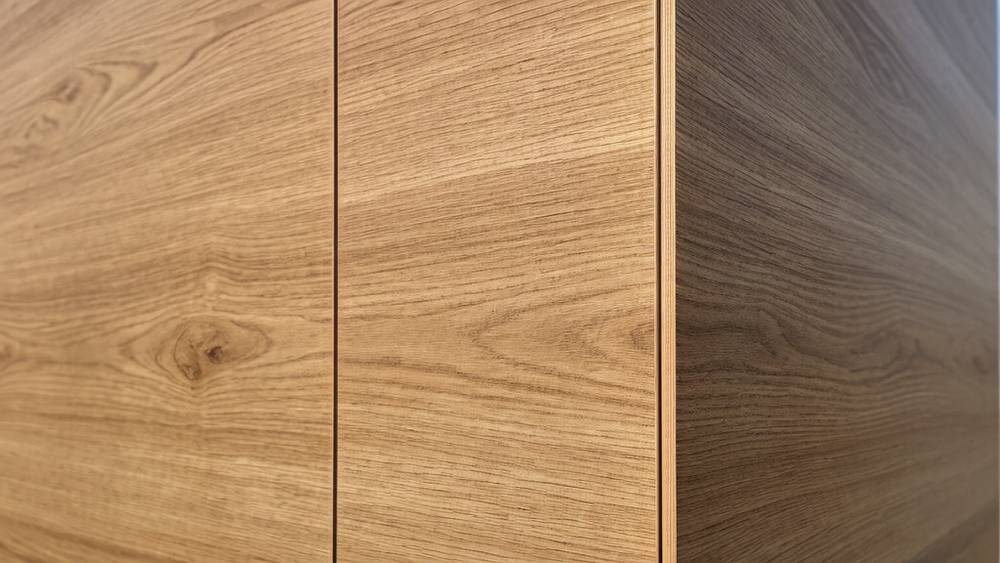
External aluminium cladding has moved far beyond its early reputation as a cold, metallic skin for industrial sheds. Today architects specify it to mimic timber grain, stone texture, and even weathered steel, all while keeping the building envelope non-combustible and dimensionally stable. Yet among the dozens of aesthetic options on the market, one question surfaces in almost every pre-tender meeting: how does a wood-look powder-coated finish on solid aluminium actually hold up after eight, twelve, or twenty years of UV exposure, rain, and thermal cycling? The answer sits at the intersection of powder coating chemistry, aluminium alloy selection, and substrate preparation, three variables that are rarely discussed together in project specifications.
Why Wood-Look Finishes Demand a Different Standard of Scrutiny
A solid-colour PVDF or polyester coating is optically simple. One pigment, one binder system, one set of weathering curves. A wood-look finish is fundamentally different: it layers a base coat, a woodgrain pattern (applied by sublimation or roller transfer), and a clear protective topcoat. Each layer has its own thickness, cure temperature window, and UV resistance profile. When any of these layers is under-cured or mismatched, the failure cascades: the clear coat chalks, the pattern bleaches, and the aluminium substrate, though structurally intact, becomes an aesthetic liability.
The substrate matters here more than many realise. Solid aluminium sheets in the 2.0 mm to 3.0 mm range (as used in rainscreen and curtain wall applications) provide a flat, stable canvas. Unlike composite panels, solid aluminium does not delaminate under heat, which means the powder coating can be cured at the full 200 °C to 210 °C required for cross-linking without risking the panel core. This is not a small advantage: incomplete cure is the leading cause of premature woodgrain fade in cladding, and solid aluminium removes one major constraint from the curing equation.
Sublimation vs Roller-Transfer: Two Paths, Different Durability Profiles
Wood-look external aluminium cladding is produced through two dominant processes, and they are not interchangeable in terms of long-term performance.
Sublimation (thermal transfer) involves printing the woodgrain onto a transfer film, then applying heat and pressure to drive the dye into the powder-coated base layer. The dye penetrates the surface of the coating, which gives decent scratch resistance, but the UV stability depends almost entirely on the clear powder topcoat that follows. If that topcoat is a standard polyester rather than a super-durable polyester or fluoropolymer-modified powder, expect visible fading within 3 to 5 years in equatorial or high-UV climates.
Roller-transfer (laminating) bonds a pre-printed decorative film directly onto the aluminium surface using a hot-melt or solvent-based adhesive. The print quality can be sharper, but the weak link is the adhesive layer. Thermal expansion of aluminium is roughly 24 × 10⁻⁶ /°C. Over a 3-metre panel length and a 60 °C diurnal temperature swing, the aluminium moves about 4.3 mm. A rigid adhesive that cannot accommodate this movement will micro-crack, allowing moisture ingress that lifts the film edge. For roller-transfer wood-look cladding, always request cyclic thermal test data (ASTM D2247 or equivalent) rather than relying on static adhesion values.
| Property | Sublimation (Thermal Transfer) | Roller-Transfer (Laminated Film) |
|---|---|---|
| Pattern Depth | Dye penetrates 20–40 μm into powder coat | Print sits on film surface; 0 μm penetration |
| UV Resistance Driver | Quality of clear powder topcoat (super-durable polyester or FEVE-modified) | Film's inherent UV stabilisers + adhesive integrity |
| Scratch Resistance | Good; pattern protected beneath topcoat | Fair; pattern on surface, scratch removes print |
| Thermal Movement Tolerance | Excellent; coating expands with aluminium | Dependent on adhesive elasticity; risk of edge lifting |
| Typical Warranty (Manufacturer) | 10–15 years on finish (with super-durable topcoat) | 5–10 years on film integrity |
| Repairability On-Site | Possible with touch-up powder + localised re-sublimation | Difficult; damaged film usually requires panel replacement |
| Cost Index (Relative) | 1.0 (baseline) | 0.8–0.9 |
The Topcoat Is the Real Warranty Underwriter
Many specification documents treat "wood-look finish" as a single line item. This is a mistake. The clear topcoat applied over the woodgrain pattern is the component that actually faces the sun, rain, and atmospheric pollutants. Three topcoat chemistries dominate the market, and their performance gap is significant:
Standard Polyester Clear Coat
Applied at 60–80 μm, standard polyester topcoats offer a low initial cost but degrade measurably in high-UV environments. Expect gloss retention to drop below 50% within 3–5 years in climates with annual UV radiation exceeding 120 kLy. Chalking (measured per ASTM D4214) can begin within 24 months. These topcoats are appropriate for interior applications or sheltered soffit areas but are a calculated risk on full-sun south-facing facades.
Super-Durable Polyester Clear Coat
Super-durable polyesters (often meeting Qualicoat Class 2 or AAMA 2604 equivalents) incorporate UV-stable resin chemistry that extends colour and gloss retention to 10–15 years. The film thickness is typically 80–100 μm, and cross-link density is higher, reducing moisture permeability. For most commercial projects using wood-look external aluminium cladding in temperate zones, this is the pragmatic sweet spot: the cost premium over standard polyester is 15–25%, but the service life before first maintenance roughly triples.
FEVE-Modified (Fluoropolymer) Clear Coat
For coastal installations, high-altitude projects, or anyone targeting a 20+ year aesthetic life, a clear coat incorporating FEVE (fluoroethylene vinyl ether) resin is the reference standard. FEVE-based topcoats resist UV degradation at the molecular level because the carbon-fluorine bond energy (approximately 485 kJ/mol) exceeds the energy of UV photons that reach the earth's surface. Gloss retention above 70% after 15 years is achievable. The cost adder is substantial, often 40–60% over standard polyester, but this must be weighed against the cost of scaffold access and panel replacement at year 8 or 10.
Specifier's Rule of Thumb: Match the clear topcoat chemistry to the project's UV exposure, not to the base coat. A super-durable base coat under a standard polyester clear will still chalk. The clear coat is the sacrificial layer, and its quality determines when that sacrifice becomes visible.
Aluminium Alloy Selection for Wood-Look Panels: More Than Just 3003 vs 5052
Wood-look finishes amplify surface imperfections. A slight orange-peel texture that disappears under a dark solid colour becomes visible under a light oak or teak woodgrain. This places a premium on the flatness and surface quality of the raw aluminium sheet.
Alloy 3003-H14 is the workhorse for external aluminium cladding panels in the 2.0–3.0 mm thickness range. It offers adequate tensile strength (140–170 MPa), good formability, and consistent surface quality from major mills. For panels exceeding 2.4 metres in width or requiring extensive brake-forming with woodgrain on show faces, 5052-H32 provides higher strength (210–240 MPa) with a slight cost premium. The key specification detail is temper: H14 for 3003 and H32 for 5052 represent the optimal balance of strength and flatness retention after coating cure.
A less-discussed variable is mill finish. Wood-look sublimation works best on a matte or semi-matte base coat, which in turn requires a consistently etched or chromated surface from the pretreatment line. Aluminium that arrives from the mill with oil residues, uneven oxidation, or handling marks will telegraph those defects through the woodgrain. Reputable fabricators, including Futeng®, run multi-stage pretreatment lines (degrease, rinse, chromate conversion coating, rinse, dry) before the base powder coat is applied, precisely because wood-look finishes are unforgiving of poor substrate preparation.
Accelerated Weathering Tests and What They Actually Predict
Laboratory accelerated weathering (QUV or Xenon arc per ASTM G154 or G155) can rank the relative durability of wood-look finishes, but it cannot predict real-world years with precision. A 2,000-hour QUV-B test might correlate loosely with 3–5 years of Florida exposure for a standard polyester, but the correlation breaks down for super-durable and FEVE systems because the acceleration factors diverge.
What accelerated testing does reveal is the failure mode. Does the clear coat chalk uniformly (acceptable, within limits) or does it develop micro-cracks that expose the woodgrain pattern directly to UV? Does the pattern fade evenly or in patches? Does the film delaminate at the panel edges? These qualitative observations, combined with ΔE colour change measurements (using a spectrophotometer per ASTM D2244), provide a more useful basis for specification decisions than a single "hours to failure" number.
For projects in extreme climates, request natural weathering data from the coating supplier. Florida (subtropical, high UV), Arizona (arid, high UV), and South Florida (salt-laden, high UV) exposure sites each stress different failure mechanisms. A wood-look finish that survives 5 years in Florida with ΔE under 5 and gloss retention above 60% is a credible candidate for a 15-year design life in most commercial applications.
Installation Factors That Shorten Wood-Look Finish Life
Even the best wood-look external aluminium cladding will fail prematurely if the installation introduces avoidable stresses. Three installation practices are responsible for a disproportionate share of warranty claims:
- Over-tightened fasteners. Solid aluminium panels expand and contract. When a fixing is torqued to the point of dimpling the panel face, the coating cracks around the fastener head. Water enters, the aluminium corrodes (even 3003 will pit under trapped moisture), and the woodgrain finish blisters outward from the fixing point. The fix: specify standoff clips or slotted fixing holes that allow thermal movement, and train installers to use torque-limiting drivers.
- Edge exposure to standing water. Wood-look panels installed with sawn edges facing upward on horizontal joints will wick water into the coating-substrate interface. The remedy is twofold: specify factory-applied edge sealant on all cut edges, and design joints with a minimum 10 mm drip gap that prevents capillary action.
- Abrasive cleaning after installation. Construction site cleaning crews sometimes use abrasive pads or acidic cleaners to remove mortar splashes from cladding. On a wood-look finish, this strips the clear topcoat in patches, creating differential gloss that reads as "staining" from a distance. The project specification should mandate post-installation cleaning protocols and designate a single trade responsible for final cleaning.
Cost-Benefit Analysis: Wood-Look Aluminium vs Real Timber Cladding
The procurement conversation often starts with a direct comparison: wood-look aluminium versus real cedar, larch, or thermally modified timber. The upfront material cost of real timber is often lower, but the total cost of ownership tells a different story. A 25-year life-cycle cost analysis for a mid-rise commercial facade (approximately 800 m² of cladding) illustrates the divergence:
Real timber requires initial staining or oiling, re-coating every 2–4 years (depending on climate and orientation), and eventual board replacement as splitting, cupping, and rot take their toll. Access equipment and labour for re-coating alone can exceed the original material cost within the first decade. Timber is also combustible, which increasingly limits its use on mid-rise and high-rise facades under building codes such as the IBC (International Building Code) and its international equivalents.
Wood-look external aluminium cladding eliminates the re-coating cycle entirely if the topcoat is specified correctly. It is non-combustible (aluminium melts at approximately 660 °C but does not contribute fuel to a fire), and the panels can be recycled at end of life. The break-even point, where the cumulative cost of timber maintenance equals the higher upfront cost of aluminium, typically falls between years 6 and 9 for most commercial projects.
Specifying Wood-Look Aluminium Cladding: A Practical Checklist
Drawing together the technical threads above, a robust specification for wood-look external aluminium cladding should address the following:
- Substrate alloy and temper: 3003-H14 for standard panels; 5052-H32 for large-format or high-wind zones. Thickness 2.0 mm minimum for rainscreen; 2.5–3.0 mm for visible curtain wall spandrel panels.
- Pretreatment: Multi-stage chromate conversion coating (or chrome-free equivalent meeting Qualicoat or AAMA pretreatment standards). Single-stage degreasing is not sufficient for wood-look finishes.
- Base coat: Super-durable polyester powder, 60–80 μm minimum, in a colour that complements the woodgrain (typically a warm grey or brown undertone).
- Woodgrain application: Sublimation preferred for exterior applications. Specify the wood species reference (e.g., "European Oak", "Teak", "Walnut") and request a physical A4 sample panel, not a digital render.
- Clear topcoat: Super-durable polyester (Qualicoat Class 2 or equivalent) as minimum; FEVE-modified for coastal or high-UV sites. Minimum 80 μm dry film thickness.
- Testing requirements: Gloss retention ≥50% after 2,000 hours QUV-B (ASTM G154); ΔE ≤5 after equivalent exposure; adhesion ≥5B per ASTM D3359 after boiling water immersion.
- Warranty: Minimum 10 years on film integrity and colour stability for super-durable systems; 15–20 years for FEVE-modified systems. Warranty must cover film adhesion, gloss retention, and colour change, not just peeling.
Wood-look external aluminium cladding occupies a unique position: it delivers the warmth and biophilic appeal of timber without the fire risk, maintenance burden, or dimensional instability of the real material. But that promise is only as good as the clear topcoat that protects the pattern and the pretreatment that bonds the system to the aluminium. Specifications that treat the woodgrain as a commodity finish, rather than a multi-layer engineered coating system, will reliably disappoint within the first five years. Those that pay attention to the topcoat chemistry, alloy selection, and installation detailing can expect a facade that reads as timber to the eye while behaving as aluminium to the building physics. For project teams seeking a single-source fabricator capable of managing the entire chain from alloy selection through coating and fabrication, suppliers like Futeng® with integrated pretreatment, powder coating, and CNC routing lines can reduce the coordination risk that multi-vendor wood-look projects often carry.