Which Cladding Metal Substrate Actually Survives 30 Years in a C5 Marine Zone
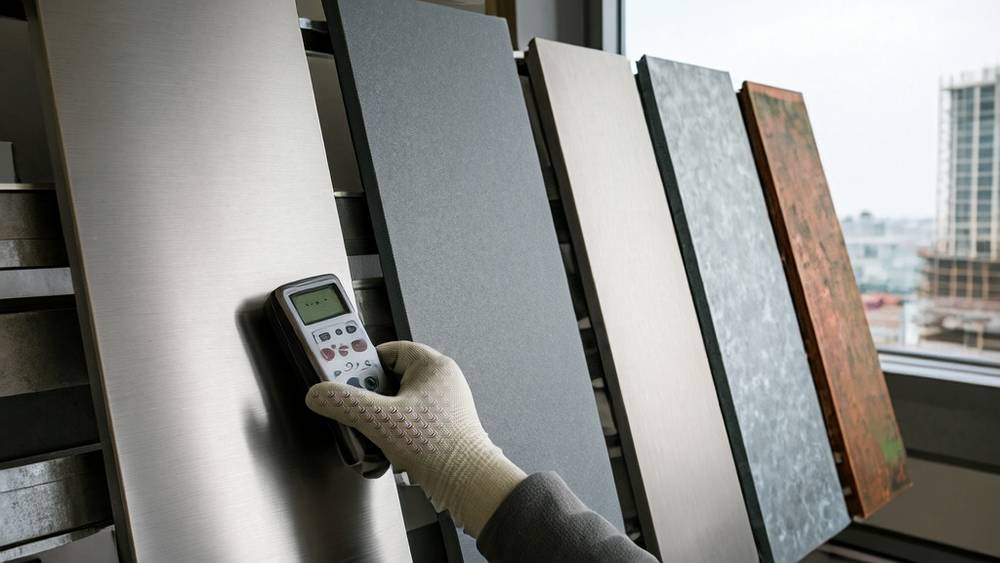
When a project specification calls for cladding metal on a 25-storey commercial tower in a coastal zone, the procurement manager faces a single question that cascades into every subsequent decision: which substrate metal actually delivers the promised 30-year service life without turning the maintenance budget into a recurring nightmare? Aluminium, steel, zinc, copper, and weathering steel each occupy a distinct position on the cost-durability spectrum, but comparing them by raw price per square metre alone has led more than one contractor into a painful rectification cycle. This article examines the five substrate metals commonly specified in architectural cladding metal systems through the lens of lifecycle corrosion performance, drawing on ASTM, ISO, and EN standards to give engineers and quantity surveyors a framework for material selection that goes deeper than the unit rate column in a bill of quantities.
Why Substrate Selection Precedes Every Other Cladding Decision
Too many project teams treat substrate metal choice as a secondary concern — something to be value-engineered after the architectural vision is locked. That sequence is backwards. The substrate dictates the forming limits, the fixing methodology, the thermal movement allowance, and ultimately whether the facade can meet its design life without intervention. A specification that starts with "aluminium or steel cladding panels" has already skipped the most consequential engineering decision on the table.
Three factors converge at the substrate level: electrochemical behaviour in the project's specific atmospheric environment, mechanical properties that determine panel flatness and spanning capability, and the compatibility between the base metal and its protective coating system. Get any one of these wrong, and the most expensive PVDF topcoat in the world will not prevent premature failure.
ISO 12944-2:2017 provides the starting framework by classifying atmospheric corrosivity from C1 (very low, heated interiors) to CX (extreme offshore). A C3 inland urban environment places entirely different demands on cladding metal substrates than a C5-M marine installation with chloride deposition rates exceeding 300 mg/m² per day. The substrate that works beautifully in one can fail catastrophically in the other.
The Five Contenders: Corrosion Mechanisms and Real-World Behaviour
Aluminium (Alloys 3003, 5005, 5052)
Solid aluminium sheet — typically 2.0 mm to 3.0 mm in architectural gauges — forms the backbone of the global curtain wall and rainscreen market. Its corrosion resistance comes from a self-healing aluminium oxide layer that forms spontaneously when the metal is exposed to oxygen. This passive film is stable in the pH range of roughly 4 to 9, which covers most atmospheric conditions encountered in construction.
The vulnerability window opens at the extremes. In highly alkaline environments — think concrete dust accumulation on soffit panels during construction, or proximity to wet cementitious materials — aluminium corrodes rapidly through alkaline attack. Similarly, coastal chloride exposure demands at minimum a chromate conversion coating beneath the organic topcoat, applied in strict accordance with AAMA 2605 requirements for architectural Class I finishes.
From a procurement standpoint, aluminium offers the most mature global supply chain. Mills in China, Europe, and the Middle East produce architectural-grade coil to consistent tolerances, and the PVDF and FEVE coating lines serving this market are well-established. Lead times for custom-perforated or formed aluminium cladding metal panels from a specialist supplier like Futeng® typically run 4-6 weeks for projects up to 5,000 m², making aluminium the most schedule-friendly option for fast-track commercial work.
| Property | Aluminium 3003/5005 | Galvanized Steel | Stainless Steel 316L | Zinc (EN 988) | Copper (C12200) |
|---|---|---|---|---|---|
| Density (kg/m³) | 2,730 | 7,850 | 8,000 | 7,200 | 8,940 |
| Typical Architectural Gauge (mm) | 2.0 – 3.0 | 0.7 – 1.2 | 0.8 – 1.5 | 0.7 – 1.0 | 0.6 – 1.0 |
| Weight per m² at Typical Gauge (kg) | ~7.4 (2.5 mm) | ~9.4 (1.2 mm) | ~11.8 (1.5 mm) | ~7.2 (1.0 mm) | ~8.9 (1.0 mm) |
| Corrosion Mechanism | Self-passivating oxide layer; vulnerable to alkalis and chlorides without protection | Sacrificial zinc layer; red rust once zinc depleted | Chromium oxide passive film; pitting risk in stagnant chloride | Patina formation; susceptible to acid rain and behind-panel condensation | Patina formation; galvanic corrosion risk with dissimilar metals |
| Suitable for C5-M Marine? | Yes, with chromate pretreatment and PVDF/FEVE topcoat | Not recommended; specify stainless | Yes, excellent marine performance | Conditional; requires ventilated cavity design | Yes, with careful detailing of fixings |
| Thermal Expansion (mm/m per 100°C ΔT) | 2.4 | 1.2 | 1.6 | 2.2 | 1.7 |
| Approximate Material Cost Ratio (per m², uncoated) | 1.0 (baseline) | 0.4 – 0.6 | 3.0 – 4.5 | 2.0 – 3.0 | 3.5 – 5.0 |
| Coating Compatibility | PVDF, FEVE, anodizing, powder | PVDF, powder, plastisol | Typically uncoated; electropolishing optional | Pre-weathered or clear-coated | Uncoated; patina is the finish |
| Design Life Expectancy (coastal, with correct spec) | 30+ years | 15 – 25 years | 50+ years | 40 – 60 years | 60 – 100+ years |
Galvanized and Galvalume Steel
Steel enters the cladding metal conversation on the strength of two arguments: low upfront material cost and high stiffness-to-thickness ratio. A 1.2 mm G90 galvanized steel panel spans further than a 3.0 mm aluminium panel of equivalent width, and the raw coil costs roughly half as much per square metre.
The trade-off is corrosion risk management. Hot-dip galvanizing provides a sacrificial zinc layer that corrodes preferentially, protecting the steel substrate. In C1-C2 inland environments with low humidity and no industrial pollutants, galvanized steel cladding with a quality PVDF topcoat can deliver 20–25 years of service. But introduce coastal chloride, industrial SO₂, or trapped moisture behind the panel, and the zinc layer depletes on a timeline that is difficult to predict with precision.
ASTM A653 governs the zinc coating weight designation. G90 (275 g/m² total both sides) is the minimum for architectural exposure; G60 (180 g/m²) belongs strictly in interior or sheltered applications. For projects within 5 km of a coastline, galvanized steel cladding metal should generally be eliminated from consideration unless the specifier can demonstrate through ISO 9223 atmospheric classification that the site falls below C3 corrosivity — a rare outcome in marine-adjacent construction.
Stainless Steel (304 and 316L)
Stainless steel occupies the premium tier of the substrate market, with 316L (2.5% molybdenum) being the default specification for any project with meaningful chloride exposure. The chromium oxide passive layer reforms instantly when scratched, giving stainless a self-healing capability that coated aluminium and steel cannot match at the substrate level.
The limiting factor is cost. Material prices for 316L coil in architectural gauges (0.8–1.5 mm) run three to four times higher than aluminium on a per-square-metre basis, and fabrication costs escalate because stainless demands higher press tonnage, wears tooling faster, and requires specialist welding procedures when complex 3D geometries are specified. For projects where the budget can absorb the premium, stainless delivers exceptional longevity — but the procurement team needs to verify that the substructure and fixings are equally corrosion-resistant. A 316L panel hung on galvanized steel rails with zinc-plated fasteners creates a galvanic cell that will corrode the cheaper components within the first decade.
Zinc (Titanium-Zinc per EN 988)
Architectural zinc, typically alloyed with small additions of titanium and copper to improve creep resistance, has earned a loyal following among European architects for its matte grey patina and its ability to be formed into complex standing-seam and cassette geometries. EN 988 defines the compositional and mechanical requirements for architectural rolled zinc products.
Zinc's Achilles heel is its sensitivity to certain environmental conditions. Behind-panel condensation in poorly ventilated cavities can cause reverse-side corrosion that progresses undetected until the panel perforates. Acid rain (pH below roughly 5.5) accelerates surface erosion, and direct contact with cedar, oak, or other acidic timbers will etch the metal. A ventilated rainscreen cavity of at least 38 mm, with continuous airflow from soffit to head, is non-negotiable for zinc cladding metal installations. When detailed correctly, zinc facades in northern European climates have demonstrated 40–60 year lifespans with minimal intervention.
Copper (C12200 Phosphorus-Deoxidized)
Copper cladding is specified less for its mechanical properties and more for the evolving aesthetic of its patina — from bright penny-orange through dark brown to the distinctive green verdigris that characterises historic institutional buildings. C12200, phosphorus-deoxidized copper with high residual phosphorus content, is the standard architectural grade.
The procurement complexity with copper arises from its position on the galvanic series. Copper is cathodic relative to steel, aluminium, and zinc, meaning it will accelerate corrosion of any less noble metal it contacts in the presence of an electrolyte. Every fixing, bracket, and substructure component in a copper-clad building must either be copper itself, stainless steel (preferably 316), or isolated with non-conductive washers and sleeves. This detail alone adds 15–25% to the installed cost relative to the material price, a factor that estimators unfamiliar with copper work frequently miss.
Coating Compatibility: The Substrate-Coating System Is One Engineered Unit
No cladding metal substrate selection is complete without mapping it to the coating technology that will protect it. The substrate and coating form a single engineered system; treating them as independent line items in a specification produces gaps that corrosion exploits.
For aluminium substrates, the dominant architectural coating technologies are 70% PVDF (polyvinylidene fluoride) resin-based systems meeting AAMA 2605, and FEVE (fluoroethylene vinyl ether) resin-based systems offering similar durability with a distinct gloss and colour palette. Both require a chromate or chromium-free conversion coating applied directly to the aluminium substrate before the primer layer. Skipping this pretreatment step — or substituting a generic wash primer — reduces the coating's adhesion and corrosion resistance by an order of magnitude, as demonstrated by decades of accelerated weathering data from the American Architectural Manufacturers Association.
On galvanized steel, the coating stack is more complex: a zinc-phosphate pretreatment on the metallic zinc layer, followed by a corrosion-inhibiting epoxy primer, then the PVDF colour coat and clear coat. The total dry film thickness and the cure conditions must be validated as a complete system because the zinc surface chemistry differs fundamentally from aluminium. ASTM D2244 and ASTM D4214 provide the colour retention and film integrity test protocols that specifiers should reference.
ASTM International notes that architectural coatings on metal substrates are tested for colour change, gloss retention, chalking, and adhesion after accelerated weathering — but these accelerated tests only correlate to real-world performance when the substrate and pretreatment are matched to the coating chemistry. A PVDF topcoat that passes 4,000 hours of QUV-B on chromated aluminium may fail within 1,500 hours on poorly pretreated galvanized steel.
Five Decision Filters for Substrate Selection
Rather than starting with a preferred metal and looking for justification, the procurement and engineering team should run each candidate substrate through these five sequential filters:
Filter 1: Atmospheric Corrosivity Classification
Determine the project's ISO 9223 corrosivity category based on distance from coast, prevailing wind direction, local industrial emissions, and rainfall patterns. A site in Dubai Industrial City (C4-C5) makes fundamentally different substrate demands than a site in suburban Denver (C2). The classification is not guesswork — it can be measured using standardised corrosion coupons exposed for the first year of the project, though in practice most teams rely on published corrosivity maps and local precedent.
Filter 2: Design Life Requirement
A 15-year design life for a speculative industrial shed points toward galvanized steel with a quality coating. A 60-year design life for an institutional building points toward aluminium, zinc, or copper. The substrate cost difference, amortised over the design life, often reverses the apparent economic ranking from Filter 1.
Filter 3: Forming Complexity
If the architectural design calls for deep-drawn 3D panels, perforated screens with high open-area ratios, or tight-radius curved elements, aluminium's formability and lower tooling wear make it the practical choice. Stainless steel can be formed to similar geometries but at significantly higher tooling cost. Zinc's low creep resistance limits its use to simpler folded geometries unless the gauge is increased.
Filter 4: Substructure and Fixing Compatibility
Map every metal-to-metal contact in the assembly. The fixing screw that touches the panel, the rivet that joins panel to bracket, the bracket that bolts to the substructure — each interface is a potential galvanic couple. Aluminium panels on aluminium substructures with stainless steel fasteners represent the most electrochemically benign combination for most environments. Mixed-metal assemblies require isolation detailing that adds cost and inspection burden.
Filter 5: Supply Chain Lead Time and Fabricator Capability
Not all substrates are available in all regions on the same timeline. Architectural-grade aluminium coil in custom colours can be sourced from multiple mills with 4–8 week lead times. Titanium-zinc to EN 988 is produced by a limited number of European mills, and architectural copper availability fluctuates with global commodity demand. Before locking the substrate specification, the procurement team should verify that at least two qualified fabricators can supply the required volume within the construction schedule.
When the Cost Equation Flips: Lifecycle vs. Installed Cost
A project in Jeddah recently illustrates the trap of substrate selection by installed cost alone. The original specification called for PVDF-coated aluminium cladding metal panels on a 30-storey mixed-use tower 800 metres from the Red Sea. During value engineering, the contractor proposed substituting coated galvanized steel at a reported saving of 35% on the cladding package. Within seven years, chloride-induced corrosion at cut edges and fixing penetrations required a full reclad — at roughly three times the original installed cost when access scaffolding, business interruption, and disposal of the failed panels were factored in.
This is not an argument that steel never works. It is an argument that the substrate decision must be made against the project's specific environmental classification, not against a generic cost-per-square-metre benchmark that ignores corrosion risk. The aluminium panels that would have cost more on Day 1 would still be performing at Year 25.
Procurement Checklist for Substrate Specification
Before releasing the cladding package for tender, the design team and procurement manager should verify that these items are resolved in the specification:
- ISO 9223 corrosivity category for the specific site, documented and agreed by all stakeholders
- Design life requirement stated explicitly (not "durable" — a number of years to first major maintenance)
- Substrate alloy or grade called out by ASTM, EN, or equivalent standard, not by generic name
- Coating system specified as a complete substrate-to-topcoat stack with minimum dry film thicknesses at each layer
- Pretreatment chemistry matched to the substrate (chromate vs. chrome-free for aluminium; zinc phosphate for galvanized steel)
- Fixing and substructure materials mapped against the panel substrate for galvanic compatibility
- Fabricator qualifications required — not all coating applicators are approved for all substrate types
- Warranty scope aligned with the substrate-coating system, not generic
The ISO 12944 series on corrosion protection of steel structures and the AAMA 2605 standard for high-performance organic coatings on aluminium provide the technical benchmarks against which any substrate-coating combination should be validated. When in doubt about a particular substrate's suitability for a given environment, independent laboratory corrosion testing per ASTM B117 (neutral salt spray) or cyclic corrosion testing per ISO 11997-1 can provide project-specific data, though these tests require 1,000–4,000 hours and must be commissioned early in the design phase.
Selecting the right substrate for architectural cladding metal is not a matter of finding the cheapest material that meets the minimum specification. It is a matter of matching the metal's corrosion behaviour, mechanical properties, and coating compatibility to the environment it will face for decades. Aluminium, with its balance of corrosion resistance, formability, coating compatibility, and supply chain maturity, remains the default choice for the majority of commercial and institutional projects worldwide — but the default holds only when the specification team has done the environmental homework to confirm it. For projects where the budget, aesthetic, or design life demands point toward steel, zinc, or copper, the same rigour applies: classify the environment, map the galvanic couples, specify the complete coating stack, and verify the supply chain before the first panel is fabricated.