5754 Marine Grade Aluminum Alloy Capping vs 3003 for Parapet Wall Protection
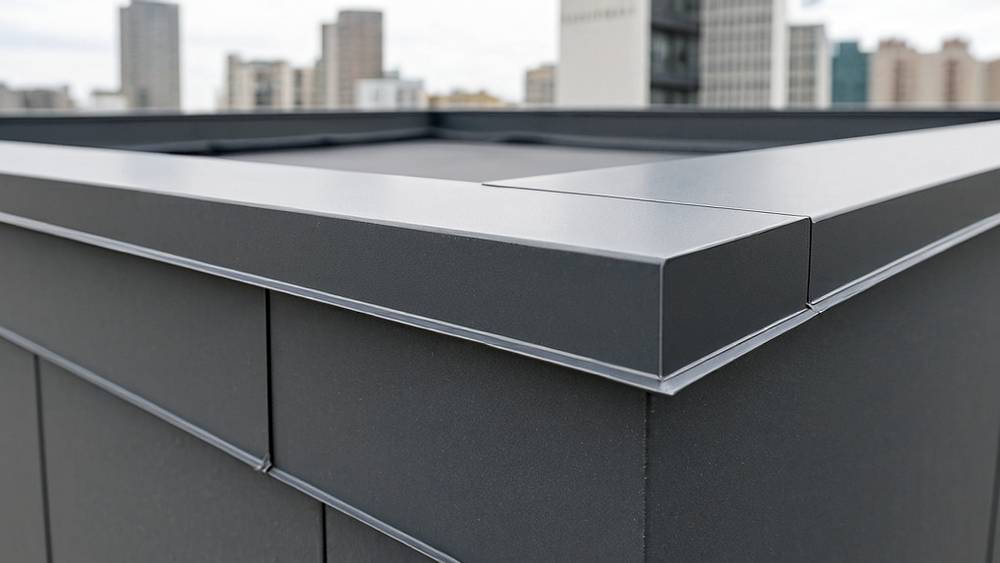
When a parapet wall on a flat roof starts spalling after three winters or a roofline bargeboard shows signs of rot within five years of installation, the post-mortem rarely points to a single cause. More often, the failure traces back to a material decision made months earlier during the specification phase: the choice between stone, timber, GRP, or pressed metal for the capping detail. Among these options, aluminum alloy capping has gained significant traction across commercial and multi-residential projects in the UK, Ireland, and coastal Europe. Yet procurement teams routinely underestimate how much the alloy grade itself dictates long-term performance, particularly when marine-grade 5754 aluminium is specified instead of standard 3003. This article examines that distinction in detail, providing the metallurgical reasoning, cost implications, and installation parameters that general contractors and facade subcontractors need before committing to a capping specification.
Why Alloy Grade Matters More Than Profile Geometry
Most technical discussions around capping products focus on profile shape, drip details, and joint expansion. These are valid concerns, but they are downstream of a more fundamental question: which aluminium alloy is being formed into that profile in the first place? The two grades most commonly encountered in architectural capping are 3003 aluminium and 5754 aluminium. They are not interchangeable, and the difference becomes acutely visible after the first decade of exposure.
Alloy 3003 is a general-purpose manganese-alloyed grade with moderate strength and good workability. It is widely available, cost-effective, and adequate for interior trim or sheltered soffit applications. But when it is bent into parapet wall cappings or roof edge copings—components that sit fully exposed to driven rain, freeze-thaw cycling, and salt-laden air—its limitations emerge. The copper content in 3003 (typically 0.05–0.20%) makes it susceptible to intergranular corrosion in chloride-rich environments. This is not a hypothetical risk. On a waterfront apartment block in Portsmouth, 3003-series cappings installed in 2012 showed pitting corrosion along the inner return leg within seven years, traced to salt spray accumulating in the cavity behind the capping.
Marine-grade 5754 aluminium (AlMg3) eliminates this vulnerability by substituting magnesium for copper. With a nominal magnesium content of 2.6–3.6%, 5754 achieves significantly higher resistance to chloride-induced pitting and stress corrosion cracking. The alloy is specifically listed in BS EN 485-2 for marine and industrial atmospheric applications. Its tensile strength (190–240 MPa in H22 temper) also exceeds that of 3003 (130–170 MPa), meaning a 5754 capping can span wider between fixings without distorting under wind uplift—a detail that becomes critical on exposed rooftop edges above 18 metres.
Specifiers who rely solely on a "powder-coated aluminium capping" description without calling out the alloy grade are effectively delegating a 30-year durability decision to the lowest bidder in the supply chain.
Marine-Grade 5754 and the Coastal Corrosion Reality
The term "marine-grade" is often thrown around loosely in architectural metalwork, but within the aluminium industry it carries a specific meaning tied to the 5000-series alloys. For aluminum alloy capping installed within 5 km of a coastline—or any location where prevailing onshore winds carry salt aerosol—5754 is the minimum defensible specification. Some projects in the Middle East and Southeast Asia push this further to 5083 (AlMg4.5Mn) for direct waterfront exposure, but for European and North American conditions, 5754 represents the cost-performance sweet spot.
The corrosion mechanism that matters here is not general surface oxidation. Aluminium naturally forms a protective oxide layer in air. The problem with chloride ions is that they break down this passive layer locally, creating small anodic sites where metal loss concentrates. In 3003, the copper-rich intermetallic particles act as cathodic sites that accelerate this localised attack. In 5754, the magnesium-rich matrix means the intermetallic phases are less noble relative to the surrounding aluminium, so galvanic driving forces are greatly reduced. The practical result: a 5754 capping on a Brighton seafront building will show cosmetic weathering over 20 years but is unlikely to suffer perforation or structural section loss, whereas a 3003 equivalent may require replacement within a decade.
This is not merely theoretical. Independent testing to ISO 9227 (neutral salt spray) and ASTM G85 (cyclic acidified salt fog) consistently shows 5754 outperforming 3003 by a factor of 3–5 times in terms of time-to-pitting under accelerated corrosion conditions. For a building envelope component with a design service life of 40–60 years, that difference translates directly into whether the capping survives the building's first major refurbishment cycle or becomes a line item on it.
Fabrication Constraints: Bending 5754 Without Cracking
The higher strength that makes 5754 attractive for durability also makes it less forgiving during fabrication. A fabricator accustomed to 3003 may encounter edge cracking when bending 5754 to tight radii, particularly if the bend line runs parallel to the rolling direction. This is not a material defect; it is a processing parameter that must be accounted for in the shop drawing stage.
The minimum bend radius for 5754-H22 (the most common temper for architectural capping) is approximately 1.5t to 2t for a 90° bend perpendicular to the grain direction, and 2.5t to 3t parallel to grain, where t is the material thickness. For a 2.0 mm thick capping, that means a 3–4 mm inside radius when bending across the grain. If the capping profile includes a sharp 90° return leg with a tight internal corner, the tooling must accommodate this radius. Press brake operators who attempt a knife-edge bend on 5754 will find the outer fibres fracturing, especially at the sheet edges.
There is a practical tension here between aesthetic intent and metallurgical reality. Architects often request crisp, sharp-cornered capping profiles to match the rectilinear language of contemporary facades. Achieving that with 5754 requires either specifying a slightly larger internal radius (and accepting a softer visual corner) or moving to an O-temper (fully annealed) material and then accepting lower strength. A third path, used by specialist suppliers including Futeng® for bespoke projects, is to bend 5754-H22 with a 2.5 mm internal radius and then apply a heavier powder coat build (80–100 microns) that visually softens the radius slightly while maintaining the full strength of the H22 temper.
Coating System Selection for 5754 Alloy Substrates
Specifying the correct alloy is necessary but not sufficient. The coating system applied to aluminum alloy capping must be compatible with both the substrate chemistry and the exposure environment. For 5754, the magnesium content at the surface requires careful pretreatment to ensure coating adhesion over decades.
The industry-standard pretreatment for architectural aluminium is a chrome-based or chrome-free conversion coating applied immediately after degreasing and etching. For 5000-series alloys, the etching stage is particularly important because magnesium tends to migrate to the surface during hot rolling, creating a magnesium-rich oxide layer that can reduce coating adhesion if not adequately removed. A minimum etch depth of 1.0 g/m² (measured by weight loss) is recommended before conversion coating, per Qualicoat specifications for architectural powder coating.
For coastal and industrial environments, the coating choice typically falls between PVDF (polyvinylidene fluoride) liquid coating and super-durable polyester powder. The comparison below provides a practical reference for specifiers weighing these options:
| Parameter | PVDF (70% resin) | Super-Durable Polyester Powder | FEVE (Alternative) |
|---|---|---|---|
| Typical DFT (microns) | 25–35 | 60–80 | 30–40 |
| Colour retention (10yr Florida) | ΔE ≤ 5 | ΔE ≤ 5 (greys/browns may exceed) | ΔE ≤ 4 |
| Chalk resistance (AAMA 2605) | Rating 8+ at 10 years | Rating 6–8 at 10 years | Rating 8+ at 10 years |
| Edge coverage on bends | Moderate (spray application) | Good (electrostatic wrap) | Moderate |
| Cost index (relative) | 1.0 (baseline) | 0.6–0.75 | 1.1–1.3 |
| Best suited environment | Coastal, high-UV, polluted industrial | Urban, inland, moderate exposure | Severe coastal, chemical plant |
| Repairability on site | Difficult (requires specialist) | Moderate (touch-up kits available) | Difficult |
The table above highlights a procurement reality that is often overlooked: the coating cost differential between PVDF and super-durable powder on a capping project is typically 30–40%, but the failure cost of under-specifying the coating in a marine environment can be an order of magnitude higher when scaffolding, access, and business disruption are factored into a premature replacement. For aluminum alloy capping on buildings within 3 km of salt water, the conservative position is PVDF or FEVE over a properly etched and conversion-coated 5754 substrate.
Thermal Movement and the Hidden Cost of Getting Fixing Centres Wrong
Aluminium expands at approximately 0.024 mm per metre per degree Celsius. For a 3-metre length of capping subjected to a 60°C temperature swing (from -10°C on a winter night to 50°C under summer sun on a dark-coloured surface), the linear movement is roughly 4.3 mm. That is not a large number in absolute terms, but it is enough to cause buckling, fastener pull-through, or joint sealant failure if the fixing design does not accommodate it.
The standard approach for aluminum alloy capping is to use slotted fixing holes at one end of each length, allowing the capping to slide relative to the substrate. But what often goes wrong on site is the interface between the capping and the continuous support—typically a treated timber batten or an aluminium sub-frame. If the capping is fixed tightly to a timber batten at every clip position, differential expansion between the aluminium and the timber (which moves with moisture content rather than temperature) can create a complex stress pattern that is hard to predict during design.
A more robust detail uses an aluminium Z-section sub-frame with the capping clipped rather than screwed, allowing free thermal movement along the entire length. This approach adds approximately £8–12 per linear metre to the supply cost compared to direct-fix timber battens, but it eliminates the risk of oil-canning and joint sealant tears that plague direct-fix installations after the first seasonal cycle. For projects with capping runs exceeding 6 metres without an expansion joint, a clipped aluminium sub-frame is strongly recommended regardless of the alloy grade selected.
Supply Chain Considerations: Sourcing 5754 in Commercial Quantities
One practical hurdle that procurement managers encounter when specifying 5754 for capping is availability. While 3003 coil and sheet are stocked in depth by most aluminium service centres, 5754 is less commonly held in the thinner gauges (1.5–2.5 mm) used for architectural capping. Lead times for 5754 sheet from European mills (typically Elval, AMAG, or Constellium) can run 8–14 weeks depending on gauge and temper, compared to 2–4 weeks for 3003.
This lead time differential has real project-programming implications. If the capping package is tendered late in the construction sequence—as it often is, since capping installation follows roofing, cladding, and parapet construction—a 10-week material lead time can push the capping installation into unfavourable weather or delay the overall handover. Forward-ordering 5754 sheet at the same time as the main facade package, even if the capping details are not fully resolved, is a tactic that experienced project managers use to avoid this bottleneck.
For projects in the Middle East and Asia-Pacific regions, additional supply chain friction arises from import logistics and local certification requirements. Some markets require in-country testing of the aluminium alloy composition to verify conformity with the specified grade before material can be released from customs. This can add 2–3 weeks to the timeline. Specifiers working on international projects should confirm early whether the capping supplier holds mill test certificates (MTCs) to ISO 10474 Type 3.1 or 3.2 for the specific heat of 5754 being supplied, as this documentation is often required to satisfy local building control or engineer-of-record review.
Installation Sequence and the Parapet Waterproofing Interface
The most consequential detail in any aluminum alloy capping installation is not the capping itself but its relationship with the waterproofing membrane beneath. On flat-roof parapet walls, the roofing membrane typically runs up the inner face of the parapet and is dressed over the top before the capping is installed. If the capping's inner return leg is too short, or if the membrane termination is too low, wind-driven rain can track behind the capping and into the parapet core.
The correct sequence, validated across hundreds of projects, is:
- Parapet wall core constructed and levelled to correct height (allow for capping fall of 1:40 minimum toward the roof side)
- Roofing membrane dressed up inner face and over parapet top, terminating minimum 50 mm down the outer face
- Continuous treated plywood or aluminium support batten fixed to parapet top, set to correct fall
- Capping inner return leg installed first, engaging with membrane termination
- Capping outer face fixed with slotted connections to allow thermal movement
- Joint sealant applied between capping lengths, tooled to concave profile to accommodate movement
A common site error is installing the capping before the roofing membrane is fully dressed and terminated. This forces the roofer to work behind an already-fixed capping, inevitably resulting in compromised membrane adhesion and lap joints. The general contractor's programme should sequence the roofing membrane completion at least 48 hours ahead of capping installation, allowing time for the membrane to be inspected and any defects rectified before it is covered.
Case in Point: A 22-Storey Residential Tower in Manchester
To ground these technical considerations in a real project context, consider a 22-storey residential tower completed in Manchester in 2021. The original specification called for "powder-coated aluminium parapet capping, colour to match window frames." The contractor's supply chain proposed 3003-H14 in 2.0 mm gauge with a standard polyester powder coat, citing a 15% cost saving versus the architect's preferred 5754 with PVDF.
During the technical submittal review, the facade consultant rejected the 3003 proposal based on two factors: the building's exposed rooftop (effective height above 60 metres, with full wind exposure from the Pennines to the east) and the dark grey colour specified (RAL 7016), which would drive surface temperatures above 70°C in summer. The consultant required 5754-H22 at 2.5 mm gauge with a 70% PVDF coating, referencing the thermal stability of PVDF under sustained high-temperature conditions and the superior corrosion resistance of the 5754 substrate in Manchester's industrial-urban atmosphere.
The cost impact was approximately £18,000 across 620 linear metres of capping—a 22% uplift. But set against a total facade package of £4.2 million and a building designed for a 60-year service life, the additional investment represented a 0.4% increment for a component that protects the entire parapet waterproofing assembly. The building has now passed three winters with no reported capping issues, and the dark grey PVDF finish shows no measurable colour shift.
This example illustrates the core message for specifiers and procurement teams: the alloy grade in aluminum alloy capping is not a commodity detail to be value-engineered away. It is a primary determinant of whether the capping performs its protective function for the full design life of the building, or becomes a maintenance liability long before the first planned refurbishment cycle.
Practical Specification Checklist for Tender Documents
For architects and facade engineers preparing capping specifications, the following checklist distils the key points discussed in this article into actionable tender language. Each item should be explicitly addressed in the performance specification or prescriptive specification for the capping package:
- Alloy grade: 5754-H22 to BS EN 485-2 for all external capping; 3003-H14 acceptable only for sheltered soffit or internal applications
- Material thickness: Minimum 2.0 mm for capping widths up to 300 mm; minimum 2.5 mm for widths 300–600 mm
- Mill certification: ISO 10474 Type 3.1 MTCs for each batch, with chemical composition within BS EN 573-3 limits for 5754
- Pretreatment: Chrome-free conversion coating to Qualicoat specifications, with minimum 1.0 g/m² etch before conversion
- Coating: PVDF (70% resin) to AAMA 2605 or FEVE to equivalent standard for coastal/industrial locations; super-durable polyester powder to Qualicoat Class 2 for inland urban locations
- Thermal movement: Slotted fixings at maximum 600 mm centres; expansion joints at maximum 6-metre intervals for dark colours
- Fall: Minimum 1:40 cross-fall toward roof side; capping to project minimum 40 mm beyond outer face of parapet wall
- Warranty: Coating warranty of 25 years for colour retention and 30 years for film integrity from coating applicator
Including these specific requirements in the tender documents removes ambiguity and prevents the value-engineering cycle from eroding the durability of a component that, while modest in cost relative to the overall facade package, carries a disproportionately high consequence of failure. For project teams seeking a single-source supplier capable of providing 5754 aluminum alloy capping with in-house PVDF coating and full mill traceability, established manufacturers with dedicated architectural metalwork divisions offer the most reliable route to specification compliance.