Profil Aluminium Curtain Wall Fails Over 0.06 mm Tolerance Gaps
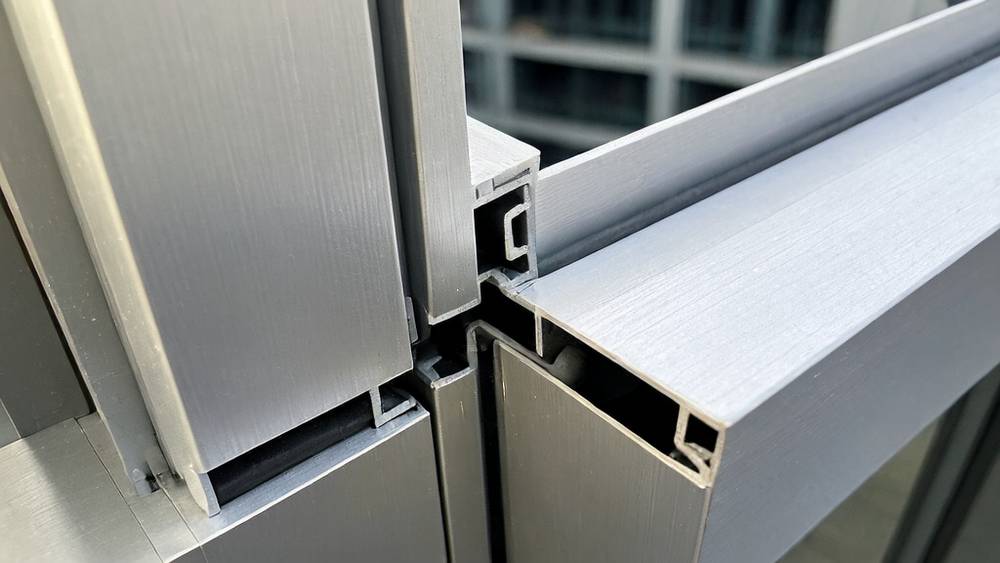
When a curtain wall contractor in Dubai called us at 2 a.m. local time, the problem was not about price or lead time. It was about profile geometry. Their stick-built system had arrived on site with 6063-T6 mullions extruded to EN 755-9 tolerances, yet the vertical mullions and horizontal transoms refused to align cleanly across a 28-storey elevation. The root cause? A 0.4 mm deviation in the tongue-and-groove interface that compounded across 84 vertical joints into a 34 mm cumulative misalignment. This is the reality of specifying profil aluminium curtain wall systems: alloy choice and tolerance bands are not abstract datasheet numbers. They directly control whether your installation crew finishes a floor per day or spends three days shimming one elevation.
Why EN 755-9 and ASTM B221 Are Not Interchangeable
Most procurement specifications for profil aluminium curtain wall will cite either EN 755-9 or ASTM B221 as the governing dimensional standard. Both cover extruded aluminium profiles, but the way each standard defines allowable deviation on a 150 mm deep mullion differs enough to cause real assembly problems.
EN 755-9 classifies extrusions by wall thickness and circumscribing circle diameter, then assigns tolerance grades. A typical 150 mm x 65 mm mullion with a 3 mm wall falls into a dimensional tolerance band of ±0.36 mm on the web depth under EN 755-9 precision grade. ASTM B221, by contrast, uses a different grouping logic based on the profile's cross-sectional geometry and applies ±0.30 mm on the same dimension for a comparable alloy-temper combination. That 0.06 mm difference sounds trivial until you multiply it by the number of stacked elements in a unitized panel assembly where four profiles meet at each transom-to-mullion junction.
Futeng® aluminium extrusion engineers have documented cases where mixing EN-sourced and ASTM-sourced profiles on the same project led to gasket compression variances of up to 18%, compromising the air infiltration performance that the system had passed during AAMA 501.1 dynamic testing. Contractors who assume "both standards are fine" without checking the specific tolerance grade invoked in the purchase order are gambling with their water penetration warranties.
ASTM B221 and EN 755-9 are both legitimate standards, but they are not translationally equivalent. The project specification must name one and stick to it across all profile sections, including accessories like pressure plates and thermal break pockets.
6060 vs 6063 vs 6005A: The Alloy Decision That Shapes Your Curtain Wall Budget
Extruders offering profil aluminium curtain wall typically default to 6063-T6. It balances extrudability, surface finish quality, and mechanical strength. But the alloy selection is not a one-size decision. Three alloys dominate the global curtain wall profile market, and each shifts the cost-performance equation differently.
| Alloy & Temper | Tensile Strength (MPa) | Yield Strength (MPa) | Relative Extrusion Cost | Typical Curtain Wall Application |
|---|---|---|---|---|
| 6060-T66 | 215 | 160 | Low | Low-rise stick-built, interior sightlines |
| 6063-T6 | 240 | 190 | Medium | Mid-to-high-rise mullions and transoms |
| 6005A-T6 | 285 | 250 | High (8-12% premium) | Wide-span lobby facades, blast-rated walls |
The jump from 6063-T6 to 6005A-T6 buys approximately 31% more yield strength. This matters when a structural engineer is trying to avoid increasing mullion depth on a 4.2-metre floor-to-floor span with 2.8 kPa wind load. A 6063-T6 mullion might require a 180 mm depth, while a 6005A-T6 profile could achieve the same moment of inertia at 150 mm, preserving sightlines and reducing aluminium weight per linear metre by roughly 12%. The material cost premium of 6005A-T6 often washes out through reduced tonnage and shallower thermal break depths.
The catch: 6005A-T6 is harder to extrude. Die wear accelerates, surface finish consistency requires tighter process control, and not every extrusion plant runs it comfortably. When sourcing profil aluminium curtain wall in 6005A-T6, confirm the extruder's actual production history with this alloy, not just their capability statement.
Thermal Break Geometry: The Polyamide Bridge That Makes or Breaks U-values
An aluminium mullion without a thermal break is a thermal bridge with a conductivity of approximately 160 W/(m·K). Adding a 24 mm to 34 mm glass-fibre-reinforced polyamide strip between the interior and exterior aluminium halves drops the profile Uf value from roughly 6.8 W/(m²·K) to between 1.8 and 3.2 W/(m²·K), depending on strip width and geometry. This is not a marginal improvement; it is the difference between passing and failing ASHRAE 90.1 or EN ISO 12631 compliance for the overall facade thermal transmittance.
Three thermal break configurations dominate the profil aluminium curtain wall market:
- Single straight strip (24 mm): Lowest cost, adequate for temperate climates. Uf around 2.8–3.2 W/(m²·K). Common in stick-built systems across Southeast Asia and the Middle East.
- Multi-chamber polyamide (30–34 mm): Internal air cavities within the strip reduce convective heat transfer. Uf drops to 2.0–2.5 W/(m²·K). Standard for European Passive House-adjacent projects.
- Polyurethane pour-and-debridge: A liquid PU is poured into a channel, cured, then the aluminium bridge is sawn out. Uf can reach 1.6–1.9 W/(m²·K). Requires specialized production lines; fewer suppliers globally can execute this at scale.
The thermal break is also a structural shear connection. Under wind load, the polyamide strip carries shear between the interior and exterior aluminium halves. EN 14024 governs the testing of these thermal barrier profiles, and the shear strength requirement is typically ≥24 N/mm of strip length at 80°C after accelerated aging. A profile that passes U-value calculations but fails EN 14024 shear testing at elevated temperatures will delaminate in service, typically at the spandrel zones where solar gain pushes cavity temperatures above 70°C.
What Actually Happens When Tolerances Stack Across a Unitized Panel
Unitized curtain wall systems are assembled in a factory, glazed, sealed, and shipped to site as complete panels measuring 1.5 m wide by 3.6 m tall or larger. Each panel contains four perimeter profiles, two intermediate transoms, and corner connectors. The tolerance stack is not additive in a simple linear sense; it compounds at each interlock interface.
Consider a 12-panel horizontal run at 1,500 mm width per panel. If each panel's width tolerance is ±0.5 mm under the extruder's declared capability (which is optimistic for many production runs), the theoretical cumulative error across 12 panels is ±6 mm. In practice, the interlocking male-female joint between adjacent panels can absorb about 2–3 mm of misalignment before the EPDM gasket compression becomes uneven. Beyond that threshold, you get visible joint width variation, compromised acoustic performance, and potential water ingress at the lower-performing joints.
The realistic solution is not to demand ±0.1 mm tolerances on every profil aluminium curtain wall dimension—that pricing would kill any project budget. Instead, specify critical-to-function dimensions on the interlock interfaces only, while allowing commercial tolerances on non-critical surfaces. A well-written profile drawing identifies 4–6 critical dimensions per section and assigns a tighter tolerance band (typically EN 755-9 precision grade) to those, with the remainder at standard grade. This approach has been validated across multiple Futeng® supplied high-rise projects where panel fit-up rates exceeded 98% on first installation.
Powder Coating vs PVDF on Curtain Wall Profiles: The 10-Year Cost Reality
Architectural specifications for profil aluminium curtain wall frequently default to PVDF (polyvinylidene fluoride) liquid coating under AAMA 2605 because "it lasts longer." The full picture is more nuanced and directly affects a project's 10-year maintenance budget.
| Parameter | Superdurable Powder (Qualicoat Class 2 / AAMA 2604) | PVDF 70% (AAMA 2605) |
|---|---|---|
| Film thickness | 60–80 µm | 30–40 µm (3-coat) |
| Colour retention (10 years, Florida) | ΔE ≤ 5 (Qualicoat Class 2) | ΔE ≤ 5 (AAMA 2605) |
| Gloss retention (10 years) | ≥50% | ≥50% |
| Chalking resistance | Rating 6–8 (ASTM D4214) | Rating 8–10 (ASTM D4214) |
| Relative cost per m² of profile surface | 100% (baseline) | 130–160% |
| Repairability on site | Difficult; full strip and re-coat | Touch-up possible with air-dry fluoropolymer |
For projects located more than 3 km from a marine coastline or in industrial zones with moderate SO₂ exposure, superdurable polyester powder under Qualicoat Class 2 delivers 15–20 years of service before the first recolouring cycle. PVDF's edge emerges in two scenarios: coastal environments within 800 metres of breaking surf (where salt spray accelerates polyester chalking) and projects specifying bright metallic or mica finishes that powder systems struggle to match consistently across multiple production batches.
The decision should also factor in the profile geometry. Deep mullion channels with recessed glazing pockets are challenging for electrostatic powder application; Faraday cage effects can leave thin spots at internal corners. PVDF liquid coating, applied via spray, reaches these recesses more reliably. If your profil aluminium curtain wall design includes complex multi-chamber profiles, discuss coating access with the applicator before locking in the finish specification.
Wind Load Deflection and the L/175 vs L/200 Debate
Curtain wall profile deflection under wind load is governed by two limits: structural strength (typically L/60 for aluminium) and serviceability (typically L/175 or L/200). The serviceability limit controls glass edge stress and prevents visible sag in horizontal transoms. The difference between L/175 and L/200 on a 3,800 mm mullion span is 21.7 mm vs 19.0 mm—a 2.7 mm difference that can be the margin between glass edge stress staying within ASTM E1300 limits or exceeding them.
Most international projects reference one of three standards for deflection limits:
- BS EN 13830: Typically L/200 or 15 mm, whichever is smaller, for mullion frontal deflection under wind load.
- AAMA TIR-A11: Recommends L/175 for metal framing members supporting glass, with tighter limits for stone or precast attachments.
- AS 4284 (Australia): L/250 for mullion deflection, which is notably stricter and often drives deeper profile sections.
The practical consequence: a profil aluminium curtain wall system designed for a London project at L/200 may need profile redesign for a Sydney project at L/250, even if the wind loads are similar. The moment of inertia requirement scales almost linearly with the reciprocal of the deflection limit. Moving from L/200 to L/250 increases the required I-value by approximately 25%. This is not a trivial extrusion die modification; it may push the profile into a different press size and alloy grade.
Sourcing Profiles Across Continents: What Procurement Managers Get Wrong
Global sourcing of profil aluminium curtain wall introduces risks that go beyond price and delivery. The three most common procurement mistakes we observe are:
- Assuming alloy equivalence across national standards: Chinese GB/T 5237 6063-T6 is chemically similar to EN AW-6063 T6, but the permitted Mg and Si ranges differ slightly. Mg content in GB/T 5237 allows 0.45–0.9%, while EN 573-3 specifies 0.45–0.9% as well—so the ranges overlap but individual heats can sit at different ends of the spectrum, affecting extrudability and anodizing response.
- Ignoring the die correction history: An extrusion die is a consumable tool. After 3–4 nitriding cycles, dimensional drift sets in. A profile that measured within tolerance on the first production run from a new die may drift 0.15–0.25 mm by the fifth run. Serious extruders track die life and retire dies before drift breaches the specified tolerance band. Price-driven procurement that sources from multiple extruders mid-project often mixes profiles from new dies and near-end-of-life dies, creating the cumulative misalignment problems described earlier.
- Under-specifying the thermal break shear test temperature: Many procurement specs reference EN 14024 shear testing at 24°C only. The more demanding test at 80°C (representing a dark-coloured spandrel panel in summer sun) reveals whether the polyamide strip's glass-fibre reinforcement is adequate. Profiles that pass at room temperature can fail catastrophically at 80°C if the polyamide formulation is cost-reduced with lower glass-fibre content.
Anodized Curtain Wall Profiles: When the Surface Is the Structure
Anodizing a profil aluminium curtain wall is not simply a colour choice. The anodic layer (typically 15–25 µm for architectural Class I under BS 3987 or AA-M12C22A31) is aluminium oxide grown from the base metal itself. This means the alloy's metallurgical quality becomes visible. Extrusion die lines, weld seams from porthole dies, and subsurface intermetallic particles that are invisible under powder coating become aesthetic defects on an anodized surface.
For anodized curtain wall profiles, the extruder must control:
- Billet homogenization temperature and soak time (to minimize Mg₂Si precipitate size)
- Extrusion speed and exit temperature (faster/hotter increases die line severity)
- Quench uniformity (uneven cooling creates differential anodizing response across the profile cross-section)
Projects specifying anodized finish on profil aluminium curtain wall should budget for a 15–25% yield loss versus powder coating, accounting for anodizing rejection at the surface treatment stage. This is not an extruder quality problem; it is inherent to the process when the specified aesthetic standard is Class I uniform satin with no visible flow lines. Contractors unfamiliar with this reality often blame the supplier for what is a predictable characteristic of anodized architectural aluminium.
The anodizing specification must also clarify whether the profile will be anodized before or after fabrication. Cutting, machining, and welding destroy the anodic layer at the worked zones. Post-fabrication anodizing is preferred but requires careful racking design to ensure uniform current density across complex curtain wall profiles with deep glazing pockets. A poorly racked mullion will show colour variation from end to end—visible as "clouding" on the installed facade.
Making the Specification Work: Practical Steps for the Project Team
A successful profil aluminium curtain wall specification is one that the extruder can actually produce and the installer can actually erect. That sounds obvious, but the gap between specification and execution is where most disputes arise. Based on project experience across 30+ countries, these are the specification elements that most reliably produce a smooth procurement-to-installation workflow:
First, identify the governing dimensional standard (EN 755-9 or ASTM B221) and the specific tolerance grade, and apply it consistently across every profile in the system schedule. Do not reference both standards in the same document unless you have explicitly mapped the tolerance equivalences dimension by dimension.
Second, designate 4–6 critical-to-function dimensions per profile drawing and assign a precision tolerance to those, while allowing commercial tolerance on the rest. The interlock interface, glazing pocket width, gasket groove opening, and thermal break channel are typically the critical dimensions.
Third, specify the thermal break testing at both 24°C and 80°C per EN 14024, and require the polyamide strip manufacturer's datasheet confirming glass-fibre content (typically 25% by weight for standard applications, higher for wide-span or blast-rated systems).
Fourth, for anodized finishes, include a reference sample and an acceptable range of colour variation (not a single-point target) agreed between architect, contractor, and extruder before production begins. This sample should be produced on the same alloy and from the same extrusion press that will run the production order.
Fifth, for projects sourced across multiple extrusion facilities, require a dimensional correlation study: run 20–30 metres of production from each die, measure the critical dimensions, and confirm that profiles from different dies and different production dates will interlock within the gasket compression tolerance before shipping. This adds roughly two weeks to the pre-production timeline and saves months of site rework.