Chrome Free vs Chromate Pretreatment for Aluminium Wall Panelling in Coastal Zones
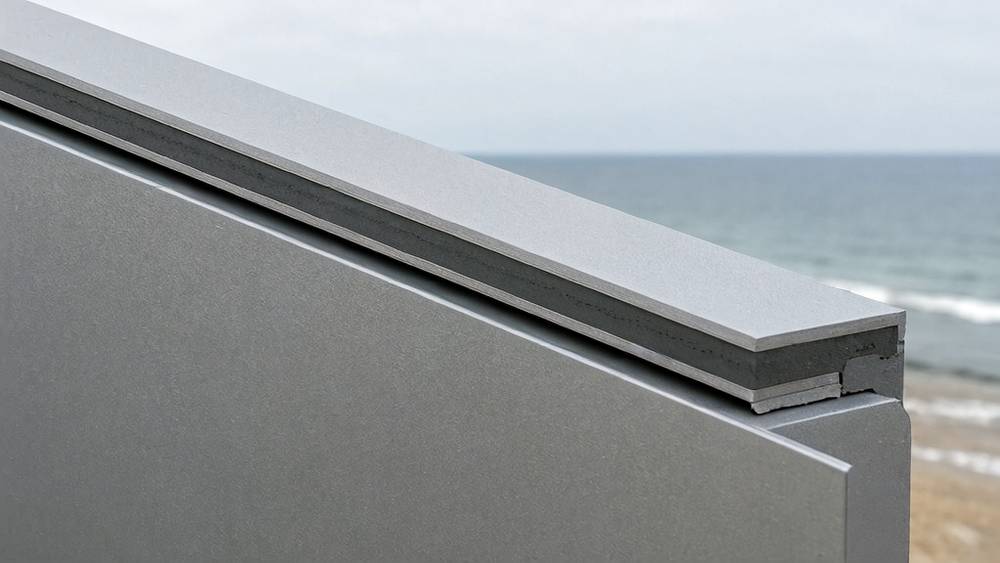
When a project specification calls for aluminium wall panelling on a high-rise tower facing the Arabian Gulf, the conversation shifts quickly from aesthetics to salt spray resistance. Coastal and industrial zones expose solid aluminium cladding panels to chloride-laden air, sulphur compounds, and relentless UV radiation. The difference between a facade that looks pristine after 15 years and one that shows filiform corrosion within three often comes down to a single specification line: the pretreatment system. Chromate conversion coatings have been the industry workhorse for decades, but tightening environmental regulations and shifting supply chain realities are pushing specifiers toward chrome-free alternatives. This article examines the pretreatment chemistry behind aluminium wall panelling, compares performance data across chromate and non-chromate systems, and provides the technical criteria that procurement teams and facade engineers need to evaluate coating adhesion longevity in aggressive environments.
The Pretreatment Layer Nobody Sees but Every Facade Depends On
Before any PVDF or FEVE topcoat touches the aluminium surface, the metal undergoes a chemical conversion process. This step creates a microscopically thin interface layer — typically 0.5 to 2.0 microns — that serves three functions: it passivates the aluminium surface against oxidation, it provides a mechanical and chemical anchor for the primer, and it inhibits underfilm corrosion if the topcoat gets scratched.
For solid aluminium wall panelling, this invisible layer does more heavy lifting than many engineers realise. Unlike composite panels where the core material adds stiffness and the aluminium skin is thinner, solid 2.5 mm or 3.0 mm aluminium sheets rely entirely on the metal surface treatment to maintain coating adhesion across decades of thermal cycling. When pretreatment fails, the failure mode is catastrophic: entire sections of coating peel away from the substrate, exposing bare aluminium to direct environmental attack.
The two dominant pretreatment chemistries on the market today are hexavalent chromium-based conversion coatings (chromating) and titanium/zirconium-based non-chrome systems. Each has a distinct performance profile, cost structure, and regulatory status that directly impacts aluminium wall panelling specifications.
Hexavalent Chromium Chromating Performance and Regulatory Reality
Chromate conversion coatings have been the gold standard for aluminium pretreatment since the 1940s. The chemistry is well understood: a solution containing chromic acid, typically with fluoride activators, reacts with the aluminium surface to form a complex chromium-aluminium oxide layer. This layer contains both trivalent chromium (insoluble, forms the barrier) and hexavalent chromium (soluble, acts as a self-healing inhibitor).
When a scratch penetrates through the topcoat and primer on chromated aluminium wall panelling, the residual hexavalent chromium ions migrate to the exposed area and repassivate the surface. This self-healing property is why chromated systems consistently outperform non-chrome alternatives in accelerated corrosion tests, particularly in filiform corrosion resistance.
However, the regulatory landscape has shifted decisively against hexavalent chromium. The European Union's REACH regulation (EC 1907/2006) listed chromium trioxide as a Substance of Very High Concern (SVHC) requiring authorisation for continued use. The current sunset date for chromating in architectural applications has been extended several times through authorisation applications, but the writing is on the wall. In North America, OSHA's updated permissible exposure limits and EPA effluent guidelines are making chromate processing increasingly expensive to operate.
For international procurement teams sourcing aluminium wall panelling across multiple jurisdictions, the compliance picture is fragmented. A project in Singapore may still accept chromated panels without restriction, while the same specification for a project in Germany would require extensive documentation under REACH authorisation. The practical consequence is that major aluminium coil coaters and panel fabricators are investing heavily in chrome-free lines, and some have already phased out chromating entirely.
Chrome-Free Titanium and Zirconium Conversion Systems
The replacement technologies fall broadly into two categories: titanium-based systems, zirconium-based systems, and hybrid Ti/Zr formulations. These are often marketed under trade names like Henkel's Bonderite series, Chemetall's Gardobond, or PPG's Chemfos, but the underlying chemistry shares common principles.
In a typical Ti/Zr conversion process, the aluminium surface reacts with hexafluorotitanic or hexafluorozirconic acid to deposit a mixed oxide layer approximately 20-80 nanometres thick. This is substantially thinner than a chromate coating and, critically, lacks the soluble inhibitor reservoir that gives chromate its self-healing capability. The adhesion mechanism relies primarily on physical interlocking at the nanoscale rather than chemical bonding, which means surface preparation becomes more demanding.
For aluminium wall panelling destined for C3 or C4 corrosivity environments (urban/industrial and coastal as defined in ISO 12944-2), the performance gap between chrome-free and chromated systems narrows significantly when the entire coating system is properly specified. A high-quality 70% PVDF topcoat applied at 25-30 microns dry film thickness over a chrome-free pretreatment can deliver comparable field performance to a chromated system in most architectural applications. The gap widens in C5-M (marine) and C5-I (industrial) environments, where the self-healing property of chromate becomes more relevant.
Filiform Corrosion Testing and What the Data Shows
Filiform corrosion is the critical failure mode that separates good pretreatment systems from inadequate ones. It appears as thread-like filaments creeping under the coating, typically initiating at cut edges or mechanical damage points. For aluminium wall panelling with exposed cut edges at panel joints, filiform resistance is not an academic concern — it is a visible durability problem.
ASTM D2803 and ISO 4623 provide standardised methods for assessing filiform corrosion resistance. The test involves scribing through the coating to bare metal, exposing the panel to a corrosive atmosphere (typically hydrochloric acid vapour or salt spray), then measuring the length and frequency of filaments after a specified duration.
The table below compiles representative performance data from multiple coating system qualification programs, comparing chromated and chrome-free pretreatments under identical topcoat conditions:
| Pretreatment Type | Coating System | ASTM D2803 Filiform (mm, 1000 hrs) | AAMA 2605 4000hr Salt Spray | ISO 12944 Corrosivity Suitability | Relative Processing Cost |
|---|---|---|---|---|---|
| Hexavalent Chromate | 70% PVDF, 3-coat | <1.0 mm average; no underfilm creep at scribe | No blisters; <2 mm creep from scribe | C1 through C5-M | Baseline (1.0x) |
| Trivalent Chromate (Cr3) | 70% PVDF, 3-coat | <1.5 mm average; minimal underfilm creep | No blisters; <3 mm creep from scribe | C1 through C5-M (with qualification) | 1.1-1.2x |
| Ti/Zr Chrome-Free (Premium) | 70% PVDF, 3-coat | 1.0-3.0 mm average; isolated filaments | No blisters; <4 mm creep from scribe | C1 through C4; C5 with caution | 0.85-0.95x |
| Ti/Zr Chrome-Free (Standard) | 70% PVDF, 2-coat | 2.0-5.0 mm; more frequent filaments | Rare blisters; <6 mm creep from scribe | C1 through C3 | 0.75-0.85x |
| Anodising (20μm AA25) | N/A (integral oxide layer) | Not applicable; different failure mode | Pitting after 1000-2000 hrs in C5 | C1 through C3; C4 with thickness increase | 1.3-1.6x |
Data compiled from multiple coating applicator qualification reports and published studies. Actual performance depends on specific chemical formulation, application parameters, and substrate alloy. This table should be used for comparative reference only; project-specific testing is recommended for C5 environments.
The data highlights a pattern that experienced facade consultants recognise: chrome-free systems are not categorically inferior, but their performance envelope is narrower. A premium Ti/Zr system with a properly applied 3-coat PVDF system can match chromated performance in most architectural environments. The risk lies in the supply chain: not every fabricator invests in premium chrome-free chemistry, and not every project specification enforces the process controls that these systems demand.
Process Control Variables That Determine Success or Failure
Switching from chromate to chrome-free pretreatment for aluminium wall panelling is not a simple chemical substitution. The process window narrows significantly, and the consequences of deviation are more severe. Six variables deserve attention from specifiers and quality assurance teams:
Rinse water quality. Chrome-free Ti/Zr systems are more sensitive to residual salts on the aluminium surface. Conductivity of the final rinse water should be below 30 μS/cm, and chloride content below 10 ppm. Some applicators running chrome-free lines have invested in reverse osmosis water treatment specifically to meet these requirements.
Dwell time and bath temperature. Chromate baths are relatively forgiving of time and temperature variation. Ti/Zr systems require tighter control: typical dwell times of 30-120 seconds at 20-35°C, with the coating weight (typically 5-15 mg/m² of titanium or zirconium) directly dependent on maintaining these parameters.
Surface etch depth. Chrome-free systems rely more heavily on mechanical interlocking, which means the aluminium surface needs a controlled etch profile before conversion coating. Acid or alkaline etching steps must be calibrated to produce a consistent surface roughness (typically Ra 0.5-1.5 μm) without over-etching, which weakens the substrate.
Alloy sensitivity. Not all aluminium alloys respond equally to chrome-free pretreatment. The 5005 and 5052 alloys commonly used for aluminium wall panelling are generally well-behaved, but copper-containing alloys (2xxx series) and some 6xxx extrusion alloys can show reduced conversion coating quality. If a project mixes sheet and extruded aluminium components — common in curtain wall systems — the pretreatment line must be validated for each alloy separately.
Drying and primer application timing. After conversion coating, chrome-free layers have a shorter window before primer must be applied. Delays beyond 24-48 hours, or exposure to condensation during storage, can degrade adhesion performance. This has implications for fabricators who batch-process pretreatment and painting on different days.
Supplier-specific chemistry validation. Unlike chromate, where the chemistry is largely commoditised, chrome-free formulations vary significantly between chemical suppliers. A qualification test conducted with Supplier A's Ti/Zr system does not automatically validate Supplier B's product, even if both are described as "chrome-free titanium zirconium."
For procurement teams specifying aluminium wall panelling, these variables translate into a practical recommendation: require the coating applicator to provide full process documentation, including bath chemistry logs, rinse water conductivity records, and pretreatment coating weight measurements for each production batch. Third-party witnessing of the pretreatment process is becoming standard practice for high-specification projects in the Middle East and Southeast Asia.
Coastal Project Specification Framework
When aluminium wall panelling is specified for a coastal project — defined as within 5 km of open seawater or in an area with prevailing onshore winds — the pretreatment decision interacts with several other coating system choices. The following decision framework has been developed based on field performance data from installations in Dubai, Singapore, and Miami:
For C3 environments (urban, inland): A standard Ti/Zr chrome-free pretreatment with a 2-coat 70% PVDF system (primer + colour coat, 25-28 μm total DFT) is generally adequate. The specification should reference AAMA 2605 for the coating and require pretreatment process documentation per the applicator's qualified procedure.
For C4 environments (coastal, >5 km from shore or sheltered bays): A premium Ti/Zr chrome-free system with a 3-coat 70% PVDF system (primer + colour coat + clear, 35-40 μm total DFT) provides the necessary durability margin. The clear coat adds approximately 12-15 μm of additional barrier protection and is particularly important for dark colours and metallic finishes where any surface defect is highly visible.
For C5-M environments (direct shoreline exposure, salt spray zone): The conservative approach remains chromate pretreatment with 3-coat PVDF. If chrome-free is mandated by project environmental requirements, trivalent chromium (Cr3) systems represent a middle ground — they eliminate hexavalent chromium while retaining some chromium-based corrosion inhibition. Independent testing per ASTM D2803 and 4000-hour salt spray per AAMA 2605 should be required for the specific coating system proposed, not just generic product data sheets.
Futeng® aluminium wall panelling products offer both chromated and chrome-free pretreatment options, with documented process control data available for project submittals. The key is matching the pretreatment chemistry to the actual environmental exposure, not defaulting to the lowest-cost option.
Coating Adhesion Testing and Field Verification
Specifying the right pretreatment chemistry is the first step. Verifying that it was applied correctly is equally important, and several test methods provide quantitative or qualitative assessment of coating adhesion on solid aluminium wall panelling:
Dry adhesion (ISO 2409 / ASTM D3359 cross-hatch test): A lattice pattern is cut through the coating to the substrate, tape is applied and removed, and the percentage of coating removed is rated. For architectural aluminium wall panelling, a rating of 4B or 5B (less than 5% removal) is the typical acceptance criterion. This test is quick and can be performed on site with portable equipment.
Wet adhesion (AAMA 2605, Section 8.4.2): Panels are immersed in distilled water at 38°C for 24 hours, then subjected to the cross-hatch test immediately after removal while still wet. This is a more aggressive test that reveals weaknesses in the pretreatment-substrate interface that dry adhesion testing misses. Chrome-free systems that pass dry adhesion can sometimes show significant delamination under wet adhesion conditions if the pretreatment was inadequate.
Boiling water adhesion (AAMA 2605, Section 8.4.3): The coated panel is immersed in boiling distilled water for 20 minutes, then cross-hatch tested. This is the most severe adhesion test in the standard and is particularly relevant for aluminium wall panelling in tropical climates where panels experience frequent condensation and rain events.
Impact adhesion (ASTM D2794): A weighted indenter is dropped onto the coated surface, and the damaged area is examined for delamination. This simulates handling and installation damage and is a practical test that reveals whether the pretreatment system tolerates the inevitable knocks that occur during construction.
For acceptance testing, the minimum recommendation is dry and wet adhesion testing on production samples from each coating batch. Boiling water adhesion should be included for projects in tropical or subtropical locations. The cost of these tests — typically $200-500 per batch — is negligible compared to the cost of recoating or replacing failed panels.
Supply Chain Implications for International Procurement
The shift toward chrome-free pretreatment is not happening uniformly across the global aluminium wall panelling supply chain. Chinese and Southeast Asian fabricators, who supply a significant portion of the international market, are at varying stages of transition. Some large-format coil coating lines have invested in chrome-free technology to maintain access to European markets, while smaller batch-spray operations continue to use chromate.
This creates a procurement challenge: a specification that simply states "chrome-free pretreatment" without qualification may result in panels treated with a low-cost Ti/Zr system that has not been validated for the project's environmental conditions. Conversely, specifying chromate pretreatment may limit the supplier base and increase lead times as fewer fabricators maintain chromate-capable lines.
The recommended approach for international aluminium wall panelling procurement is to specify performance requirements rather than chemistry. Reference AAMA 2605 (or the equivalent regional standard such as EN 1396 for coil-coated aluminium or Qualicoat for architectural applications) and add project-specific testing requirements based on the environmental exposure category. This allows fabricators to propose their qualified pretreatment system — chromate or chrome-free — while ensuring that the performance bar is met.
Additional due diligence should include requesting the applicator's qualification test reports for their specific pretreatment and coating combination, ideally with data from an accredited independent laboratory rather than in-house testing. A site audit of the pretreatment line, whether conducted by the specifier or a third-party inspection agency, provides assurance that the documented process controls are actually being followed in production.
The transition from chromate to chrome-free pretreatment for aluminium wall panelling represents a genuine technical challenge, not merely a regulatory checkbox. Getting it right requires understanding the chemistry, respecting the narrower process windows of chrome-free systems, and verifying performance through appropriate testing. For coastal and industrial projects where the stakes are highest, the data supports a cautious approach: either stay with qualified chromate systems while they remain available, or invest the additional specification effort required to properly validate a chrome-free alternative. Either path is defensible — provided the decision is made with eyes open to the technical trade-offs involved.