Jual Wall Cladding Listings Often Lack Solid Aluminium Facade Specifications
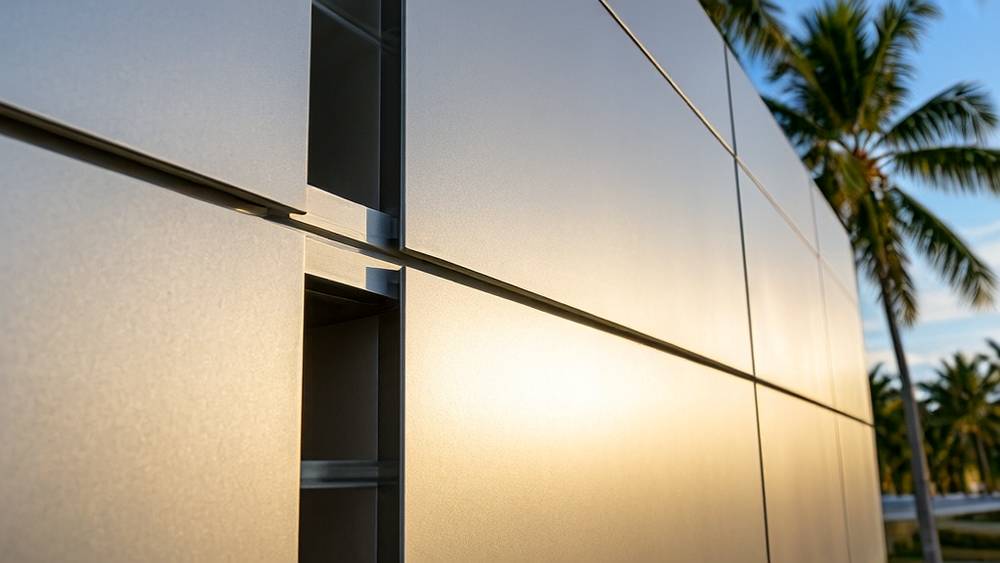
When procurement managers and facade contractors across Southeast Asia search for jual wall cladding, the marketplace returns thousands of listings from Tokopedia, Shopee, Blibli, and Indotrading. Stone veneer panels, WPC planks, and composite sheets dominate the results. But for commercial high-rise projects, educational campuses, hospitals, and airport terminals, none of those materials meet the structural, fire, and durability demands that building codes enforce. Solid aluminium cladding panels, fabricated from 2.0 mm to 3.0 mm alloy sheets and finished with architectural-grade PVDF coatings, sit in a different category entirely — one that rarely appears in consumer marketplaces because the supply chain operates through technical specification, not e-commerce storefronts.
The gap between what "jual wall cladding" listings show and what a 12-storey office tower actually needs is where costly procurement mistakes happen. This article maps out the specification differences across material categories, explains why solid aluminium panels command a different price structure, and provides a framework for evaluating suppliers when sourcing aluminium facade systems in Indonesia and the broader ASEAN market.
What the Marketplace Actually Sells Under "Jual Wall Cladding"
A scan of the major Indonesian platforms reveals four dominant product categories masquerading under the same search term:
- Natural stone cladding (batu alam) — Split-face and honed stone panels sold per square meter, typically 15–30 mm thick, weighing 35–60 kg/m². Suppliers like Batu Alam Jakarta and Mughni Stone offer installation-ready panels for residential feature walls. The weight alone disqualifies these from lightweight curtain wall applications above 6 floors.
- WPC (wood-plastic composite) cladding — Extruded planks combining wood fibre and thermoplastics, sold per batang (2.9 m lengths, 22 cm width, 2.6 cm thickness). Products like Skayu WPC cladding target residential exteriors and fences. UV degradation limits lifespan to 7–12 years in equatorial climates, and fire ratings rarely exceed Class C.
- Interior decorative panels — PVC-based, laminate, and thin-gauge composite sheets designed for indoor feature walls. These carry zero structural capacity and no tested weather resistance.
- Generic "cladding" listings — Indotrading aggregates over 2,090 products under cladding and wall panels, mixing ceramic, GRC, HPL, and aluminium composite materials without clear technical differentiation.
None of these categories satisfy the performance requirements of a ventilated rainscreen facade on a commercial building. The search term jual wall cladding functions as a catch-all in Indonesian B2C and small-scale B2B marketplaces, but the architectural specification process demands material data sheets, not product thumbnails.
Solid Aluminium Cladding: The Material Specification Baseline
When architects specify aluminium wall cladding for exterior facades, they reference a defined set of material parameters that consumer-grade products cannot meet. Understanding these parameters is the first filter for separating legitimate architectural supply from general marketplace listings.
Alloy and Temper
Solid aluminium panels for facade applications use AA 3003, AA 5005, or AA 5052 alloy series with H14 or H16 temper. These manganese and magnesium-alloyed grades provide the formability needed for bending, perforating, and routing without cracking, while maintaining tensile strength between 150–230 MPa depending on the specific alloy. AA 1100 series, though cheaper, lacks the mechanical properties required for panel spans exceeding 600 mm.
Panel Thickness and Span Limits
Solid aluminium cladding panels are specified at 2.0 mm, 2.5 mm, or 3.0 mm thickness as standard. The relationship between thickness, stiffener layout, and allowable wind load determines maximum unsupported spans:
- 2.0 mm — Suitable for small-format panels (up to 600 × 1200 mm) in low-rise buildings with wind loads under 1.0 kPa. Requires closely spaced stiffeners.
- 2.5 mm — The workhorse specification for mid-rise commercial facades. Handles panel sizes up to 1200 × 2400 mm with standard stiffener layouts at wind pressures up to 2.0 kPa.
- 3.0 mm — Required for large-format panels (1500 × 3000 mm and above), high-wind zones, and applications demanding minimal oil canning. Standard for airport terminals, convention centres, and coastal high-rises.
These thicknesses apply to solid aluminium sheets only. ACP products achieve stiffness through sandwich construction, not material thickness — a fundamentally different engineering approach that does not translate across product categories.
Coating Systems and Real-World Durability
The Indonesian climate combines high UV radiation (averaging 5.0–6.5 kWh/m²/day), 70–90% relative humidity, and in coastal zones, airborne chloride concentrations that accelerate metal corrosion. Coating selection directly determines whether a facade looks acceptable after 10 years or requires premature replacement.
| Coating Type | Resin System | Dry Film Thickness | AAMA Standard | Colour Retention (Equatorial) | Coastal Suitability |
|---|---|---|---|---|---|
| PVDF (Kynar 500®/Hylar 5000®) | 70% PVDF / 30% acrylic | 30–40 μm (2-coat), 40–50 μm (3-coat) | AAMA 2605 | 15–20 years | Excellent — 4,000+ hrs salt spray resistance |
| FEVE (Lumiflon®) | Fluoroethylene vinyl ether | 35–45 μm | AAMA 2605 | 20–25 years | Excellent — superior gloss retention at 60° |
| Super Durable Polyester | Polyester with TGIC/HAA | 60–80 μm | AAMA 2604 | 7–10 years | Moderate — limited chloride resistance |
| Standard Polyester | Polyester | 25–30 μm | AAMA 2603 | 3–5 years | Not recommended — chalk and fade within 24 months |
The price difference between AAMA 2605 PVDF and AAMA 2603 polyester coating typically ranges from USD 12–18/m² at the fabrication level. For a 5,000 m² facade, that translates to roughly USD 60,000–90,000 in additional coating cost — versus potentially USD 250,000–400,000 in re-coating or panel replacement if the cheaper option fails within a decade. The lifecycle economics favour PVDF in any project with a design life exceeding 10 years.
Fabricators like Futeng® operate PVDF coating lines that meet AAMA 2605 requirements with verified 4,000-hour salt spray resistance, a critical data point for specifiers working on projects in Jakarta's coastal reclamation areas or Surabaya's port district.
Engineering the Facade System: Beyond the Panel
A solid aluminium cladding package involves more than the visible panel face. The substructure, fixing method, and thermal movement accommodation determine whether the installed facade performs as intended over decades.
Rainscreen Principle and Ventilation
Solid aluminium panels are typically installed as a ventilated rainscreen — an outer skin separated from the structural wall or insulation layer by a 30–50 mm air cavity. This cavity serves three functions: pressure equalisation (reducing water ingress driven by wind), drainage of any moisture that penetrates the panel joints, and convective airflow that dries the cavity after rain. The Centre for Window and Cladding Technology (CWCT) provides detailed guidance on rainscreen design principles applicable across climate zones.
Fixing Systems: Visible vs Concealed
Two primary fixing approaches govern solid aluminium panel installation:
- Exposed fastener (face-fixed) — Panels are drilled and screwed directly onto the aluminium subframe using stainless steel fasteners with EPDM washers. This system costs 15–25% less than concealed fixing but leaves visible screw heads across the facade. Common in industrial buildings and budget-driven commercial projects. Requires precise fastener spacing (typically 300–400 mm centres) to control panel deflection.
- Concealed fixing (hook-on or cassette) — Panels engage onto a carrier rail system via folded return edges or extruded aluminium clips. No fasteners penetrate the visible face. This system costs more due to the additional fabrication steps (folding, routing, clip attachment) but delivers a clean architectural appearance and permits individual panel removal for maintenance access. Dominant in office towers, hotels, and institutional buildings.
Thermal Movement: The 1.2 mm per Linear Metre Rule
Aluminium expands at approximately 2.4 × 10⁻⁵ per °C. In Jakarta, where ambient temperatures swing from 24°C at night to 38°C under direct sun, a 3-metre panel experiences roughly 1.0–1.2 mm of thermal movement. Joint design must accommodate this movement without stressing fasteners or causing panel buckling. The standard minimum joint width for solid aluminium rainscreen panels is 12–15 mm, verified against the American Architectural Manufacturers Association (AAMA) joint design guidelines.
Sourcing Solid Aluminium Cladding in Indonesia: The Supply Chain Reality
The procurement path for architectural aluminium cladding does not run through Tokopedia or Shopee. It runs through technical sales teams, specification managers, and factory visits. Understanding this supply chain structure helps international buyers and local contractors avoid intermediaries that add cost without adding value.
Domestic Fabricators vs Imported Systems
Indonesia hosts a growing number of aluminium fabrication facilities capable of CNC routing, bending, and PVDF coating. However, capacity constraints emerge on projects exceeding 10,000 m² — larger fabricators may quote 12–16 week lead times during peak construction periods. Importing fabricated panels from established manufacturers in China, Malaysia, or the Middle East becomes commercially viable at volumes above 3,000 m², with sea freight adding approximately USD 1.50–2.50/m² to the landed cost depending on packaging density and shipping distance.
Key Specification Documents to Request
When evaluating any supplier responding to a jual wall cladding inquiry for commercial projects, request the following before comparing prices:
- Mill certificates — Verifying alloy composition and temper of the aluminium sheet stock. The material should trace back to certified rolling mills compliant with The Aluminum Association standards.
- Coating performance test reports — AAMA 2605 requires documented results for salt spray resistance (ASTM B117, minimum 4,000 hours), humidity resistance (ASTM D2247, minimum 4,000 hours), and colour retention (ASTM G155, minimum 10 years simulated exposure).
- Wind load calculation package — Panel span, stiffener layout, and deflection limits calculated to the project's specific wind zone per ASCE 7 or the Indonesian SNI 1727 equivalent.
- Fire performance classification — Solid aluminium panels are non-combustible (EN 13501-1 Class A1 or equivalent). This is a critical differentiator from WPC and ACP products, which require careful verification of fire-rated core materials.
- Installation methodology statement — Detailing subframe connection to the primary structure, bracket spacing, and thermal isolation details at floor lines.
Price Structure Breakdown
Solid aluminium cladding pricing follows a multi-component structure. Understanding each component enables accurate budget comparison:
| Cost Component | Typical Range (USD/m²) | Variables Affecting Cost |
|---|---|---|
| Aluminium sheet (2.5 mm, AA 3003) | 18–26 | LME aluminium price, alloy grade, sheet dimensions |
| PVDF coating (3-coat, AAMA 2605) | 12–18 | Colour (metallics add 15–20%), gloss level, brand of PVDF resin |
| CNC fabrication (cutting, routing, folding) | 10–20 | Panel complexity, perforation ratio, edge detailing, quantity of stiffeners |
| Subframe system (aluminium rails + brackets) | 15–25 | Concealed vs exposed, thermal break requirements, wind load zone |
| Packaging and export preparation | 1.5–3 | Protective film type, crate specification, container optimisation |
| Sea freight (Asia to Indonesia) | 1.5–2.5 | Port of origin, fuel surcharges, container type (20 ft vs 40 ft HC) |
A fully fabricated, PVDF-coated, 2.5 mm solid aluminium panel system with concealed fixings typically lands at USD 65–95/m² in Indonesia, depending on project scale and complexity. This represents a fundamentally different product category from the IDR 150,000–450,000/m² (USD 9–28/m²) products appearing in marketplace searches for jual wall cladding.
Five Questions That Separate Architectural Suppliers from Marketplace Sellers
When a procurement inquiry starts with "jual wall cladding," the responses often come from general traders who source whatever material the buyer requests without technical qualification. The following five questions quickly filter capable suppliers:
- "Can you provide AAMA 2605 test reports from an independent laboratory for the last three projects you completed?" — Traders cannot. Fabricators with in-house coating lines can produce these documents within 24 hours.
- "What is your maximum panel fabrication size, and what stiffener layout do you recommend for a 2.5 mm panel spanning 1,200 mm between supports at 2.0 kPa wind load?" — The answer should reference specific deflection limits (typically L/60 to L/90 for aluminium rainscreen panels) and stiffener spacing calculations.
- "Do you stock AA 5052 for coastal projects, and can you provide mill certificates tracing back to the rolling mill heat number?" — AA 5052 offers superior corrosion resistance for marine environments. Suppliers who only stock AA 1100 or cannot provide traceability flag themselves immediately.
- "What is your standard joint width for a ventilated rainscreen, and how do you detail horizontal joints to prevent water ingress under negative wind pressure?" — The correct answer involves 12–15 mm open joints with a pressure-equalised cavity, not silicone sealant as a primary water barrier.
- "What packaging specification do you use for export container shipments to prevent transit damage?" — Professional fabricators specify interleaving with PE foam, edge protectors, and crated packaging. The absence of a documented packaging procedure correlates with high damage rates in transit.
Specifiers working on projects in Indonesia should verify that aluminium cladding systems comply with SNI 03-2850-1992 (the Indonesian national standard for metal cladding installation) and that wind load calculations reference the appropriate wind speed maps for the specific project location, not generic assumptions.
When "Jual Wall Cladding" Means a 20-Year Facade Decision
The marketplace search for jual wall cladding reflects Indonesia's rapidly growing construction sector — GDP growth driving commercial, hospitality, and infrastructure projects that all require exterior envelope solutions. But the consumer platforms that aggregate these listings serve a fundamentally different market segment than the architectural specification process that governs commercial facade procurement.
For building owners and project managers, the critical distinction is not between one supplier and another, but between product categories that share a search term but nothing else. WPC planks and natural stone veneers serve residential applications competently. Solid aluminium cladding panels — fabricated to specification, coated to AAMA 2605 standards, and engineered as part of a ventilated rainscreen system — serve buildings that must perform for decades under tropical conditions.
The procurement process that produces a successful facade outcome starts with material specification, not price comparison. Requesting mill certificates, coating test reports, wind load calculations, and installation methodology statements before discussing pricing saves projects from the most expensive mistake in facade procurement: discovering that the installed product does not meet the performance requirements that the building demands.
For projects requiring volumes above 2,000 m² of solid aluminium cladding with PVDF coating, direct engagement with fabrication facilities that operate under ISO 9001 quality management and maintain in-house testing capability provides the most reliable path from specification to installation. The additional cost per square metre relative to marketplace alternatives reflects the difference between a material purchased and a facade system engineered.