Lap Seam Metal Wall Panels Exposed Versus Concealed Fastener Cost Breakdown
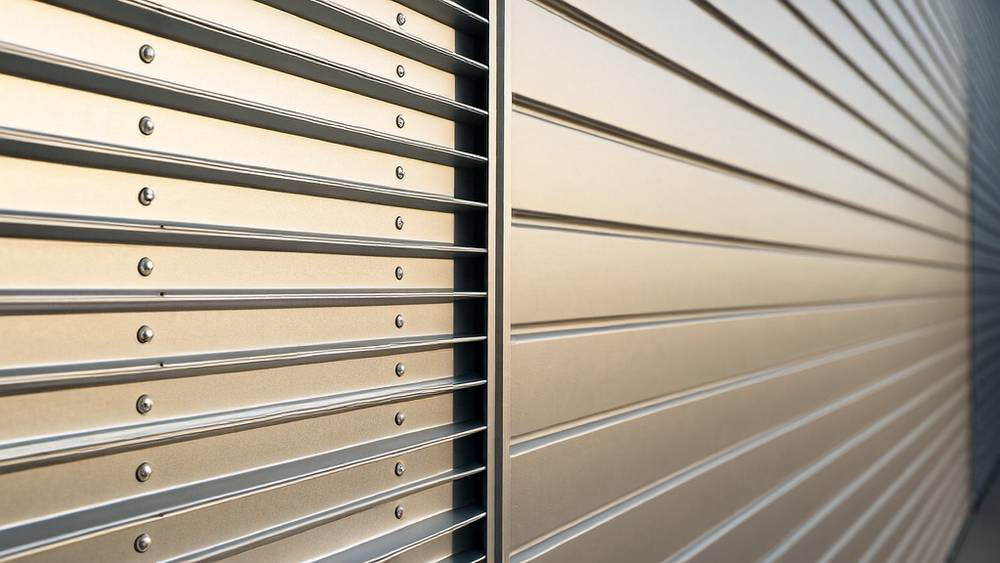
Every rainscreen and exterior wall project eventually confronts a cost tension that shapes material choices before a single panel arrives on site. For lap seam metal wall panels, that tension sits between two fastener strategies: exposed fasteners that cut upfront spending and concealed fasteners that eliminate decades of visible screw heads. The numbers matter here. Current North American estimates place exposed fastener lap seam systems around $4 to $8 per square foot installed, while concealed fastener alternatives routinely run $10 to $18 per square foot. That gap widens on large commercial envelopes where tens of thousands of square feet multiply every dollar difference. But procurement managers who stop at the bid tab miss what happens after year seven, when exposed fasteners begin telling a different financial story through maintenance logs, thermal movement stress, and water ingress callbacks. This article unpacks what that gap actually buys you, where it pays off, and where over-specifying concealed systems bleeds budget without measurable return.
The Real Cost Gap Beyond the Bid Tab
Exposed fastener lap seam metal wall panels dominate the lower end of the installed cost spectrum for a straightforward reason: installation speed. A crew familiar with the profile can place 800 to 1,200 square feet per day using standard Tek screws with EPDM washers driven through pre-punched flange slots. The panel-to-panel lap joint relies on a simple overlap geometry, typically 3/4 inch to 1-1/2 inch depending on the profile, with fasteners penetrating through both sheets into steel or cold-formed girts behind. No specialized clipping hardware. No sequential interlock alignment. No thermal isolation pads to position. The system trades labor hours for visible fastener lines that run in consistent horizontal or vertical bands across the facade.
Concealed fastener lap seam metal wall panels reverse that equation. The interlocking seam geometry, whether a snap-lock, hook-and-pin, or slide-clip configuration, hides every fastener behind the panel face. That aesthetic gain demands roughly 30% to 50% more installation time. Panels must be engaged in sequence, typically from a fixed starting edge moving across the wall plane. Alignment errors compound; a 1/16-inch deviation at panel three becomes visible by panel twelve. The installer cannot simply back out a screw and shift the panel. The entire run may need disassembly. These systems also introduce additional components: extruded aluminum mounting rails, stainless steel clips with slotted holes for thermal movement, and sometimes continuous Z-girts that add $2 to $4 per square foot in material cost before the first panel is hung.
ASTM E-330 and the Structural Performance Question
Both fastener approaches must satisfy the same building code requirements for wind load resistance, typically verified through ASTM E-330 testing. The distinction lies in how loads transfer through the assembly. Exposed fastener panels distribute wind pressure directly through the screw heads into the substrate. Each fastener becomes a point load, and the panel's span capability between girts determines how many fasteners participate in load sharing. LITSCO's Streamline CR profile, for example, is tested under ASTM E-330 to confirm allowable spans for a given wind zone, with the exposed fastener pattern explicitly defined in the test setup.
Concealed fastener lap seam metal wall panels route wind loads through the interlocking seam into hidden clips, which then transfer force to the subframe. The load path includes an extra connection point, the clip-to-panel interface, which must be engineered to prevent disengagement under negative wind pressure (suction). Testing becomes more system-dependent. A snap-lock seam that performs at 45 psf on one subframe spacing may fail at the same pressure on wider girt centers because clip rotation changes the engagement angle. Procurement teams should request the specific ASTM E-330 test report for the exact panel profile, clip type, and substrate spacing combination specified, not a generic brochure value.
Thermal Movement: Where Concealed Systems Earn Their Premium
Aluminum expands at approximately 0.0000129 inches per inch per degree Fahrenheit. For a 20-foot panel length subjected to a 100°F seasonal temperature swing, that translates to roughly 0.31 inches of linear movement. Exposed fastener lap seam metal wall panels handle this through oversized fastener holes or slotted flange punches. The panel can slide slightly under the screw head if the installer does not over-torque the fastener and lock the panel rigid. In practice, over-torquing is common. The result: oil canning, distorted lap seams, and in severe cases, fastener tear-out at panel edges.
Concealed systems address thermal movement at the clip level. Slotted clip holes allow the panel to expand and contract independently of the subframe. The interlocking seam geometry accommodates small longitudinal shifts without changing the visible joint width. This is not merely a theoretical advantage. Buildings in Phoenix, Dubai, or Riyadh experience daily skin temperature swings exceeding 80°F on dark-colored metal. On a 60-foot uninterrupted panel run, that daily movement approaches 0.5 inches. Concealed fastener lap seam metal wall panels with properly detailed sliding clips absorb this without accumulating stress. Exposed fastener systems on the same wall may develop ripples within the first three years.
Water Management and the Rainscreen Factor
The exposed fastener hole represents a potential water entry point, even with EPDM washer seals. Washers age. UV exposure hardens EPDM over time. Thermal cycling works fasteners loose. On a 10,000-square-foot wall with fasteners at 12-inch centers along each girt line, there may be 15,000 to 20,000 individual penetrations through the metal skin. Each one is a long-term liability that maintenance budgets must address.
This is why many exposed fastener lap seam metal wall panels are specified as part of a rainscreen assembly with a dedicated water-resistive barrier (WRB) and ventilated cavity behind the panel. The panel sheds the bulk of rainwater; the WRB handles any moisture that bypasses fasteners or lap joints. ATAS International's Versa-Seam system explicitly follows this approach, requiring a waterproof building envelope behind the panel. Concealed fastener systems reduce the penetration count to zero through the panel face, though clip fasteners still penetrate the WRB at attachment points. The distinction matters most in driven-rain climates (Miami-Dade, Vancouver, Singapore) where wind pressures can force water upward through lap joints.
When Exposed Fasteners Make Engineering Sense
Despite the long-term arguments favoring concealed systems, exposed fastener lap seam metal wall panels remain the correct specification for several project typologies:
Agricultural and industrial buildings where the facade is not customer-facing and maintenance access is straightforward. Pre-engineered metal building (PEMB) envelopes where cost per square foot drives every decision and the wall panel must integrate with roof panels from the same manufacturer. Retrofit over-cladding projects where the existing substrate is uneven or the structural condition of girts is uncertain, making the adjustability of exposed fasteners an advantage during installation. Temporary or phased buildings with a design life under 15 years, where the maintenance cost argument for concealed fasteners never materializes.
Taylor Metal's Long Span Series and Berridge's exposed fastener wall panels illustrate this segment well: profiles designed for speed, produced in high volume, and stocked at regional plants for quick turnaround. These are not inferior products. They are purpose-built for a cost tier where concealed fasteners would kill the project budget.
The Concealed Fastener Value Threshold
The break-even calculation shifts based on three variables: building design life, maintenance access difficulty, and aesthetic expectations. For a 25-year design life on a building with lift access for facade maintenance, the net present value of avoided re-sealing and fastener replacement may justify a $6 to $8 per square foot premium. For a 40-year institutional building where scaffolding for facade access costs $50,000 per mobilization, the concealed fastener argument strengthens dramatically.
McElroy Metal's concealed fastener wall panel line and PAC-CLAD's hidden fastener systems target exactly this threshold. Their marketing emphasizes architectural lines and weather resistance because the buyers in this tier, architects and institutional facility managers, weight lifecycle cost above initial bid price. The panels themselves are often heavier gauge (0.040 inch or 0.050 inch aluminum versus 0.032 inch for many exposed fastener profiles), which further improves span capability and reduces oil canning susceptibility.
Hybrid Approaches and the Fastener Visibility Spectrum
The industry does not force a binary choice. Several manufacturers offer lap seam profiles that reduce fastener visibility without achieving full concealment. CENTRIA's Econolap 3/4 inch profile places side lap fasteners in the high cell of the corrugation, where they are less visible from grade than face-fastened trapezoidal profiles. The aesthetic improvement is real, even if the technical classification remains "exposed fastener." The cost increment over standard exposed fastener panels is modest, typically $1 to $2 per square foot for the profile upcharge and slightly slower installation.
Another hybrid strategy pairs exposed fastener lap seam metal wall panels on rear and side elevations with concealed fastener panels on the primary street-facing facade. This allocates budget to where it delivers maximum visual and maintenance impact. The specification package must clearly delineate the transition zones and ensure compatible subframe detailing at the interface between systems. When sourced from a single manufacturer like Futeng®, which produces both exposed and concealed solid aluminum panel profiles from the same coil stock and coating line, color consistency across the transition is guaranteed.
| Cost Factor | Exposed Fastener Lap Seam | Concealed Fastener Lap Seam | Cost Delta Impact |
|---|---|---|---|
| Panel Material ($/sq ft) | $1.50 – $3.00 | $2.50 – $5.00 | Higher gauge and profile complexity |
| Clip/Subframe Hardware ($/sq ft) | $0.50 – $1.00 | $2.00 – $4.00 | Extruded rails, SS clips required |
| Installation Labor ($/sq ft) | $2.00 – $4.00 | $4.50 – $8.00 | 30-50% slower install rate |
| Typical Total Installed ($/sq ft) | $4.00 – $8.00 | $10.00 – $18.00 | 2x to 2.5x premium |
| 20-Year Maintenance ($/sq ft) | $1.50 – $3.50 | $0.30 – $0.80 | Fastener resealing, washer replacement |
| Design Life Suitability | 10-25 years | 25-60+ years | Long-term asset vs. shorter-cycle |
Coating and Material Compatibility Across Both Systems
Whether fasteners are exposed or concealed, the base aluminum substrate and coating specification follow the same industry standards. Solid aluminum panels for exterior walls should be manufactured from 3003-H14 or 5052-H32 alloy, with 5052 preferred for coastal environments due to superior corrosion resistance. Minimum thickness for lap seam profiles is typically 0.032 inch (22 gauge), though 0.040 inch and 0.050 inch provide better flatness on wider spans.
PVDF fluoropolymer coatings meeting AAMA 2605 specification remain the benchmark for architectural exteriors, offering 30+ year color and gloss retention when applied at a minimum 0.8 mil dry film thickness over a suitable primer. For exposed fastener lap seam metal wall panels, the fastener heads themselves should carry an equivalent coating specification. Mismatched fastener coatings, where the panel carries a 70% PVDF finish but the screws use a generic painted head, produce visible differential fading within five to seven years. This detail is frequently overlooked in submittal reviews and becomes a punch-list item later.
The Metal Construction Association publishes technical bulletins on fastener compatibility and coating selection that specifiers should reference during product approval. For projects in aggressive environments, ASTM B117 salt spray testing data should be requested for the complete assembly, including fasteners, not just the panel coupon.
Procurement Strategy: Separating System Cost from Lifecycle Cost
General contractors and facade subcontractors bidding on design-build projects face a structural incentive to minimize upfront material cost. The specification that arrives at bid stage may call for concealed fastener lap seam metal wall panels, but value engineering proposals frequently substitute exposed fastener alternatives to close a budget gap. The owner's representative and architect must evaluate that substitution against the building's actual maintenance plan and expected service life, not against an abstract preference for hidden fasteners.
Three questions should frame the evaluation:
- What is the design building life per the owner's project requirements? If under 20 years, the exposed fastener substitution may be fully justified.
- What is the cost and logistical difficulty of facade access for re-sealing and maintenance? Buildings with internalized maintenance access (catwalks, davits, BMU systems) tolerate exposed fasteners better than those requiring rented lifts or scaffolding.
- Does the building program include occupied spaces directly behind the wall assembly where water ingress carries high consequential damage costs (data centers, museums, healthcare)? If yes, the redundant barrier of a concealed system plus WRB may be non-negotiable.
The decision between exposed and concealed fastener lap seam metal wall panels ultimately rests on a lifecycle cost analysis specific to the building, not on generalized product superiority claims. Both technologies have decades of proven performance when specified within their appropriate application envelope. The specification error occurs when procurement treats them as interchangeable commodities rather than distinct systems optimized for different cost and performance bands. For projects that demand full technical documentation, ASTM E-330 test reports, and AAMA 2605 coating certification across both panel and fastener components, manufacturers with integrated production control from coil to finished panel offer the most defensible compliance package.