Engineering Aluminium Facade Fins for Wind Load Coating and Installation Cost
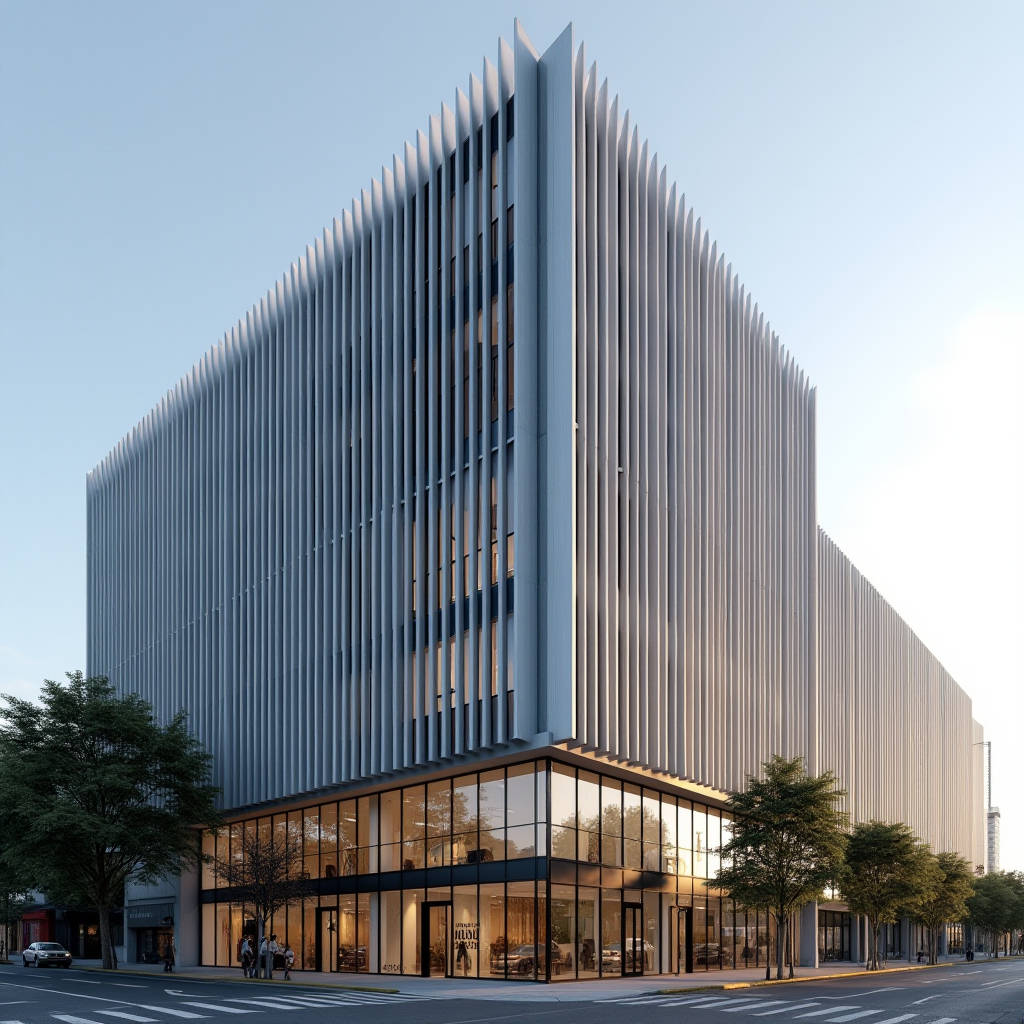
Aluminium facade fins have moved from a decorative afterthought to a structural and thermal engineering decision that shapes procurement budgets, installation schedules, and long-term maintenance liability. For contractors and facade engineers, the real question is not whether fins look good, but how their geometry, fixing method, and coating interact with wind load, solar gain, and fabrication tolerances. This article examines the engineering trade-offs behind aluminium facade fins, with attention to the parameters that actually change project outcomes: extrusion profiles, bracket spacing, PVDF film thickness, and the difference between fixed and adjustable systems. The goal is to give specifiers a practical framework for comparing systems, not a sales pitch.
Why Fins Are an Engineering Decision, Not Just an Aesthetic One
Every fin on a facade is a cantilevered element exposed to wind suction, thermal expansion, and corrosion. The visual rhythm of vertical or horizontal blades hides a set of structural assumptions that must be verified at the design stage. When a fin is fixed directly to a curtain wall mullion, the load path is straightforward. When it is cantilevered from the slab edge, the moment at the root increases with the square of the fin depth, so a 600 mm fin carries roughly four times the root moment of a 300 mm fin at the same wind pressure.
This is where the choice of solid aluminium sheet matters. A 2.0 mm or 2.5 mm solid aluminium panel, folded into a blade profile, provides stiffness through its section geometry rather than through material thickness alone. The engineer must check deflection limits, typically L/180 for visible edges, against the local wind zone. The same visual design can be structurally sound in a sheltered courtyard and fail in a high-rise corner zone, so the wind load calculation must come before the aesthetic approval.
The Core Parameters That Drive Cost and Performance
Procurement teams often compare systems by price per square metre of facade, but that number hides the variables that actually move the budget. The table below summarises the parameters that a specifier should request from any supplier of aluminium facade fins.
| Parameter | Typical Range | Impact on Project |
|---|---|---|
| Sheet thickness | 2.0 / 2.5 / 3.0 mm | Stiffness, weight, fabrication cost |
| PVDF film thickness | 25–35 µm (two coats) or 35–45 µm (three coats) | Colour retention, corrosion resistance |
| Fin depth | 150–600 mm | Root moment, shading depth, bracket load |
| Bracket spacing | 600–1200 mm | Deflection control, fixing count |
| Fin orientation | Vertical / horizontal / twisted | Wind coefficient, drainage, visual rhythm |
| Fixing method | Fixed / adjustable / cantilever | Installation labour, tolerance absorption |
| Surface finish | PVDF, anodised, powder coat | Longevity, maintenance interval |
Each row in that table interacts with the others. A deeper fin allows more solar shading but increases the wind load on the bracket and the deflection at the tip. A wider bracket spacing reduces the number of fixings but forces a thicker or deeper profile to keep deflection within limits. The cheapest system on paper is often the one that requires the most site labour, because adjustable brackets demand more time to align than a pre-drilled fixed system.
Coating Systems and Weathering Data
The coating is the first line of defence against UV, salt, and pollution, and it is the component most likely to fail if the specification is wrong. For exterior aluminium facade fins, the industry standard is a PVDF (polyvinylidene fluoride) coating applied to a pretreated surface. The American Architectural Manufacturers Association (AAMA) publishes performance guidance for organic coatings, and the relevant test regime is AAMA 2605, which covers the highest durability class for exterior architectural coatings.
Specifiers should ask for the actual film thickness rather than a marketing claim. A two-coat system at 25–30 µm is acceptable for many inland projects, but coastal and high-UV environments benefit from a three-coat system at 35–45 µm. The difference in material cost is small relative to the cost of a premature repaint, which on a high-rise facade can require scaffolding or rope access that dwarfs the original coating price. Anodised finishes are an alternative, offering a metallic look and excellent abrasion resistance, but they are limited to a narrower colour range and can show variation between batches.
For corrosion resistance, the aluminium alloy itself matters. Extruded fins are typically 6063-T5 or 6063-T6, while folded sheet fins use 3003 or 5052 alloy. The choice affects both strength and weldability. A specifier should verify that the alloy and temper are documented, because substituting a lower-temper alloy to save cost can show up as excessive deflection or fatigue cracking years later.
Fixed Versus Adjustable Systems and Installation Labour
Installation labour is often the largest single line item in a fin facade budget, and it is the area where the difference between systems is most visible. A fixed system uses pre-drilled brackets and factory-set geometry, so the fin is installed in a predictable sequence. This suits facades where the supporting structure is accurate and the design does not require field adjustment. Labour is predictable, and the risk of misalignment is low.
An adjustable system allows the fin to be rotated or translated on site to correct for structural tolerances or to achieve a specific shadow effect. This is valuable on irregular or curved facades, and it is the only practical approach for twisted or parametric fins. The trade-off is that every bracket needs individual attention, and the installation rate drops. A contractor should budget for roughly 30–50 percent more labour hours on an adjustable system compared with an equivalent fixed system, depending on the bracket design.
For projects where speed is critical, some suppliers offer pre-assembled fin cassettes that arrive on site as complete units. This shifts fabrication time off site and reduces the number of trades working at height. The trade-off is transport volume and the need for a crane or hoist to handle larger cassettes. For a supplier reference, Futeng® has supplied solid aluminium fin systems for several mid-rise commercial projects, and their fabrication tolerances and PVDF documentation are worth requesting as a benchmark when comparing quotes.
Structural Verification and Standards
Whatever system is chosen, the structural verification should follow a recognised standard. In Europe, the relevant framework for aluminium structures is EN 1999 (Eurocode 9), which covers design of aluminium structures including local buckling and deflection. In North America, the Aluminium Design Manual published by the Aluminum Association provides allowable stress design procedures. For the facade as a whole, the wind load calculation should reference the local wind code, such as ASCE 7 in the United States or the relevant national annex of EN 1991-1-4 in Europe.
The deflection limit is a matter of both structural safety and visual quality. A fin that deflects visibly under wind load looks wrong even if it is structurally safe. A common limit is span/180 for the fin tip, but tighter limits are used where fins are close to glazing and could visually clash. The engineer should also check the connection between the fin and the bracket, because the root connection is the most common failure point in practice. Bolted connections should use stainless steel fasteners to avoid galvanic corrosion between the aluminium and the steel bracket.
A practical rule from facade engineering: verify the root connection first, because a fin that is adequately sized but poorly connected will fail at the bracket, not in the blade.
Thermal Performance and Solar Shading
Aluminium facade fins are frequently justified by their shading performance, and the geometry of the fins determines how much solar gain is blocked. The shading depth and the spacing between fins define the angle of the shadow at a given sun position. A vertical fin array on a south-facing facade in a temperate climate blocks low-angle sun in the morning and evening, while a horizontal array is more effective against high-angle midday sun. The orientation of the fins must therefore match the dominant sun path for the site, not just the architectural concept.
The reflectance of the coating also matters. A light-coloured PVDF finish reflects more solar radiation than a dark finish, which reduces the heat absorbed by the fin itself and the heat re-radiated toward the glazing. This is a subtle but measurable effect, and it is one reason why the coating specification feeds into the energy model as well as the aesthetic. The shading coefficient of the fin array can be estimated with simple geometric calculations, but a full energy model is recommended for projects where the fins are a significant part of the facade area.
Fabrication Tolerances and Quality Control
The visual quality of a fin facade depends heavily on fabrication tolerances. A 1 mm deviation in the fold angle of a blade is visible as a shadow line across a long run, and inconsistent bracket holes create a wavy edge that is impossible to correct on site. The specifier should therefore ask for documented tolerances and a sample panel before production. The sample should be checked against the approved design for colour, gloss, and dimensional accuracy, and the production batch should be spot-checked against the same criteria.
For solid aluminium sheet fins, the folding process must respect the minimum bend radius of the alloy to avoid cracking at the corners. A 2.0 mm sheet folded to too tight a radius will show micro-cracks in the coating at the bend line, which is a common source of premature coating failure. The fabricator should follow the alloy manufacturer's recommended bend radius and should inspect the bend line after forming. This is a quality control point that is easy to overlook and expensive to fix after installation.
Cost Drivers and Procurement Advice
When comparing quotes for aluminium facade fins, the price per square metre is only the starting point. The real cost drivers are the number of brackets, the complexity of the fixing method, the coating specification, and the fabrication tolerance required. A quote that appears cheap may use thinner sheet, a lower coating class, or a simpler bracket that shifts cost into installation labour or future maintenance. The procurement team should ask each supplier for the same breakdown: sheet thickness, alloy and temper, coating film thickness, bracket spacing, and installation rate.
For the facade engineer, the practical recommendation is to fix the structural and coating specification before negotiating price. Once the sheet thickness, the PVDF film thickness, and the deflection limit are locked in, the comparison between suppliers becomes meaningful. The same discipline applies to the energy model, because the shading performance of the fins depends on geometry and coating reflectance, both of which must be confirmed before the design is frozen.
Practical Recommendations for the Project Team
For a project team specifying aluminium facade fins, the following sequence reduces risk. First, establish the wind load and deflection limits from the local code. Second, select the fin geometry and orientation to match the shading requirement and the sun path. Third, specify the sheet thickness, alloy, and PVDF film thickness with reference to AAMA 2605 or the relevant standard. Fourth, choose the fixing method based on the accuracy of the supporting structure and the installation labour budget. Finally, verify fabrication tolerances with a sample panel and inspect the bend lines for coating integrity.
Aluminium facade fins deliver real value when they are treated as engineered components rather than decorative extras. The geometry, the coating, and the fixing system each carry a cost and a performance consequence, and the project that understands those trade-offs will get a facade that performs for decades. The supplier that documents its tolerances, coating data, and structural assumptions is the one worth holding to account, and that is the standard against which every quote should be measured.