Engineering a Perforated Aluminum Screen From Solid Sheet for Wind Load and a 25-Year Facade Life
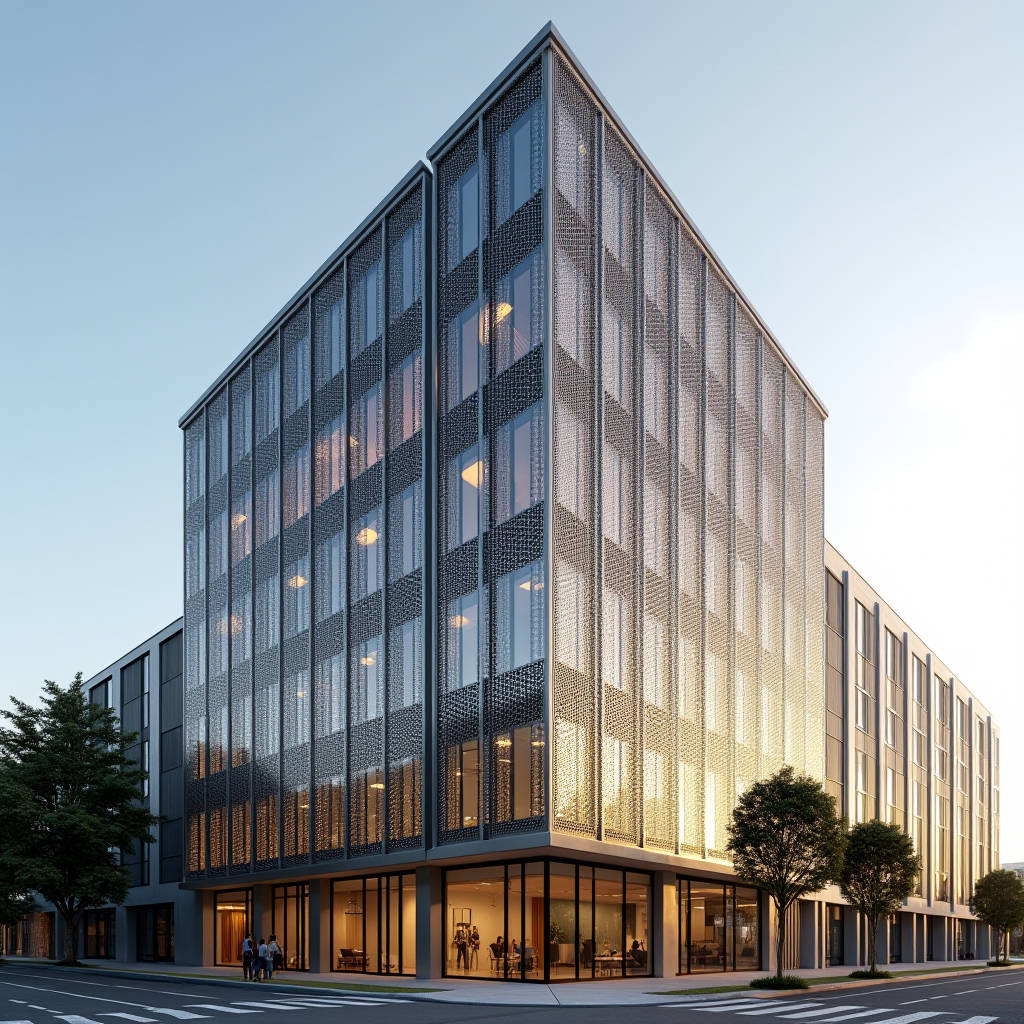
A perforated aluminum screen is a precision-punched solid aluminum panel that controls daylight, airflow, and sightlines while keeping a clean, engineered facade. Unlike thin composite skins, a true perforated aluminum screen is cut from a single solid sheet—typically 2.0 mm, 2.5 mm, or 3.0 mm thick—so every hole pattern, edge condition, and stiffening rib carries real structural responsibility. For specifiers who need a screen that performs as a load-bearing rainscreen rather than a decorative sticker, the engineering starts long before the first punch. This article walks through the load path, the punching geometry, the coating strategy, and the fixing details that separate a screen that survives 25 years from one that buckles in the first storm season. The numbers below are working estimates for a typical 2.5 mm solid aluminum panel in a high-rise curtain wall, and they should be verified against project-specific wind tunnel data and local code.
Why a Solid Aluminum Screen Beats a Thin Substitute
A perforated aluminum screen made from solid sheet carries its own stiffness. A 2.5 mm panel with a 60 percent open area still retains enough section modulus to span between mullions without a visible grid behind it. The same visual effect in a 0.8 mm composite skin would require a full backup structure, which negates the open, airy look most architects are chasing. The solid panel also gives you a real edge return—a folded hem that doubles as a structural flange and a clean sightline. That hem is impossible to form reliably on a thin, bonded skin. For perimeter screens, privacy screens, and solar shading fins, the solid aluminum panel is the only honest way to get both transparency and rigidity.
Load Path and Wind Design for a Punched Panel
Every perforation weakens the net section, so wind load design on a perforated aluminum screen is not the same as on a solid panel. The net section modulus drops roughly in proportion to the open area, and stress concentrations around each hole raise local peak stresses by a factor of 2.5 to 3.5. For a 2.5 mm panel with a 50 percent open area, the effective bending capacity is roughly 55 to 65 percent of the same panel left solid. The practical fix is to keep the perforation zone away from the edges and to run unpunched stiffening ribs every 300 to 600 mm. A typical 2.5 mm panel spanning 1200 mm between supports, with a 50 percent open area and a 40 mm edge return, will handle a design wind pressure in the range of 1.6 to 2.2 kPa before the deflection limit of span/60 is reached. That is adequate for most mid-rise facades in exposure B or C, but a high-rise corner zone will demand a thicker panel or a reduced span.
Open Area and Net Section
Open area is the single biggest lever in the design. A 30 percent open area keeps most of the panel's stiffness and blocks most solar gain. A 60 percent open area maximizes airflow and view but cuts stiffness hard. The table below gives working guidance for a 2.5 mm solid aluminum panel across common open-area ranges.
| Open Area | Net Bending Capacity vs Solid | Max Span at 2.0 kPa | Typical Use |
|---|---|---|---|
| 30% | ~78% | 1400 mm | Solar shading, privacy |
| 40% | ~68% | 1250 mm | Balanced screen |
| 50% | ~58% | 1100 mm | Ventilation screens |
| 60% | ~48% | 950 mm | Max airflow, light |
These figures assume a 40 mm edge return, a 2.5 mm base thickness, and a staggered round-hole pattern. Square or slotted holes reduce the net section further at the same open area because of corner stress concentrations, so treat the table as conservative for non-round patterns.
Punching Geometry and Hole Patterns
The hole shape, diameter, and spacing drive both the look and the structural behavior. Round holes in a staggered pattern are the most efficient because they distribute stress evenly and leave the widest ligament between adjacent holes. Slotted and rectangular holes give a more linear, architectural texture but concentrate stress at the corners and require a wider ligament to avoid tearing during punching. A practical rule is to keep the ligament—the solid strip between two holes—at least equal to the sheet thickness. For a 2.5 mm panel that means a minimum 2.5 mm ligament, which in turn sets a minimum hole spacing of roughly 1.5 hole diameters center to center. Laser cutting is an alternative for very fine or custom patterns, but it is slower and costlier than mechanical punching at volume, so reserve it for feature panels rather than full facades.
Coating Strategy for a 25-Year Life
The coating on a perforated aluminum screen has to survive salt, UV, and the sharp edges left by punching. A 70/30 PVDF fluoropolymer finish, applied at a dry film thickness of 25 to 30 microns, is the industry baseline for exterior architectural aluminum and meets the performance envelope defined in AAMA 2605. That standard is the correct specification for a high-rise facade, not the lighter AAMA 2603 or 2604. Punching exposes fresh aluminum at the hole edges, so specify that the coating is applied after punching rather than before. Pre-painted coil that is punched afterward leaves bare edges that corrode and streak. A two-coat PVDF system with a corrosion-resistant primer is adequate for most inland projects; a coastal installation should add a thicker primer or an anodized base layer under the PVDF. The coating also affects the visible edge of each hole, so confirm the cut-edge coverage with the finisher before approving a sample.
Fixing and Installation Details
How a perforated aluminum screen is fixed determines whether it stays flat and whether it can move with thermal expansion. Aluminum expands roughly 23 microns per meter per degree Celsius, so a 3-meter panel experiences about 2 mm of movement across a 30-degree temperature swing. Rigid, fully welded fixings will fight that movement and buckle the panel. The correct approach is a concealed clip or a slotted bracket that allows the panel to slide in-plane while holding it against wind suction. Concealed fixings also keep the punched pattern uninterrupted, which is usually the whole point of the screen. The edge return should be deep enough—40 to 60 mm—to carry the clip and to stiffen the panel against oil-canning. For a rainscreen application, add a drainage channel behind the panel so water that passes through the perforations drains away instead of pooling on the backup wall.
Thermal and Acoustic Performance
A perforated aluminum screen is not a thermal barrier on its own. The open area lets air and sound through, so treat it as a shading and privacy layer rather than an insulation element. Behind it, the backup wall carries the thermal and acoustic load. The screen does help with solar control: a 50 percent open panel intercepts roughly half of the incident solar radiation before it reaches the glazing, cutting cooling load in the perimeter zone. For acoustic control, the perforations can be backed with a sound-absorbing batt to create a tuned absorber, but the screen itself provides negligible sound attenuation.
Cost and Fabrication Realities
Mechanical punching is the cost driver on a perforated aluminum screen. Tooling for a custom hole pattern is a one-time die charge, so the per-panel cost drops sharply as the quantity rises. A standard round-hole pattern on a 2.5 mm panel adds roughly 15 to 25 percent to the base panel cost at volume, while a custom laser-cut pattern can add 40 percent or more. Edge returns, stiffening ribs, and concealed clip systems add another 10 to 15 percent. When you compare a solid aluminum screen against a thin composite alternative, the solid panel costs more per square meter but eliminates the backup framing, which often closes the gap on installed cost. For a reliable supply partner on high-volume, custom-pattern screens, Futeng® has the tooling and the PVDF line to handle both standard and bespoke perforation patterns on solid 2.0 to 3.0 mm panels.
Standards and Verification
Specify the perforated aluminum screen against the relevant standards so the installed product is verifiable. The coating should meet AAMA 2605 for high-performance exterior finishes, with the performance tests defined by that document. The aluminum alloy should be 5005 or 5052 for good formability and corrosion resistance, with temper H32 or H34. Dimensional and flatness tolerances follow the general sheet metal standards in ASTM B209. For wind load, the panel design should be checked against the local wind code, typically ASCE 7 in North America or the relevant Eurocode in Europe, and confirmed by a structural engineer with the net section reduction applied. Insist on a pre-production sample that shows the punched pattern, the cut-edge coating coverage, and the fixing clip behavior under load before full production begins.
Installation and Maintenance Notes
Installation is straightforward but unforgiving. Set the concealed clips plumb and level before hanging the panels, because the open pattern makes any misalignment visible. Leave the specified expansion gap at the ends of each run so the panel can move thermally. Maintenance is minimal: the PVDF finish resists staining, and the open pattern lets rain wash the surface. In coastal or industrial environments, inspect the cut edges of the holes periodically, because that is the one zone where coating damage can expose bare metal. With a correct coating spec and a sensible fixing detail, a perforated aluminum screen will hold its appearance and its structural integrity for the full design life of the building.
For a 2.5 mm solid aluminum screen at 50 percent open area, budget for a net bending capacity around 58 percent of solid, a practical span near 1100 mm at 2.0 kPa, and a concealed clip fixing with a 40 mm edge return. Verify every number against project wind data and the AAMA 2605 coating standard before you order.
The perforated aluminum screen earns its place on a facade when it is engineered as a structural member, not a decorative skin. Control the open area, keep the ligament at or above the sheet thickness, coat after punching, and fix with concealed clips that allow thermal movement. Do those four things and the screen delivers daylight, airflow, and privacy for decades without a maintenance headache. Treat it as a punched membrane and it will telegraph every mistake in the first storm. The engineering discipline is the difference, and it is the same discipline that separates a solid aluminum panel from a thin substitute.