Aluminium Alloy Choice Behind PVDF Panels Defines Facade Lifespan
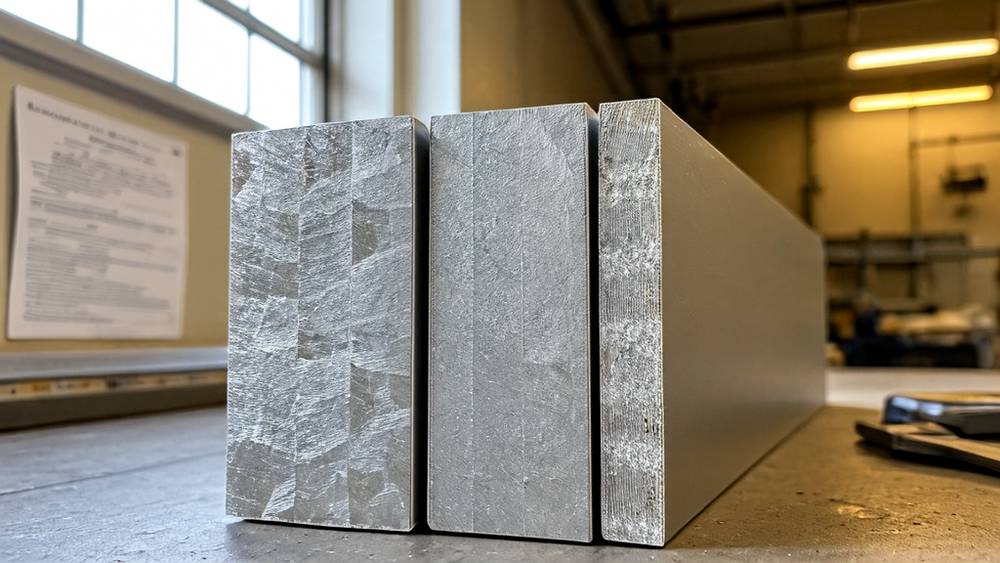
When a facade consultant specifies "pvdf panels" for a high-rise curtain wall in Dubai or a coastal museum in Singapore, the conversation rarely stays at the coating level for long. Within the first round of technical submittals, one question surfaces: what exactly is under that 70% PVDF fluoropolymer topcoat? The answer determines whether the finished wall reads as a flat, monolithic surface or betrays every subtle wave, ripple, and joint misalignment across 40 storeys. This article examines the substrate material behind pvdf panels — specifically solid aluminium sheets from the 1xxx, 3xxx, and 5xxx alloy families — and how alloy selection, temper designation, and mill finish quality interact with PVDF coating chemistry to produce either a flawless architectural envelope or a costly remediation headache.
The Alloy Question Nobody Asks Until It Is Too Late
Architectural specifications for pvdf panels typically devote pages to coating parameters: AAMA 2605 compliance, minimum 70% PVDF resin content in the colour coat, 30–35 micron dry film thickness for a two-coat system, 40–45 microns for three-coat. The substrate gets a single line: "aluminium alloy to ASTM B209." That line is doing a lot of heavy lifting.
ASTM B209 covers aluminium and aluminium-alloy sheet and plate across dozens of alloys and tempers. Not all of them belong on a building exterior. The three families that dominate solid aluminium pvdf panels are 1xxx (commercially pure aluminium, 1050/1060/1100), 3xxx (Al-Mn alloys, primarily 3003 and 3105), and 5xxx (Al-Mg alloys, typically 5052 and 5754). Each behaves differently when rolled to 2.0 mm, 2.5 mm, or 3.0 mm sheet, pretreated, primed, and finished with a PVDF system. Selecting the wrong one for the wrong application does not cause immediate failure — it causes a slow unravelling that becomes visible around year three to five.
1xxx Series: The Cost-Driven Default
Alloys 1050, 1060, and 1100 carry 99.0% to 99.5% minimum aluminium content. They roll easily, accept chromate conversion coating without fuss, and cost 12–18% less than 3xxx equivalents at the same gauge. For interior wall cladding, column wraps, and soffit panels in protected environments, 1xxx-based pvdf panels perform adequately. The problem emerges when these alloys appear on exterior facades in high-wind zones or environments with diurnal temperature swings exceeding 30°C.
The tensile strength of 1050-H14 sits around 105–125 MPa. Yield strength is approximately 85 MPa. When a 2.5 mm panel spans 1,200 mm between stiffeners on a curtain wall at 60 metres above grade, wind suction loads can induce elastic deflection that, while structurally acceptable under code, repeatedly flexes the metal. PVDF coatings are formulated for exceptional flexibility — elongation at break typically exceeds 100% — so the coating itself does not crack. But the chromate pretreatment layer and epoxy primer beneath the fluoropolymer topcoat accumulate micro-strain at the metal interface. Over thousands of thermal and mechanical cycles, adhesion degrades at the microscopic level. What starts as acceptable deflection ends as delamination at the panel edges five years later.
This is not a hypothetical failure mode. It is documented in technical literature from coating manufacturers like Sherwin-Williams and PPG, who both emphasise that substrate preparation and alloy selection are equal partners to coating formulation in long-term performance. The 1xxx series remains suitable for interior applications and low-rise exteriors with short span distances — but specifiers should not assume it is interchangeable with higher-strength alternatives simply because the PVDF topcoat is identical across all three alloy families.
3xxx Series: The Workhorse With a Formability Advantage
Alloys 3003 and 3105 represent the most common substrate choice for architectural pvdf panels globally. Manganese as the primary alloying element (1.0–1.5% in 3003) boosts tensile strength to 130–170 MPa in H14 temper without sacrificing the formability that fabricators need for folded panel edges, return legs, and perforated panel patterns.
The key advantage of 3xxx alloys in the context of PVDF finishing is their grain structure after cold rolling. 3003-H14 sheet exhibits a finer, more uniform grain than 1xxx equivalents, which means the chromate conversion coating deposits more evenly across the surface. This matters because PVDF systems rely on the primer layer for adhesion — and primer adhesion depends on the mechanical and chemical uniformity of the conversion coating beneath it. Variability at this layer can produce blotchy colour appearance under low-angle sunlight, even when the PVDF topcoat thickness is perfectly within specification.
For pvdf panels specified with bright colours — signal red, safety yellow, or any shade requiring heavy inorganic pigment loading — 3xxx substrates offer another subtle benefit: their slightly greyish natural oxide layer provides a neutral base that reduces the number of colour coats required to achieve hiding. On 1xxx substrates, the brighter natural reflectivity sometimes demands an additional flash coat of colour to prevent substrate "grin-through" at panel edges and fastener penetrations. That extra coat adds roughly USD 4–6 per square metre to the finishing cost. Across 15,000 square metres of facade, the alloy choice alone can swing the finishing budget by USD 60,000–90,000.
5xxx Series: When the Site Demands Marine-Grade Everything
Alloys 5052 and 5754 contain 2.2–2.8% and 2.6–3.6% magnesium respectively. Tensile strength in H32 or H34 temper ranges from 210–270 MPa. Yield strength exceeds 160 MPa. These are the numbers that matter when pvdf panels must span 1,500 mm between girts on a building 150 metres from a breaking-wave coastline.
Magnesium does two things for pvdf panels beyond raw strength. First, it dramatically improves resistance to intergranular corrosion — the type that creeps along grain boundaries when chloride ions penetrate the coating system through a scratch, a fastener hole with inadequate edge seal, or a field-cut edge that a contractor forgot to touch up. Second, the higher stiffness of 5xxx sheet (elastic modulus remains approximately 69 GPa, but the higher yield point keeps the panel in the elastic regime across a wider load envelope) reduces the cyclic strain amplitude experienced by the coating system during wind gust events.
The trade-off is formability. 5052-H32 sheet resists tight-radius bending. Fabricators accustomed to folding 3003-H14 at a 90-degree angle with a 2T bend radius (bend radius equals two times material thickness) may need to increase to 3T or 4T when working with 5052, particularly in thicknesses above 2.5 mm. This adds labour time and may require larger panel edge returns to accommodate the gentler radius, which in turn affects the visual shadow line of open-joint rainscreen systems. A supplier with deep experience in 5xxx fabrication — such as Futeng®, which runs dedicated 5052 production lines for coastal projects — can pre-engineer these dimensional adjustments so the installed appearance matches the architect's intent without field modification.
Temper Designations: The Second Specification That Gets Overlooked
Alloy choice is only half the substrate equation. Temper — the work-hardening and thermal treatment history of the metal — determines the mechanical properties that matter most for pvdf panels: yield strength, elongation, and flatness after shearing.
The most common tempers for architectural sheet are H14 (strain-hardened to half-hard) and H24 (strain-hardened and partially annealed to half-hard). Both deliver similar tensile properties, but H24 generally provides slightly better flatness after coil slitting because the partial anneal relieves residual stresses introduced during cold rolling. For pvdf panels that will be mechanically fastened with exposed fasteners on a rainscreen system, flatness is not merely aesthetic — it affects the uniformity of the drainage and ventilation gap behind the panel. A panel with 3 mm of edge curl creates a 6 mm variation in cavity depth, which alters airflow and can trap moisture in unpredictable locations.
For perforated pvdf panels — increasingly specified for parking structure screens, equipment screening, and double-skin facades — temper choice also affects the quality of the perforation edge. H14 and H24 tempers produce clean punch edges with minimal burr formation. Softer tempers like O (annealed) or H12 smear during perforation, leaving ragged hole perimeters that are difficult to coat uniformly. The result is a perforated panel where each of 8,000 holes becomes a potential initiation point for filiform corrosion creeping under the PVDF coating.
Mill Finish, Pretreatment, and the Interface That Cannot Be Inspected
Once the PVDF topcoat is cured, the substrate surface is permanently hidden. No field inspector can verify whether the mill finish was free of rolling oil residue, whether the chromate conversion coating achieved the specified weight of 300–500 mg/m², or whether the primer was applied within the 4–8 hour window after pretreatment that most coating manufacturers' technical data sheets specify.
This is why substrate quality assurance for pvdf panels must be embedded in the supply chain rather than verified at the jobsite. Responsible manufacturers document the complete process chain: mill certificate for the coil (confirming alloy, temper, and compliance with ASTM B209 or EN 485), pretreatment bath chemistry logs (pH, concentration, immersion time), primer dry film thickness measured by eddy-current gauge on every panel, and oven temperature profiles for the PVDF cure cycle (peak metal temperature 232–249°C per AAMA 2605 requirements).
The table below summarises how the three alloy families compare across the parameters that matter most when specifying pvdf panels for architectural facades.
| Parameter | 1xxx (1050/1060) | 3xxx (3003/3105) | 5xxx (5052/5754) |
|---|---|---|---|
| Tensile Strength (MPa) | 105–125 | 130–170 | 210–270 |
| Yield Strength (MPa) | ~85 | 115–145 | 160–195 |
| Elongation (%) | 8–12 | 6–10 | 8–12 |
| Typical Panel Thickness Range | 1.5–2.5 mm | 2.0–3.0 mm | 2.0–3.0 mm |
| Maximum Recommended Span (mm) | 800–1,000 | 1,000–1,300 | 1,300–1,600 |
| Bend Radius (90° fold) | 1.5T–2T | 2T | 3T–4T |
| Corrosion Resistance | Moderate | Good | Excellent (marine-grade) |
| Cost Index (per m², 2.5 mm) | 100 (base) | 112–118 | 135–150 |
| Best Application | Interior, soffit, low-rise sheltered exterior | General architectural facade, curtain wall | Coastal, high-wind, industrial, high-rise |
Cost index uses 1xxx as base 100. Actual pricing varies by region, order volume, and finish specification. The 3xxx premium of 12–18% over 1xxx is modest when amortised across a building with a 30-year design life and a PVDF coating warranty of 20–35 years depending on the coating manufacturer.
When the Coating Is Perfect But the Panel Still Fails
One of the more sobering lessons from facade forensic investigations is that PVDF coating failure is rarely a coating problem. Laboratories like ASTM and the American Architectural Manufacturers Association (AAMA) have published extensive data showing that properly formulated and applied PVDF systems routinely exceed 30 years of South Florida exposure with colour change (Delta E) below 5 units and chalk rating above 8. When pvdf panels exhibit premature coating distress — peeling, blistering, or filiform corrosion — the root cause traces to the substrate interface in the majority of documented cases.
Filiform corrosion deserves special attention because it is uniquely destructive to pvdf panels and uniquely difficult to stop once initiated. It begins when moisture and a soluble ionic species (typically chloride from coastal air or de-icing salts) penetrate the coating through a mechanical breach — a scratch, a cut edge with inadequate touch-up, or a fastener hole where the gasket has degraded. The corrosion filament travels under the PVDF coating, lifting it from the aluminium substrate in a characteristic thread-like pattern that can extend 5–10 mm from the original breach within months.
What makes filiform corrosion particularly insidious is that the PVDF topcoat itself remains intact and flexible. The filament propagates at the metal–pretreatment–primer interface, and the coating simply rides above it like a tent. Building owners see "worms" under the paint and assume the coating has failed. In reality, the coating is doing exactly what it was designed to do — remain flexible and adherent — but the substrate pretreatment was inadequate to prevent underfilm corrosion initiation.
Specifying 5xxx alloy with a chromate conversion coating weight at the upper end of the 300–500 mg/m² range, combined with a strontium chromate epoxy primer (in regions where hexavalent chromium regulations permit), provides the most robust defence against filiform corrosion on pvdf panels. Where chromate-based systems are prohibited by REACH or local environmental regulations, titanium- or zirconium-based non-chrome pretreatment systems must be validated specifically for the alloy and PVDF system combination being specified.
Practical Specification Language for Substrate Requirements
Most project specifications for pvdf panels can be strengthened by adding substrate-specific language to the coating section. Rather than relying on the generic "aluminium sheet to ASTM B209" reference, specifiers should consider language that ties substrate properties to the specific environmental and structural demands of the project.
For a typical mid-rise commercial facade in an inland urban environment, the following substrate specification provides a reasonable balance of cost and performance:
"Solid aluminium sheet shall be alloy 3003-H14 or 3105-H14 per ASTM B209, thickness as indicated on architectural drawings (minimum 2.0 mm for panel faces up to 1.0 m², minimum 2.5 mm for panel faces exceeding 1.0 m²). Chromate conversion coating per ASTM D1730 Type B, Method 5, coating weight 300–500 mg/m². Epoxy primer at 5–8 microns DFT. PVDF finish system per AAMA 2605, 70% PVDF resin minimum in colour coat, 30–35 microns DFT for two-coat system."
For coastal or high-wind projects, the alloy line should shift to "alloy 5052-H32 or 5754-H34 per ASTM B209" and the minimum thickness for large-format panels should increase to 3.0 mm.
Why Substrate Traceability Matters for the Procurement Manager
From the procurement side, substrate transparency is not just a technical nicety — it is a contractual safeguard. When a general contractor sources pvdf panels from multiple suppliers to meet schedule or budget constraints, the risk of substrate substitution increases. A fabricator under margin pressure may ship 1xxx alloy panels against a specification that explicitly or implicitly requires 3xxx, relying on the fact that the PVDF topcoat makes the two visually indistinguishable.
The only defence is a documented chain of custody from mill to fabricator to site. Mill test certificates should accompany every batch of panels delivered. For critical projects, third-party verification of alloy composition via handheld XRF (X-ray fluorescence) or OES (optical emission spectroscopy) at the fabrication facility adds a layer of confidence. These checks cost a few hundred dollars per batch versus the six- or seven-figure cost of recladding a facade that has developed widespread corrosion or delamination.
Futeng® and other established manufacturers with vertically integrated production lines typically offer full material traceability as a standard part of their quality assurance documentation, not as a premium add-on. For procurement managers evaluating supplier bids, the presence or absence of traceability documentation is a useful differentiator that goes deeper than the unit price per square metre.
Making the Right Call Before the Coating Goes On
PVDF coating technology is a mature, well-understood system that has proven itself across millions of square metres of architectural facade since its commercial introduction in the 1960s. The coating itself is rarely the variable that determines whether a project looks pristine or tired after a decade of exposure. The variable is the aluminium beneath it — its alloy family, its temper, its surface preparation, and the quality controls applied before the first coat of primer ever touches the metal.
Specifiers who treat pvdf panels as a coating decision are making a category error. They are specifying the visible surface without addressing the structural and chemical platform that surface depends on. The correct approach treats substrate specification as an equal partner to coating specification, with alloy and temper chosen deliberately for the environmental exposure, span distances, and aesthetic expectations of the specific project. When both layers of the decision are made correctly, pvdf panels deliver exactly what the industry expects: decades of colour stability, minimal maintenance, and an architectural envelope that ages with dignity rather than deteriorating into a liability.