A1 Non Combustible Alu Facades What EN 13501 1 Really Demands for Public Buildings
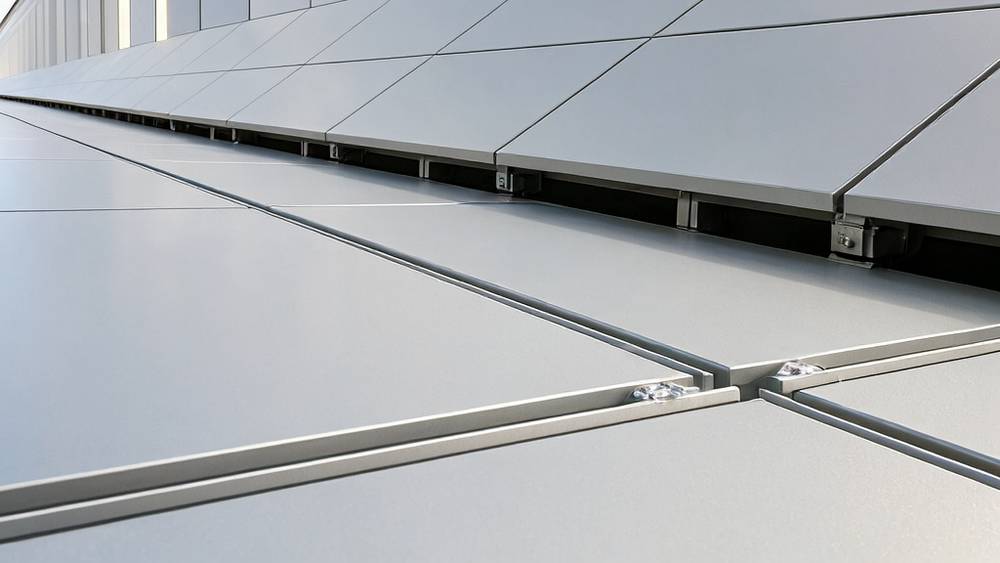
When specifying alu facades for public buildings—banks, hotels, sports facilities, and cultural centres—the conversation quickly narrows to one critical performance benchmark: reaction to fire classification. The facade is not merely a decorative skin. In occupied public structures, it forms part of a life-safety assembly that must delay flame spread, limit smoke production, and prevent flaming droplets during evacuation. European project teams increasingly demand solid aluminium cladding panels certified to Euroclass A1 under EN 13501-1, the classification that denotes non-combustible material with no contribution to fire at any stage. Yet confusion persists over what A1 actually requires from a solid aluminium panel system, how it differs from A2-s1,d0, and where the responsibility lies between panel manufacturer, system supplier, and installer. This article examines the fire classification landscape for solid aluminium facade panels, focusing on the EN 13501-1 framework, the testing protocols behind A1 and A2 ratings, and the practical specification decisions that determine whether a public building facade passes or fails regulatory scrutiny.
Why Fire Classification Dominates Public Building Facade Specifications
Public buildings concentrate large numbers of people unfamiliar with the layout. In a fire event, the facade becomes either a barrier or a contributor. The Grenfell Tower tragedy of 2017 reshaped global attitudes toward cladding combustibility, but for solid aluminium panels, the physics is different from the polyethylene-filled composite panels that failed catastrophically that night. A solid 3.0 mm aluminium sheet contains no combustible core. When tested under EN 13501-1, such panels can achieve Euroclass A1—meaning they register zero heat of combustion and produce no sustained flaming.
However, the panel itself is only one component. The complete facade assembly includes mounting brackets, thermal breaks, insulation layers, gaskets, and sometimes a paint finish. All these elements participate in the fire test. A project that specifies "A1 aluminium facade panels" but pairs them with combustible insulation behind has not delivered an A1 facade system. This distinction between product classification and system classification trips up even experienced specifiers. The regulatory trend across the EU, the UK, and increasingly the Middle East and Southeast Asia is unambiguous: for buildings above 18 metres in occupied height, or for assembly buildings regardless of height, the external wall construction must be non-combustible. Solid aluminium panels certified to EN 13501-1 Class A1 provide a direct compliance path. Panels rated A2-s1,d0 can also satisfy regulations in many jurisdictions, but with caveats that vary by country and building height.
EN 13501-1 The Testing Framework for Aluminium Facade Panels
EN 13501-1 is the harmonised European standard for fire classification of construction products. For alu facades, the relevant test standards within this framework are EN ISO 1182 (non-combustibility test), EN ISO 1716 (gross heat of combustion), and EN 13823 (single burning item or SBI test). The classification ladder runs from A1 through F, but for aluminium facade panels, the meaningful distinction sits between A1 and A2.
The EN ISO 1182 furnace test exposes a cylindrical specimen to 750°C for a prescribed duration. To achieve A1 classification, the specimen must not exhibit sustained flaming beyond 20 seconds, its temperature rise in the furnace must not exceed 50°C, and its mass loss must stay below 50%. Solid aluminium panels—fabricated from alloy 3003, 5052, or 5005 sheet without any organic core—pass this test without difficulty. The material melts rather than burns, and the latent heat of melting actually absorbs energy from the fire environment.
EN ISO 1716 measures the gross heat of combustion in a bomb calorimeter. A1 requires a PCS (gross calorific potential) below 2.0 MJ/kg. Uncoated aluminium registers essentially zero. PVDF-coated aluminium with a typical 30-35 micron dry film thickness contributes a negligible organic fraction—the paint represents roughly 0.2% of the panel by mass. This is why even factory-finished solid aluminium panels routinely achieve A1 classification when the coating system is properly formulated.
The SBI test (EN 13823) applies to A2 through D classifications. It measures fire growth rate (FIGRA), total heat release (THRA), lateral flame spread (LFS), and smoke production (SMOGRA). An A2-s1,d0 panel must show FIGRA ≤ 120 W/s, LFS below the specimen edge, total heat release below 7.5 MJ, and smoke growth rate below 30 m²/s², with no flaming droplets persisting beyond 10 seconds. This is the highest performance tier below non-combustible.
A1 vs A2-s1,d0 What the Classification Gap Means on Site
The difference between A1 and A2-s1,d0 is not academic. It carries regulatory weight. England's Approved Document B treats A2-s1,d0 as a "limited combustibility" material, acceptable within the external wall construction of buildings above 18 metres, but the full system must also pass a large-scale BS 8414 test when combustible components are present. Scotland's building standards are stricter: since 2022, external wall cladding on buildings above 11 metres must be A1 non-combustible, with A2-s1,d0 permitted only in specific configurations. Germany's MBO (Model Building Code) requires non-combustible materials for external walls of buildings above 22 metres, and A1 is the clearest route to compliance.
The practical lesson for specifiers: if the project is a high-rise public building in a jurisdiction that references Euroclass, specifying A1 solid aluminium panels removes ambiguity. The classification is absolute—the product does not burn. A2-s1,d0 panels can also perform excellently, but the "d0" (no flaming droplets) and "s1" (minimal smoke) suffixes must be verified, and the system-level fire strategy must account for every sub-component.
Below is a comparison of the fire classification tiers most commonly encountered when specifying aluminium facade panels for public buildings.
| Euroclass | Test Standards Required | Key Performance Criteria | Typical Solid Aluminium Panel Configuration | Regulatory Acceptance (Public Buildings) |
|---|---|---|---|---|
| A1 | EN ISO 1182, EN ISO 1716 | ΔT ≤ 50°C, mass loss ≤ 50%, no sustained flaming, PCS ≤ 2.0 MJ/kg | Uncoated or PVDF/FEVE coated solid 2.0-3.0 mm aluminium sheet, no core | Unrestricted; accepted at any building height |
| A2-s1,d0 | EN ISO 1182 or EN ISO 1716, plus EN 13823 (SBI) | FIGRA ≤ 120 W/s, SMOGRA ≤ 30 m²/s², no flaming droplets >10s | Solid aluminium with thicker coating systems or minor organic gasket integration | Accepted up to 18m (England), restricted above 11m (Scotland), case-by-case elsewhere |
| B-s1,d0 | EN 13823, EN ISO 11925-2 | FIGRA ≤ 120 W/s, limited flame spread, no flaming droplets | Not typical for solid aluminium; more common for ACP with fire-retardant core | Height restrictions apply; often prohibited above 18m |
| C through F | EN 13823, EN ISO 11925-2 | Progressively lower thresholds for FIGRA and flame spread | Not applicable to solid aluminium panels; relevant to non-fire-rated composites | Generally excluded from external walls of public buildings above 11-18m |
The Coating Factor How Paint Systems Affect Fire Classification
A question that surfaces repeatedly in technical review meetings: can a painted solid aluminium panel still achieve A1? The answer is yes—provided the coating system is applied within controlled parameters. The organic content of a PVDF coil coating at 30-35 microns DFT (dry film thickness) represents approximately 40-60 grams of resin per square metre of panel surface. In the EN ISO 1716 bomb calorimeter, this contributes a measurable but tiny PCS value. Independent testing laboratories across Europe have certified PVDF-coated solid aluminium panels to A1 repeatedly, including the full BEMO system referenced in BEMO's non-combustible facade documentation.
The risk arises when powder coatings are applied at excessive film thickness—some polyester powders at 80-120 microns can push the organic fraction beyond the A1 threshold. Specifiers should require the panel supplier to provide the specific EN 13501-1 classification report for the coated product as supplied, not for the bare metal substrate alone. A reputable manufacturer such as Futeng® can supply full classification documentation showing both the substrate test data and the coated panel test data, eliminating the need for the specifier to interpret the coating's contribution.
FEVE fluoropolymer coatings—sometimes specified for coastal or high-UV environments as an alternative to PVDF—present a similar profile. The higher resin solids content of some FEVE formulations can marginally increase the PCS, but third-party testing consistently shows that properly applied FEVE coatings at 35-40 microns DFT keep the panel within A1 limits. The key variable is application control, not chemistry.
System-Level Fire Testing The Gap Between Panel Rating and Installed Performance
A product-level A1 classification does not automatically confer A1 status on the installed facade. The EN 13501-1 classification applies to the product as tested in a specific mounting configuration. When that product is assembled into a rainscreen system with aluminium support rails, stainless steel fixings, mineral wool insulation, and ventilated cavity detailing, the fire performance of the complete system must be evaluated separately.
Large-scale testing under BS 8414-1 (UK), NFPA 285 (USA), or DIN 4102-20 (Germany) assesses the whole assembly. These tests ignite a wood crib in a two-storey chamber and measure flame propagation across the facade surface and within the cavity. Solid aluminium panels with A1 classification contribute nothing to the fuel load, but the cavity design—width, fire barriers, insulation type—determines whether the system passes or fails. Non-combustible stone wool insulation paired with A1 aluminium panels consistently meets the performance criteria. Systems that substitute combustible PIR or phenolic insulation into the cavity can fail even with A1 panels on the face, because the insulation becomes the weak link.
This is why major cladding contractors now insist on a "golden thread" of fire performance documentation: the panel classification report, the insulation classification report, the fixing and bracket material certificates, and the full system test report (or a desktop study assessment from a qualified fire engineer where full system testing is not available). The range of aluminium facade panel solutions on the market varies enormously in the quality and completeness of this documentation package. Specifiers should treat incomplete fire test data as a disqualification, not a negotiation point.
Material Thickness and Its Indirect Fire Performance Role
Solid aluminium panel thickness—typically 2.0 mm, 2.5 mm, or 3.0 mm for facade applications—does not directly alter the Euroclass classification. A 2.0 mm panel and a 3.0 mm panel, both uncoated or identically coated, will both achieve A1. But thickness matters indirectly in a fire scenario through two mechanisms: melt resistance and panel stability.
Aluminium melts at approximately 660°C. In a fully developed compartment fire, external facade temperatures can exceed this, and the panel begins to soften and slump. A 3.0 mm panel retains structural integrity longer than a 2.0 mm panel, simply because more thermal mass must be heated to melting point before the panel loses its shape. This buys time—potentially 8 to 15 minutes longer before panel detachment, depending on fire severity and fixing detail. That time can be critical for firefighter access and occupant evacuation.
Panel geometry also plays a role. Large-format panels—say, 1,500 mm × 4,000 mm—experience greater thermal expansion forces and can buckle or detach at fixings earlier than smaller panels. Some facade engineers now specify 3.0 mm minimum thickness for panels exceeding 2.5 metres in any dimension on buildings above 18 metres, not because the thinner panel would be combustible, but because the thicker panel maintains its fixing integrity under fire conditions for longer.
Fire engineering advice from multiple projects converges on a simple principle: specify A1 classified solid aluminium panels, document every component in the assembly, and do not assume that a panel certificate alone covers the installed system.
Global Regulatory Divergence Why One Classification Does Not Fit All
While EN 13501-1 dominates European specification, international projects demand awareness of other frameworks. In the United States, NFPA 285 governs exterior wall assembly fire testing, and solid aluminium panels are evaluated as part of a wall assembly rather than receiving a standalone combustibility classification. ASTM E136, the American equivalent of EN ISO 1182, defines non-combustibility with slightly different criteria—the furnace temperature is 750°C, but the pass/fail thresholds for temperature rise and mass loss differ from the European standard. A panel that meets A1 under EN 13501-1 generally passes ASTM E136, but direct equivalency cannot be assumed without testing.
In the Middle East, particularly the UAE, the Civil Defence often references both EN and ASTM standards, creating a dual-compliance requirement. The 2018 UAE Fire and Life Safety Code of Practice mandates that external cladding on buildings above 15 metres must be non-combustible or of limited combustibility, with specific reference to EN 13501-1 classifications. A1 solid aluminium panels satisfy this directly.
Australia's National Construction Code (NCC) takes a different approach, using AS 1530.1 for combustibility and AS 5113 for full-scale facade testing. Solid aluminium panels tested to AS 1530.1 achieve "non-combustible" classification. The key takeaway for specifiers working across jurisdictions: always identify the governing fire standard for the specific project location and require the panel supplier to produce test reports from a laboratory accredited for that standard. Cross-referencing a European EN report to satisfy an ASTM requirement is not valid practice.
Specification Checklist for A1 Solid Aluminium Facade Panels
Procurement managers and facade engineers evaluating alu facades for public buildings should work through a structured verification process. The following checklist distils the discussion above into actionable steps.
- Request the EN 13501-1 classification report for the coated panel. Do not accept a report for bare metal only. Verify that the classification (A1 or A2-s1,d0) applies to the product as supplied, including the specified coating system at the specified film thickness.
- Confirm the testing laboratory's accreditation. The report should come from a notified body with ISO 17025 accreditation for EN 13501-1 testing. Unaccredited or manufacturer-self-declared classifications carry no regulatory weight.
- Check the insulation specification. A1 panels paired with combustible insulation negate the fire strategy. Specify non-combustible stone wool insulation (Euroclass A1) for the cavity, and verify the insulation's own classification report.
- Review the fixing and bracket materials. Aluminium support rails and stainless steel fixings (grade 304 or 316) are standard and non-combustible. If the system uses any polymeric thermal break pads or gaskets, obtain their fire classification data and confirm they do not downgrade the assembly.
- Assess cavity fire barrier requirements. Ventilated rainscreen cavities require horizontal and vertical fire barriers at compartment floor levels. Confirm that the system design includes these and that the barrier material is tested for the specific cavity width.
- For buildings above 18 metres in England, or above 11 metres in Scotland, verify that the complete system either has a BS 8414 test report or a desktop study from a chartered fire engineer. Panel-level A1 classification alone is not sufficient for regulatory sign-off on high-risk buildings.
- Document the supply chain. Ensure that the panels supplied to site match the tested product exactly—same alloy, same thickness, same coating system from the same applicator. Substitution without re-testing invalidates the classification.
Cost Implications of A1 Specification for Public Building Projects
Specifying A1 solid aluminium panels does carry a cost differential compared to A2-s1,d0 panels or non-classified alternatives, but the delta is often smaller than project teams anticipate. The cost driver is not the aluminium itself—the alloy and gauge are identical—but the documentation and quality assurance infrastructure behind the A1 classification.
A1-certified panels require ongoing factory production control (FPC) under the system of Assessment and Verification of Constancy of Performance (AVCP) System 1 or System 1+, depending on the product standard. This involves annual surveillance audits by a notified body, regular sampling and testing, and batch traceability that extends from the aluminium mill through coating to fabrication. These compliance costs add approximately 5-8% to the panel supply price compared to non-classified product from the same manufacturer.
Against this, the regulatory risk of specifying panels without clear fire classification is severe. Projects that cannot demonstrate compliance at completion face delayed handover, retrospective remediation, and in some jurisdictions, prohibition on occupation. The cost of replacing non-compliant cladding on a completed building typically runs 3-5 times the original supply-and-install cost. Against that exposure, the 5-8% premium for A1-certified panels represents inexpensive risk management.
For public buildings, where reputation and occupancy permits depend on regulatory compliance, the specification decision is clear. A1 solid aluminium panels provide unambiguous fire performance documentation, global regulatory acceptance, and a straightforward audit trail. The alternative—saving a small percentage on panel supply and absorbing the documentation and compliance risk—is a calculation that fewer project teams are willing to make.
The fire classification of aluminium facade panels is not a product feature to be debated alongside colour and finish options. It is a binary safety parameter. For public buildings, the correct specification is A1-classified solid aluminium panels, supported by complete system-level documentation. The panel, coating, insulation, fixings, and cavity design together form the fire safety case. Omissions or shortcuts in any one of these elements create a vulnerability that regulators, insurers, and occupants have a right to expect does not exist.