Non Combustible Wood Look Aluminium Cladding and the Sublimation Film Fire Compliance Gap
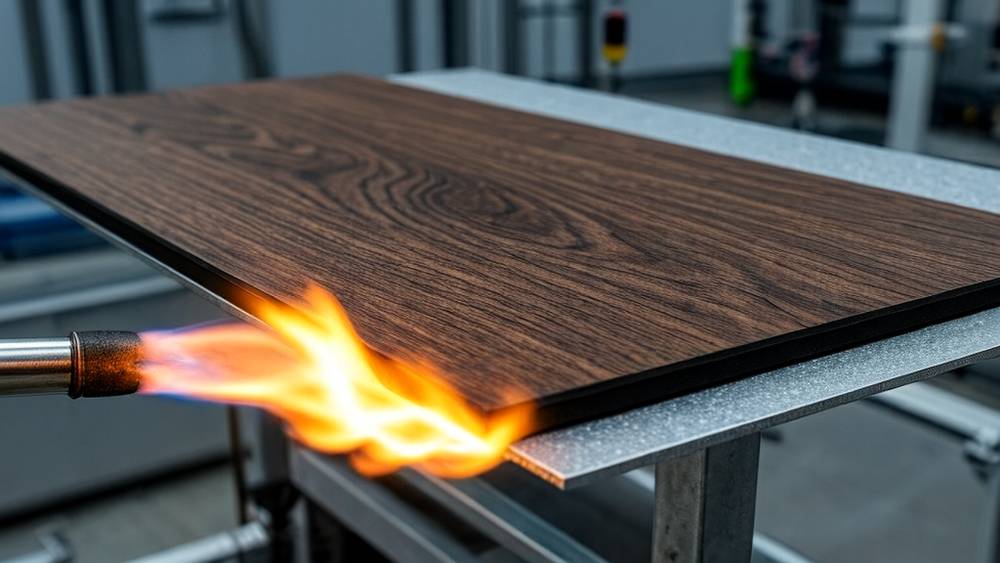
When a project specification calls for the warmth of timber on a high-rise facade or a coastal installation 300 metres from salt spray, the conversation shifts quickly from aesthetics to fire compliance. Wood look aluminium has become the default answer for architects who want timber grain without the combustibility risk that comes with real wood cladding. But not every wood look aluminium product meets the same fire standard, and the difference between a system tested to AS 1530.1 versus one that carries a superficial "non-combustible" label can derail a permit application or, worse, create a liability that nobody on the construction team saw coming.
The Fire Rating Gap Nobody Talks About in Wood Look Aluminium
Real timber cladding on external walls is increasingly restricted under building codes worldwide. Australia's NCC 2022, for instance, now prohibits combustible cladding on Type A and Type B construction for buildings above two storeys. The UK's Approved Document B tightened after Grenfell. Even in North America, the IBC limits combustible materials on exterior walls of Type I and II construction. These restrictions created massive demand for wood look aluminium, but the market responded with a problem: not all aluminium cladding is actually non-combustible.
The distinction hinges on the core material. Solid extruded or sheet aluminium panels with sublimated wood grain finishes achieve true non-combustibility under AS 1530.1 and EN 13501-1 Class A1/A2 ratings. But aluminium composite panels with wood-look films, even those marketed as "fire retardant," often contain polyethylene or mineral-filled cores that burn differently. The wood grain transfer process itself becomes a second variable. Sublimation decoration penetrates the coating layer at a molecular level and leaves no additional combustible layer. PVC-based wood-look films applied to aluminium skins introduce organic compounds that contribute to flame spread and smoke development.
A project engineer who specifies "wood look aluminium" without pinning down the exact fire test standard risks receiving a product that passes a superficial visual check but fails the critical combustibility test. The difference in material cost between a sublimated solid aluminium panel and a film-laminated composite can be 30-45%, which creates an incentive for value engineering that nobody in the quality chain should accept without full transparency.
AS 1530.1 vs EN 13501-1: Understanding the Two Standards That Define Non-Combustibility
Different jurisdictions reference different fire test frameworks, and wood look aluminium products must be evaluated against the standard that applies to the project location. The two dominant standards are AS 1530.1 (Australia/New Zealand) and EN 13501-1 (European Union and countries that reference Eurocodes).
AS 1530.1 is deceptively simple. It is a furnace test that subjects a material specimen to 750°C for a defined period and measures whether the material combusts, produces flaming, or raises the furnace temperature beyond specified limits. A material either passes as "non-combustible" or does not. There is no intermediate classification. Solid aluminium sheets with sublimated wood grain finishes consistently pass AS 1530.1 because the aluminium substrate melts but does not combust, and the sublimation decoration contains negligible organic mass per unit area.
EN 13501-1 uses a tiered classification from A1 (fully non-combustible) through F (no performance determined). The critical boundary for most facade applications is A2-s1,d0. Achieving this requires passing both the EN ISO 1182 non-combustibility furnace test and the EN ISO 1716 gross calorific potential test. The "s1" suffix limits smoke production, and "d0" requires zero flaming droplets within the first 600 seconds of the SBI test under EN 13823. Solid aluminium panels with sublimated wood grain finishes can achieve A2-s1,d0 when the total organic content from the sublimation layer stays below the 2.0 MJ/kg threshold specified in EN 13501-1.
The table below breaks down the key differences between the two standards and what they mean for wood look aluminium specification:
| Parameter | AS 1530.1 | EN 13501-1 (A2-s1,d0 Target) |
|---|---|---|
| Furnace Temperature | 750°C constant | 750°C (EN ISO 1182) |
| Gross Calorific Potential Limit | Not tested separately | <2.0 MJ/kg (EN ISO 1716) |
| Smoke Measurement | Not assessed | SMOGRA ≤30 m²/s², TSP600s ≤50 m² (s1 rating) |
| Flaming Droplets | Not assessed under AS 1530.1 alone | d0 = none within 600s (EN 13823 SBI) |
| Pass/Fail Logic | Binary: non-combustible or not | Tiered: A1, A2, B, C, D, E, F with smoke and droplet subclasses |
| Typical Solid Wood Look Aluminium Result | Non-combustible (pass) | A2-s1,d0 (when organic content controlled) |
Sublimation vs Film Lamination: Why the Decoration Method Determines Fire Performance
Wood look aluminium achieves its timber aesthetic through one of two fundamentally different processes, and the choice between them has direct consequences for fire safety compliance.
Sublimation transfer, also known as thermal dye sublimation, embeds wood grain pigments into the polyester or PVDF coating layer of the aluminium panel at temperatures between 180°C and 210°C. The process converts solid dye particles directly into gas, which penetrates the polymer matrix of the coating and bonds at a molecular level. Once cooled, the decoration is integral to the coating. Total organic mass contributed by the dye is measured in milligrams per square metre. From a fire testing perspective, this contribution is negligible and typically falls well within the EN ISO 1716 limits for A2 classification.
Film lamination bonds a printed polymer film, typically PVC or acrylic, to the aluminium surface using adhesive. The film itself is combustible. Even "non-PVC" films marketed as eco-friendly alternatives contain acrylic or polyurethane layers that contribute significant organic mass. A 0.15 mm PVC wood-look film adds approximately 180-220 grams per square metre of combustible material. When tested under EN ISO 1716, this can push the gross calorific potential above 4.0 MJ/kg, which exceeds the A2 threshold by a factor of two. Under a real fire scenario, film-laminated panels can delaminate, with the film layer peeling away and contributing to flame propagation independent of the aluminium substrate.
Specifiers should request the full fire test report showing the exact decoration method tested, not just the substrate material. A test certificate for bare aluminium tells you nothing about the decorated panel's fire performance.
Coating Chemistry and Smoke: What PVDF and FEVE Bring to Wood Look Aluminium Fire Safety
The base coating system onto which wood grain sublimation is applied plays an underappreciated role in overall fire performance. Two coating chemistries dominate the wood look aluminium market: PVDF (polyvinylidene fluoride, typically 70% PVDF resin with 30% acrylic modifier) and FEVE (fluoroethylene vinyl ether).
PVDF-based coatings have been tested extensively in facade fire scenarios. The fluoropolymer backbone resists thermal decomposition below 370°C. When PVDF does decompose, it releases hydrogen fluoride gas, which acts as a flame retardant by scavenging free radicals in the gas-phase combustion reaction. This mechanism is well documented in fire science literature and contributes to the limited smoke production observed in PVDF-coated aluminium panels during SBI testing under EN 13823.
FEVE coatings offer higher gloss retention and can be formulated as solvent-based or water-based systems. Solvent-based FEVE performs similarly to PVDF in fire tests. Water-based FEVE, while environmentally preferable, may contain co-solvents and surfactants that increase the organic content of the cured film. A typical water-based FEVE formulation contains 5-8% organic co-solvent by weight in the wet state, reduced to approximately 1-2% after curing. This residual organic content must be accounted for when evaluating the total combustible load of the finished panel.
The sublimation process itself introduces approximately 0.5-1.5 g/m² of additional organic material when wood grain dyes are transferred into the coating. This figure is based on dye uptake rates observed in commercial sublimation lines processing architectural aluminium. For context, the EN 13501-1 A2 threshold for homogeneous products is 2.0 MJ/kg, which equates to roughly 40-60 g/m² of combustible material for a 2.5 mm thick aluminium panel weighing 6.75 kg/m². The sublimation dyes contribute less than 3% of the allowable combustible mass, leaving a comfortable margin for the coating system itself.
Real-World Project Implications: When Fire Specs Meet Budget and Lead Time
On paper, specifying a sublimated wood look aluminium panel with full AS 1530.1 or EN 13501-1 A2-s1,d0 certification is straightforward. On site, three practical challenges emerge that procurement managers and facade engineers need to anticipate.
Challenge 1: Test Report Scope. A fire test certificate for a specific wood grain colour and panel thickness does not automatically cover every colour in the same product range. Darker wood grain patterns require higher dye loading during sublimation. A Blackbutt or Jarrah pattern might contain 30-50% more dye per square metre than a light Oak or Birch. If the fire test was conducted on a light colour, the darker variants may not achieve the same classification. Reputable manufacturers test the worst-case (darkest, highest dye load) colour in their range to provide a conservative certification baseline. Verify this with the supplier before accepting a test report at face value.
Challenge 2: Perforation and Open Area. Wood look aluminium panels with perforations for acoustic absorption or ventilation present a modified fire scenario. The perforations increase the exposed surface area and can alter the combustion behaviour by allowing hot gases to penetrate behind the panel. EN 13501-1 testing for perforated products should follow the mounting and fixing conditions specified in EN 13238, which simulates the end-use application. A solid panel test report does not apply to perforated variants of the same product.
Challenge 3: Mixed Cladding Systems. A facade might combine wood look aluminium panels with other materials such as fibre cement, real timber battens, or ACM panels in non-critical areas. The fire performance of the overall system depends on the weakest component. A non-combustible aluminium panel installed adjacent to combustible insulation or a combustible weather barrier creates a system-level fire path that individual component testing does not capture. Large-scale facade fire tests such as BS 8414 or NFPA 285 evaluate the entire wall assembly, and these system-level tests should form part of the compliance package for any project where wood look aluminium is used alongside other materials.
Specification Checklist: Five Questions to Ask Before Ordering Wood Look Aluminium
Based on the fire compliance factors discussed above, procurement teams and specifiers should work through the following questions with any potential wood look aluminium supplier:
- Which fire standard was the product tested under? If the answer is "it's aluminium, so it's non-combustible," that is not a test result. Demand the actual test report number, issuing laboratory, and date.
- Was the fire test conducted on the decorated panel or on bare aluminium? Only decorated panel test results are valid for compliance submission. A bare substrate test certificate is irrelevant for a wood-look product.
- Which colour and thickness was tested, and does it match what you are ordering? Confirm that the test specimen matches the specified product in colour intensity, panel thickness, and coating system.
- What decoration method is used? Sublimation transfer or film lamination. If the answer is unclear or the supplier cannot articulate the difference, treat the fire certification as unverified.
- Are large-scale system test reports available? For projects requiring BS 8414, NFPA 285, or equivalent system-level testing, confirm that the wood look aluminium panels have been included in such tests with the proposed substrate and insulation configuration.
Suppliers such as Futeng® who maintain documented fire test libraries covering multiple wood grain colours and panel thicknesses can significantly reduce the compliance documentation burden during the submittal phase. The key is verifying that the documentation is current (less than five years old unless the product formulation is unchanged) and issued by an accredited laboratory under ISO/IEC 17025.
Regional Code Variations and Their Impact on Wood Look Aluminium Specification
Fire code requirements for external cladding are not globally harmonised, and wood look aluminium products that comply in one jurisdiction may require additional testing for another. Understanding these regional differences prevents costly re-specification late in the project timeline.
Australia (NCC 2022): The National Construction Code now requires external walls of Type A and Type B construction to be non-combustible under AS 1530.1. Wood look aluminium panels must pass this test individually. Additionally, Clause C2D10 requires that any insulation, sarking, or ancillary components within the external wall system also be non-combustible, unless specific concessions apply for sarking-type materials. This means specifying a non-combustible aluminium panel is necessary but not sufficient; the entire wall build-up must be evaluated.
United Kingdom (Approved Document B): Buildings with a storey at 18 metres or above (reduced to 11 metres from 2026) require materials achieving A2-s1,d0 or better under EN 13501-1 for external walls and specified attachments. The UK government's 2024 amendments to Approved Document B introduced a ban on combustible materials in external walls of all new residential buildings regardless of height, closing a previous loophole for buildings between 11 and 18 metres.
United States (IBC 2024): The International Building Code references NFPA 285 for exterior wall assemblies on Type I, II, III, and IV construction above 12.2 metres. Individual material non-combustibility under ASTM E136 is required for certain components, but NFPA 285 is a system test. Wood look aluminium panels must demonstrate successful NFPA 285 testing as part of the specific wall assembly proposed, including the insulation, air barrier, and structural backing.
Middle East (UAE Fire and Life Safety Code): The UAE code references both EN 13501-1 and NFPA 285, depending on the emirate and project type. Dubai Civil Defence requires A2-s1,d0 as a minimum for external cladding on high-rise buildings. Abu Dhabi follows similar requirements under the ADIBC. Projects in the region should budget for both material-level EN testing and system-level NFPA 285 testing if the specification requires it.
The practical takeaway for international procurement is that a wood look aluminium product with EN 13501-1 A2-s1,d0 certification covers a significant portion of global fire compliance requirements, but not all. North American projects will additionally need NFPA 285 system testing. Australian projects require AS 1530.1. Specifying a test report that matches the project jurisdiction from the outset avoids the scenario where compliant panels are delivered to site but rejected because the fire certificate references the wrong standard.
Cost and Lead Time Realities for Fire-Compliant Wood Look Aluminium
The price difference between a fully fire-certified sublimated wood look aluminium panel and a non-certified film-laminated alternative is real, and procurement teams need to understand what drives it.
Sublimation production lines for architectural aluminium operate at slower cycle times than film lamination. A typical sublimation press processes panels in 3-8 minute cycles depending on panel size and colour intensity, with throughput of 15-25 m² per hour per press. Film lamination can achieve 3-5 times that speed. The capital cost of sublimation equipment is also higher, with industrial-grade architectural sublimation presses from manufacturers such as Monti Antonio costing EUR 150,000-300,000 per unit.
Fire testing itself represents a significant cost. A single EN 13501-1 classification report covering non-combustibility, calorific potential, and SBI testing costs approximately EUR 15,000-25,000. Testing one colour variant adds another EUR 8,000-12,000. A product range with 12 wood grain colours and three panel thicknesses could require EUR 60,000-100,000 in fire testing alone if the supplier tests every combination. This is why many smaller suppliers test one colour and one thickness, leaving specifiers exposed on the untested variants.
Lead times for fire-compliant wood look aluminium reflect these production realities. Standard wood grain colours from manufacturers who maintain inventory may ship in 4-6 weeks. Custom colours or non-stock thicknesses typically require 8-12 weeks, including the sublimation production slot. Film-laminated alternatives may be available in 2-3 weeks, but the time saved in procurement can be lost in compliance negotiations if the fire certification does not meet project requirements.
The table below compares the key cost and performance parameters that differentiate fire-compliant sublimated wood look aluminium from film-laminated alternatives:
| Parameter | Sublimated Wood Look Aluminium | Film-Laminated Wood Look Panel |
|---|---|---|
| Combustibility Classification | AS 1530.1 Non-Combustible / EN A2-s1,d0 | Typically EN B-s2,d0 or lower |
| Organic Content | <0.5 MJ/kg (decoration contribution) | 3.0-5.0 MJ/kg (film + adhesive) |
| UV Durability of Wood Grain | 15-25 years (sublimation within PVDF/FEVE) | 5-12 years (film degradation, delamination risk) |
| Production Throughput | 15-25 m²/hr per press | 50-80 m²/hr per line |
| Typical Lead Time (Stock Colours) | 4-6 weeks | 2-3 weeks |
| Relative Material Cost | 100% (baseline) | 55-70% of sublimated panel cost |
| Fire Test Coverage | Tested per colour family and thickness | Often substrate-only testing provided |
Making the Right Call: Fire Compliance as a Procurement Filter
The wood look aluminium market has matured to the point where the aesthetic quality of wood grain finishes is consistently high across most reputable manufacturers. The differentiator is no longer how convincing the Jarrah or Walnut pattern looks. It is whether the fire certification documentation matches what the project actually needs, and whether the supplier can demonstrate that every panel shipped to site carries the same fire performance as the one tested in the laboratory.
For facade engineers and procurement managers, this means treating fire compliance not as a checkbox on a submittal form but as the primary filter through which wood look aluminium products are shortlisted. A supplier who cannot produce a current, relevant fire test report for the exact colour and thickness specified should not progress to the pricing stage, regardless of how attractive the unit rate appears.
The construction industry has learned through painful experience that cladding fire compliance failures carry consequences measured in human lives and criminal liability, not just project delays and remedial costs. Wood look aluminium offers a genuine solution to the conflict between timber aesthetics and fire safety requirements, but only when the specification is precise, the testing is relevant, and the supply chain is transparent about what has been tested and what has not.