8 mm Open Joints Behind Metal Effect Wall Panels and the Moisture Failures They Hide
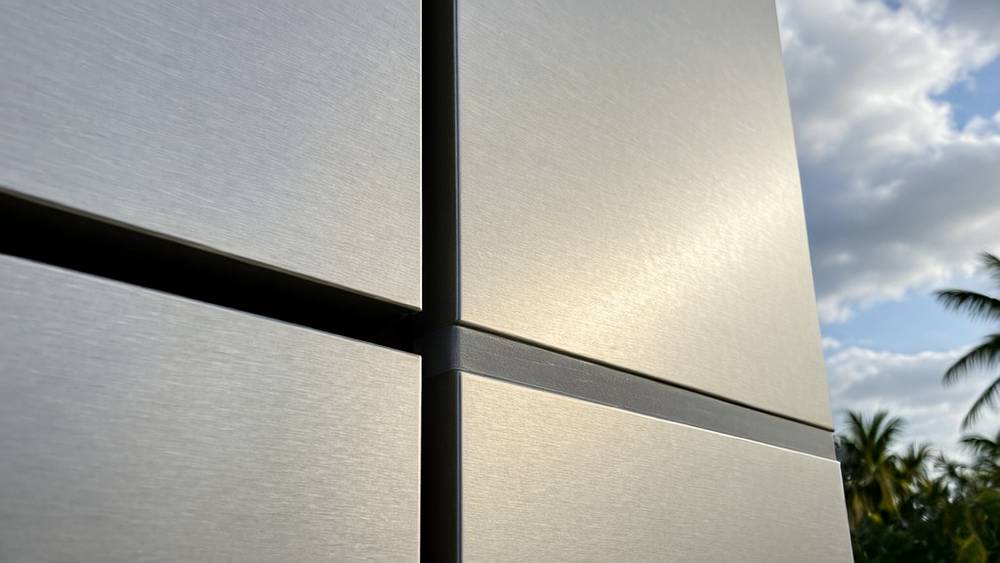
When a project specification calls for metal effect wall panels, the conversation almost always starts with colour and finish. Architects chase a specific Corten rust tone or a brushed stainless steel look. Contractors worry about lead times and installation sequencing. But the question nobody asks until it is too late — and the one that separates a facade that looks pristine at handover from one that looks tired after three monsoon seasons — is how the substrate behind that metallic finish holds up against real-world moisture ingress. This article focuses on that gap. It examines what happens when water finds its way behind metal effect wall panels on solid aluminium substrates, which coating technologies provide genuine barrier protection versus those that rely on illusion alone, and how drainage and ventilation detailing determines whether the panel system breathes or rots. We draw on ASTM coating standards, real site observations from Southeast Asian high-rise projects, and cost data that procurement managers can use to evaluate bids beyond the finish sample.
The Moisture Problem Nobody Specifications Address
Most technical submittals for metal effect wall panels include a finish warranty, a coating thickness certificate, and maybe an adhesion test report. What they rarely include is any analysis of what the panel assembly does with water once it gets past the outer surface. And it always gets past the outer surface — through joints, around penetrations, behind sealant that looked perfect on day one but cracked after the first thermal cycle.
Solid aluminium panels have an inherent advantage here that composite panels do not: there is no polyethylene core to delaminate or wick moisture laterally. But that advantage evaporates if the panel system is detailed as if water will never enter. It will. The question is whether the back side of the panel, the support framing, and the drainage cavity are equipped to handle it.
Three moisture failure modes appear repeatedly in forensic facade investigations across tropical and subtropical climates:
- Interstitial condensation on the rear face of the panel when warm, humid outdoor air hits the cooler aluminium surface behind the insulation layer
- Capillary-driven water retention at horizontal panel joints where surface tension holds moisture against the cut edge of the coating
- Runoff concentration at window head details and louvre junctions where water from large glazed areas channels directly onto metal effect wall panels below
Each of these mechanisms can undermine the metallic finish from the rear side — where warranty inspectors never look. And each is preventable with detailing that costs little at the fabrication stage but is expensive to retrofit.
PVDF vs Powder: Barrier Performance Beyond the Colour Chart
The metallic effect on a solid aluminium panel comes from the pigment system suspended in the coating matrix. PVDF (polyvinylidene fluoride) coatings using 70% Kynar 500® or Hylar 5000® resin systems have dominated the architectural market for decades because of their UV resistance and colour stability. Powder coatings — particularly FEVE-based fluoropolymer powders — have gained ground by offering similar weathering performance with lower volatile organic compound emissions during application.
But when the evaluation shifts from colour retention to moisture barrier performance, the comparison changes. The critical metric is not gloss retention after 10 years of Florida exposure. It is the coating's resistance to moisture vapour transmission (MVT) and its behaviour at cut edges and fastener penetrations.
The following table compares key moisture-related performance characteristics across the four coating systems most commonly specified for metal effect wall panels:
| Coating System | Standard Reference | Typical DFT (microns) | Moisture Vapour Transmission Rate | Cut-Edge Corrosion Resistance | Applicable Climate Zones |
|---|---|---|---|---|---|
| PVDF 70% (Kynar 500®) | AAMA 2605 | 30-40 | Very Low | Moderate — requires edge sealing | All zones including coastal |
| FEVE Powder (Fluoropolymer) | AAMA 2605 (qualified) | 60-80 | Very Low | Good — thicker film reduces edge vulnerability | All zones; preferred in high-UV |
| Super-Durable Polyester Powder | AAMA 2604 | 60-80 | Moderate | Moderate — needs rigorous pretreatment | Urban and inland only |
| Standard Polyester Powder | AAMA 2603 | 50-70 | Higher | Lower — not recommended for wet climates | Interior or dry exterior only |
The takeaway for specification writers: a metallic finish that looks identical in a 100 mm × 100 mm sample chip can perform radically differently at full scale. The thicker film build of FEVE powder coatings provides a measurable advantage at cut edges — which is where moisture attack on metal effect wall panels typically begins. This is not an argument against PVDF, which remains the benchmark for colour consistency. It is an argument for understanding what you are buying beyond the colour match.
Pretreatment: The Layer Nobody Sees
Before any metallic-effect coating touches the aluminium surface, the substrate must undergo chemical pretreatment. This step has zero aesthetic impact and therefore receives almost no attention during factory inspections. But it has more influence on long-term moisture resistance than the choice between PVDF and powder.
Chromate conversion coatings were the industry standard for decades. They provide excellent corrosion resistance and a strong bonding surface for organic topcoats. Hexavalent chromium is also toxic, carcinogenic, and heavily restricted under EU REACH regulations. The industry has shifted to chromium-free alternatives — titanium-zirconium based systems, silane treatments, and thin-film nanoceramic technologies.
The problem: not all chrome-free pretreatments perform equally in humid environments. Some titanium-zirconium systems show excellent dry adhesion but lose up to 40% of their bond strength after 2,000 hours of condensation testing per ASTM B117 salt spray protocols. The better-performing systems — typically those incorporating a silane sealing step — maintain adhesion within 10% of initial values after equivalent exposure.
For projects specifying metal effect wall panels in Bangkok, Mumbai, Singapore, or any climate where relative humidity stays above 80% for months at a time, pretreatment specification deserves the same scrutiny as the visible finish. Futeng® aluminium cladding panels, for example, use a multi-stage chrome-free pretreatment line with a final silane seal — a detail that matters far more than the colour of the topcoat when panels are installed 30 storeys up with no practical access for remedial work.
Drainage Cavities and the Ventilation Imperative
A solid aluminium panel with a perfectly applied metallic-effect coating, mounted tight against the structural substrate with no air gap, will still fail if water gets behind it. The failure mechanism is not corrosion of the aluminium itself — 3XXX and 5XXX series alloys are inherently corrosion-resistant — but rather a combination of coating blistering, mineral staining from runoff across concrete or mortar substrates, and freeze-thaw damage in colder climates.
The rainscreen principle, codified in standards such as BS 5250 for moisture management in buildings, separates the weather-resisting barrier (the metal effect wall panels) from the thermal and air barrier via a ventilated cavity. This cavity must be:
- Minimum 20 mm deep for low-rise buildings (up to 3 storeys)
- Minimum 38 mm deep for mid- and high-rise buildings where pressure equalisation is required
- Minimum 50 mm deep behind panels with perforations or open joints exceeding 10 mm
Ventilation openings at the top and bottom of each panel zone must provide a minimum free area of 500 mm² per linear metre of wall — a figure that many shop drawings miss because the detailer treats the opening as an aesthetic afterthought rather than a functional requirement.
One common failure pattern observed in completed projects: a building uses metal effect wall panels on its street-facing elevation with a properly detailed 38 mm cavity, but the rear elevation — value-engineered during construction — reduces the cavity to 15 mm behind the same panel system. Within two years, the rear elevation panels show staining and coating degradation while the front elevation panels remain pristine. Same panels, same metallic finish, same installation crew. The difference is entirely in the detailing.
Panel Joint Design: The 8 mm Rule and Its Limits
Open-joint rainscreen systems have become popular for their clean shadow lines and absence of visible sealant. The joint width — typically 6 mm to 12 mm — is specified by the architect for aesthetic reasons. But it has profound functional consequences for moisture management.
At 6 mm, capillary action can draw water across the joint under wind-driven rain conditions. At 8 mm, the surface tension of water (approximately 0.073 N/m at 20°C) is generally insufficient to bridge the gap under normal conditions. At 12 mm, the joint is wide enough that wind-driven rain penetrates freely, requiring a deeper drainage cavity and more robust flashing behind the panel.
The 8 mm joint has become something of an industry default for metal effect wall panels in open-joint systems — wide enough to break capillary tension, narrow enough to limit direct rain penetration. But this rule of thumb breaks down in specific conditions:
- Coastal sites with prevailing wind speeds above 15 m/s: wind-driven rain can penetrate 8 mm joints. Increase to 10 mm with deeper cavity or switch to a drained-and-ventilated sealed joint.
- Panel heights exceeding 4 m: thermal movement across a 4 m aluminium panel can exceed 4 mm (coefficient of thermal expansion: 23.4 × 10⁻⁶ /°C). An 8 mm joint provides only 2× the expected movement range — tight but workable if installation temperature is controlled.
- Areas with high insect or nesting bird pressure: 8 mm joints can admit wasps and small birds into the cavity. Perforated closure profiles or insect mesh become necessary, adding cost and ongoing maintenance requirements.
When Metal Effects Go Wrong: Three Case Studies
Case 1: The Coastal Hotel That Faded Unevenly
A five-star resort in Da Nang, Vietnam specified Corten-effect metal effect wall panels for its ocean-facing facade. The specification called for a PVDF coating with a rusted-steel visual effect. What the specification did not address was that the metallic pigments used to create the Corten appearance — primarily iron oxide and micaceous iron oxide — have different UV absorption characteristics than standard architectural pigments.
Within 18 months, the south-west elevation showed visible colour shift while the north-east elevation remained stable. Investigation revealed that the PVDF resin system was correctly applied at 32 microns DFT, but the specific pigment blend had not been tested for UV stability in tropical marine conditions. The fix required a full re-coat of the affected elevation at a cost exceeding $120,000 — roughly 40% of the original panel contract value.
The lesson: metallic-effect finishes using non-standard pigments need accelerated weathering test data specific to the pigment-resin combination, not just the resin system alone. An AAMA 2605 certification for the coating system does not guarantee colour stability if the pigment package falls outside the manufacturer's standard range.
Case 2: The Retail Podium with Staining at Every Joint
A high-end retail development in Kuala Lumpur used champagne-metallic metal effect wall panels on a low-rise podium wrapping a parking structure. The panels were installed over a steel subframe with a 25 mm cavity — slightly below the recommended minimum. Within 12 months, dark staining appeared at horizontal joints, concentrated where the panels abutted concrete slab edges.
The staining was not a coating failure. It was alkaline runoff from the adjacent concrete, carried by rainwater and deposited on the panel surface at each joint. The cavity was too shallow to allow effective drainage, and no drip edge had been detailed at the concrete slab terminations. The fix involved cleaning all panels, installing stainless steel drip flashings at slab edges, and locally opening the cavity to 38 mm where possible.
Cost of the remediation: approximately $35,000. Cost of including drip flashings in the original scope: approximately $4,200. The ratio of retrofit cost to prevention cost — roughly 8:1 — is not unusual for moisture-related facade defects.
Case 3: The Airport Terminal Where Everything Worked
A regional airport terminal expansion in southern India specified brushed-stainless-effect metal effect wall panels across 8,000 m² of exterior wall area. The project team took three decisions that made the difference between success and failure:
- They specified FEVE powder coating with a 70-micron minimum DFT and required edge-sealing of all cut panels at the fabrication stage — not as a site-applied afterthought.
- They designed a 50 mm ventilated cavity behind all panels, with continuous ventilation slots at the base and head of each storey-height panel zone, sized at 800 mm² per linear metre.
- They required the panel fabricator to supply a pretreatment quality certificate showing chromium-free conversion coating with silane seal, tested to 3,000 hours neutral salt spray per ASTM B117 with no more than 2 mm creep from scribe.
Five years after completion, the panels show no staining, no coating delamination, and colour difference (ΔE) below 2.0 across all elevations. The project came in approximately 12% above the lowest bid, which had proposed standard polyester powder on a 20 mm cavity with no edge treatment. The 12% premium bought a facade that has required zero remedial work in half a decade.
Specifying for Moisture Resistance: A Practical Checklist
Based on the failure patterns and successful outcomes described above, the following checklist translates the technical discussion into actionable specification language for metal effect wall panels on projects where moisture exposure is a genuine concern:
- Coating system: Minimum AAMA 2605 for all exterior applications. Consider FEVE powder for projects within 5 km of breaking surf or in climates exceeding 2,000 mm annual rainfall.
- Pretreatment: Require a chrome-free conversion coating with silane seal. Ask for salt spray test data (ASTM B117, minimum 2,000 hours) for the complete coating system including pretreatment.
- Cavity depth: 38 mm minimum for buildings over 3 storeys. 50 mm behind open-joint or perforated panels.
- Ventilation: Minimum 500 mm² per linear metre of wall at both cavity base and head. Increase to 800 mm² in tropical climates.
- Joint width: 8 mm minimum for open joints. Increase to 10 mm in coastal or high-wind locations.
- Edge treatment: All field-cut panel edges must be sealed with a compatible touch-up coating system. Factory-cut edges should be sealed as part of the fabrication process.
- Drip details: Continuous stainless steel or aluminium drip flashings at all horizontal interruptions in the cavity — slab edges, window heads, louvre sills.
- Substrate isolation: No direct contact between aluminium panels and concrete, mortar, or dissimilar metals. Use EPDM or neoprene isolation pads at all fixing points.
Cost Implications of Moisture-Ready Detailing
Procurement managers evaluating bids for metal effect wall panels often struggle to compare proposals that appear to offer the same product — same alloy, same thickness, same visible finish — at different price points. The differences are almost always in the invisible elements: pretreatment quality, cavity detailing, edge sealing, and flashing scope.
The table below provides indicative cost ranges for the moisture-related elements of a solid aluminium cladding package, expressed as a percentage of the total panel supply and install cost for a typical mid-rise commercial project (reference: 2,500 m² of 2.5 mm solid aluminium panels with metallic-effect coating, installed on aluminium subframe):
| Element | Basic Specification | Moisture-Optimised Specification | Cost Premium (% of Package) |
|---|---|---|---|
| Coating system | AAMA 2604 super-durable polyester powder | AAMA 2605 FEVE fluoropolymer powder | +6% to +9% |
| Pretreatment | Standard chrome-free (no silane) | Chrome-free with silane seal | +0.5% to +1% |
| Cavity depth | 25 mm (below BS 5250 recommendation) | 38-50 mm ventilated cavity | +2% to +4% (subframe and bracketry) |
| Edge sealing | Site touch-up only | Factory edge seal + site touch-up | +1% to +2% |
| Flashing package | Basic head and sill flashings | Full flashing package with drip edges at all interruptions | +2% to +3% |
| Total premium range | +11.5% to +19% |
An 11.5% to 19% premium on the cladding package translates to roughly 1% to 2.5% of total facade cost when glazing, doors, and structural elements are included. Against the cost of a single major remediation campaign — which typically runs 30% to 50% of the original cladding contract — the arithmetic favours getting the detailing right the first time.
Quality Verification During Fabrication
Specifying moisture-ready detailing is one thing. Verifying that it has actually been done is another. Factory inspections for metal effect wall panels tend to focus on the visible: colour match against the control sample, gloss level, absence of orange peel or dirt inclusion in the coating. The moisture-critical elements require deliberate, targeted inspection.
Key verification points during a factory visit or third-party inspection:
- Pretreatment line: Check that the chemical bath concentrations are within the supplier's specified range. Look for automatic monitoring and dosing — manual chemical management leads to concentration drift between shifts.
- Edge sealing station: Verify that edge sealant is being applied to all four edges of cut panels, not just the visible edges. The top edge of a panel — hidden in the joint and never seen after installation — is the most vulnerable to water ingress.
- Coating thickness measurement: DFT should be measured on the face, the returns, and the rear side. A panel with 40 microns on the face and 8 microns on the returns has a moisture vulnerability that no warranty covers.
- Packaging: Panels stored or shipped without edge protection, stacked face-to-face without interleaving, will arrive on site with coating damage that creates moisture entry points before installation even begins.
These inspection points cost nothing to check but can save projects from discovering moisture problems after the scaffolding comes down.
For project teams that do not have the budget for full-time factory inspection, a practical compromise is to require the fabricator to submit a quality dossier with each shipment: pretreatment bath logs, coating thickness measurements for each batch, edge-seal application records, and packaging photographs. This does not replace inspection, but it creates a paper trail that makes it harder to skip steps.
Regional Climate Considerations
The moisture performance of metal effect wall panels is not a universal constant. The same panel system that performs flawlessly in Dubai's arid climate can fail in Jakarta's humidity within three years. Specification decisions must account for the project's specific climate exposure.
Key climate factors that should drive detailing decisions:
- Annual rainfall: Locations receiving more than 1,500 mm per year should default to the moisture-optimised specification. Above 3,000 mm — common in equatorial Southeast Asia — the cavity depth and ventilation area recommendations should be treated as minimums, not targets.
- Driving rain index: This metric, which combines rainfall and wind speed data, is a better predictor of moisture ingress than rainfall alone. Areas with a driving rain index above 5 m²/s per year require enhanced joint detailing and deeper cavities. Data is available from national meteorological agencies and building science resources aligned with ISO 15927-3.
- Temperature range: Locations with diurnal temperature swings exceeding 15°C create condensation risk that may not exist in more thermally stable climates. The rear face of a metallic-effect panel can drop below the dew point overnight, forming condensation that drains into the cavity. Morning sun hitting the panel face then drives that moisture outward — but not before some has been absorbed by the building wrap or insulation.
- Salt exposure: Within 3 km of breaking surf, the combination of salt deposition and high humidity creates an electrochemical environment that accelerates coating degradation at any breach in the coating film. Edge sealing moves from recommended to mandatory in these zones.
Moving Beyond the Finish Sample
The metallic-effect sample chip that an architect selects at the start of a project is a promise. The installed facade three years later is the delivery on that promise — or the failure to deliver. The difference between the two outcomes rarely has anything to do with the pigment blend or the resin chemistry visible on the sample. It has everything to do with the invisible decisions made about pretreatment, cavity design, edge sealing, and flashing.
For contractors and procurement managers evaluating metal effect wall panels, the practical implication is straightforward: the lowest compliant bid is rarely the lowest-cost option when lifecycle performance is included in the calculation. The bid that includes a silane-sealed pretreatment, a properly dimensioned ventilation cavity, factory-applied edge sealing, and a complete flashing package will cost more on paper and less over time.
The three project cases described in this article — one failure from pigment instability, one failure from cavity design, one success from comprehensive detailing — represent outcomes that were predictable at the specification stage. None of the failures involved defective materials. All of them involved specification gaps that could have been closed at zero or near-zero cost to the design team, simply by asking questions that go beyond the finish sample.
The next time a metallic-effect panel sample lands on your desk, ask about the pretreatment. Ask about the cavity depth. Ask about the edge seal. If the supplier cannot answer those questions with data, the finish — however beautiful — is hiding a risk that will surface long before the warranty expires.